
How Far Is AI Drug Development from Becoming a Reality?
AI Revolutionizing Drug Development: A Glimpse into the Future of Pharma Innovation


When people think of AI and healthcare, they often imagine applications like AI-powered consultations, AI analyzing X-rays, and AI-based diagnostics, which are all patient-facing or "B2C" uses. However, there is another important aspect of AI in healthcare: the use of AI in drug development. Although the commercialization of AI in the pharmaceutical industry is still in its early stages, the benefits of cost reduction and efficiency improvement are already evident. AI has the potential to reduce the drug development timeline, which typically takes 15 years and costs $2 billion, to just 1.5 years and $2.6 million. From a results standpoint, the future of AI in drug development looks very promising.
AI Solves Challenges in Drug Development
Since the emergence of ChatGPT, AI has begun reshaping countless industries, and particularly in 2024, a wave of large AI models have been launched. The healthcare sector, being one of the first industries to embrace AI, has become fertile ground for the application of these models.
Before AI's arrival, pharmaceutical companies were already using digital tools to improve drug development efficiency. According to Zheng Xing, Chief Engineer of Biomedical R&D at DeepScience Technology, pharmaceutical companies have been utilizing physical modeling methods in drug research since the 1990s.
With the advent of AI, digital technologies enhanced by AI have brought about a revolutionary leap in the speed of drug development. As Shalin, Head of IT at Insilico Medicine, explained, drug development was previously a long process, averaging 10-15 years, with each new drug costing $1-2 billion. However, after the launch of large AI models, Insilico Medicine, leveraging Amazon Web Services, built a generative AI-powered drug development platform called Pharma.AI. This platform was able to complete the early drug discovery process—from target identification to clinical compound nomination—in just 18 months and at a cost of $2.6 million.
Recently, Insilico Medicine's candidate drug for idiopathic pulmonary fibrosis, Rentosertib, completed Phase 2a clinical trials on patients, demonstrating its safety and preliminary efficacy. "Rentosertib is the world's first candidate drug whose target and molecular structure were identified by generative AI," Shalin noted.
In a similar vein, Zheng Xing of DeepScience Technology shared that their company had developed the Hermite drug design platform and RiDYMO high-quality hit discovery platform based on the AI for Science paradigm. In a GPCR-targeting compound screening project, they discovered 14 lead compounds at the nanomolar level from a pool of 12 million candidates using AI-driven high-throughput screening and high-precision evaluation. This process achieved an efficiency boost of several hundred times compared to international pharmaceutical giants working on the same target.
The application of AI in drug development is no longer an isolated case. Pfizer used AI to successfully develop innovative drugs for rare genetic diseases, cutting the research cycle to one-third of traditional methods and reducing costs to 1/200. AlphaFold2, a deep learning model developed by DeepMind, predicted protein structures with unprecedented accuracy, solving a problem that had taken years of experimental work and was now used by over 2 million researchers globally.
AI’s integration into drug discovery and design is accelerating, with significant advancements like the optimization of training models for protein folding (via DeepScience Technology’s Uni-Fold). These efforts continue to break new ground, further cementing AI's role in driving innovation in pharmaceutical research.
From Billions to Trillions
McKinsey predicts that by 2030, the market for AI in drug development could surpass $100 billion, with a potential market size of $280-530 billion if AI fully penetrates the entire drug development process. According to data, the global AI healthcare market will reach $15 billion by 2025, with medical imaging analysis, intelligent diagnostics, and drug development being the three core areas.
The capital markets also show growing interest in AI in healthcare. Since the beginning of the year, several AI healthcare stocks have surged, such as Grail, which saw its stock price increase by over 200%, and Tempus, with a 165% rise.
According to the "2025 AI Pharmaceutical Market Analysis and Future Development Trends Report," the global AI pharmaceutical market is expected to reach $20 billion by 2025, with a compound annual growth rate (CAGR) of over 30%. Clearly, with the rise of platforms like DeepSeek, large AI models are now fully transforming the pharmaceutical industry.
However, the public's exposure to AI in healthcare largely remains centered around patient-facing applications. Even some financial analysts believe that AI's primary focus is still on "C-end" (consumer) applications in healthcare, such as patient services, rather than the more capital-intensive "manufacturing side," which has not yet fully commercialized. As Yuan Chen, Research Director at Jiangyi Capital, commented, "AI has shown better performance in patient-facing applications, but its commercialization in manufacturing, particularly drug production, remains limited due to capital expenditure constraints."
In drug manufacturing, the commercialization of AI-powered drug development is mainly hindered by capital investment challenges. Most innovative pharmaceutical companies rely on funding from primary market sources, particularly private equity (PE) investors. The challenge lies in developing drugs with global market competitiveness while ensuring that the products generate significant cash flow to cover the investment costs. According to Zheng Xing, the long timeline for new drug development, the complexity of factors affecting a drug's success, and investor sentiment fluctuations present significant challenges for the widespread adoption of AI in drug development.
Moreover, on a global scale, data fragmentation and "black box" models also limit progress. There are currently no AI-driven drugs that have entered Phase III clinical trials.
Challenges and Opportunities Ahead
Zheng Xing explained that the traditional cost model for drug development—"10 years, 1 billion dollars"—remains the industry standard. However, the success of AI in drug discovery is still in its infancy, and the industry faces numerous challenges, including model "hallucinations" and data shortages. These issues mean that AI cannot yet fully replace traditional methods of drug discovery, and a standardized approach for evaluating AI-generated results is still in development.
Despite these challenges, experts believe that the future of AI in drug development is bright. AI will increasingly become the core engine of pharmaceutical research, shifting the industry from an "experience-driven" model to a "data-driven" one. Although data, regulatory, and technological maturity challenges remain, AI's potential to shorten development cycles, reduce failure rates, and introduce new treatment paradigms cannot be underestimated. As large AI models continue to evolve and the costs of usage decrease, experts predict that AI will reshape the global pharmaceutical landscape within the next decade, potentially unlocking trillions of dollars in market growth.
Thank you for reading!
If you enjoyed this article, feel free to support my work with a tip or leave a comment below to share your thoughts. I’d love to hear your opinions on the future of AI in drug development and how it’s transforming the pharmaceutical industry. Every bit of support helps me continue writing!
– Evan Tao
About the Creator
Evan Tao
Have you gone through a heartbreak that changed you?
Comment below. Let’s create a space for healing, together.
If this story touched you, please share it.
Sometimes, your pain becomes someone else’s lifeline.
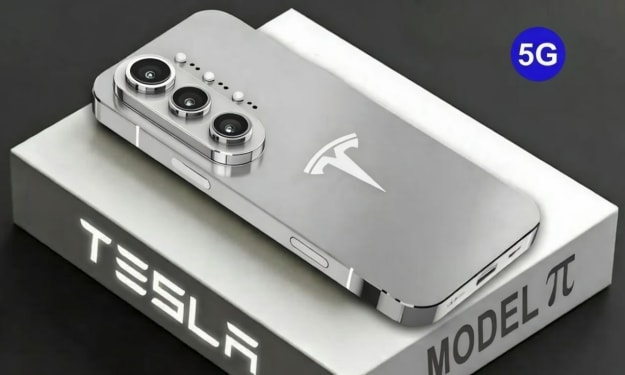
Tesla Pi Phone: The Truth Behind the Internet’s Favorite Mythical Smartphone
In the fast-moving world of consumer technology, few things generate as much consistent buzz as a product that doesn’t actually exist. For years, the internet has been saturated with spectacular renders, wild specification leaks, and enthusiastic viral videos detailing the impending arrival of the Tesla Pi Phone (sometimes called the Model Pi).
By Mohammad Hamid4 days ago in Futurism
Video Conferencing Market Trends: Remote Work Adoption, AI Features & Forecast to 2034
Growing demand for remote and hybrid work, the rapid spread of high-speed internet, and the push by organizations to cut travel costs are fueling strong momentum in the video conferencing space. According to IMARC Group's latest data, the global video conferencing market size was valued at USD 13.8 Billion in 2025. Looking forward, IMARC Group estimates the market to reach USD 31.4 Billion by 2034, exhibiting a CAGR of 9.60% from 2026-2034. North America currently dominates the market, holding a market share of over 39.8% in 2025.
By Suhaira Yusuf3 days ago in Futurism
Why Didn't Anyone Tell Us
Men, move along. This is not for you. This is for the women. I was forty-five when I began menopause. It is pretty young for that to be going on in a woman’s life, but I had undiagnosed PCOS, my entire life. Thank you to all the gynecologists I had seen my entire life. That in itself should encourage women to keep seeking second opinions, especially when you are not getting correct answers or any at all.
By Alexandra Grant3 days ago in Humans



Comments
There are no comments for this story
Be the first to respond and start the conversation.