
How Does DevOps Accelerate Digital Transformation in Enterprises?
Harnessing the Power of DevOps and AI to Drive Digital Transformation and Accelerate Innovation in Enterprises
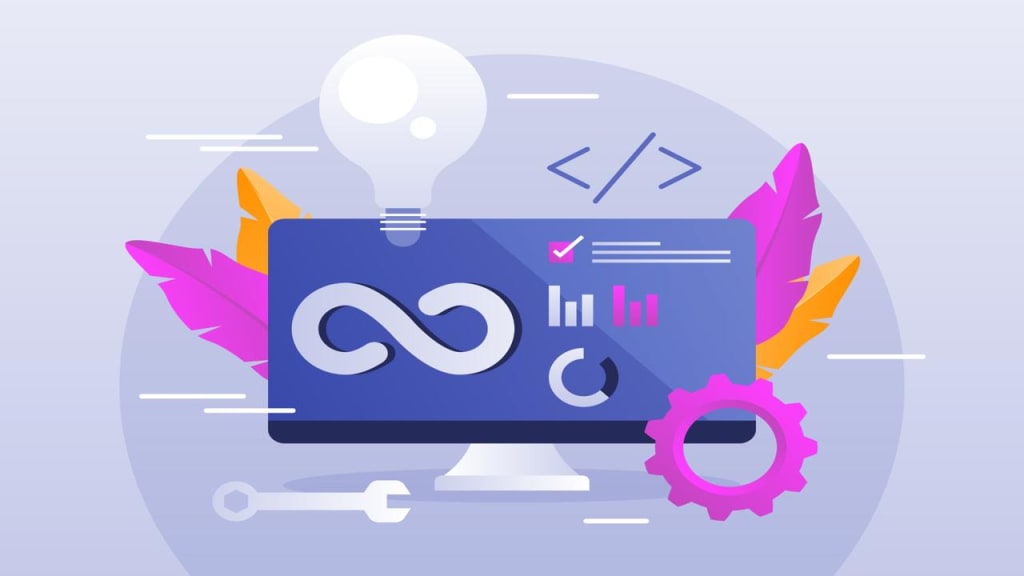
In today's rapidly evolving business landscape, digital transformation has become a top priority for enterprises seeking to stay competitive. As companies strive to modernize their operations and deliver better customer experiences, DevOps has emerged as a critical enabler of this transformation. By streamlining processes, enhancing collaboration, and improving software development cycles, DevOps is helping enterprises achieve the agility and speed required to thrive in a digital world.
But there's another technological force accelerating digital transformation: Artificial Intelligence (AI). The integration of AI with DevOps is revolutionizing the way enterprises operate, enabling smarter automation, predictive insights, and enhanced scalability. In this article, we’ll explore how DevOps accelerates digital transformation, how AI plays a pivotal role, and how combining these technologies can benefit enterprises.
The Role of DevOps in Digital Transformation
At its core, DevOps is a set of practices that combine software development (Dev) and IT operations (Ops). The goal is to shorten the systems development life cycle while delivering high-quality software. DevOps emphasizes collaboration between previously siloed teams, automation of repetitive tasks, and continuous improvement, all of which are essential for digital transformation.
Here are the key ways in which DevOps accelerates digital transformation:
1. Improved Collaboration and Communication
One of the main challenges in traditional IT environments is the disconnect between development and operations teams. This disconnect often leads to delays, miscommunication, and inefficiencies. DevOps fosters a culture of collaboration, breaking down these silos and encouraging teams to work together from the start of a project. This collaborative approach ensures that software development aligns with business objectives, leading to faster delivery and higher-quality outcomes.
2. Automation of Repetitive Tasks
Automation is a cornerstone of DevOps. By automating tasks such as testing, deployment, and monitoring, DevOps reduces the time and effort required to manage infrastructure and software. Automation enables teams to focus on higher-level tasks, such as innovation and optimization, rather than being bogged down by manual processes. This not only speeds up the development process but also ensures consistency and reliability in software delivery.
3. Continuous Integration and Continuous Delivery (CI/CD)
CI/CD pipelines are integral to DevOps and play a crucial role in digital transformation. Continuous integration ensures that code changes are automatically tested and integrated into the main codebase, reducing the risk of conflicts and errors. Continuous delivery, on the other hand, automates the deployment process, allowing for frequent and reliable software releases. This rapid feedback loop enables enterprises to adapt quickly to market changes and customer needs, driving digital transformation.
4. Faster Time-to-Market
In a digital world, speed is everything. Enterprises need to deliver new features, updates, and products faster than ever before to stay competitive. DevOps accelerates the development process, enabling teams to release software more frequently and with fewer issues. This faster time-to-market gives enterprises a significant edge, allowing them to respond to customer demands and market trends in real-time.
5. Scalability and Flexibility
As enterprises grow and evolve, their infrastructure needs to scale accordingly. DevOps enables organizations to build scalable and flexible systems that can adapt to changing business requirements. By leveraging cloud technologies and microservices architectures, DevOps ensures that enterprises can scale their operations without compromising performance or reliability. This scalability is essential for digital transformation, as it allows businesses to handle increased demand and expand into new markets seamlessly.
The Role of Artificial Intelligence in Digital Transformation
While DevOps provides the framework for digital transformation, AI introduces the intelligence needed to optimize and automate complex processes. AI is transforming industries by enabling machines to learn from data, make predictions, and perform tasks that traditionally required human intervention.
In the context of digital transformation, AI brings several key benefits:
1. Predictive Analytics and Insights
AI-powered predictive analytics can analyze vast amounts of data in real-time, providing enterprises with valuable insights into customer behavior, market trends, and operational efficiency. These insights enable businesses to make data-driven decisions, optimize their processes, and anticipate future needs. When integrated with DevOps, AI can predict potential issues in the software development lifecycle, such as system failures or security vulnerabilities, allowing teams to proactively address them before they become critical.
2. Intelligent Automation
AI takes automation to the next level by enabling intelligent decision-making. While DevOps automates routine tasks, AI can automate more complex processes that require analysis and reasoning. For example, AI-powered tools can automatically adjust infrastructure resources based on usage patterns, ensuring optimal performance and cost-efficiency. In the realm of ai for enterprise, intelligent automation helps businesses scale their operations without requiring additional manual intervention.
3. Enhanced Security
Security is a top concern for enterprises undergoing digital transformation. AI can enhance security by detecting anomalies and potential threats in real-time. AI-powered security tools can monitor network traffic, identify suspicious behavior, and automatically trigger preventive measures. When integrated into a DevOps pipeline, AI ensures that security is built into every stage of the software development process, reducing the risk of cyberattacks.
4. AI-Driven Development
AI is also transforming the way software is developed. AI-powered development tools can assist in writing code, detecting bugs, and optimizing algorithms. These tools enable developers to work more efficiently and reduce the time required to build complex applications. In a DevOps environment, AI-driven development accelerates the software development lifecycle, allowing teams to deliver high-quality software faster.
The Synergy Between DevOps and AI
The combination of DevOps and AI creates a powerful synergy that accelerates digital transformation even further. When integrated, these technologies enable enterprises to achieve greater agility, scalability, and efficiency. Here’s how the synergy between devops consulting services and AI can drive transformation:
1. AI-Driven Monitoring and Alerting
In a DevOps environment, monitoring is essential for ensuring the health and performance of applications and infrastructure. AI can enhance monitoring by detecting patterns and anomalies that might go unnoticed by human operators. AI-powered monitoring tools can predict potential issues before they occur, triggering automated alerts and corrective actions. This proactive approach reduces downtime and ensures that systems are always running optimally.
2. Automation of DevOps Workflows
AI can automate various aspects of the DevOps workflow, from code deployment to infrastructure management. For example, AI can optimize the allocation of resources in cloud environments, ensuring that applications have the necessary compute power without overprovisioning. AI-powered automation tools can also handle incident management, automatically resolving common issues and freeing up teams to focus on higher-level tasks.
3. Improved Decision-Making
AI enables better decision-making by providing actionable insights from data. In a DevOps environment, AI can analyze logs, performance metrics, and user feedback to identify areas for improvement. This data-driven approach helps teams make informed decisions about optimizing their processes and delivering better outcomes for customers. In the context of ai for enterprise, these insights allow businesses to innovate faster and stay ahead of the competition.
4. Continuous Learning and Improvement
One of the key principles of DevOps is continuous improvement. AI enhances this by enabling continuous learning from data. AI algorithms can analyze past performance, identify bottlenecks, and recommend improvements. This continuous learning loop ensures that DevOps processes are always evolving and improving, leading to more efficient operations and faster delivery.
5. AI-Powered DevSecOps
Security is a critical component of digital transformation, and AI plays a key role in enhancing DevSecOps practices. AI can automatically detect and respond to security threats, ensuring that vulnerabilities are addressed in real-time. This AI-driven approach to security not only improves the overall security posture of an organization but also accelerates the development process by reducing the need for manual security checks.
The Benefits of AI-Enhanced DevOps for Enterprises
The integration of AI into DevOps offers numerous benefits for enterprises undergoing digital transformation:
1. Faster Time-to-Market
By automating repetitive tasks and optimizing workflows, AI-enhanced DevOps enables faster software delivery. Enterprises can release new features, updates, and products more frequently, giving them a competitive edge in the market.
2. Improved Scalability
AI-driven automation allows enterprises to scale their operations effortlessly. Whether it’s scaling infrastructure to handle increased traffic or scaling development processes to meet growing demand, AI ensures that enterprises can expand without compromising performance.
3. Reduced Costs
AI-powered optimization tools can reduce operational costs by automatically adjusting resources based on usage patterns. This cost-efficiency is especially valuable for enterprises with large-scale cloud deployments or complex infrastructure needs.
4. Enhanced Customer Experiences
AI-powered predictive analytics enable enterprises to anticipate customer needs and deliver personalized experiences. By integrating AI into their DevOps pipelines, enterprises can ensure that their applications are always delivering value to customers, leading to improved satisfaction and loyalty.
5. Increased Security
AI-driven security tools provide real-time threat detection and response, ensuring that enterprises are protected from cyberattacks. This enhanced security posture not only safeguards sensitive data but also ensures compliance with regulatory requirements.
Conclusion
As enterprises continue their journey toward digital transformation, the integration of DevOps and AI will play an increasingly important role in driving success. DevOps accelerates transformation by enabling faster software delivery, improved collaboration, and greater scalability. AI, on the other hand, brings intelligence and automation to the table, optimizing processes and enabling smarter decision-making.
About the Creator
Keep reading
More stories from Stephan Hawke and writers in Futurism and other communities.
Future-Proofing with DevOps: Strategies and Timelines for 2025
As technology evolves, organizations continuously seek efficient strategies to enhance operations, with DevOps services standing at the forefront of this transformation. This approach integrates development (Dev) and operations (Ops) into a unified team, accelerating improvement and delivery. As we approach 2025, it is crucial to understand when and why to integrate DevOps, and how to choose the right services and solutions provider.
By Stephan Hawkeabout a year ago in Journal
About Binding Prometheus
I want to start actively advocating on behalf of my own work, and the most valuable part of my canon is, without a doubt, Binding Prometheus, the play I have been working on since 2019 and only finished in 2023 as part of my MA. The play itself is an amalgamation of a million different inspirations. On one end, it evokes the Ancient Greek myth-play, deriving its own title from the earliest extant work of Western drama we have, Aeschylus’s Prometheus Bound. On the other end, it borrows significantly from the sci-fi bulwarks from over the years, namely Mary Shelley’s Frankenstein and Karel Capek’s Rossum’s Universal Robots. The play could be an episode of Black Mirror, I fear. I don’t know. I’ve only ever seen one episode of Black Mirror.
By Steven Christopher McKnight19 days ago in Futurism
RegTech Market: Regulatory Complexity, Automation & Market Opportunities
According to IMARC Group's latest research publication, global RegTech market size reached USD 18.6 Billion in 2025. Looking forward, IMARC Group expects the market to reach USD 77.0 Billion by 2034, exhibiting a growth rate (CAGR) of 17.10% during 2026-2034.
By Andrew Sullivan8 days ago in Futurism


Comments
There are no comments for this story
Be the first to respond and start the conversation.