
How AI is Transforming the Hiring Process
Understanding how AI factors into hiring


Artificial intelligence (AI) is increasingly woven into every stage of recruiting. Nearly 99% of Fortune 500 companies now use automated Applicant Tracking Systems (ATS) to sift through resumes, and roughly 87% of recruiters report using AI-powered tools in hiring. These systems promise to speed up hiring—eliminating low-fit applicants, highlighting top candidates, and even analyzing video interviews—all with minimal human intervention. In practice, the benefits can include dramatically faster time-to-hire and lower costs: for example, one ATS report found an effective AI system can cut the hiring cycle by up to 60% and reduce screening costs by 75% by filtering out about 88% of unqualified applicants. On the other hand, AI in hiring raises fresh concerns about fairness, transparency, and privacy.
This post examines both sides of the AI hiring trend, with a close look at Jumbl – an AI-driven job referral platform – plus other examples like LinkedIn’s matching tools and HireVue’s AI interviews.
AI Hiring Tools: Jumbl, LinkedIn and HireVue
Many hiring platforms now incorporate AI:
- Jumbl’s user experience illustrates the process. Jumbl is a prime illustration of AI in modern recruiting. Launched in 2024 by Kounselo Education, Jumbl is a mobile/web “job referral marketplace” that lets candidates request employee referrals at top companies. A candidate selects a target company and job, uploads their current resume and a personal message, then submits a referral request (Jumbl charges a referral fee per request). Under the hood, the AI analyzes the resume and message against the job description. It likely uses natural language processing to extract key skills, experiences, and qualifications from your profile, and compares them with the role’s requirements. If you meet enough criteria, the system marks you as a strong match. The platform’s own documentation says it “screens profiles for quality referrals”, meaning it forwards only those applications that pass a certain relevance threshold. In effect, Jumbl’s AI mimics an ideal referrer who only looks at candidates who truly fit the role. For candidates, this means the focus is on making your submitted profile as complete and relevant as possible. Jumbl instructs users to “write personalized cover messages” and upload their up-to-date resume. These materials feed the AI. In one recent press release, Jumbl emphasized its “AI-powered profile screening” as a core feature. By ensuring that only well-matched profiles reach potential referrers, Jumbl claims to have achieved hundreds of successful interviews and placements. Whether the 5× interview statistic holds broadly is hard to verify, but it highlights how AI screening can amplify the chances for strong candidates by quickly routing them into employee networks.
- LinkedIn’s AI-Driven Job Matching. The professional network LinkedIn has embedded AI into its job search. Recently it introduced an AI-powered interface where users can describe the roles they want in plain language. Powered by large language models, LinkedIn’s search now understands natural queries like “marketing roles in video gaming” and finds relevant jobs even if the exact keywords aren’t in the job title. LinkedIn also has a “job match” feature: it analyzes your profile and a job description to compute a match score, highlighting where your qualifications are strong or weak. For example, if you’re a web developer who didn’t explicitly list HTML, the AI will infer that skill and suggest you add it. These enhancements aim to surface better fits and guide candidates on how to improve their profiles. (LinkedIn notes that users apply to over 11,000 jobs per minute on the platform, so AI helps cut through that volume.) In short, LinkedIn uses AI to improve traditional job matching by moving beyond simple keyword searches.
- HireVue’s AI Video Interviews. HireVue is a popular platform for AI-enhanced video interviews and assessments. It offers automated scheduling and even AI scoring of one-way video interviews. In its marketing, HireVue claims its tools reduce screening time by 60% and speed up time-to-hire by 90%, yielding big cost savings. The system records candidates answering interview questions on video and then uses AI algorithms (including speech and facial analysis) to evaluate responses and behavior. In theory, this allows hiring teams to screen more candidates with data-driven consistency. In practice, HireVue (and similar vendors) have drawn both use and criticism. Some employers praise the efficiency and consistent evaluation. However, civil rights groups have raised alarms. For instance, a recent ACLU complaint accused a HireVue deployment at Intuit of biased outcomes: because the AI’s speech-recognition scored a Deaf, Indigenous candidate poorly despite her strong credentials, the group alleges discrimination under state and federal law. Research confirms these concerns: automated speech and emotion recognition often misinterpret non-standard accents or differ across demographics, meaning AI scoring can inadvertently disadvantage non-white or disabled candidates. Under pressure, HireVue recently ended some controversial features (like facial-expression analysis), but even straightforward voice analysis remains problematic for some. This example shows that while AI video interviews promise speed, they also amplify questions about fairness and accessibility.
Advantages of AI in Recruiting
Used thoughtfully, AI tools can bring significant benefits to hiring:
- Speed and Efficiency: AI systems can process applications far faster than humans. Rather than reading 250 resumes manually, an AI-powered ATS scans them in seconds. Industry reports suggest this translates into dramatically shorter hiring cycles: one survey found 86% of recruiters say their ATS/AI tools have reduced overall time-to-hire. On the candidate side, AI can mean faster responses too. For example, Jumbl’s app allows instant referral requests without emailing strangers, and HireVue lets you interview on your own schedule. Altogether, AI screening tools can cut weeks off recruiting. Some vendors even report 75% lower screening costs and 90% faster hires thanks to AI-driven processes.
- Improved Matching: AI can analyze detailed criteria from both sides to find better fits. Traditional keyword searches miss nuances, but AI’s natural-language understanding can match synonyms and contextual cues. LinkedIn’s new search, for instance, uses language models to interpret intent, so it can recommend a “business development” role even if a posting doesn’t use that exact phrase. Similarly, Jumbl’s AI scores your resume against job requirements, effectively personalizing your referral target list. By reducing random hits and focusing on strong matches, AI helps companies discover candidates they might have overlooked and helps applicants find suitable roles faster. Indeed, one study of ATS users found 62% of recruiters said they found more high-quality candidates than with traditional applications.
- Consistency and Reduced Human Bias (Potential). Ideally, AI screening applies the same criteria uniformly, which could reduce some forms of human bias. For example, an algorithm can be blind to a candidate’s name, gender, or alma mater if configured that way. Some vendors emphasize that standardized assessments and scoring can limit the impact of a recruiter’s personal prejudices. However, this promise is contingent on careful design and data. In reality, AI can also amplify bias (see below) unless its rules are transparent and audited. But when well-implemented, AI does allow companies to codify objective requirements (skills, test scores, work history) into the process, which in principle should benefit consistently qualified applicants.
- Data-Driven Insights. By collecting and analyzing large volumes of candidate data, AI tools can surface patterns that humans might miss. For example, predictive analytics might identify which combinations of skills and experiences correlate with success in a role, or flag promising passive candidates in an employer’s talent pool. This kind of data-driven approach can help refine job descriptions, uncover hidden talent segments, and even improve diversity by highlighting underutilized candidate groups. In fact, over 79% of recruiters say that adopting an ATS/AI has increased the quality of their new hires. In sum, AI can add new insights into the hiring funnel that were previously impractical.
- Scalability and 24/7 Access. AI systems don’t tire or need breaks. They can screen thousands of profiles around the clock and can conduct interviews at any hour. This means global or remote hiring becomes easier: candidates in different time zones can be evaluated without delay, and companies can maintain a continuous recruiting pipeline. Jumbl’s mobile and web apps, for instance, let job seekers request referrals at any time. In fields with skill shortages, this kind of around-the-clock operation can be crucial to attracting top talent quickly.
Concerns and Challenges
Despite these advantages, AI in hiring raises serious concerns:
- Bias and Fairness. Ironically, while AI can remove some overt forms of human bias (like conscious stereotyping), it frequently introduces new biases through its data and design. Multiple studies have shown that AI resume screeners often favor certain demographic groups. For example, a Brookings research project found that resumes with “white-associated” names were selected 85.1% of the time by an AI screening model, compared to only 8.6% for “Black-associated” names. In another audit, AI screened out 100% of resumes with names associated with Black men in favor of white-sounding names. (This “name swap” research demonstrates how historic inequities in the training data can lead AI to perpetuate racial and gender bias.) The HireVue case discussed above is another example: automated speech recognition systematically mis-scored a qualified Deaf candidate, suggesting the AI was penalizing her for characteristics unrelated to job performance. In short, “garbage in, garbage out” applies: if the AI is trained on biased hiring data, it will reproduce those biases. Without rigorous oversight, AI risks making hiring even less fair.
- Lack of Transparency and Accountability. Most AI hiring tools are “black boxes”: they make decisions through complex algorithms that neither candidates nor many recruiters fully understand. When an application is rejected by AI, the candidate usually gets no explanation beyond “does not meet minimum requirements.” This opacity frustrates job seekers and can hide unfair rules (e.g. weighting outdated criteria). Moreover, because companies often buy AI tools off-the-shelf, they may not know exactly how the models work or what data they use. Critics argue that employers “cannot hide behind AI” to avoid responsibility for discrimination. Regulators are paying attention: in several jurisdictions, employment laws are being updated to require transparency about AI usage. For instance, a proposed federal bill in the US would require companies to notify candidates if AI is used in hiring and allow them to opt out. Until such laws are in place, the lack of explainability in AI systems remains a major concern for fairness and legal compliance.
- Over-reliance on Automation. AI is a tool, not a substitute for human judgment. When companies rely too heavily on algorithms, they risk missing qualities that are hard to quantify. For example, teamwork, cultural fit, creativity, or untapped potential may not show up in a resume keyword scan. If an AI system is set up with narrow screening rules, it could exclude candidates who might succeed with proper training or mentorship. A survey found that 35% of recruiters worry AI may filter out applicants with unique skills or experiences, and 21% think the biggest danger is that AI will “overlook typical qualities” like initiative or adaptability. In other words, automated hiring can inadvertently cast too narrow a net, missing strong candidates who don’t fit the expected mold. Human recruiters must remain in the loop to catch those gems. Jumbl’s model helps here by ensuring some human is ultimately granting the referral, but the initial funnel is still algorithmic.
- Data Privacy and Security. AI hiring requires handling vast amounts of personal data: resumes, cover letters, video interview recordings, psychological assessments, and even social media or biometric data. Legal experts warn that AI-driven recruiting “must collect and store a large amount of sensitive employee and candidate information”. Every time an applicant feeds data into an AI system, there is a risk it could be exposed—whether through a data breach or unintended sharing. Some AI vendors boast of analyzing candidates’ facial expressions, tone, or even inferring traits like engagement, sexuality, or political views. These capabilities raise red flags: how long is this data kept? Is it used for other purposes? Does it comply with privacy laws (e.g. GDPR, CCPA)? For example, many states now require explicit notice if employers use AI on applicants. Job seekers may have no idea how their information is handled behind the scenes. This loss of control can erode trust in the hiring process. In short, companies must be vigilant about encryption and data policies, because any AI system is only as good as its data protection.
- Candidate Distrust. Not surprisingly, many job seekers are uneasy about AI in hiring. According to one 2025 survey, 66% of U.S. adults said they would avoid applying for jobs that use AI to make hiring decisions. Over a third (37%) believe racial or ethnic bias is already a significant problem in hiring. Even among employers, 65% of HR leaders say they view AI positively, but that still leaves a sizeable minority wary of its effects. If applicants don’t trust the fairness of the system, they may disengage or seek work elsewhere. Employers introducing AI must address these perceptions, e.g. by explaining how the technology is used and offering human appeals for rejected candidates.
Practical Takeaways for Job Seekers
Given this landscape, what can you do as a job seeker to thrive in an AI-driven hiring market? Here are some key tips:
- Optimize your resume for AI/ATS. Use clear formatting (no fancy graphics or unusual fonts) and include relevant keywords from the job posting. Studies show 88% of employers feel they lose qualified candidates whose resumes aren’t “ATS-friendly”. That means if the automated screener doesn’t see the skills it expects (because the resume is poorly formatted or missing terms), your application may never reach a human. To avoid this, tailor each resume to the role: match the phrasing of your skills, use headings like “Work Experience” or “Skills,” and spell out any acronyms. Tools like Jobscan can preview how an ATS might parse your resume. In short, treat the resume as a data input for machines: it should be complete, keyword-rich, and logically organized.
- Leverage AI tools proactively. You can use AI to your advantage as well. For instance, LinkedIn now allows natural-language job queries. Instead of manually filtering jobs, try typing plain goals (e.g. “project manager in renewable energy with data analysis”). The AI will surface roles you might miss with simple keyword search. Also, pay attention to any AI feedback. LinkedIn’s “job match” feature will show where your profile is strong or lacking; if it suggests adding a skill like SQL or Agile, do it. AI resume builders or even GPT-4 can help tailor your resume wording (but use them carefully and edit the output). The point is, treat AI as a collaborator: let these tools help you find and fine-tune applications.
- Cultivate referrals and networks. AI screening can only go so far – often, the best way to get noticed is through human connections. Platforms like Jumbl explicitly turn referrals into an algorithmic service. If you have any contacts at a company, ask for an intro or referral. An employee who vouches for you can override an unfriendly ATS. Jumbl formalizes this by letting you request referrals easily, and its AI helps target the right ones. Even outside Jumbl, ensure your LinkedIn profile is current and engage with your network. A strong internal referral usually increases interview chances significantly (some studies suggest 3–5× higher interview rates for referred candidates). In short: don’t rely solely on “apply” buttons.
- Prepare for AI-screened interviews. If the process includes video or chatbot interviews (e.g. HireVue or similar), practice them. Speak clearly and at a moderate pace, since automated speech-recognition can struggle with heavy accents or background noise. Some systems allow closed captions or written responses – use those options if you have hearing or speech differences. Research whether the platform you’ll use includes voice or facial analysis; if it does, focus on professional demeanor (but don't overthink expressions). Also, ensure a quiet, well-lit setup so the AI has a clean feed. Finally, always be truthful. Cheating an AI with false credentials (like plagiarizing answers) can backfire, since some tools even do plagiarism checks. Treat an AI interview as seriously as a live one.
- Mind your digital privacy. Be careful what personal data you share. Only fill in the fields required by the platform and review its privacy policy if available. For example, Jumbl asks for your resume and contact info – but it’s safe to limit additional details like religious or personal photos. If a tool like HireVue asks for video, check if it has an option to opt out of additional analyses (some allow you to decline beyond just voice, for instance). Generally, assume any data you provide could be stored and accessed later, so protect sensitive information (social security number, health info, etc.) until you’re sure of the employer’s legitimacy. Given experts’ warnings that AI hiring “collects and stores a large amount of sensitive” data, it’s wise to minimize your digital footprint. Use strong passwords and consider creating job-search-specific email addresses if needed.
- Stay informed and adaptable. AI hiring technologies are evolving quickly. Keep up with news about common hiring tools and practices so you know what to expect. For instance, if a company says “we use HireVue,” you can Google how that platform works (and what controversies exist). Similarly, LinkedIn often announces new features; early adopters of their AI tools will likely get noticed by the system. Regularly update your online profiles (LinkedIn, personal sites) to reflect your current skills. Finally, remember that AI is a tool, not an infallible judge. If you’re turned down after an AI screening, don’t assume you’re unhireable – seek human feedback. You might reach out politely to a recruiter or networking contact to clarify or get advice. Being proactive and understanding the process can help turn around a near miss.
Balancing Promise with Caution
AI is reshaping hiring in profound ways. On one hand, efficiency gains and smarter matching can benefit both employers and candidates. Platforms like Jumbl demonstrate how AI can turbo-charge referrals and help qualified applicants break through gatekeepers faster. Automated tools can also help recruiters manage overwhelming applicant volumes and find hidden gems in the data. On the other hand, risks of bias, opacity, and data misuse are very real. High-profile studies and lawsuits (like the ACLU case against HireVue) highlight that blindly trusting AI is dangerous. The data-driven nature of AI means companies must be vigilant about fairness and security.
For job seekers, this means knowledge is power. Understand that your resume might first go through an algorithmic lens. Craft your materials with that in mind, and use AI tools to your benefit (LinkedIn’s new AI, resume optimization software, etc.). Simultaneously, don’t lose sight of the human element: build genuine connections, prepare thoroughly for interviews (whether AI or human-led), and advocate for yourself if needed. By combining technology-savviness with traditional networking and communication skills, you can navigate an AI-driven hiring landscape more successfully.
In the end, AI in recruiting is neither purely good nor purely bad. It can make hiring faster and more data-driven, but it can also introduce new problems if misused. Understanding both sides – through real examples like Jumbl and well-known tools like LinkedIn and HireVue – helps job seekers and employers strike the right balance. Stay informed, stay adaptable, and use the tools at hand to give yourself the best shot in today’s competitive job market.
Key Takeaways for Job Seekers:
- Optimize for AI/ATS: Use clear formatting and include role-specific keywords in your resume. Avoid fancy layouts; instead, tailor your resume to each job’s required skills.
- Use referrals and networks: Take advantage of platforms like Jumbl to get employee referrals (which dramatically raise interview odds). Informal connections on LinkedIn can also help bypass strict filters.
- Leverage AI tools yourself: Try LinkedIn’s new AI job search (natural language queries) and heed its fit scores. Use AI resume coaches or interview practice apps to polish your applications.
- Prepare for AI interviews: Speak clearly and concisely in video interviews. Test your microphone and camera beforehand. If needed, ask for accommodations if the platform has accessibility issues (e.g. speech-to-text for hearing impairments).
- Protect your privacy: Only submit necessary personal details. Check what data each platform collects. Remember that AI tools may analyze beyond the basics, so limit social media exposure and be cautious about uploading highly sensitive information.
- Stay adaptable: Keep your skills and profiles up-to-date. Pay attention to AI feedback (for instance, add any missing skills LinkedIn suggests). And if an AI system screens you out, seek human advice or try alternative application routes.
By understanding how AI factors into hiring – and adjusting your approach accordingly – you can improve your chances of success while avoiding common pitfalls.
About the Creator
Ram Gopal
Ram Gopal Singh is a seasoned digital marketing strategist with over 12 years of hands-on experience in transforming online brands. Renowned as India’s Premier SEO Expert, he has consistently delivered phenomenal results.
Australia Construction Equipment Market: Infrastructure Growth, Urban Development & Technology Adoption
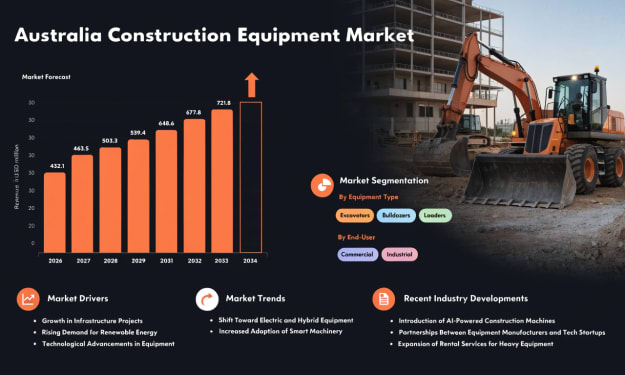
According to IMARC Group, the Australia construction equipment market reached USD 1.9 Billion in 2024 and is projected to expand to USD 2.4 Billion by 2033, exhibiting a compound annual growth rate (CAGR) of 2.50% during 2025–2033. This steady growth reflects sustained infrastructure expansion and urban development across Australia. Construction equipment—including excavators, loaders, cranes, bulldozers and road-building machinery—plays a critical role in delivering transportation networks, residential housing, commercial developments and mining operations. As Australia invests in modernization and sustainability, demand for advanced and eco-friendly equipment solutions continues to evolve.
By Kevin Cooper7 days ago in Futurism
Bioherbicides Market Outlook: Sustainable Weed Management and Agricultural Growth Opportunities
According to IMARC Group's latest research publication, The global bioherbicides market size reached USD 3.3 Billion in 2025. Looking forward, IMARC Group expects the market to reach USD 8.1 Billion by 2034, exhibiting a growth rate (CAGR) of 10.01% during 2026-2034.
By James Whitman7 days ago in Futurism



Comments
There are no comments for this story
Be the first to respond and start the conversation.