
How AI is Transforming Modern iOS Application Development
How AI Is Revolutionizing iOS Application Development in 2026

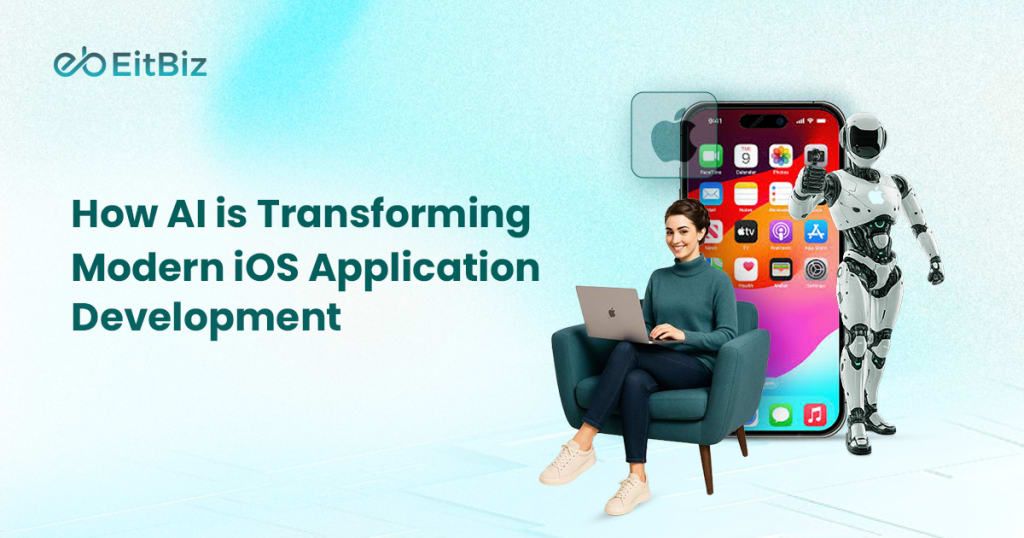
Mobile apps have changed more in the last five years than in the previous decade combined. Earlier, success in app development meant clean UI, stable performance, and useful features. Today, that is only the starting point. Users expect apps to think, adapt, and respond intelligently.
Artificial Intelligence is driving this shift. It is not replacing traditional development practices. Instead, it is reshaping how developers design, build, test, and improve applications over time.
Modern iOS Application Development now sits at the intersection of software engineering, behavioral data, and machine learning. Developers are no longer building static products. They a1re building evolving digital experiences.
This article explains, from a practical and experience-based perspective, how AI is transforming iOS development and what it actually means for developers, businesses, and users.
Why AI Became Essential in iOS Apps?
Let’s start with a simple reality: user behavior changed faster than development practices.
People use dozens of apps daily. They do not want to learn complicated interfaces anymore. They expect apps to understand context automatically.
AI helps bridge that gap. Several factors pushed AI into mainstream iOS development:
- Smartphones now include powerful neural engines capable of handling machine learning tasks locally.
- Users prefer personalized experiences instead of generic layouts.
- Privacy concerns encourage on-device intelligence rather than constant cloud processing.
- Businesses rely on behavioral insights to improve retention.
In short, AI solves real problems developers already face: slow engagement, poor retention, and overwhelming user choices.
That is why AI is becoming a practical layer inside iOS Application Development, not just an experimental feature.
Smarter Personalization Without Extra User Effort
Personalization used to mean allowing users to change settings manually. That approach rarely worked because most users never adjusted preferences.
AI changed this completely.
Now apps observe patterns quietly and improve experiences automatically. A music app learns listening habits. A shopping app notices browsing behavior. A productivity app predicts frequently used actions.
This creates smoother interactions because users spend less time configuring the app.
From a developer’s perspective, personalization works best when:
- analytics tracking starts early,
- user events are structured clearly,
- and feedback loops exist between data and UI decisions.
The goal is not complexity. The goal is relevance.
AI Is Changing How Developers Write Code
Many discussions focus only on AI inside apps, but AI is also transforming the development workflow itself.
Developers now use AI-assisted tools to:
- suggest code improvements,
- detect logical errors,
- automate repetitive tasks,
- and identify performance risks.
This does not remove the need for expertise. Instead, it removes friction.
Experienced developers still design architecture and make critical decisions. AI simply accelerates execution.
In real-world iOS Application Development, this shift means teams spend more time solving user problems and less time fixing avoidable mistakes.
On-Device Intelligence Is Redefining Privacy
Privacy has become a central concern for mobile users. Many people hesitate to share personal data unless they trust the application.
Apple’s ecosystem encourages processing data directly on the device. AI models can now run locally without sending sensitive information to servers.
This approach delivers three clear advantages:
- Faster responses
- Better offline functionality
- Stronger user trust
For example, voice recognition or photo categorization can happen entirely on the device.
Developers who design AI features with privacy in mind often see higher long-term user retention. Trust becomes a competitive advantage.
Natural Language Interaction Feels More Human
Users increasingly prefer talking or typing naturally instead of navigating deep menus.
Natural Language Processing allows apps to understand intent rather than keywords.
Consider common scenarios:
- searching files using plain language,
- asking a finance app spending questions,
- summarizing notes automatically,
- generating contextual replies.
These experiences reduce cognitive effort.
From an AEO perspective, apps that deliver direct answers quickly align better with how people now search and interact digitally.
The lesson for developers is simple: design around questions users ask, not features developers want to showcase.
Predictive Intelligence Improves Retention
Retention remains one of the hardest challenges in mobile products. Many apps lose users within the first week.
AI helps developers notice warning signs early.
Instead of waiting for uninstall data, predictive systems analyze behavior patterns such as:
- shorter sessions,
- skipped features,
- reduced interaction frequency.
Apps can then respond intelligently. A learning app may suggest easier lessons. A fitness app may adjust goals automatically.
This proactive approach changes iOS Application Development from reactive problem-solving into continuous experience optimization.
Testing Becomes Smarter and Faster
Testing every user scenario manually is nearly impossible. Device variations, user behaviors, and OS updates create countless edge cases.
AI-assisted testing tools analyze patterns across large datasets and simulate realistic usage conditions.
They can:
- detect visual inconsistencies,
- identify crash patterns,
- predict unstable releases,
- monitor performance anomalies.
Developers still validate results, but AI reduces blind spots.
Computer Vision Opens New Possibilities
AI-powered computer vision allows apps to interpret images and video in real time.
This capability expands what mobile apps can do.
Examples include:
- scanning documents instantly,
- identifying products through cameras,
- enabling augmented reality shopping,
- recognizing objects for educational tools.
Developers entering iOS Application Development today increasingly explore vision-based features because hardware now supports them efficiently.
The key insight: successful implementations focus on solving one clear problem instead of trying to recognize everything.
Accessibility Improves Through AI
AI has quietly improved accessibility across mobile apps.
Features like voice control, automatic captions, and intelligent screen descriptions help users interact more comfortably.
What makes this important is that accessibility improvements often benefit all users, not only those with disabilities.
Clearer interfaces and adaptive interactions create better usability overall.
Apps that invest in inclusive design demonstrate responsibility and long-term thinking, both important for user trust.
Challenges Developers Should Not Ignore
AI brings advantages, but it also introduces new responsibilities.
Common challenges include:
- biased training data,
- model accuracy limitations,
- increased processing demands,
- ethical considerations.
Developers must evaluate whether AI genuinely improves user experience or simply adds complexity.
The strongest products adopt AI gradually, solving specific problems first.
The Future Direction of AI in iOS Development
Looking ahead, AI will become less visible but more integrated.
Users will not notice “AI features.” They will simply experience smoother interactions.
We can expect:
- interfaces that adapt automatically,
- context-aware notifications,
- multimodal interactions combining voice, text, and visuals,
- stronger on-device intelligence.
Final Thoughts
The biggest change AI brings is philosophical. Developers are no longer building fixed products. They are building systems that learn from users over time.
Modern iOS Application Development combines engineering discipline with behavioral understanding. Success now depends on how well an app reduces effort for users.
AI works best when applied quietly and purposefully. When users achieve goals faster without noticing the technology behind it, developers have done their job well.
That is where the real transformation lies, not in artificial intelligence itself, but in creating genuinely helpful digital experiences.
About the Creator
Keep reading
More stories from Emily Carter and writers in Futurism and other communities.
Non-stick Coatings Market Overview: Production Trends, Raw Materials & Demand Forecast
According to IMARC Group's latest research publication, global non-stick coatings market size reached USD 2.17 Billion in 2024. Looking forward, IMARC Group expects the market to reach USD 3.19 Billion by 2033, exhibiting a growth rate (CAGR) of 4.4% during 2025-2033.
By sujeet. imarcgroupa day ago in Futurism



Comments
There are no comments for this story
Be the first to respond and start the conversation.