
How AI Is Changing Our Daily Lives: 7 Ways You Didn’t Expect
From digital assistants to dating apps, here’s how artificial intelligence is quietly reshaping your everyday world—often without you realizing it.
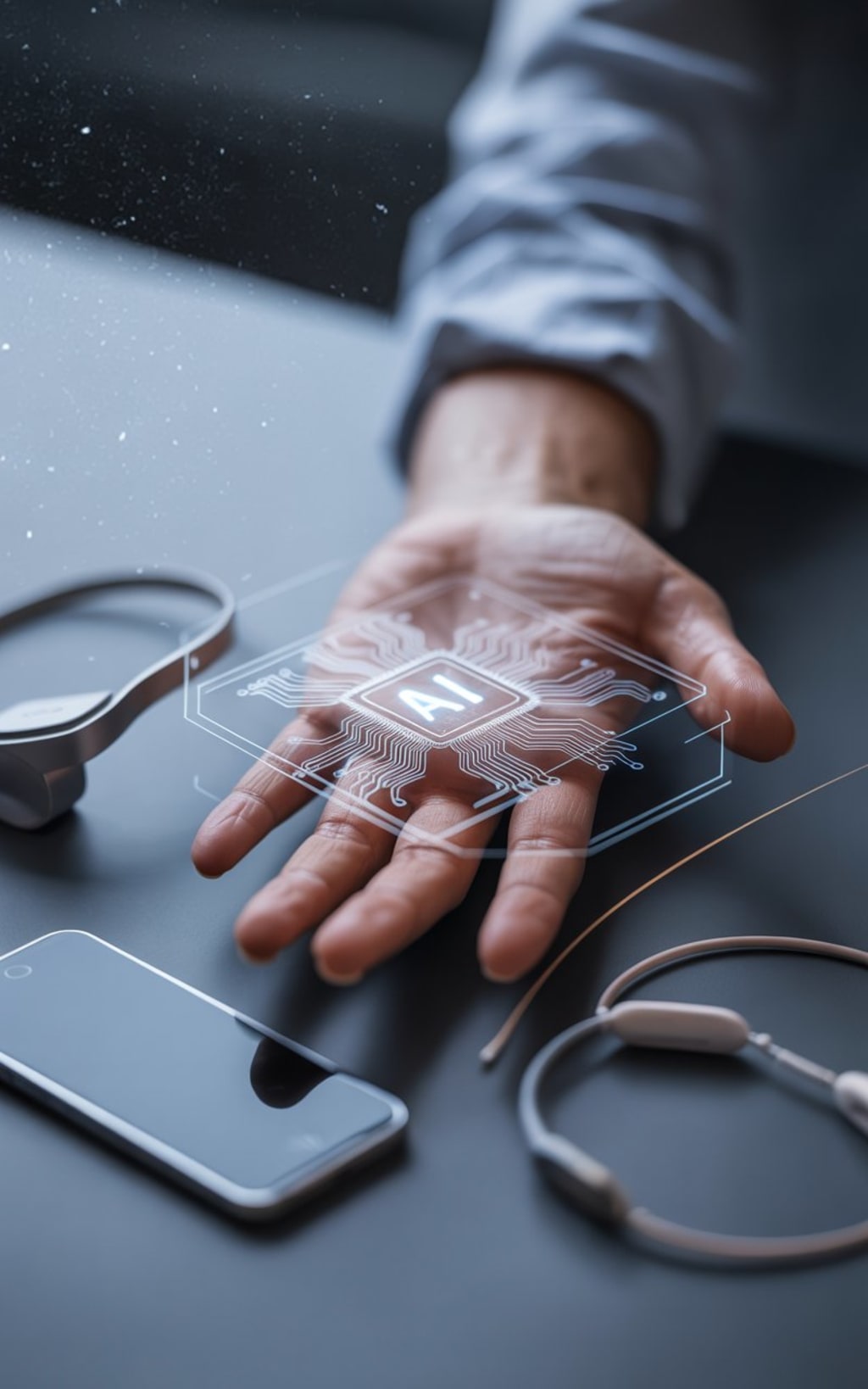
Artificial Intelligence (AI) used to be something we associated with sci-fi movies, robotic assistants, or tech labs buzzing with machines. But fast-forward to 2025, and AI has quietly slipped into our daily lives—not just in obvious ways, but in subtle, surprising ones that we barely notice. It’s reshaping how we eat, work, shop, love, and even dream. This isn’t a look into the future—it’s already here.
Here are 7 unexpected ways AI is transforming your life—and you probably didn’t even realize it.
---
1. Your Digital Assistant Is Studying You
Whether you’re asking Siri for directions, setting an alarm with Alexa, or using Google Assistant to send a text, these voice-activated helpers are doing more than following commands—they’re learning. Every interaction trains the system to recognize your preferences, your routines, and even your tone of voice when you're stressed.
AI isn’t just listening—it’s observing. These systems adjust music based on your mood, recommend reminders based on your patterns, and even learn when you’re most productive. In many ways, your assistant now understands you better than your friends do.
---
2. AI is Writing Your Emails—and Maybe This Article
Open Gmail, and you’ve likely noticed those eerily perfect suggested replies. That’s AI at work, predicting your tone and the context of the conversation. Apps like Grammarly don’t just correct your grammar anymore—they rewrite your tone, making your boss think you're twice as professional.
Even content creation is changing. From student essays to business reports, AI-powered writing tools (like ChatGPT, Jasper, and Copy.ai) are increasingly doing the heavy lifting. But here's the twist: it's not just about automation. It’s about augmentation. Writers now use AI to brainstorm ideas, organize thoughts, and polish their prose. It’s like having a co-writer who doesn’t sleep.
---
3. AI Knows Your Taste Before You Do
Have you ever discovered a song, Netflix show, or YouTube video that felt too perfect—like it was made just for you? That’s not coincidence. AI recommendation engines track your viewing history, watch time, pause moments, and more to predict what you'll love next.
But it goes deeper. Spotify’s "Discover Weekly" and TikTok’s For You Page don’t just analyze your behavior—they shape it. AI isn't just reflecting your taste anymore. It’s subtly influencing it, nudging your preferences in directions you might not have explored otherwise. In a sense, you’re co-creating your personality with AI.
---
4. AI Is Playing Matchmaker
Online dating has evolved beyond swiping right. Apps like Tinder, Bumble, and Hinge now use AI to recommend matches based on complex data: chat patterns, photo preferences, response times, and even your use of emojis.
Some apps have introduced AI bots that simulate conversations to coach you through dating or analyze emotional tone in messages to predict compatibility. It’s no longer just about attraction—it’s about data-driven chemistry.
And with emotion-tracking AI becoming more sophisticated, we might be heading toward a future where an app can tell you: “Don’t date Alex. Your stress levels rise every time they text.”
---
5. Your Shopping Habits Are Mapped by Machines
Have you ever just thought about a product and then seen an ad for it? While it may feel like AI is reading your mind, what's actually happening is even more fascinating—and a little creepy.
AI tracks your browsing history, social media behavior, scrolling speed, and even how long your eyes linger on a product (if you're using certain camera-enabled devices). Retailers then use predictive algorithms to decide what ad to show, when to show it, and how often.
More interestingly, AI is behind dynamic pricing. The same flight or Amazon product can show you a different price depending on your location, time of day, or device. It’s personalized pricing—and it’s rewriting the rules of shopping.
---
6. AI Is Monitoring Your Health—Silently
Healthcare is undergoing an AI revolution. From smartwatches to health apps, AI tracks your heart rate, sleep cycle, activity level, and more. But what’s surprising is how early it’s catching issues.
In 2025, AI can now detect signs of diseases like atrial fibrillation or sleep apnea before symptoms become obvious—sometimes months in advance. Even mental health apps are using AI to analyze your voice, typing patterns, and interaction habits to predict anxiety or depression episodes.
Hospitals are also using AI for diagnostics. Machines trained on millions of scans now outperform doctors at spotting certain cancers, making faster and more accurate diagnoses. In essence, AI might save your life—before you even know you’re sick.
---
7. It’s Quietly Shaping Your Decisions
The most unexpected way AI changes our lives isn’t through gadgets or apps—it’s through influence.
AI-powered algorithms decide what news you see, which posts get prioritized on your feed, and which comments are buried. They frame your worldview. Whether you're aware of it or not, AI helps shape your opinions, fears, values, and even your sense of reality.
For example, if you’re reading mostly negative news, it’s not always because the world is worse—it’s because AI has learned that negativity keeps you engaged. In this way, AI isn’t just a mirror—it’s a filter. And sometimes, it’s a manipulator.
---
Final Thoughts: Welcome to the Invisible Revolution
We’re living in an age where AI has become invisible infrastructure—as vital and as unnoticed as electricity. It’s not just changing jobs or industries. It’s rewiring the fabric of our daily experience.
And here’s the truth: AI is only as good (or as dangerous) as the data it learns from—and the humans who build it. So, as we rush into this AI-driven era, we must ask: who’s really in control? The machine, or the person who trained it?
Either way, AI isn’t coming. It’s already here. And it’s changing your life—even when you’re not looking.
About the Creator
Keep reading
More stories from Abubakar Khan and writers in Futurism and other communities.
The Impact of AI on the Future of Jobs: What You Need to Know
Introduction Artificial Intelligence (AI) is no longer just a buzzword. It is a reality that is transforming how industries operate, how businesses function, and most importantly, how jobs are created and reshaped. From automating mundane tasks to revolutionizing entire sectors, AI is slowly but steadily influencing the labor market. While many fear job displacement due to automation, others see AI as an opportunity to enhance human productivity and create new, innovative job roles. In this article, we will dive deep into how AI is affecting the job market, what future trends we should expect, and how you can prepare yourself for the inevitable shift.
By Abubakar Khan5 months ago in Futurism
About Binding Prometheus
I want to start actively advocating on behalf of my own work, and the most valuable part of my canon is, without a doubt, Binding Prometheus, the play I have been working on since 2019 and only finished in 2023 as part of my MA. The play itself is an amalgamation of a million different inspirations. On one end, it evokes the Ancient Greek myth-play, deriving its own title from the earliest extant work of Western drama we have, Aeschylus’s Prometheus Bound. On the other end, it borrows significantly from the sci-fi bulwarks from over the years, namely Mary Shelley’s Frankenstein and Karel Capek’s Rossum’s Universal Robots. The play could be an episode of Black Mirror, I fear. I don’t know. I’ve only ever seen one episode of Black Mirror.
By Steven Christopher McKnight20 days ago in Futurism
UAE Board Games Market: Board Game Cafés, Imported Titles & Rising Popularity
According to IMARC Group's latest research publication, The UAE board games market size was valued at USD 101.66 Million in 2025 and is projected to reach USD 227.1 Million by 2034, growing at a compound annual growth rate of 9.34% from 2026-2034.
By Abhay Rajput6 days ago in Futurism



Comments (1)
It's crazy how AI has seeped into our daily lives without us really noticing. Like you said, our digital assistants are basically learning our every move. And those suggested email replies? So creepy yet useful. It makes me wonder how much more of our privacy we're sacrificing as AI gets smarter. Also, with AI writing tools, are we losing the essence of human creativity? How do we ensure our work still reflects our unique voices?