
Home Office Furniture Market: Premium Aesthetic Designs, Lifestyle Shift & Industry Growth
Consumers invest in premium setups to enhance work-from-home efficiency.

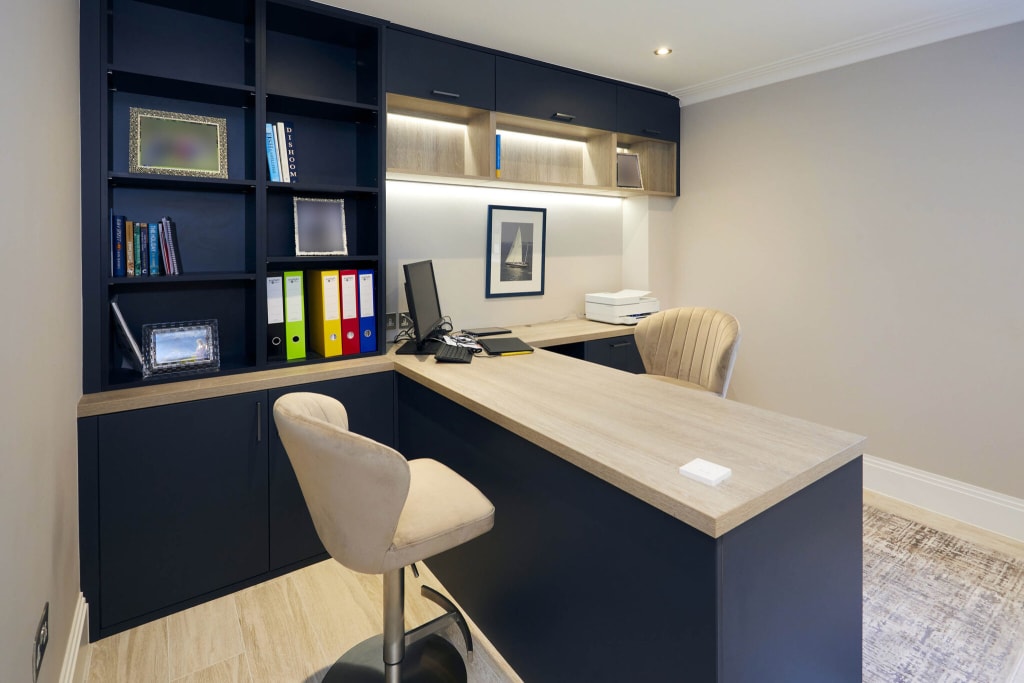
According to IMARC Group's latest research publication, global home office furniture market size reached USD 31.0 Billion in 2025. Looking forward, IMARC Group expects the market to reach USD 50.3 Billion by 2034, exhibiting a growth rate (CAGR) of 5.52% during 2026-2034.
How AI is Reshaping the Future of Home Office Furniture Market
Smart Ergonomic Adjustments and Posture Monitoring: AI-powered desks and chairs track sitting patterns and posture in real time, automatically adjusting height, lumbar support, and tilt.
Personalized Workspace Optimization: Machine learning analyzes work patterns to recommend optimal furniture arrangements and lighting adjustments.
Predictive Maintenance and Quality Control: Computer vision technology enables automated inspections during furniture manufacturing, identifying defects and quality variations with exceptional accuracy.

Home Office Furniture Industry Overview:
The remote work revolution continues reshaping how people design their home workspaces, with hybrid models becoming a permanent fixture across industries. Corporate policies now mandate two to three remote days weekly, transforming one-time pandemic purchases into predictable replacement cycles. Employers are subsidizing desk-chair bundles to reduce workers' compensation risks, while insurance carriers bundle premium discounts with verified ergonomic deployments.
Home Office Furniture Market Trends & Drivers
The explosion of digital jobs and remote work arrangements is fundamentally driving home office furniture demand. By the end of this decade, digital employment is estimated to grow around 25%, with professionals increasingly establishing dedicated home offices to complete their work. As of late last year, over 10% of new U.S. job postings openly advertised remote or hybrid work opportunities, showing the sustained trend toward flexible workplaces.
E-commerce platforms have revolutionized how consumers shop for home office furniture, offering unprecedented convenience and selection. Online retailers operate around the clock, enabling busy professionals to browse and purchase furniture whenever convenient. Augmented reality tools on e-commerce sites have cut cart-abandonment rates significantly, allowing buyers to visualize furniture in their actual spaces through 3D previews before committing to purchases.
Sustainability and health consciousness are creating new growth avenues in the home office furniture market. Consumers increasingly prioritize eco-friendly materials, with around 40% actively seeking furniture made from recycled metal, reclaimed wood, and other sustainable resources. Manufacturers are responding with innovations like bio-renewable packaging derived from used cooking oil, reducing carbon footprints while maintaining product quality and food safety compliance.
Leading Companies Operating in the Global Home Office Furniture Industry:
- Ashley Furniture Industries Inc.
- Haworth Inc.
- Herman Miller Inc.
- HNI Corporation
- Inter IKEA Systems B.V.
- Kimball International Inc.
- Knoll Inc
- KOKUYO Co. Ltd.
- Okamura Corporation
- Steelcase Inc.
- Teknion Corporation
Home Office Furniture Market Report Segmentation:
By Product Type:
- Seating
- Storage Units and File Cabinets
- Desks and Tables
- Others
Seating represents the largest segment with around 35.3% of market share, as ergonomic chairs are essential for maintaining comfort and productivity during extended work hours.
By Material Type:
- Wood
- Metal
- Plastic
- Glass
- Others
Wood leads the market with around 54.6% share due to its timeless aesthetic, durability, and versatility across different design styles and home decor preferences.
By Price Range:
- Low
- Medium
- High
Medium price range dominates with around 39.5% of market share, striking the optimal balance between affordability and quality that appeals to the broadest customer base.
By Distribution Channel:
- Supermarkets and Hypermarkets
- Specialty Stores
- Online Stores
- Others
Specialty stores command the largest share at around 45.3%, offering expert guidance, extensive product knowledge, and customization options that general retailers cannot match.
Regional Insights:
- North America (United States, Canada)
- Asia Pacific (China, Japan, India, South Korea, Australia, Indonesia, Others)
- Europe (Germany, France, United Kingdom, Italy, Spain, Russia, Others)
- Latin America (Brazil, Mexico, Others)
- Middle East and Africa
Europe exhibits a clear dominance in the home office furniture market with over 37.5% market share, driven by strong remote work adoption, high consumer spending power, and emphasis on ergonomic workspace solutions.
Recent News and Developments in Home Office Furniture Market
- August 2025: Steelcase and Studio 7.5 introduced the Zeph Side Chair to enliven and add comfort to shared workspaces, expanding options for flexible work environments that support collaboration and individual focus.
- May 2024: Haworth completed acquisition of Fellowes, a leading manufacturer of business machines and office products, expanding its product portfolio and strengthening its position in comprehensive office solutions.
- April 2024: Herman Miller and Studio 7.5 introduced the Zeph Side Chair designed to enhance comfort in shared workspaces, reflecting ongoing innovation in furniture that supports hybrid work models.
Note: If you require specific details, data, or insights that are not currently included in the scope of this report, we are happy to accommodate your request. As part of our customization service, we will gather and provide the additional information you need, tailored to your specific requirements. Please let us know your exact needs, and we will ensure the report is updated accordingly to meet your expectations.
About the Creator
sujeet. imarcgroup
With 2 years of hands-on experience at IMARC Group, I have conducted in-depth market research and analysis across diverse industries including technology, healthcare, agriculture, and consumer goods.
Keep reading
More stories from sujeet. imarcgroup and writers in Futurism and other communities.
Biocides Market: Agriculture & Crop Protection, Biosecurity Measures & Growth Outlook
According to IMARC Group's latest research publication, global biocides market size reached USD 9.5 Billion in 2024. Looking forward, IMARC Group expects the market to reach USD 13.9 Billion by 2033, exhibiting a growth rate (CAGR) of 4.12% during 2025-2033.
By sujeet. imarcgroupabout 19 hours ago in Futurism
GCC Bridge Construction Market Analysis: Industry Overview, Key Players & Growth Outlook
According to IMARC Group's latest research publication, GCC bridge construction market size was valued at USD 25.56 Billion in 2025. The market is projected to reach USD 40.94 Billion by 2034, exhibiting a growth rate (CAGR) of 5.38% during 2026-2034.
By Abhay Rajputabout 16 hours ago in Futurism
Smoothies Market Trends: Functional Ingredients, Clean Label Appeal & Forecast to 2034
Rising health awareness, busy lifestyles, and preference for convenient, nutritious foods are driving healthy snack demand, supported by clean-label trends, product innovation, and expanding retail and online distribution channels. According to IMARC Group's latest data, the global smoothies market size was valued at USD 18.0 Billion in 2025. Looking forward, IMARC Group estimates the market to reach USD 25.6 Billion by 2034, exhibiting a CAGR of 3.98% from 2026-2034.
By Andrew Sullivan2 days ago in Futurism
The Light Turns
It's Tuesday 7:13 a.m. A cold and clear November morning awaits Ray on his morning commute. Ray rubs his hands together in the front seat of his Subaru. He turns the air temperature up, but keeps the air on low until the air warms up. He looks at the backup camera screen and reverses the Subaru out of his driveway onto Trimble Road.
By John R. Godwin6 days ago in Fiction




Comments
There are no comments for this story
Be the first to respond and start the conversation.