
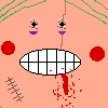

Only one thing comes to me when I see large sparkling eyes, vividly colored hair, an ambiguous nose, and an overdone facial expression.
Can you figure out what it is?
If you answered Anime, congratulations, you have just read an otaku's thoughts!
Anime (pronounced "Ah-nee-may") is a kind of Japanese animation. They have their own flair, which may manifest itself in unexpected and amazing ways. Anime also has its own sense of humor and way of thinking. It might be profound and serious, or it can be the silliest and craziest thing you've ever seen (like "Lucky Star", "Kill Me Baby") and craziest thing you've ever seen (like "Death Note", "Gintama"). Most anime programs are based on popular manga (Japanese comics), but they are given a bit more life. Anime often addresses more serious issues than traditional cartoons. Cartoons are regarded as a type of entertainment for youngsters in the United States. People of all ages (even newborn newborns!) watch anime in Japan. Most episodes and movies are aimed at children, adolescents, or young adults, but there are also numerous anime aimed at older audiences, including businessmen and housewives!
In Japanese, the word "Anime" is an abbreviated pronunciation of "animation," which refers to all animation. Outside of Japan, the term anime refers to Japanese animation or a Japanese-distributed animation style that is marked by colorful visuals, vivid characters, and magical themes. Japanese animation originated in the twentieth century. Katsudo Shashin is credited as being the first Japanese animation. The Great Kanto earthquake of 1923 caused enormous devastation, including the loss of the first Anime Studios and anime works, leaving Kouchi's Namakura Gatana as the oldest surviving animation. Otogi Manga Calendar, which broadcast from 1961 to 1964, was the first anime television series.
My first exposure to anime was in fourth grade, when I watched "City Hunter" on the Animax channel. Though I had seen anime (the plural of anime) such as "Doraemon," "Shinchan," "Avatar-The Last Airbender," "Summer Days with Coo," "AstroBoy," "Dragon Ball-Z," and "Naruto" in the past, I had not realized the profound sense of anime until it was dubbed in Hindi (rather I would say "contaminated" instead of "dubbed" by old, ridiculous male voices in Hindi who would crack unnecessary, slap-stick jokes deviating viewers from the plot and land you in a hotch-potch of indianised anime). My sister (three years younger than me, though I refuse to admit she is more mature than me) developed an unusual interest in Japanese anime such as "Tears to Tiara" and "Stigma of the Wind," which aired on Animax: which I found strange at the time because my "patriotic inertia" would prevent me from accepting anything other than Indian products. I was first put off by the fact that all of the voice actors were Japanese, and in order to follow the tale, I had to read the English subtitles and connect the speech with the video presented, which needed a great deal of concentration. I couldn't accomplish all of those exhausting duties at the same time, so I went back to my old TV channels: Cartoon Network, Nickolodeans, Hungama, Pogo, Boomerang, and Jetix.
After a lengthy absence, I resumed experimenting with my talents in comprehending anime in class seven, which proved to be a success when I first indulged in anime such as "Hayate the Combat Butler" and "Fairy Tail." Oh! What a delectable poison! After a long day at school, tuition, swimming lessons, painting and music courses, and a slew of other activities, all I wanted to do was sit back and relax and watch these anime. Nothing mattered to me at the moment, not even my parents, friends, or instructors. In those imaginary regions of pleasure, I could deal with my setbacks and pains just as readily as I dealt with my achievements. Nothing troubled me, except when I had to answer phone calls or open the door if a visitor arrived when the anime episodes were playing. However, anime had little effect on my studies because after watching a two-hour long program, I suffered from PADS (Post Anime Depression Syndrome), which caused me to feel guilty about wasting time, which was exacerbated by my mother's rebuke (I would like to describe this situation as "Kata Ghaye nuun-er Chheta"), and this guilt would propel me to study harder, concentrate, and work for longer hours, which became a daily routine for me; so I
As a result, I would want to recommend that all guardians let their children to watch anime since it worked for me (maybe I have unusual wirings in my brain!). Anime can undoubtedly help you improve your literary, linguistic, and analytical abilities. More significantly, it would provide an enormous supply of entertainment, much above the league of everyday Indian soaps.
Understanding the root culture is critical to understanding the narrative, whether it is Japanese anime, Korean Aeni webtoons, Chinese Manhua Anime, or American comedies (which I suffered when I was novice in watching anime). If you've ever seen an anime, you've undoubtedly noticed that the characters behave differently and that things in general (such housing, transportation, dining, and so on) are a little different than you're accustomed to. The artwork is perhaps the most noticeable distinction between Japanese animation and others, with enormous eyes (bigger than the nose), brilliantly colored hair, certain well-endowed figures, and exaggerated emotional expressions and actions being characteristic of anime. Because anime is hand-drawn, it is detached from reality, giving a perfect avenue for escapism into which spectators may easily immerse themselves. Anime production focuses less on animation movement and more on the reality of surroundings such as "The Garden of Words."
Most anime opening and credit sequences are backed by popular bands performing Japanese rock or pop songs linked to the anime series. Some of my favorite anime songs include "Nanairo Namida" by Tomato n' Pine from the anime "Beelzebub" and "Just Awake" from the anime "Hunter X Hunter."
Because there are so many various sorts of anime, they are divided into genres. Some of them are: Action, Music, Mecha, Adventure, Mystery, Bishounen, Yuri, Yaoi, Akuma, Seinen, Shoujo, Shounen, Kodomo, Slice of Life, and many more. Whether you're a die-hard anime fan (like myself, known as a "otaku"), a casual spectator, an inquisitive bystander, or a non-anime domain commoner, anime genres will provide you with some fundamental information and help you navigate the anime world with ease and enjoyment.
I'd like to share some remarkable anime phrases that have stayed with me:
• "Ghost in the Shell 2: Innocence" star Motoko Kusanagi
"We mourn for a bird's blood but not for a fish's blood. Those who have a voice are blessed."
• "Liar Game's" Shinchi Akiyama
"People SHOULD be questioned. This notion is often misunderstood. Doubt is a natural aspect of getting to know someone. Many individuals mistake "trust" with "giving up on attempting to understand others," which is considerably worse than disbelieving. It is, in fact, 'apathy.'"
• "My Teen Romantic Comedy SNAFU" star Hachiman Hikigaya
"If the truth is painful,
Then
The lie must be kind.
Then
Kindness must be lied about."
You may watch anime on television by subscribing to Animax, Aniplus, AnimeCental, or TV Tokyo, or on the internet at sites such as animehaven.to, kissanime, Funimation.com, Netflix, Crunchyroll.com, hulu, YouTube, and others.
ENJOY ANIME WATCHING!
About the Creator
Rahau Mihai
Hi! Come to my profile and you will see really useful things or something to relax you !
Keep reading
More stories from Rahau Mihai and writers in Futurism and other communities.
Animal Nutrition Market Trend, Outlook 2025
Animal nutrition is concerned with the nutritional requirements of animals, primarily those in food production and agriculture, but also in aquariums, zoos, and wildlife management. Animal nutrition is critical for agricultural animal production and health. Various organizations and initiatives, such as the National Animal Nutrition Program (NANP), provide as a conduit for identifying high-priority animal nutrition issues. These organizations provide a holistic and integrated strategy to assembling, collecting, sharing, synthesizing, and disseminating science-based knowledge and instructional materials on animal nutrition in order to boost high-priority research across agricultural species. Several nations are putting in place mechanisms that redefine the responsibilities of business and government in providing safe animal feed. The FAO/WHO Codex Alimentarius Commission established a Good Animal Feeding Code of Practice in 2004. The handbook provides thorough and up-to-date information as well as practical advice to assist producers and stakeholders in understanding the production and distribution chain in order to comply with the legal framework.
By Rahau Mihai4 years ago in Journal
Tesla Pi Phone: The Truth Behind the Internet’s Favorite Mythical Smartphone
In the fast-moving world of consumer technology, few things generate as much consistent buzz as a product that doesn’t actually exist. For years, the internet has been saturated with spectacular renders, wild specification leaks, and enthusiastic viral videos detailing the impending arrival of the Tesla Pi Phone (sometimes called the Model Pi).
By Mohammad Hamidabout 14 hours ago in Futurism
Vertical AI Market Projected to Reach USD 115.4 Billion By 2034
The Global Vertical AI Market is projected to reach approximately USD 115.4 Billion by 2034, increasing from USD 12.9 Billion in 2024, and it is expected to grow at a CAGR of 24.5% during the forecast period from 2025 to 2034. This expansion is supported by the increasing demand for industry-specific artificial intelligence solutions that address specialized operational requirements.
By Roberto Crumabout 4 hours ago in Futurism


Comments
There are no comments for this story
Be the first to respond and start the conversation.