
Heart Pump Device Market Size and Forecast 2025–2033
Advanced Mechanical Circulatory Support Systems Transforming Global Heart Failure Care


Heart Pump Device Market Overview
The global Heart Pump Device Market is entering a transformative decade as cardiovascular diseases (CVDs) continue to rise worldwide and healthcare systems increasingly rely on advanced mechanical circulatory support (MCS) technologies. According to Renub Research, the heart pump device market is projected to reach US$ 7.72 billion by 2033, growing from US$ 2.55 billion in 2024, at a robust CAGR of 13.1% from 2025 to 2033.
This impressive growth trajectory is driven by a combination of factors: the escalating burden of heart failure, rapid technological innovation in implantable and extracorporeal pumps, an aging global population, rising acceptance of minimally invasive procedures, and expanding awareness of advanced heart failure management options. As heart transplantation remains limited by donor shortages, heart pump devices are increasingly being used as both life-saving bridges and long-term therapies.
Global Heart Pump Device Industry Landscape
Heart pump devices play a critical role in supporting or replacing the pumping function of the heart in patients suffering from severe or end-stage heart failure. These devices include ventricular assist devices (VADs), intra-aortic balloon pumps (IABPs), extracorporeal membrane oxygenation (ECMO) systems, and total artificial hearts (TAHs). Once considered niche technologies, these devices are now becoming central to modern cardiac care.
The global healthcare community is facing an unprecedented cardiovascular crisis. According to British Heart Foundation (2024) data, approximately 620 million people worldwide—nearly 1 in every 13 individuals—are living with heart and circulatory disorders. Asia and Australia account for around 340 million patients, while Europe contributes another 100 million. Coronary (ischemic) heart disease alone affects nearly 200 million people globally, making it the most common cardiovascular diagnosis worldwide.
These staggering numbers highlight the urgent need for advanced therapies that can improve survival and quality of life. Heart pump devices address this need by stabilizing cardiac output, reducing symptoms, and allowing patients to live longer and more active lives. Continuous R&D is further improving device durability, size, and patient compatibility, accelerating adoption across hospitals and specialized cardiac centers.
Key Growth Drivers of the Heart Pump Device Market
1. Rising Adoption of Mechanical Circulatory Support (MCS)
Mechanical circulatory support devices have become indispensable in managing advanced heart failure, especially as donor hearts remain scarce. Ventricular assist devices (VADs) are increasingly used as both temporary and permanent solutions.
Data from the Scientific Registry of Transplant Recipients (SRTR) shows that among adult patients listed for heart transplants between 2016 and 2018, only 56.2% received a transplant within the first year, while many remained on waiting lists or required device support. Even after three years, nearly one-third of patients had not received a transplant, reinforcing the growing dependence on mechanical heart support.
MCS devices significantly improve survival rates, enhance quality of life, and serve as reliable bridge-to-transplant or destination therapies—making them a cornerstone of modern cardiology.
2. Growing Demand for Destination Therapy and Bridge-to-Transplant Solutions
Heart pump devices are increasingly used as long-term or permanent solutions for patients who are not eligible for transplantation. This is especially critical given the rising prevalence of heart failure globally.
In the United States alone, more than 6.5 million people over the age of 20 are living with heart failure, with nearly 960,000 new cases diagnosed each year. Similar trends are being observed in Europe and Asia-Pacific, further fueling global demand for VADs and artificial heart systems.
Destination therapy has evolved from a last resort into a mainstream treatment pathway, creating sustained demand for next-generation heart pump devices with improved longevity and patient comfort.
3. Continuous Technological Advancements
Technological innovation is reshaping the heart pump device market. Miniaturization, improved biocompatible materials, enhanced battery life, and smarter control systems have significantly improved patient outcomes.
Companies like SynCardia are pioneering next-generation total artificial heart (TAH) systems for patients with end-stage biventricular failure. The integration of remote monitoring, AI-driven diagnostics, and data analytics allows clinicians to track patient health in real time, reduce complications, and personalize therapy.
These advancements are not only improving clinical outcomes but also expanding the eligible patient population, driving market expansion across both developed and emerging economies.
Challenges Limiting Market Expansion
High Cost of Devices and Procedures
Despite their life-saving potential, heart pump devices remain expensive. Manufacturing requires sophisticated engineering, advanced materials, and rigorous regulatory compliance, all of which increase costs. Additionally, implantation surgery, postoperative care, and long-term maintenance significantly raise overall treatment expenses.
In low- and middle-income countries, limited insurance coverage and insufficient government support restrict patient access, creating a major barrier to widespread adoption.
Complex Surgical Requirements
Implanting devices such as VADs requires highly specialized cardiac surgeons, advanced hospital infrastructure, and intensive postoperative care. These requirements limit availability in rural and resource-constrained healthcare settings.
The complexity of procedures also increases the risk of complications such as infections or mechanical failure if follow-up care is inadequate. As a result, even well-funded hospitals may face challenges in scaling these therapies.
Regional Market Insights
United States Heart Pump Device Market
The United States leads the global heart pump device market due to its advanced healthcare infrastructure, high heart disease prevalence, and strong reimbursement systems. The country is a hub for innovation, early technology adoption, and clinical research.
Major hospitals and academic centers routinely perform complex cardiac procedures, while domestic manufacturers drive continuous innovation. An aging population and growing awareness of advanced cardiac care ensure sustained demand for heart pump devices across the U.S.
Germany Heart Pump Device Market
Germany dominates the European market thanks to its robust healthcare system, strong R&D ecosystem, and early adoption of advanced cardiac technologies. Companies such as Berlin Heart have introduced innovative solutions like the EXCOR VAD, widely used in pediatric and adult patients.
According to the Deutscher Herzbericht 2022, coronary heart disease accounted for 121,172 deaths in 2021, making it the country’s leading cause of mortality. This high disease burden continues to support market growth.
China Heart Pump Device Market
China represents one of the fastest-growing markets globally, driven by a rapidly aging population, rising cardiovascular disease prevalence, and government-backed healthcare reforms.
The Annual Report on Cardiovascular Health and Diseases in China (2021) estimates that 8.9 million people are living with heart failure. Local innovation is accelerating, with companies like Yongrenxin Medical Instrument Co. Ltd. raising nearly US$ 100 million in Series A funding to develop heart failure treatment platforms.
Strategic collaborations between international and domestic manufacturers are further strengthening the market ecosystem.
Saudi Arabia Heart Pump Device Market
Saudi Arabia is emerging as a key Middle Eastern market, supported by government investments in healthcare infrastructure and the expansion of specialized cardiac centers. The rising prevalence of lifestyle-related cardiovascular conditions is driving demand for advanced heart failure treatments.
Government initiatives to modernize healthcare systems and partnerships with international medical device companies are expected to accelerate adoption in the coming years.
Heart Pump Device Market Segmentation
By Product
Ventricular Assist Devices (VADs)
Intra-Aortic Balloon Pumps (IABPs)
Extracorporeal Membrane Oxygenation (ECMO)
Total Artificial Hearts (TAHs)
By Type
Implanted Heart Pump Devices
Extracorporeal Heart Pump Devices
By End Use
Hospitals
Cardiac Centers
Research Institutes
Regional Outlook
North America: United States, Canada
Europe: Germany, France, Italy, Spain, UK, Belgium, Netherlands, Turkey
Asia-Pacific: China, Japan, India, Australia, South Korea, Thailand, Malaysia, Indonesia, New Zealand
Latin America: Brazil, Mexico, Argentina
Middle East & Africa: Saudi Arabia, UAE, South Africa
Competitive Landscape
The global heart pump device market is highly competitive, with established multinational players and innovative startups driving technological progress. Key players include:
Abbott Inc.
Getinge AB
Teleflex Incorporated
Fresenius SE & Co. KGaA
LivaNova PLC
CorWave SA
JARVIK HEART, INC.
ABIOMED
These companies focus on product innovation, strategic collaborations, clinical trials, and geographic expansion to strengthen their market positions.
Final Thoughts
The Heart Pump Device Market is poised for exceptional growth through 2033, fueled by the global rise in cardiovascular diseases, expanding adoption of mechanical circulatory support, and continuous technological breakthroughs. While high costs and surgical complexity remain challenges, innovation and healthcare infrastructure development are steadily improving access.
As heart pump devices evolve from temporary support systems to long-term life-saving solutions, they are redefining the future of heart failure care. With strong momentum across North America, Europe, and Asia-Pacific, and increasing investments in emerging markets, the industry is set to play a vital role in extending and improving millions of lives worldwide.
About the Creator
Sushant. Renub Research
I’m Sushanta Halder, Digital Marketing Manager at Renub Research with 15+ years in SEO, content, PPC & lead generation. Passionate about data-driven growth strategies.
Keep reading
More stories from Sushant. Renub Research and writers in Futurism and other communities.
Business Process Outsourcing Market Forecast 2025–2033
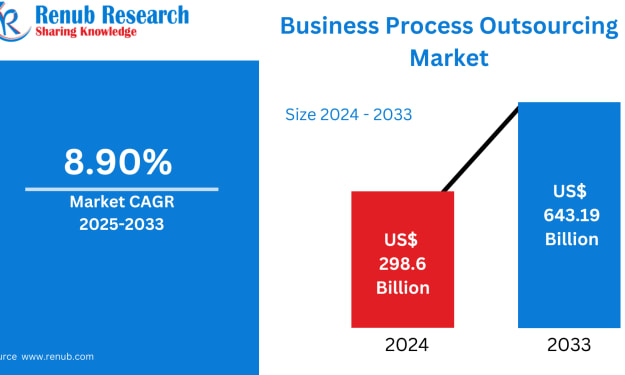
Introduction: The Expanding Role of Outsourcing in the Global Economy The global Business Process Outsourcing (BPO) market has evolved from a cost-saving tactic into a strategic enabler of digital transformation and operational excellence. According to Renub Research, the BPO market was valued at US$ 298.6 billion in 2024 and is projected to reach US$ 643.19 billion by 2033, expanding at a CAGR of 8.90% during 2025–2033.
By Sushant. Renub Researchabout 8 hours ago in Futurism
About Binding Prometheus
I want to start actively advocating on behalf of my own work, and the most valuable part of my canon is, without a doubt, Binding Prometheus, the play I have been working on since 2019 and only finished in 2023 as part of my MA. The play itself is an amalgamation of a million different inspirations. On one end, it evokes the Ancient Greek myth-play, deriving its own title from the earliest extant work of Western drama we have, Aeschylus’s Prometheus Bound. On the other end, it borrows significantly from the sci-fi bulwarks from over the years, namely Mary Shelley’s Frankenstein and Karel Capek’s Rossum’s Universal Robots. The play could be an episode of Black Mirror, I fear. I don’t know. I’ve only ever seen one episode of Black Mirror.
By Steven Christopher McKnight22 days ago in Futurism
The CEO of Everything
They say "jack of all trades, master of none," but they forgot to mention the part where the jack of all trades is also the camera woman, the makeup artist, and the person currently yelling at a tangled Wii microphone cable in a her own bathroom while recording herself singing and trying to make it look realistic and professional. (As professional as you can make it with nothing but a cell phone camera and a mic that doesn't work)
By Sara Wilson5 days ago in Humans


Comments
There are no comments for this story
Be the first to respond and start the conversation.