
Global Textile Market Size & Forecast 2025–2033: Innovation, Sustainability, and Expanding Demand Redefine a Trillion-Dollar Industry
From Fashion to Technical Applications, the Textile Industry Enters a New Era of Smart, Sustainable, and High-Performance Growth


Global Textile Market Outlook
The global textile market is undergoing a remarkable transformation, driven by innovation, sustainability, and rapidly changing consumer preferences. According to Renub Research, the market is anticipated to reach US$ 3,606.70 billion by 2033, up from US$ 1,955.22 billion in 2024, expanding at a CAGR of 7.04% during the forecast period 2025–2033.
This strong growth trajectory is fueled by rising demand for clothing, home furnishings, and technical textiles, along with breakthroughs in sustainable fibers, digital printing, and smart textile technologies. Emerging markets across Asia-Pacific and the Middle East are also playing a decisive role, as growing populations, urbanization, and disposable incomes continue to reshape consumption patterns.
Textiles remain one of the most essential materials in human life. Produced by interlacing natural or synthetic fibers through weaving, knitting, or felting, textiles serve countless purposes—from everyday clothing and home décor to medical, automotive, and construction applications. While fashion remains the dominant consumer, the rise of industrial and performance textiles is expanding the industry’s scope beyond traditional boundaries.
Textiles: A Foundation of Modern Life
Textiles are deeply embedded in global economic and cultural systems. The largest share of textile consumption still comes from apparel and fashion, serving a diverse global population with varying cultural, climatic, and functional needs. However, textiles are equally vital in home furnishings (carpets, curtains, upholstery), healthcare (bandages, gowns), transportation (automotive interiors), and construction (insulation, geotextiles).
Countries such as China, India, and Bangladesh dominate textile manufacturing, benefiting from scale, labor availability, and integrated supply chains. Meanwhile, the United States and Europe lead in innovation, premium textiles, and sustainability-driven transformation. With global awareness increasing around environmental responsibility, the textile industry is rapidly shifting toward eco-friendly materials, ethical sourcing, and circular fashion models.
Key Growth Drivers of the Global Textile Market
Rising Demand in Fashion and Apparel
The global fashion industry remains the strongest engine of textile demand. Rapid fashion cycles, growing influence of social media, and increasing consumer spending have significantly accelerated textile consumption. Younger consumers, in particular, prefer frequent wardrobe updates, boosting production of both natural and synthetic fibers.
E-commerce platforms have expanded global access to fashion, enabling brands to reach consumers across borders and stimulating demand in both developed and developing economies. In June 2025, Chargeurs SA strengthened its technical and smart textile portfolio through the acquisition of two business segments from Cilander, signaling continued consolidation and innovation in the sector.
Expansion of Technical and Industrial Textiles
Beyond apparel, textiles are increasingly used in automotive, medical, construction, aerospace, and industrial sectors. These technical textiles are designed for performance, durability, and specialized functionality—such as fire resistance, moisture management, or structural reinforcement.
Infrastructure growth and healthcare expansion, particularly in Asia-Pacific, are driving this segment’s rapid adoption. Both private and public investments are accelerating research into high-performance textile engineering, making technical textiles one of the fastest-growing segments globally.
In January 2024, luxury silk brand Lilysilk launched its “A Laidback Luxe” collection, combining modern aesthetics with functional luxury—reflecting how innovation now bridges fashion and performance.
Shift Toward Sustainable and Eco-Friendly Textiles
Sustainability is no longer optional in textiles—it is central to future growth. Consumers are increasingly demanding organic cotton, recycled fibers, biodegradable fabrics, and low-impact dyes. Governments in Europe and North America are tightening regulations on emissions, water usage, and waste, pushing manufacturers toward cleaner production.
Circular fashion models, fiber-to-fiber recycling, and waste-reduction technologies are opening new opportunities. In February 2025, Toray Industries unveiled a breakthrough chemical recycling technology for nylon 66, reinforcing the role of innovation in achieving sustainability goals.
Challenges Facing the Global Textile Industry
Environmental and Ethical Pressures
The textile industry remains one of the world’s most resource-intensive sectors. High water usage, chemical discharge, and textile waste continue to raise serious environmental concerns. Additionally, labor practices in developing manufacturing hubs are under scrutiny, posing reputational and regulatory risks for global brands.
To remain competitive, companies must invest in clean technologies, ethical sourcing, transparent supply chains, and fair labor practices—all of which require long-term strategic commitment.
Raw Material Price Volatility and Supply Chain Disruptions
Textile manufacturing is highly dependent on raw materials such as cotton, wool, polyester, and dyes. Climate change, geopolitical tensions, and economic instability often cause price fluctuations that directly impact profitability.
Supply chain vulnerabilities, exposed during the COVID-19 pandemic, persist due to rising freight costs, labor shortages, and trade restrictions. Manufacturers are now focusing on regionalization, diversification, and digital supply chain management to reduce future risks.
Segment Analysis: Key Textile Categories
Global Cotton Textile Market
Cotton remains the largest segment due to its softness, breathability, and biodegradability. Widely used in apparel, home textiles, and medical products, cotton continues to dominate consumer preference. India, China, and the United States lead global cotton production and exports.
The rising demand for organic cotton and eco-certified fabrics is driving investments in sustainable farming and traceable sourcing, reinforcing cotton’s long-term relevance.
Global Wool Textile Market
Wool textiles are valued for their warmth, elasticity, and natural moisture resistance. Major producers include Australia, New Zealand, and the United Kingdom. Despite competition from synthetic alternatives, wool retains strong demand in premium fashion and winter wear.
Innovations such as washable wool and blended fabrics are helping the segment appeal to younger, sustainability-conscious consumers.
Global Natural Fiber Textile Market
Natural fibers such as cotton, wool, silk, jute, and hemp are gaining renewed attention for their lower environmental impact. Global fashion brands are investing heavily in natural fiber technologies, while government initiatives in countries like India and Germany support sustainable textile production.
Global Polyester Textile Market
Polyester is the most widely used synthetic fiber due to its durability, affordability, and versatility. It dominates sportswear, fast fashion, upholstery, and industrial applications. While traditional polyester faces environmental criticism, recycled polyester (rPET) is gaining popularity as a sustainable alternative.
Demand for wrinkle-free, water-resistant, and resilient materials is particularly strong in activewear and performance apparel markets.
Global Fashion and Clothing Textile Market
Fashion and clothing represent the largest application segment globally. Rising disposable incomes, fast fashion trends, influencer marketing, and digital retail platforms continue to fuel this segment’s growth.
Brands are experimenting with new blends, textures, sustainable fabrics, and smart textiles, making fashion textiles one of the most dynamic segments in the global textile ecosystem.
Regional Market Insights
United States Textile Market
The U.S. textile industry remains a global leader in innovation, technical textiles, and smart fabrics. While much manufacturing has moved offshore, reshoring efforts, sustainability initiatives, and demand for made-in-USA products are revitalizing the sector.
France Textile Market
France is synonymous with luxury textiles and high-end fashion. The country emphasizes craftsmanship, sustainability, and innovation, with strong government support for green manufacturing and circular fashion.
India Textile Market
India is one of the world’s largest textile producers and exporters, known for cotton, silk, and handlooms. Government initiatives like Make in India and growing domestic demand are accelerating industry growth. Organic and sustainable textiles from India are gaining global traction.
Brazil Textile Market
Brazil’s textile sector is supported by a large domestic market and strong cotton production. While economic volatility exists, regional supply chains and growing demand for sustainable materials continue to strengthen the market.
UAE Textile Market
The UAE is emerging as a regional hub for textile trade and re-export, supplying the Middle East and North Africa. With strong demand for luxury apparel, uniforms, and home textiles, and hosting major international trade fairs, Dubai is becoming a key center for digital and sustainable fashion.
Textile Market Segmentation
By Raw Material:
Cotton
Chemical
Wool
Silk
Others
By Product:
Natural Fibers
Polyester
Nylon
Others
By Application:
Household
Technical
Fashion & Clothing
Others
By Geography:
North America (U.S., Canada)
Europe (France, Germany, Italy, UK, Spain, Belgium, Netherlands, Turkey)
Asia-Pacific (China, Japan, India, South Korea, ASEAN, Australia, New Zealand)
Latin America (Brazil, Mexico, Argentina)
Middle East & Africa (Saudi Arabia, UAE, South Africa)
Key Players in the Global Textile Market
Leading companies are focusing on innovation, sustainability, and vertical integration to stay competitive. Renub Research covers each company with five viewpoints: overview, key person, recent developments, SWOT analysis, revenue analysis, and key player analysis.
Major players include:
Aditya Birla Ltd.
Arvind Limited
Asahi Kasei Corporation
BSL Limited
China Petroleum & Chemical Corporation
DuPont de Nemours Inc.
Honeywell International Inc.
Paramount Textile Mills (P) Ltd.
Solvay
Toray Industries Inc.
Final Thoughts
The global textile industry is evolving far beyond its traditional role. With sustainability, innovation, and technology at the forefront, the sector is becoming smarter, greener, and more diversified. As emerging economies drive consumption and developed markets push innovation, the textile market is poised for robust long-term expansion.
By 2033, the industry’s value of US$ 3.6 trillion will not only reflect growing demand but also a fundamental transformation in how textiles are produced, used, and recycled. For manufacturers, investors, and policymakers alike, the textile market represents both a challenge and a tremendous opportunity in the decade ahead.
About the Creator
Keep reading
More stories from Aaina Oberoi and writers in Futurism and other communities.
Truffle Market Size and Forecast 2025
Introduction Once hidden beneath forest floors and harvested only by skilled foragers with trained animals, truffles have evolved from an elite culinary secret into a globally recognized luxury ingredient. Known for their earthy aroma, complex flavor, and remarkable scarcity, truffles now command attention not only from chefs and food connoisseurs, but also from investors, agricultural innovators, and global food brands.
By Aaina Oberoi3 days ago in Futurism
About Binding Prometheus
I want to start actively advocating on behalf of my own work, and the most valuable part of my canon is, without a doubt, Binding Prometheus, the play I have been working on since 2019 and only finished in 2023 as part of my MA. The play itself is an amalgamation of a million different inspirations. On one end, it evokes the Ancient Greek myth-play, deriving its own title from the earliest extant work of Western drama we have, Aeschylus’s Prometheus Bound. On the other end, it borrows significantly from the sci-fi bulwarks from over the years, namely Mary Shelley’s Frankenstein and Karel Capek’s Rossum’s Universal Robots. The play could be an episode of Black Mirror, I fear. I don’t know. I’ve only ever seen one episode of Black Mirror.
By Steven Christopher McKnight19 days ago in Futurism
United States Kitchen Appliance Market Size and Forecast 2025–2033
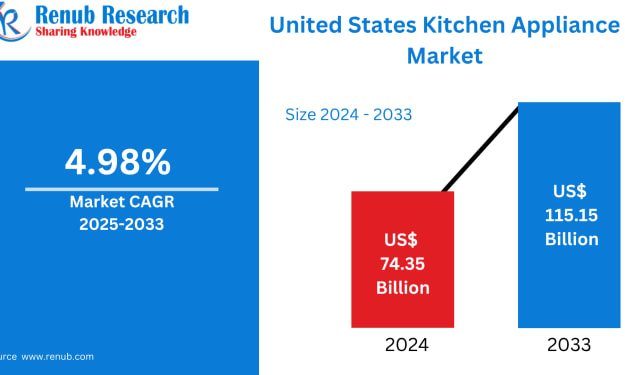
The United States kitchen appliance market is entering a defining decade shaped by innovation, sustainability, and evolving consumer lifestyles. According to Renub Research, the market is projected to reach US$ 115.15 billion by 2033, rising from US$ 74.35 billion in 2024, at a compound annual growth rate (CAGR) of 4.98% during 2025–2033.
By Marthan Sir4 days ago in Futurism
Wild Card Weekend Recap: What Happens Now?
I think I figured out why I love Wild Card Weekend so much. It's because it's the first playoff anything of the calendar year. The NFL season starts in the fall, and once upon a time, the champion was crowned either on or slightly before New Year's. The evolution of the NFL schedule has resulted in the playoffs starting just into the New Year, and currently, the final week of the season falls on the first weekend of the New Year, with Wild Card Weekend coming a week after that. So yes, chronologically, the NFL's Wild Card Weekend serves as the first playoff anything of the calendar year.
By Clyde E. Dawkins7 days ago in Unbalanced



Comments
There are no comments for this story
Be the first to respond and start the conversation.