
Ghiyas ud din Balban
Ghiyas ud din Balban;; was the ninth sultan of the Mamluk dynasty of Delhi. Ghiyas ud Din was the regent of the last Shamsi sultan, Nasiruddin Mahmud. He got rid of his predecessor Imaduddin Raihan and also got rid of this rivals in the court. His original name was Baha Ud Din. He was an Ilbari Turk.
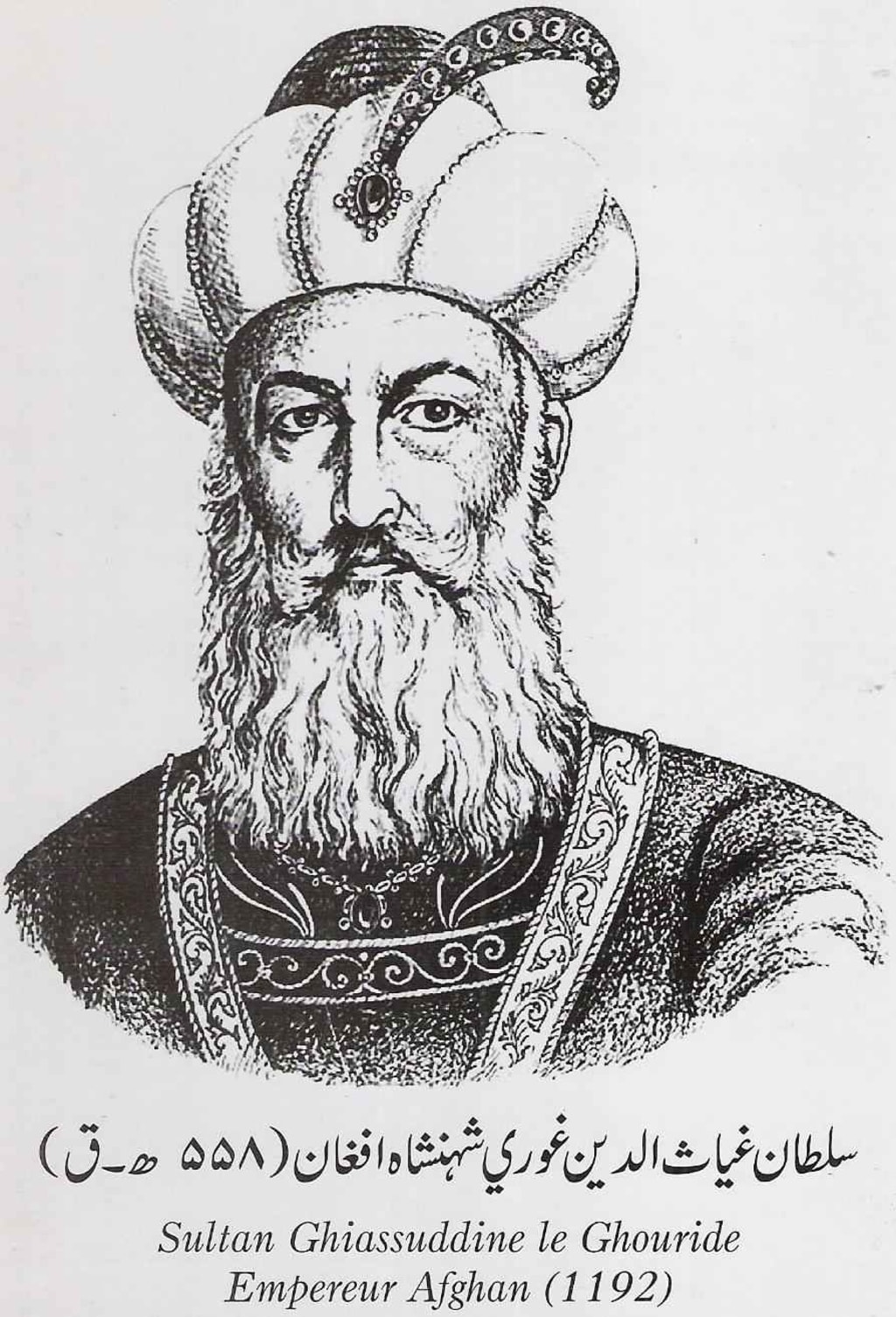
“A great warrior; ruler and statesman who saved the infant Muslim state from extinction at a critical time, Balban will ever remain a great figure in medieval Indian history”-Dr. Iswari Prasad.
Ghiyas-ud-din Balban who ruled India as the Sultan of Delhi from 1266 to 1287 A.D. was one of the greatest Sultans of the Mediaeval period.
He like his master Iltutmish rose to power and became the Sultan of Delhi.
His period has been marked as an illustrious chapter in the history of the Delhi sultanate.
Early Career:
Balban like his master Iltutmish was born in a Turkish family of Ilbari Tribe. He was kidnapped by the Mongols in his early youth and was sold to a slave trader named Khwaja Jamal-ud- din. He took him to Delhi where he was purchased by Iltutmish. During his stay at Delhi, Iltutmish was very much impressed by the intelligence and ability of Balban and enrolled him as a member of the famous corps of the forty slaves.
During the reign of Raziya Sultana, he was promoted to the post of Amir- i-Shikar (Lord of the Hunt). He was loyal to Raziya in his early days. But later on he joined hands with the nobles who deposed Raziya Sultana from the throne of Delhi successfully. The next Sultan was Bahram Shah who gave him the Jagir of Rewari and Hansi in lieu of his service to him.
His Early Difficulties:
Balban had to face a number of problems after his accession to the throne. The affairs of the state had fallen into confusion as well as the prestige of the crown had sunk low due the misrule of weak and incompetent successors of Iltutmish. The powers of the nobles had increased and the majority of the members of the famous Forty had become disloyal to the throne.
They were proud, arrogant and were jealous of Balban. In the words of Barani, “Fear of the governing power which is the basis of all good governments and the source of the glory and splendor of the state, had departed from the hearts of all men, and the country had fallen into a wretched condition.”
Restoration of the Crown’s Prestige:
Balban had realized that without the restoration of crown’s prestige which had sunk low during the rule of weak successors of Iltutmish, no better and effective government could be possible. He also knew that this could be restored through the policy of absolute despotism. He believed that absolute despotism alone could exact obedience from his subjects and ensure security of the country.
He also knew that in order to be a successful despot one must follow the policy of theory of kingship. The concept of theory of kingship is that the right to rule is given by the God and not by the people and for his actions whether good or bad, the ruler is answerable and accountable to God but not to the people he rules.
Destruction of the Forty:
The Forty a select body of Turkish nobles was created by Iltutmish for better and effective administration. The members of this body were chosen on the basis of loyalty and meritorious service. But after Iltutmish, the members of the Forty enjoyed unlimited power due to his weak and incompetent successors. They considered the Sultan just a puppet in their hands. Balban clearly knew that in the path of his despotism, the Forty would be a great obstruction.
Re-organisation of Army:
Balban re-organised his army and made it strong and efficient as it was the main pillar of his despotic government. He appointed Imad-ul-Mulk who was a competent vigilant officer, as the Diwan- i-Ariz (minister of war) in charge of the army. The minister in charge of the army was made independent of the financial control of the Wazir and he enjoyed full confidence of the Sultan.
The lands, given in Jagir to the military personnel since the time of Aibak and now enjoyed by their widows, sons and successors were taken back and they were paid pensions in cash.
Death of Balban:
Balban’s health gradually declined after the shock of his son’s death. He was old and was at quite advance stage of his life. Realizing his end he summoned his youngest son Bughra Khan, the governor of Bengal to Delhi. But Bughra apprehending some danger did not turn up. Balban then nominated Kai Khusrav, the son of his eldest son prince Muhammad as his heir. He died in 1287 at the age of eighty.
About the Creator
Keep reading
More stories from AKHIL SENGAR and writers in Futurism and other communities.
Gautama Buddha
Gautama Buddha, popularly known as the Buddha (also known as Siddhattha Gotama or Siddhārtha Gautama[note 3] or Shakyamuni), was an ascetic, a religious leader and teacher who lived in ancient India (c. 6th to 5th century BCE or c. 5th to 4th century BCE).[6][7][8][note 4] He is regarded as the founder of the world religion of Buddhism, and revered by Buddhists as an enlightened being,[9] who rediscovered an ancient path to freedom from ignorance, craving and the cycle of rebirth and suffering. He taught for around 45 years and built a large following, both monastic and lay.[10] His teaching is based on his insight into the arising of suffering or dissatisfaction and its ending—the state called Nirvana (lit. vanishing or extinguishing).
By AKHIL SENGAR4 years ago in Futurism
Big Data Analytics in Education Market to Reach USD 115.7 Billion By 2033
Big Data Analytics in Education Market The global Big Data Analytics in Education market is expanding steadily as educational institutions increasingly rely on data to improve learning outcomes and operational efficiency. The market is expected to reach around USD 115.7 billion by 2033, increasing from USD 22.1 billion in 2023, which reflects a strong 18% CAGR during the forecast period from 2024 to 2033. The growth of digital learning platforms, online assessments, and cloud based learning systems has generated large volumes of educational data that require advanced analytics tools. These technologies help institutions analyze student behavior, academic performance, and administrative operations to support better decision making.
By Roberto Cruma day ago in Futurism
Australia EV Charging Market: Infrastructure Expansion, Smart Charging Tech & Government Incentives
According to IMARC Group, the Australia electric vehicle (EV) charging market reached USD 304.4 Million in 2025 and is projected to expand significantly to USD 1,692.2 Million by 2034, exhibiting a compound annual growth rate (CAGR) of 21.00% during 2026–2034. This rapid growth reflects the accelerating transition toward electric mobility across Australia. Increasing adoption of electric vehicles by consumers and commercial fleets is driving demand for a reliable and widespread charging infrastructure network. Governments and private investors are expanding public charging stations while businesses and residential property developers integrate charging solutions into new infrastructure. At the same time, advancements in smart charging technologies and energy management systems are strengthening Australia EV charging market share by improving efficiency, convenience, and grid integration.
By Kevin Cooper2 days ago in Futurism




Comments
There are no comments for this story
Be the first to respond and start the conversation.