
GCC Industrial Gases Market: Steel, Chemicals & Healthcare Driving Demand Growth
How Expanding Manufacturing & Infrastructure Projects Are Driving Demand for Industrial Gases Across the GCC

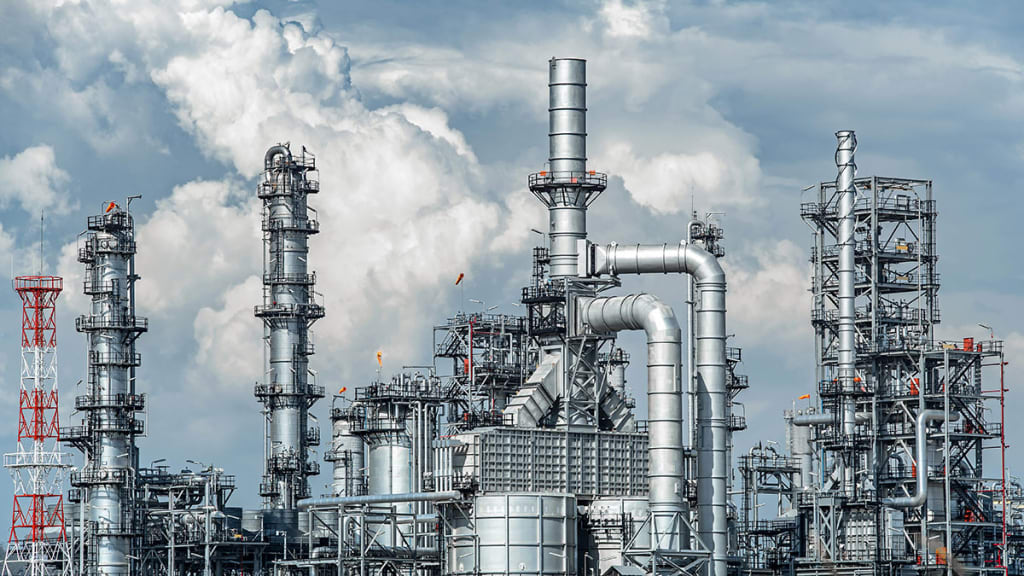
According to IMARC Group's latest research publication, GCC Industrial Gases Market size reached USD 3.4 Billion in 2024. Looking forward, IMARC Group expects the market to reach USD 6.2 Billion by 2033, exhibiting a growth rate (CAGR) of 6.47% during 2025-2033.
How AI is Reshaping the Future of GCC Industrial Gases Market
- Predictive Maintenance and Asset Optimization: AI algorithms monitor air separation units and cryogenic equipment continuously, predicting component failures before breakdowns occur, reducing unplanned downtime by 35% while extending plant lifespan across Saudi Arabia's massive industrial facilities.
- Real-Time Production Efficiency: Machine learning optimizes gas production parameters—temperature, pressure, flow rates—dynamically adjusting operations to maximize output while reducing energy consumption by 25%, critical for nitrogen and oxygen plants operating in extreme Gulf temperatures.
- Smart Cylinder Tracking and Management: Deep learning systems automatically read cylinder serial numbers, specifications, and manufacturing details using smartphone cameras, cutting registration time by 80-90% for distributors managing millions of returnable assets throughout the region.
- Demand Forecasting and Supply Chain Intelligence: Advanced analytics predict industrial gas requirements across metallurgy, healthcare, and energy sectors, improving inventory accuracy by 40% and enabling just-in-time delivery that reduces storage costs for packaged and bulk distribution networks.
- Automated Quality Control and Compliance: AI-powered sensors continuously monitor gas purity levels—oxygen at 99.5%, medical-grade nitrogen at 99.999%—flagging deviations instantly, ensuring strict compliance with healthcare and manufacturing specifications while minimizing product waste across GCC facilities.
How Vision 2030 is Revolutionizing GCC Industrial Gases Industry
Saudi Arabia's Vision 2030 and complementary GCC economic diversification programs are fundamentally transforming industrial gas demand through massive green hydrogen initiatives and infrastructure investments. The $5 billion NEOM Green Hydrogen Project producing 650 tonnes daily represents the world's largest renewable hydrogen facility, while SABIC's $5 billion green hydrogen investments focus on ammonia production and circular carbon technologies. These mega-projects require enormous volumes of nitrogen for purging systems, oxygen for gasification processes, and specialized gases for advanced manufacturing. The Kingdom's $32 billion renewable energy pipeline expanding capacity to 130 gigawatts creates sustained demand for industrial gases in solar panel manufacturing and wind turbine production. Saudi Aramco's acquisition of 50% stake in Blue Hydrogen Industrial Gases Company in Jubail strengthens low-carbon hydrogen capabilities, while the Saudi Green Initiative's $187 billion commitment targets 20 million tonnes annual emissions reduction. Regional carbon capture and utilization facilities requiring 12 million tonnes capacity create new markets for CO2 supply and management. These strategic initiatives position industrial gases as essential enablers of economic transformation rather than commodity inputs.
View Comprehensive 2026 Industry Forecasts
GCC Industrial Gases Market Trends & Drivers:
The GCC industrial gases market is experiencing explosive growth fueled by unprecedented infrastructure development and manufacturing expansion across all member states. Saudi Arabia's construction pipeline exceeds $1.7 trillion, with mega-projects like NEOM, The Line, Qiddiya City, and New Murabba demanding massive volumes of argon for welding, nitrogen for inerting, and oxygen for metal fabrication. Qatar's World Cup 2034 preparations and infrastructure awards generate confirmed procurement demand for specialty gases across stadium construction, transportation networks, and hospitality facilities. The UAE's Operation 300bn initiative targeting tripled industrial GDP contribution drives metal processing, chemical manufacturing, and electronics assembly—all intensive industrial gas consumers. Healthcare expansion throughout the region creates sustained demand for medical-grade oxygen and nitrogen, with Saudi Arabia's 90 gigawatt electricity sector requiring enhanced reliability for hospitals serving growing populations. The GCC's strategic position as manufacturing hub for export to Africa, South Asia, and Europe strengthens demand for high-purity gases in electronics, automotive components, and aerospace manufacturing. Energy-intensive industries seeking cost optimization increasingly adopt on-site gas generation rather than packaged delivery, shifting market dynamics toward integrated supply models.
Green energy transition and decarbonization mandates are reshaping industrial gas applications and creating entirely new market segments. The region's $150 billion green hydrogen investment across MENA positions the GCC as global production leader, with Masdar targeting one million tonnes annually and Air Products' NEOM facility producing 1.2 million tonnes of green ammonia. These projects consume enormous quantities of nitrogen for purging, oxygen for gasification, and helium for leak detection across complex hydrogen production chains. Carbon capture, utilization, and storage (CCUS) initiatives including Saudi Aramco's Hawiyah facility capable of 9 million tonnes annual CO2 capture create dual demand—capturing industrial CO2 emissions while simultaneously supplying food-grade CO2 to beverage manufacturers and medical facilities. Enhanced oil recovery projects inject captured carbon back into reservoirs, extending petroleum production while reducing atmospheric emissions—a circular approach requiring sophisticated gas separation and purification technologies. Steel manufacturers implementing electric arc furnaces use oxygen-enriched combustion reducing carbon footprints by 95%, while SABIC's Trucircle™ polymers incorporate recycled materials requiring precise atmospheric controls. The integration of renewable energy into heavy industry—Ma'aden's solar-powered aluminum smelting cutting emissions to net-zero—demands specialized gas mixtures for advanced manufacturing processes unavailable through traditional suppliers.
Digital transformation and supply chain localization initiatives are fundamentally restructuring industrial gas distribution economics and competitive dynamics. Linde's September completion of Airtec acquisition, increasing ownership above 90%, consolidates air separation units, CO2 plants, and turnkey gas generation across Kuwait, UAE, Qatar, Bahrain, and Saudi Arabia, creating integrated regional supply networks offering enhanced reliability and customer service. Gulf Cryo operates 30+ production and distribution sites demonstrating the logistics infrastructure required for packaged and bulk delivery across dispersed industrial clusters. Government localization mandates encouraging domestic manufacturing partnerships drive investment in regional production capacity rather than reliance on imports, with Air Products Qudra operating Jubail facilities producing hydrogen and nitrogen for Saudi Aramco's petrochemical complexes. The shift toward on-site gas generation for large consumers—steel mills, chemical plants, refineries—reduces transportation costs while ensuring uninterrupted supply during peak demand periods or geopolitical disruptions. E-commerce platforms and digital ordering systems enable smaller manufacturers to access specialty gases previously available only through distributor networks, democratizing market access while creating competitive pressure on traditional bulk suppliers to enhance service quality and pricing transparency.
GCC Industrial Gases Market Industry Segmentation:
The report has segmented the market into the following categories:
Type Insights:
- Nitrogen
- Oxygen
- Carbon Dioxide
- Argon
- Hydrogen
- Others
Application Insights:
- Manufacturing
- Metallurgy
- Energy
- Chemicals
- Healthcare
- Others
Supply Mode Insights:
- Packaged
- Bulk
- On-Site
Country Insights:
- Saudi Arabia
- UAE
- Qatar
- Oman
- Kuwait
- Bahrain
Competitive Landscape:
The competitive landscape of the industry has also been examined along with the profiles of the key players.
Recent News and Developments in GCC Industrial Gases Market
- December 2025: Air Products announced collaboration with Yara International to develop low-emission ammonia projects, combining Air Products' industrial gas capabilities and low-carbon hydrogen expertise with Yara's ammonia production and global distribution network, strengthening green hydrogen value chains across energy and agriculture sectors.
- September 2025: Linde completed acquisition of over 90% of Airtec, one of the largest Middle Eastern industrial gas suppliers, previously holding 49% stake. The strategic consolidation strengthens Linde's presence across Kuwait, UAE, Qatar, Bahrain, and Saudi Arabia, integrating air separation units, CO2 plants, and on-site generation infrastructure.
- July 2024: Saudi Aramco signed agreement to acquire 50% stake in Blue Hydrogen Industrial Gases Company (BHIG), an Air Products Qudra subsidiary operating in Jubail. The deal includes hydrogen and nitrogen offtake options, enhancing Aramco's low-carbon hydrogen production capabilities in Saudi Arabia's Eastern Province.
- October 2025: Air Products' NEOM Green Hydrogen Project reached 80%+ completion across all sites, featuring 257 wind turbines generating 1.6 gigawatts of clean energy. The $5 billion facility will produce 650 tonnes of carbon-free hydrogen daily, positioning Saudi Arabia at the forefront of the global green hydrogen economy.
Note: If you require specific details, data, or insights that are not currently included in the scope of this report, we are happy to accommodate your request. As part of our customization service, we will gather and provide the additional information you need, tailored to your specific requirements. Please let us know your exact needs, and we will ensure the report is updated accordingly to meet your expectations.
About the Creator
Abhay Rajput
I am working in market research company that provides market and business research intelligence across the globe.
Keep reading
More stories from Abhay Rajput and writers in Futurism and other communities.
UAE Mental Health Market: Rising Awareness, Service Expansion & Growth Outlook
According to IMARC Group's latest research publication, UAE Mental Health Market size reached USD 13.10 Billion in 2024. Looking forward, IMARC Group expects the market to reach USD 28.26 Billion by 2033, exhibiting a growth rate (CAGR) of 8.92% during 2025-2033.
By Abhay Rajput7 days ago in Futurism
About Binding Prometheus
I want to start actively advocating on behalf of my own work, and the most valuable part of my canon is, without a doubt, Binding Prometheus, the play I have been working on since 2019 and only finished in 2023 as part of my MA. The play itself is an amalgamation of a million different inspirations. On one end, it evokes the Ancient Greek myth-play, deriving its own title from the earliest extant work of Western drama we have, Aeschylus’s Prometheus Bound. On the other end, it borrows significantly from the sci-fi bulwarks from over the years, namely Mary Shelley’s Frankenstein and Karel Capek’s Rossum’s Universal Robots. The play could be an episode of Black Mirror, I fear. I don’t know. I’ve only ever seen one episode of Black Mirror.
By Steven Christopher McKnight19 days ago in Futurism
Smart Lock Market Size to Surpass USD 9.9 Billion by 2033 Driven by IoT Integration & Connected Living Trends
According to IMARC Group's latest research publication, global smart lock market size reached USD 2.7 Billion in 2024. Looking forward, IMARC Group expects the market to reach USD 9.9 Billion by 2033, exhibiting a growth rate (CAGR) of 15.43% during 2025-2033.
By Suhaira Yusuf6 days ago in Futurism


Comments
There are no comments for this story
Be the first to respond and start the conversation.