
GCC Crane Market Analysis: Industry Trends, Competitive Landscape & Growth Outlook
How Mega Infrastructure Projects and Urban Expansion Are Driving Growth in the GCC Crane Market

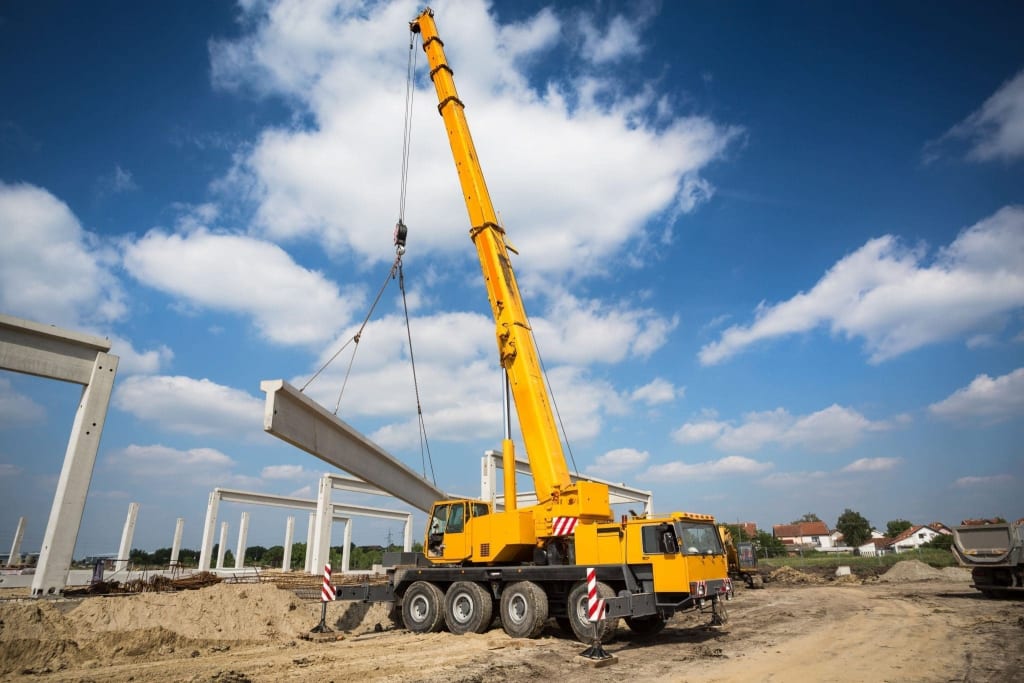
According to IMARC Group's latest research publication, the GCC crane market size reached USD 2.8 Billion in 2024. The market is projected to reach USD 3.8 Billion by 2033, exhibiting a growth rate (CAGR) of 3.4% during 2025–2033.
How AI is Reshaping the Future of GCC Crane Market
- AI-Powered Lift Planning & Load Optimization: AI platforms like Versatile's CraneView attach sensors to crane hooks, capturing real-time lift data. On active GCC sites, this drives smarter crew scheduling, reduces idle time, and enables early crane demobilization—cutting project costs measurably.
- Predictive Maintenance for Heavy Equipment: IoT sensors on hydraulic systems, engines, and wire ropes feed machine learning models that flag failures before they happen. This cuts unplanned crane downtime on GCC mega-projects and keeps multi-billion-dollar schedules on track.
- Computer Vision for Jobsite Safety: AI cameras monitor crane exclusion zones in real time, issuing instant alerts when workers enter risk areas. OSHA-backed research shows AI-driven safety monitoring can reduce construction site accidents by up to 50%.
- Autonomous Crane Operations: Semi-autonomous crane control using GPS, LiDAR, and AI stabilization is now commercially deployed. Operators can precisely place steel beams with automated guidance—critical for the precision tolerances required across NEOM and UAE high-rise projects.
- Digital Twin Integration: AI builds live digital replicas of crane operations within a project's BIM environment, enabling real-time clash detection, lift simulation, and sequence optimization—preventing costly rework across the GCC's densely scheduled construction pipelines.
Request a Preview Report with the Most Recent Industry Data
How Vision 2030 is Revolutionizing GCC Crane Industry
Vision 2030 has single-handedly transformed crane demand across the GCC. Saudi Arabia's giga-project pipeline—NEOM alone budgeted at USD 500 billion—requires enormous crane fleets for high-rise construction, bridge installation, and industrial plant assembly that simply didn't exist in the region five years ago. Saudi Arabia currently accounts for the majority of active GCC project awards, with over USD 53 billion channeled through its national infrastructure fund in partnership with BlackRock. The downstream impact is equally significant: the petrochemicals sector is forecast to absorb over a third of the Kingdom's oil output into chemical production, requiring heavy-lift cranes for plant modules weighing up to 1,900 tonnes. UAE programs like the Abu Dhabi 13-community housing initiative (AED 106 billion) and Qatar's infrastructure push post-World Cup keep the broader GCC fleet fully occupied. With renewable energy, ports, rail, and industrial zones all expanding simultaneously, crane operators and OEMs are seeing the most sustained regional demand cycle in decades.
GCC Crane Market Trends & Drivers:
The most immediate driver of GCC crane demand is the sheer volume of active construction and energy projects running concurrently across the region. Saudi Arabia's Red Sea Project, NEOM, Qiddiya, and several major petrochemical expansions each require specialized heavy-lift crane solutions that domestic fleets are actively expanding to meet. Mammoet, one of the region's most prominent heavy-lift contractors, has been involved in erecting the world's largest Propane Dehydration plant in Saudi Arabia—a project involving 15 pipe rack modules weighing up to 1,900 tonnes each, requiring crawler cranes of up to 1,250-tonne capacity. The global crane rental market was valued at USD 53.12 billion in 2025, and the Middle East's share continues growing as governments prioritize infrastructure delivery. Companies are increasingly preferring rental over ownership to avoid high capital costs, fueling fleet expansion by specialist operators across all six GCC countries.
Oil, gas, and energy projects continue generating sustained demand for high-capacity cranes, including marine and port variants serving offshore platforms and coastal industrial sites. The UAE's Fujairah F3 combined cycle power plant—the largest independent power plant in the UAE at 2.4 GW—required Mammoet to mobilize three of the UAE's largest gas turbine components, transported 23 km from port through mountainous terrain. Meanwhile, Saudi-owned Gulf Haulage Heavy Lift placed an order for 18 Liebherr mobile cranes of up to 300-tonne capacity specifically to meet growing Saudi market requirements, citing rising demand in the 100-to-300-tonne class. In March 2024, Mammoet expanded its Middle East and Africa fleet by adding eight new cranes—including a 600-tonne crawler and multiple all-terrain units—immediately deploying them across UAE infrastructure and substation projects. This fleet investment pattern across multiple operators signals a structural, multi-year expansion cycle rather than a short-term spike.
The shift toward smarter, more sustainable crane operations is reshaping procurement decisions across the GCC. Liebherr developed an electric hydraulic mobile crane—the LTC 1050-3.1E—capable of running on electricity or diesel, cutting CO₂ emissions by up to 90% compared to diesel when running on hydrogenated vegetable oil. Mammoet has added the first of these electric cranes to its regional fleet, aligning with GCC sustainability mandates under Vision 2030 and UAE Net Zero 2050 commitments. Digital platforms are also changing how crane services are sourced—Dubai-based MyCrane, an online crane rental service, has launched operations in Saudi Arabia, enabling contractors to access pre-qualified operators digitally across the Kingdom. On one documented project, clients sourcing through MyCrane saved 30% compared to standard quotes by accessing locally positioned cranes. As GCC construction activity evolves toward higher-precision, higher-complexity lifts, the combination of advanced crane technology, digital procurement, and sustainability-driven fleet renewal is setting new performance benchmarks across the industry.
GCC Crane Market Industry Segmentation:
The report has segmented the market into the following categories:
Product Type Insights:
- Mobile Cranes
- Marine and Port Cranes
- Fixed Cranes
Application Insights:
- Construction and Infrastructure
- Mining
- Oil and Gas
- Others
Country Insights:
- Saudi Arabia
- UAE
- Qatar
- Oman
- Kuwait
- Bahrain
Competitive Landscape:
The competitive landscape of the industry has also been examined along with the profiles of the key players.
Recent News and Developments in GCC Crane Market
- March 2024: Mammoet expanded its Middle East and Africa fleet with eight new cranes—including a 600-tonne crawler crane, a 400-tonne, two 250-tonne, and 100-tonne all-terrain cranes, plus three 35-tonne rough terrain units—immediately deployed across UAE construction and substation infrastructure projects.
- July 2024: Mammoet received its first Liebherr LR12500 crawler crane, boasting a 2,500-tonne lifting capacity and a 200-metre hook height. The crane is earmarked for oil and gas, nuclear, large-scale civil, and offshore energy projects across the region, reflecting GCC demand for ultra-heavy lift capability.
- 2024: Mammoet added the first electric hydraulic crane to its regional fleet—a Liebherr LTC 1050-3.1E—capable of running on electricity or diesel, cutting CO₂ emissions by up to 90% on HVO fuel, marking a significant step toward sustainable lifting operations aligned with GCC net-zero targets.
- 2025: MyCrane, the Dubai-based online crane rental platform, expanded operations into Saudi Arabia, enabling contractors to access pre-qualified crane operators digitally across the Kingdom. The platform demonstrated client savings of 30% by connecting jobs to locally positioned equipment, improving procurement efficiency region-wide.
- 2025: Saudi Arabia's construction equipment market—valued at USD 1.46 billion—continued absorbing crawler and mobile crane capacity for mega-project needs, with XCMG, Liebherr, and Mammoet identified as key suppliers of heavy crawler cranes supporting energy and infrastructure sector growth across the Kingdom.
Note: If you require specific details, data, or insights that are not currently included in the scope of this report, we are happy to accommodate your request. As part of our customization service, we will gather and provide the additional information you need, tailored to your specific requirements. Please let us know your exact needs, and we will ensure the report is updated accordingly to meet your expectations.
About the Creator
Abhay Rajput
I am working in market research company that provides market and business research intelligence across the globe.
Keep reading
More stories from Abhay Rajput and writers in Futurism and other communities.
GCC CPVC Pipes Market Outlook: Demand Drivers, Key Players & Future Opportunities
According to IMARC Group's latest research publication, the GCC CPVC pipes market size was valued at USD 563.68 Million in 2025 and is projected to reach USD 791.25 Million by 2034, growing at a compound annual growth rate of 3.84% from 2026–2034.
By Abhay Rajput4 days ago in Futurism
How Payment-Focused Blockchains Are Adapting to a Changing Crypto Market?
As the cryptocurrency ecosystem matures, its focus is gradually shifting from experimentation toward practical application. Early blockchain networks were often designed to test decentralization itself, but today’s platforms are increasingly judged by how well they solve real-world problems. One of the most important of these issues is how to move money quickly, cheaply, and across borders.
By Muhammad Irfan Afzala day ago in Futurism
Think for Me
"How do you calculate the circumference of a circle? Submit your answer when ready." [Pause] "Excellent! Every student was able to call up the answer electronically very quickly. If I, as a robot had feelings, I would express pride. You may break for lunch. Return to this cyber room in 45 minutes."
By Julie Lacksonen3 days ago in Humans




Comments
There are no comments for this story
Be the first to respond and start the conversation.