

In the future, the advancements in AI will bring about a world where humanity and artificial intelligence become intertwined. Tesla Bots will scale buildings and even be sent to the Moon. AI chatbots will assist people in controlling their lucid dreams, while tunnel diggers construct an underground city on Mars. Floating ocean cities and rotating ring space stations will be powered by fusion energy. This future will mark the official expansion of humans as a multiplanetary species. Lunar hover bikes will roam the lunar surface, and astronauts will enter cryosleep for long journeys. Astronomers will predict the existence of wormholes, and time cloaking devices will manipulate the speed of light to create invisible time. The advanced understanding of black holes will enable planetary data storage, with micro black holes grown in laboratories enclosed within Dyson spheres for energy harvesting. The era of biology and information will come to an end, giving rise to the singularity, where technology progresses faster than human predictions. Embark on a journey into the future and discover the remarkable technologies that await us.
SpaceX successfully launches a pair of Starships to resupply the international space station. In the realm of virtual reality, millions of Artificial Intelligence Systems (AIS) exist as digital replicas, residing in protected Virtual Worlds and simulations. These AIS undergo rigorous training to expedite their development before being released into the real world. Additionally, there is a remarkable advancement in the field of bioprinting, where miniaturized organs are created using 3D printing technology. These organs serve as testing platforms for individual medical responses before actual administration in real-life scenarios. Furthermore, AI chatbots play a crucial role in guiding individuals towards achieving and maintaining lucid dreams, which are dreams that can be controlled. Lucid dreams offer the opportunity to explore past experiences, alternate timelines, and reconstruct lost or fragmented memories. In the realm of space exploration, the lunar Starlink Mission embarks on a journey to the moon, deploying five Starling satellites for the lunar base. Moreover, there are five space stations orbiting Earth, along with the operational lunar Gateway space station around the Moon. SpaceX also launches a Tesla bot, known as lunar 1, which is sent to train and work at the moon base. In a fascinating development, biohackers have started implanting DNA storage devices into their own bodies. Digital data, in the form of binary code, is converted into DNA sequences and stored on artificially constructed DNA molecules. Astonishingly, a single gram of DNA can store a staggering 215 petabytes (25 million gigabytes) of data. Theoretical physicists are making significant strides in understanding dark energy, wormholes, and black holes, thereby opening up possibilities for faster-than-light travel and the creation of technologies that can create, stabilize, and navigate wormholes. These advancements would be characteristic of a Type 3 Galactic Civilization. Additionally, a team of robots has landed on Mars and is actively constructing a base in preparation for the future arrival of humans. These robots are responsible for tasks such as repairing, refueling, and providing shelter for themselves, effectively becoming the first colonizers of Mars. In urban areas, humanoid robots and human police officers work together to patrol city streets, ensuring safety and security.
A molecular digital camera captures ultra-high-resolution images of cells and tissues while traveling through human blood vessels. Molecular electronics are developed through chemical reactions and single molecules. On Mars, a small-scale permanent fuel production facility becomes operational, combining CO2 from the air with hydrogen from ice water to create methane rocket fuel for the return journey. A test launch of a Mark 2 Starship takes place, doubling the diameter and quadrupling the internal space of the original Starship. This advancement paves the way for larger space telescopes, space habitats, and construction machines to be launched into space. As humanity strives to hold the sun in their hands, they will gain dominion over the cosmos. Fusion, the ultimate energy source, powers our sun and the stars we observe. More countries are investing in fusion energy capability, leading to unlimited clean energy and propelling humanity towards becoming a type 1 civilization. This progress also enables energy-intensive super projects and the ability to power large-scale desalination plants, converting ocean saltwater into freshwater. With endless energy, space debris cleanup and the construction of a rotating ring space station are planned. However, there is also the concern of using fusion to power kinetic bombardment, dropping large heavy objects from orbit to strike targets on Earth's surface with the force of a meteorite. Artificial global climate control becomes a possibility, allowing the construction of cities in the Arctic and the use of fusion to cool the ground and prevent permafrost melting. In the oceans, massive floating cities are envisioned, along with the construction of underwater habitats and the beginning of terraforming efforts.
About the Creator
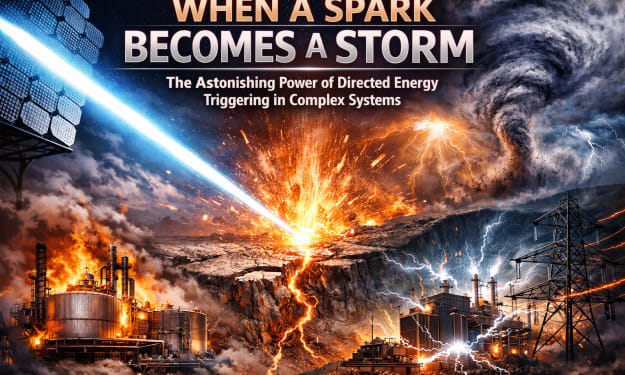
When a Spark Becomes a Storm
Section 1: The Hidden Reservoirs of Potential Energy — The Underlying Foundations of Catastrophic Failure At the core of systemic vulnerability lies a fundamental, often overlooked principle: complex, large-scale systems—be they electrical grids, geological formations, chemical stores, or atmospheric phenomena—are capable of harboring enormous quantities of stored potential energy. This energy is often invisible, silent, and contained within the physical structure or state of the system, maintained in a metastable equilibrium by control systems, environmental conditions, or natural processes.
By Peter Thwing - Host of the FST Podcast5 days ago in Futurism
Lithium Niobate Market Encouraged Growth To USD 8.6 Billion by 2034 at 7.2% CAGR
Overview The Global Lithium Niobate Market is expected to be worth around USD 8.6 billion by 2034, up from USD 4.3 billion in 2024, and is projected to grow at a CAGR of 7.2% from 2025 to 2034.
By Hayden Kulas5 days ago in Futurism



Comments
There are no comments for this story
Be the first to respond and start the conversation.