
From Zero to Robotics Hero: My Journey with the AI Vision Robot Tank Kit
A Box of Possibilities

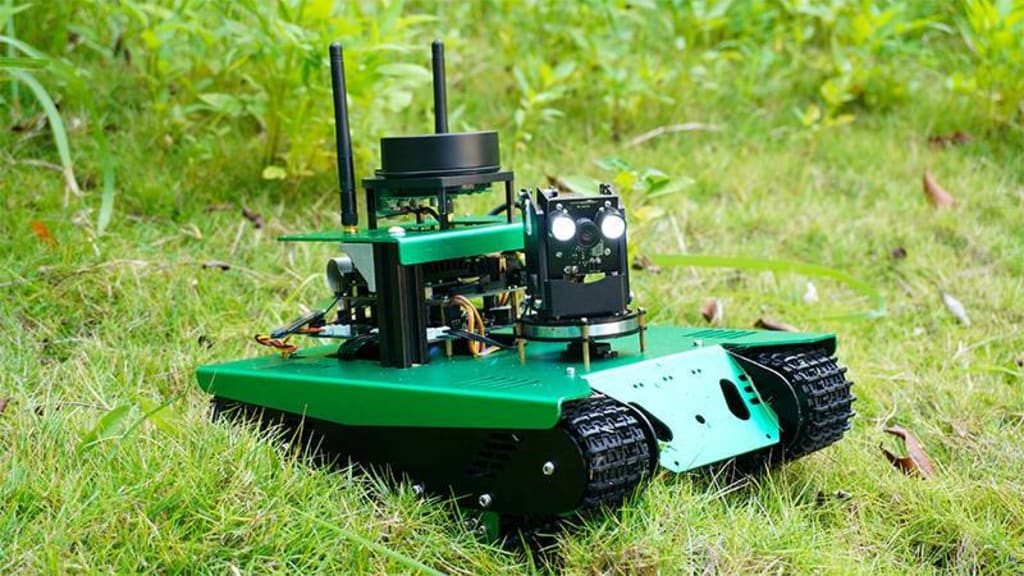
The moment I unboxed the AI Vision Robot Tank Kit, I felt like a modern-day tinkerer, unlocking the future of robotics one component at a time. It wasn’t just a kit—it was a promise. A promise to teach me robotics, Python programming, and even SLAM lidar mapping.
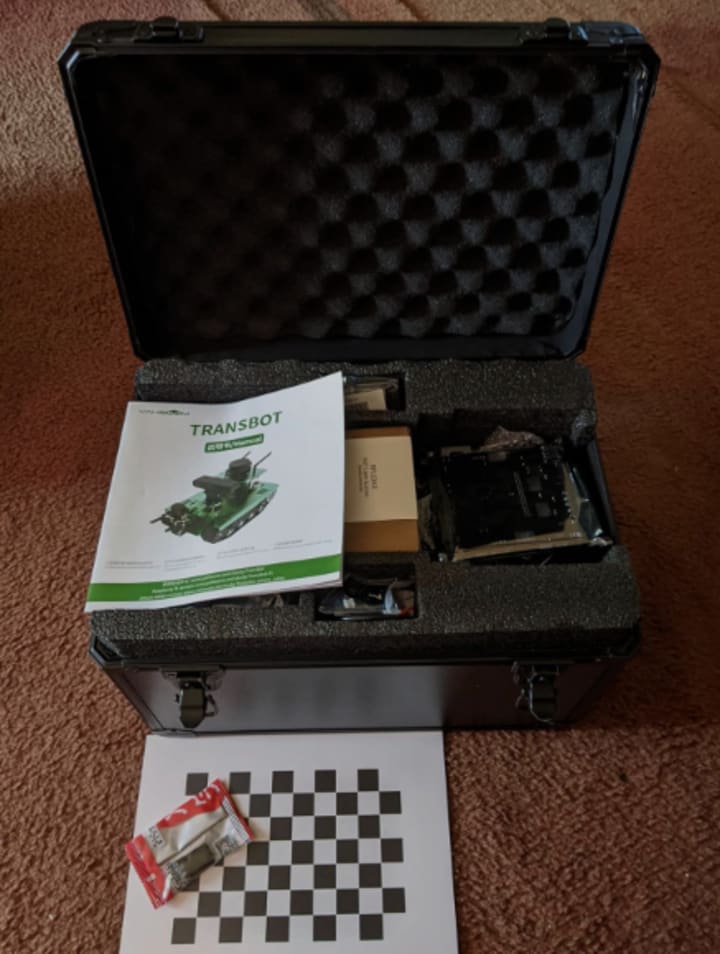
What lay in front of me wasn’t just metal, motors, and wires. It was potential.
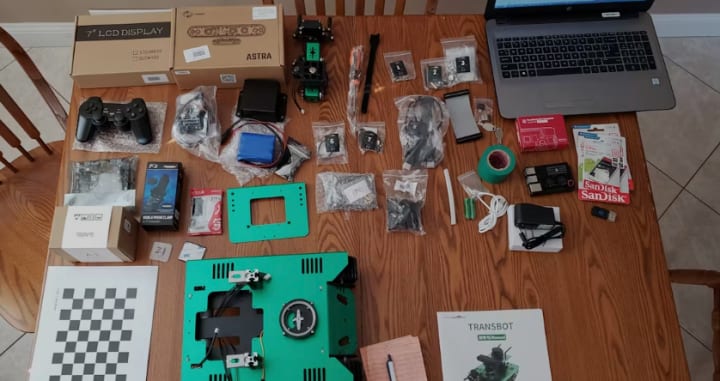
I’ll admit: robotics wasn’t always “my thing.” But as someone passionate about tech, I knew this was the next frontier. So, I rolled up my sleeves and embarked on an epic 6-hour journey of assembly, coding, and discovery.
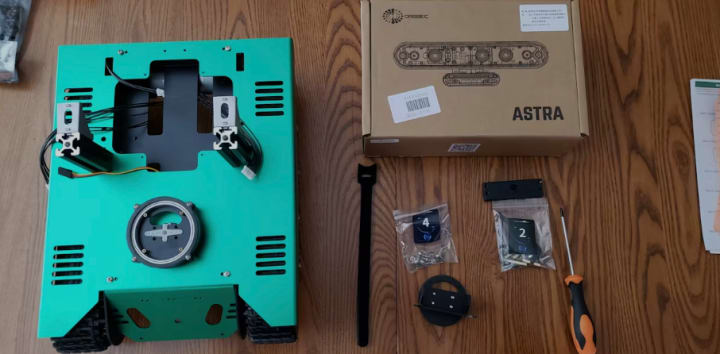
The Build: When Engineering Meets Art
The green aluminum alloy oxide chassis caught my eye immediately—a sturdy frame designed to last. As I began assembling, I was blown away by the thoughtful design:
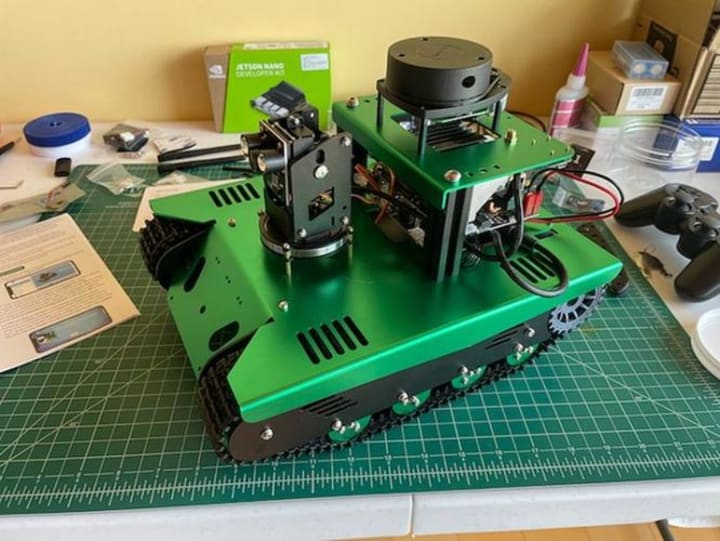
High-torque gear motors that promised smooth, powerful motion.
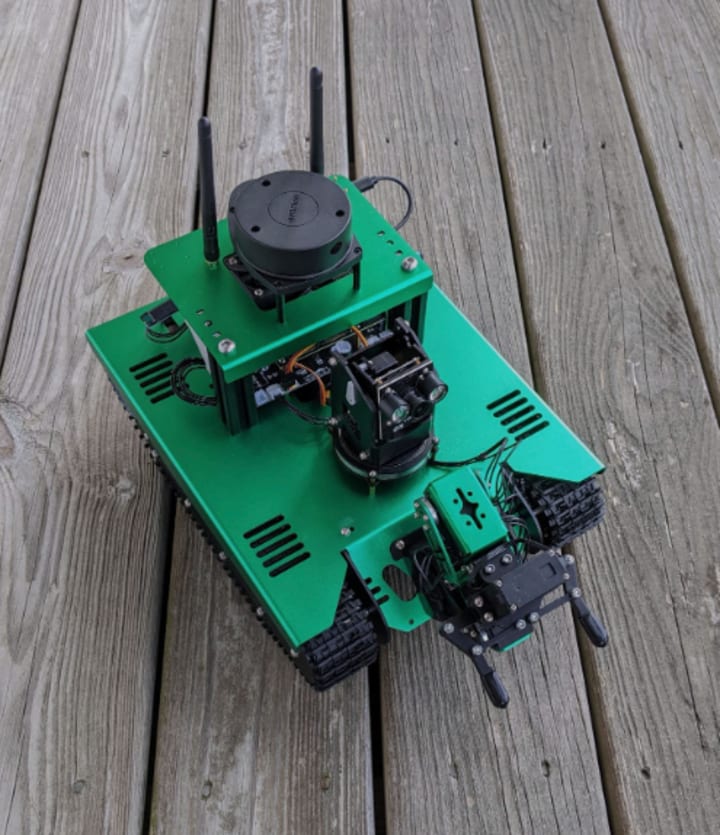
SLAM lidar for real-time mapping and obstacle avoidance.
A 2DOF pan/tilt camera that would let me see the world through the robot’s eyes.
The process was not without its challenges. Aligning components, fine-tuning the connections, and troubleshooting small details required patience. I found myself flipping back and forth between the instructional videos and hands-on trial-and-error.
But isn’t that where learning truly happens? The first time the crawler powered up and moved forward, I couldn’t help but smile. All that effort culminated in a machine I had built with my own hands—ready to take on the world.
Programming with Python: From Scripts to Action
Once assembled, the real fun began: coding.....
The kit’s Python integration opened up a world of possibilities. With tools like Rviz and MoveIt, I could control the robotic arm, simulate tasks, and see my code come to life. Suddenly, robotics didn’t feel like a lofty dream—it was right there, tangible and responsive.
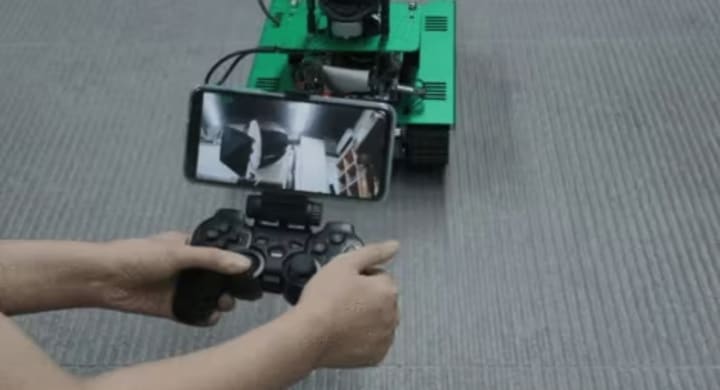
Here are some highlights from my Python-powered experiments:
Fixed-Point Navigation: I programmed the robot to map its environment using the SLAM lidar and navigate to specific coordinates. Seeing the robot autonomously avoid obstacles felt like magic.
AI Vision Tracking: Leveraging the depth camera, I explored object tracking and AR tag recognition. Watching the tank identify and follow objects in real time was both surreal and satisfying.
Real-World Simulation: Using JupyterLab, I tuned parameters and tested robotic arm movements before deploying them on the actual machine.
The more I learned, the more doors opened—each one leading to new discoveries.
Challenges and Lessons Learned
Like any tech journey, there were hiccups.
The iOS app compatibility didn’t work for me, but I found solace in the kit’s JupyterLab integration. Who needs a mobile app when you have Python?
Fine-tuning the lidar for accurate mapping took trial and error, but the results were worth it.
These challenges, however, were part of the learning process. Robotics is not about perfection—it’s about iteration, patience, and persistence. Every obstacle overcame brought me closer to understanding how machines think and move.
Why This Kit Stands Out
There are many robotics kits out there, but the AI Vision Robot Tank Kit is unique. It bridges the gap between education and innovation, offering tools that can grow with you. Whether you’re a student, hobbyist, or aspiring roboticist, this kit provides:
Hands-On Experience: Learn robotics, SLAM mapping, and Python by doing.
Real AI Integration: Lidar mapping, object recognition, and navigation unlock real-world AI applications.
Customizability: Add cameras, tweak code, and build on top of the existing platform.
This isn’t just a toy—it’s a stepping stone into the future of robotics and machine learning.
My Takeaway: Building the Future
As the AI Vision Robot Tank completed its first autonomous trial, I sat back and reflected. What began as a collection of parts had turned into something remarkable. It wasn’t just the physical robot I built, but also the knowledge and confidence I gained.
This experience reminded me that tech isn’t just about tools; it’s about what you create with them. The future of robotics is bright, and tools like this make it accessible to everyone.
If you’ve ever dreamed of diving into Python programming, exploring AI robotics, or mastering SLAM mapping, I encourage you to take the leap. Start small, stay curious, and let your creations surprise you.
What’s Next?
Now that I’ve mastered the basics, I’m already planning my next projects:
Adding voice controls for hands-free operation.
Enhancing the robot’s vision using OpenCV for better object detection.
Mapping larger environments using advanced SLAM algorithms.
The possibilities are endless, and I can’t wait to see where this journey takes me next.
Closing Thoughts
Tech stories often highlight “what’s possible,” but rarely focus on the learning process. For me, this kit was more than just a product—it was a mentor. It challenged me, taught me, and inspired me to think bigger.
If you’re on the fence about robotics, remember this: The best way to predict the future is to build it.
About the Creator
Your Personal Alchemique
Exploring the intersection of tech, design, and luxury. At Alchemique, I share smart gadgets, stylish upgrades, and essentials that elevate modern living.
Keep reading
More stories from Your Personal Alchemique and writers in Futurism and other communities.
The Future of Drones: Where High-Tech Meets Practicality
Drones have rapidly evolved from niche gadgets into powerful tools for professionals and hobbyists. With innovations like 4K HDR cameras, intelligent obstacle avoidance systems, and immersive VR capabilities, drones are transforming how we interact with the world.
By Your Personal Alchemiqueabout a year ago in Futurism
Australia Digital Banking Market: Mobile-First Financial Services, AI-Driven Personalization & Open Banking Innovation
According to IMARC Group, the Australia digital banking market reached a value of USD 231.6 Million in 2025 and is projected to reach USD 607.8 Million by 2034, growing at a compound annual growth rate (CAGR) of 10.98% during 2026–2034. The market is expanding rapidly as financial institutions increasingly embrace digital transformation to enhance customer experience and operational efficiency. Digital banking platforms enable customers to access financial services through mobile applications and online portals without the need for physical branch visits. Rising smartphone penetration and internet connectivity are encouraging consumers to adopt mobile-first financial services for everyday banking activities. Banks are also integrating artificial intelligence (AI), advanced analytics and automation technologies into digital platforms to deliver personalized financial solutions and improve security. As fintech partnerships and open banking initiatives continue to reshape the financial ecosystem, digital banking is becoming a central component of Australia’s evolving financial services landscape.
By Kevin Cooperabout 6 hours ago in Futurism
Hottest in the Office
Dear Rafi, You’re very distracting to work around. For the first second I saw you the other day, I thought you were some type of executive. It took a moment to realize no, you were just the new guy, dressed up for the job he wants. Be still, my heart.
By Gabriel Shames6 days ago in Pride




Comments
There are no comments for this story
Be the first to respond and start the conversation.