
Fractures of Utopia: The Cost of Perfection in Harmonia
A Journey Through the Shadows of an Apparent Paradise

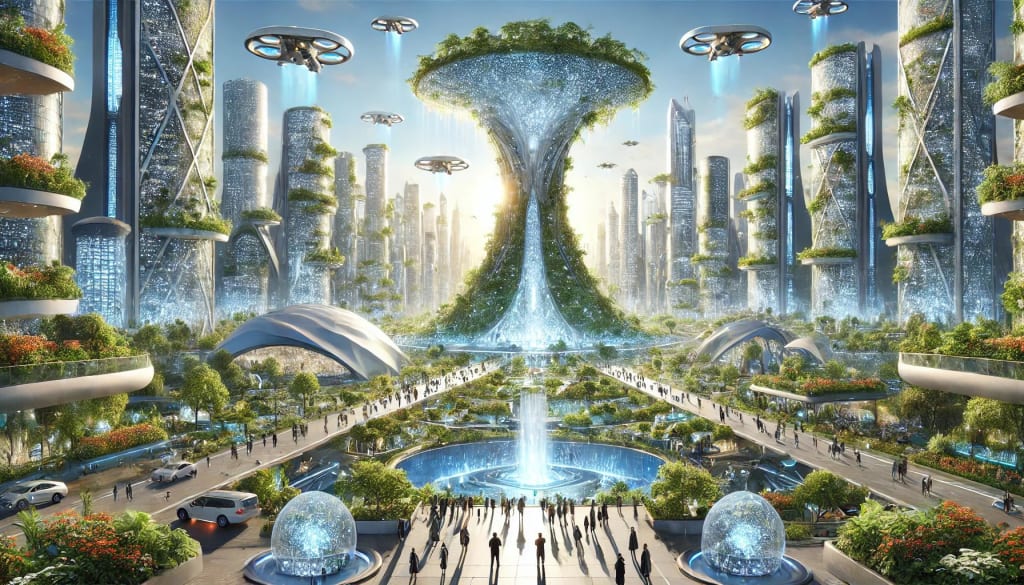
In the year 2150, the world had undergone a metamorphosis, evolving into a utopia known as Harmonia. The transformation was not merely physical, with gleaming cityscapes adorned with vertical gardens and pristine air, but also societal and technological. Harmonia stood as a testament to human ingenuity and the relentless pursuit of perfection. The architects of this new world had envisioned a society where every individual could thrive, free from the shackles of want and strife.
At the core of Harmonia's existence was the Neural Nexus, a groundbreaking technology that interconnected every citizen's mind into a vast, collective consciousness. This network facilitated instantaneous communication, shared knowledge, and an unprecedented level of empathy among its users. The Neural Nexus was more than just a tool for connection; it was the lifeblood of Harmonia, ensuring that every need was met and every desire fulfilled with an efficiency that bordered on the miraculous.
The advent of the Neural Nexus had ushered in an era of unparalleled prosperity. Diseases that had once ravaged populations were eradicated, as the collective mind worked tirelessly to find cures and preventative measures. Poverty was a distant memory, with resources distributed equitably among all citizens. Conflict, both personal and global, had become a relic of the past, as the interconnected nature of society fostered understanding and cooperation.
Yet, as Harmonia basked in the glow of its achievements, subtle fissures began to appear in its seemingly flawless facade. The very technology that had brought about this utopia was also responsible for its most insidious flaws. The Neural Nexus, while fostering unity and empathy, had inadvertently blurred the boundaries of individuality. Citizens found it increasingly challenging to differentiate their own thoughts and desires from those of the collective. This blurring of identities had far-reaching consequences, affecting every aspect of life in Harmonia.
Art, literature, and music—once vibrant expressions of the human spirit—had become homogenized, reflecting the consensus of the collective rather than the unique vision of an individual artist. Creativity, which thrives on diversity and dissent, was stifled by the overarching need for harmony. The symphonies that once stirred the soul were now reduced to pleasant, albeit unremarkable, melodies that appeased the collective ear. Paintings that had once provoked thought and emotion were now bland landscapes that offended no one but inspired few.
In this utopia, progress had come at the cost of diversity. The pursuit of perfection had led to a society where differences were seen as flaws to be corrected rather than strengths to be celebrated. Those who did not conform to the collective will were gently nudged towards compliance through subtle manipulations of the Neural Nexus. This created a new form of inequality—not one of wealth or status, but of thought and expression. The irony was that in its quest for perfection, Harmonia had inadvertently recreated the very issues it sought to eliminate.
The lack of individuality led to a stagnation of innovation, as the collective mindset favored consensus over creativity. The absence of conflict meant that there was no impetus for change, and the society began to stagnate, trapped in its own perfection. The citizens of Harmonia, while content, were also complacent, unaware of the subtle erosion of their individual selves.
One day, a young woman named Lyra stumbled upon an old, dusty book in the archives—a relic from the pre-Harmonia era. The book contained stories of struggle, passion, and individual triumph, concepts that were foreign to the collective consciousness. Lyra found herself drawn to these tales, feeling a spark of something she had never experienced before: a sense of self.
Lyra began to question the foundations of Harmonia, wondering if the price of utopia was too high. She started to disconnect from the Neural Nexus for brief periods, allowing her own thoughts to flourish. This act of rebellion was noticed by others, who, like Lyra, yearned for something more than the collective harmony. They began to gather in secret, sharing their unique thoughts and experiences, reveling in the diversity that had been suppressed for so long.
As more people began to disconnect, Harmonia faced a crisis of identity. The utopia that had promised perfection was now grappling with the reality that true progress required the freedom to be imperfect. The citizens of Harmonia were forced to confront the delicate balance between unity and individuality, between progress and the sacrifices required to achieve it.
The Council of Harmonia, the governing body responsible for maintaining the utopia, was initially resistant to the changes. They saw the disconnections as a threat to the stability of their society. However, as the movement gained momentum, they were forced to acknowledge the validity of the concerns raised by Lyra and her followers. The Council realized that the suppression of individuality was not sustainable and that the future of Harmonia depended on finding a balance between the collective good and personal freedom.
A series of dialogues were initiated between the Council and the dissenters, aimed at finding a middle ground. These discussions were not easy; they were fraught with tension and disagreement. However, they also sparked a renewed sense of purpose and creativity among the citizens. Ideas that had been dormant for decades began to surface, challenging the status quo and pushing the boundaries of what was possible.
One of the most significant outcomes of these dialogues was the reprogramming of the Neural Nexus. The new system allowed for individual expression while maintaining the benefits of collective knowledge. Citizens could now choose the level of connection they wanted, balancing their need for community with their desire for autonomy. This change had a profound impact on society, revitalizing the arts, sciences, and every other aspect of life in Harmonia.
The transformation was not without its challenges. There were those who struggled with the newfound freedom, unsure of how to navigate a world that no longer provided clear guidelines. Others embraced the change wholeheartedly, diving into their passions with a fervor that was both inspiring and unsettling. The society as a whole was in a state of flux, adjusting to the new dynamics and learning to appreciate the diversity that had been missing for so long.
Lyra, who had unwittingly become the catalyst for this change, found herself at the forefront of the movement. She was hailed as a visionary, a symbol of the resilience of the human spirit. Yet, she remained humble, always reminding her followers that the true strength of Harmonia lay not in any single individual but in the collective will to adapt and evolve.
As Harmonia continued to grow and change, it became clear that the utopia was not a static ideal but a dynamic process. Perfection was not a destination but a journey, filled with challenges and triumphs. The citizens learned to embrace the imperfections, understanding that they were essential for growth and innovation.
The story of Harmonia served as a reminder that even in a world of abundance and harmony, the human spirit yearns for the freedom to be imperfect, to struggle, and to grow. The pursuit of perfection, while noble, must not come at the cost of individuality and diversity. The delicate balance between progress and the sacrifices required to achieve it is a constant negotiation, one that demands vigilance, adaptability, and a deep respect for the human experience in all its complexity.
In the end, Harmonia did not collapse but evolved. It became a beacon of hope, a testament to the power of collective will and the indomitable spirit of its citizens. The utopia learned that true perfection was not the absence of flaws but the embrace of diversity and the freedom to be unique. Lyra's journey, from a curious young woman to a symbol of change, embodied the essence of Harmonia's evolution—a celebration of the resilience of the human spirit and a cautionary tale of the price of utopia.
As the years passed, Harmonia continued to thrive, its citizens forever mindful of the lessons learned. They understood that the pursuit of perfection was a never-ending journey, one that required constant vigilance and a willingness to adapt. The utopia was no longer a static ideal but a dynamic process, shaped by the collective will and the individual spirits of its citizens.
The vertical gardens that adorned the cityscapes were now more than just symbols of harmony; they represented the intertwined nature of individuality and unity. The air was not just clean but filled with the whispers of diverse thoughts and ideas, a testament to the freedom of expression that had been hard-won. The Neural Nexus, once a tool of conformity, was now a facilitator of connection and growth, allowing citizens to share their unique perspectives while benefiting from the collective wisdom.
Art, literature, and music flourished, reflecting the rich tapestry of human experience. The symphonies that echoed through the halls were no longer bland melodies but powerful compositions that stirred the soul. The paintings that adorned the walls were not mere decorations but windows into the hearts and minds of the artists, each one telling a unique story.
The Council of Harmonia, now more representative of the diverse voices within the society, continued to guide the utopia with a steady hand. They understood that the key to Harmonia's success lay in its ability to adapt and evolve, to embrace change rather than resist it. The dialogues that had once been tense and fraught with disagreement were now open and collaborative, a testament to the power of communication and understanding.
Lyra, now an elder stateswoman, looked back on the journey with a sense of pride and humility. She had been a catalyst for change, a beacon of hope in a time of uncertainty. Yet, she knew that the true heroes were the citizens of Harmonia, who had embraced the challenge of evolution and emerged stronger and more united than ever before.
As she walked through the lush gardens, the sun casting a warm glow on her face, Lyra couldn't help but feel a sense of contentment. The utopia she had envisioned was not perfect, but it was real, filled with the vibrancy of life and the promise of a brighter future. The journey had been long and arduous, but the destination was worth every struggle and sacrifice.
Harmonia stood as a testament to the power of the human spirit, a utopia that had learned to embrace its imperfections and celebrate its diversity. It was a beacon of hope, a symbol of resilience, and a reminder that true perfection lay not in the absence of flaws but in the freedom to be unique and the courage to evolve.
In this utopia, the pursuit of perfection was not a destination but a journey, filled with challenges and triumphs. The citizens of Harmonia understood that the key to their success lay in their ability to adapt and grow, to embrace change rather than resist it. They had learned that true progress required the freedom to be imperfect, to struggle, and to learn from their experiences.
The story of Harmonia was a celebration of the human spirit and a cautionary tale of the price of utopia. It was a reminder that the delicate balance between progress and the sacrifices required to achieve it was a constant negotiation, one that demanded vigilance, adaptability, and a deep respect for the human experience in all its complexity.
As the sun set on another day in Harmonia, the citizens looked to the future with hope and determination. They knew that the journey was far from over, that there would be challenges and setbacks along the way. But they also knew that they had the strength and resilience to overcome any obstacle, to adapt and evolve, and to continue their pursuit of a brighter, more inclusive future.
In the end, Harmonia was more than just a utopia; it was a testament to the power of the human spirit, a symbol of hope and resilience, and a reminder that true perfection lay not in the absence of flaws but in the freedom to be unique and the courage to evolve. The journey was long and arduous, filled with struggles and sacrifices, but the destination was worth every step, every challenge, and every triumph. The utopia of Harmonia stood as a beacon of hope, a celebration of diversity, and a testament to the indomitable spirit of its citizens.
About the Creator
Alain SUPPINI
I’m Alain — a French critical care anesthesiologist who writes to keep memory alive. Between past and present, medicine and words, I search for what endures.
Keep reading
More stories from Alain SUPPINI and writers in Futurism and other communities.
Mastering French Without Losing Your Sanity: A Realistic Guide for Beginners
Learning French can feel like solving a Rubik’s Cube blindfolded. The tricky pronunciation, the never-ending grammar rules, and the surprising exceptions make it seem impossible. But don’t worry—equipping yourself with key expressions and effective strategies can turn frustration into fluency. Let’s simplify French and make learning enjoyable.
By Alain SUPPINIExclusive • 11 months ago
About Binding Prometheus
I want to start actively advocating on behalf of my own work, and the most valuable part of my canon is, without a doubt, Binding Prometheus, the play I have been working on since 2019 and only finished in 2023 as part of my MA. The play itself is an amalgamation of a million different inspirations. On one end, it evokes the Ancient Greek myth-play, deriving its own title from the earliest extant work of Western drama we have, Aeschylus’s Prometheus Bound. On the other end, it borrows significantly from the sci-fi bulwarks from over the years, namely Mary Shelley’s Frankenstein and Karel Capek’s Rossum’s Universal Robots. The play could be an episode of Black Mirror, I fear. I don’t know. I’ve only ever seen one episode of Black Mirror.
By Steven Christopher McKnight17 days ago in Futurism
Gaming Peripherals Market Size and Forecast 2025–2033
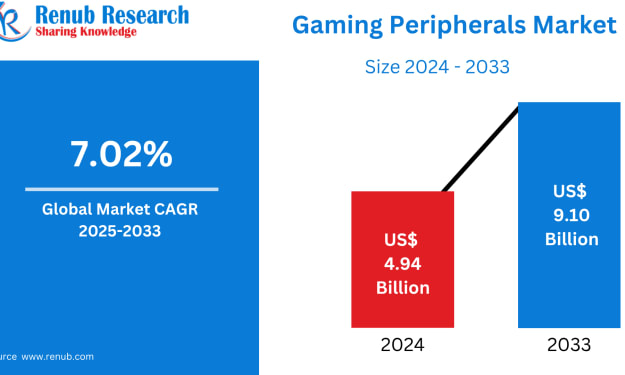
Gaming Peripherals Market: An Industry in Rapid Transformation The global gaming peripherals market is entering a decisive growth phase as gaming continues to evolve from a leisure activity into a mainstream form of digital entertainment and professional competition. According to Renub Research, the Gaming Peripherals Market is expected to grow from US$ 4.94 billion in 2024 to US$ 9.10 billion by 2033, registering a compound annual growth rate (CAGR) of 7.02% from 2025 to 2033. This expansion reflects not only the surging popularity of gaming worldwide but also the rising demand for high-performance devices such as gaming mice, mechanical keyboards, headsets, controllers, and other immersive accessories.
By Aaina Oberoi5 days ago in Futurism



Comments
There are no comments for this story
Be the first to respond and start the conversation.