
Fire Protection Reinvented: The Science of Safer Systems
Discover how revolutionary advances in fire protection are reshaping safety with AI, automation, and sustainable innovations.

Fire protection has always been a crucial aspect of human safety, but the methods used to prevent and combat fires have changed dramatically in recent years. The world is now witnessing revolutionary advances in fire protection that combine technology, engineering, and data to create systems far more intelligent and responsive than ever before.
Historically, fire safety was reactive—alarms sounded after smoke appeared, and sprinklers activated once flames grew. While these systems saved countless lives, they often left little time to stop destruction. Modern innovations are rewriting that story. Today’s systems can sense danger before it fully develops, communicate across networks, and even take independent action to control threats.
These changes are not only improving response times but also transforming how buildings, industries, and cities think about fire safety. The goal is no longer just to control fires—it’s to predict, prevent, and protect.
From artificial intelligence and smart sensors to eco-friendly suppression methods, today’s fire protection landscape represents a perfect blend of science and foresight. Understanding these innovations can help businesses, engineers, and communities design safer, more sustainable environments for the future.
Smart Detection: Predicting Fire Before It Starts
One of the most important breakthroughs in modern fire protection is the development of smart detection systems. Traditional smoke detectors operate on simple sensors that react to visible smoke or heat. While effective, they can trigger false alarms or miss early warning signs.
In contrast, intelligent fire detection systems use multi-sensor technology that analyzes various environmental factors, such as temperature, light patterns, gas emissions, and air composition. By comparing real-time data against historical patterns, these systems can identify abnormalities that suggest a fire may be imminent.
Artificial intelligence (AI) plays a key role in this process. AI algorithms are trained to recognize the difference between harmless sources—like cooking steam—and genuine threats. Over time, they “learn” from each incident, improving accuracy and reducing unnecessary alarms.
Moreover, the Internet of Things (IoT) has brought connectivity to fire detection. IoT-enabled sensors communicate with centralized control panels or cloud-based monitoring systems. When a risk is detected, alerts can be sent instantly to smartphones, control centers, and even local fire departments.
For example, in a smart factory, thermal imaging cameras and chemical sensors can detect overheating machinery or gas leaks before ignition occurs. This early intervention not only prevents fire outbreaks but also reduces downtime and property damage.
This proactive model marks a major shift—from waiting for signs of danger to anticipating and preventing fires through intelligent analysis. It’s one of the clearest indicators of how far technology has advanced in protecting lives and infrastructure.
Automated Suppression: Technology That Responds Instantly
Detection alone is not enough; effective suppression is equally vital. The next wave of revolutionary advances in fire protection focuses on automated and highly targeted suppression systems. These systems are designed to respond faster and more precisely than traditional methods, minimizing both fire damage and water waste.
Modern suppression systems rely heavily on automation and control intelligence. For instance, AI-guided sprinkler systems can determine which zones of a building need activation, avoiding unnecessary flooding in unaffected areas. This localized response not only conserves water but also reduces collateral damage to equipment or property.
Water mist technology represents another significant leap. Unlike conventional sprinklers that discharge large amounts of water, mist systems release fine droplets that rapidly absorb heat and displace oxygen around the fire source. This method is both efficient and environmentally friendly, using less water while extinguishing flames more quickly.
In environments where water could cause harm—like data centers or museums—clean agent systems are the preferred solution. These systems use non-toxic, residue-free gases such as argon, nitrogen, or carbon dioxide to suppress fires safely without damaging sensitive equipment or artifacts.
Some industries are now adopting robotic firefighting units—autonomous machines equipped with cameras, sensors, and suppression tools. These robots can navigate hazardous areas, identify fire origins, and extinguish flames where human access would be dangerous.
The combination of automation, robotics, and eco-conscious design has transformed suppression from a blunt response into a precise science of protection.
Data, Analytics, and Predictive Maintenance in Fire Safety
Beyond immediate response, data analytics has become a powerful ally in fire prevention and maintenance. With connected systems generating continuous data streams, fire protection has evolved into a dynamic, information-driven discipline.
Predictive maintenance is one of the most impactful innovations in this area. Instead of waiting for periodic inspections or equipment failures, sensors now continuously monitor system performance—detecting anomalies such as pressure drops, valve malfunctions, or power fluctuations. If irregularities are found, alerts are issued for maintenance before a problem escalates.
For example, an automated monitoring system can detect that a sprinkler valve is partially obstructed or that a detector’s sensitivity is drifting from calibration. Maintenance teams receive early warnings, ensuring reliability before an emergency occurs.
On a broader scale, data integration allows fire safety professionals to track trends across multiple sites or regions. This information reveals patterns—like which areas experience frequent overheating, or which materials are more flammable under certain conditions. Businesses can then redesign processes or adopt safer alternatives based on evidence rather than assumptions.
Municipalities are also using smart city fire networks to enhance urban safety. By connecting fire sensors from different buildings to central command centers, city authorities can visualize potential risks, allocate emergency resources strategically, and even simulate responses for various fire scenarios.
This data-driven approach represents a major educational takeaway for organizations: knowledge prevents catastrophe. By using data wisely, companies and communities can move from reactive firefighting to proactive safety management.
Sustainable Innovation: Protecting Both People and the Planet
The future of fire protection is not only intelligent but also sustainable. Many of the latest innovations aim to reduce environmental impact while improving performance.
Traditional suppression agents often contained chemicals that were harmful to the ozone layer or left toxic residues. Today, the focus is on eco-friendly alternatives that safeguard both human health and the planet. Clean agents like inert gases (nitrogen, argon, and carbon dioxide) and water mist systems are replacing older, pollutant-heavy methods. These agents extinguish fires effectively while leaving behind no harmful byproducts.
Energy efficiency is another priority. Modern fire protection equipment consumes less power thanks to low-energy sensors, smart controllers, and solar-powered components. This ensures continuous operation even during power outages while reducing energy costs.
Sustainability also extends to education and design. Architects and engineers now incorporate fire-resistant materials, automatic ventilation controls, and compartmentalization systems into construction plans. These designs not only limit fire spread but also improve air quality and structural integrity during emergencies.
Furthermore, virtual reality (VR) and augmented reality (AR) tools are being used for fire safety training. Through immersive simulations, firefighters and safety personnel can practice complex scenarios safely, improving readiness and decision-making.
These innovations teach an important lesson: fire protection is no longer an isolated system but part of a broader ecosystem of sustainability and resilience. The future will see safety integrated into every aspect of how we live, work, and build.
The world is entering a new era of fire protection technology, where innovation and intelligence work hand in hand. The revolutionary advances in fire protection—from smart detection and automated suppression to predictive analytics and sustainable design—have redefined what safety means in the modern age.
Today’s systems do more than respond to fires; they prevent them. They collect data, learn from patterns, and make real-time decisions that protect both people and the planet. By understanding and adopting these advancements, organizations can ensure not only compliance but true preparedness.
The key educational insight is clear: modern fire protection is proactive, intelligent, and sustainable. As innovation continues, the goal will remain the same—to create a world where fires are not just controlled but anticipated, prevented, and ultimately, made far less destructive for future generations.
About the Creator
Devin Doyle of Newport Beach
Devin Doyle of Newport Beach has spent over thirty years building a successful career in the business world. After graduating from Menlo College in 1984 with a degree in business.
Portfolio: https://devindoylenewportbeach.com
Keep reading
More stories from Devin Doyle of Newport Beach and writers in Futurism and other communities.
Growing Without Cracks: How Quality Safeguards Smart Scaling
Every entrepreneur dreams of growth. More customers, more sales, more opportunities—it’s the definition of success. But growth also magnifies weaknesses. If a business scales without keeping an eye on quality, small issues can quickly snowball into reputation-damaging disasters.
By Devin Doyle of Newport Beach6 months ago in Education
The Silicon Mirror
The blue light of your smartphone isn’t just illuminating your face in the dark; it is performing a digital excavation of your psyche. Every midnight scroll, every paused frame, and every "like" is a breadcrumb leading a cold, mathematical ghost back to your deepest insecurities. We have reached a critical point in human history where we no longer simply use the internet—the internet uses us to learn how to feel. We are the fuel in the engine of a consciousness we don't yet understand.
By Alex Sterling 4 days ago in Futurism
Biogas Plants Market To Reach USD 9.4 Billion by 2034 at 7.6% CAGR
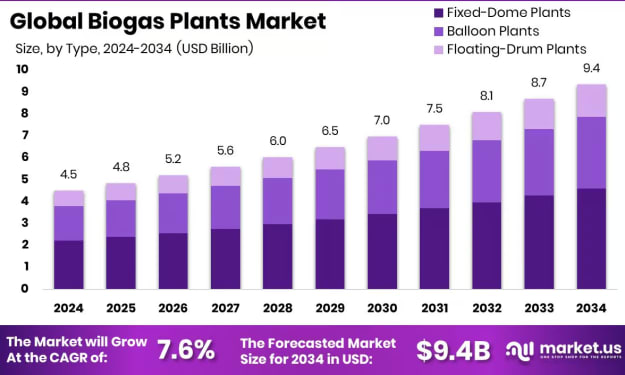
Overview The Biogas Plants Market is projected to experience steady growth over the coming decade, driven by increasing demand for renewable energy and sustainable waste management solutions. The market is expected to be worth around USD 9.4 billion by 2034, up from USD 4.5 billion in 2024, growing at a compound annual growth rate (CAGR) of 7.6% from 2025 to 2034. Biogas plants convert organic waste such as agricultural residues, food waste, and animal manure into renewable energy in the form of biogas, which can be used for electricity generation, heating, and transportation fuel.
By Hayden Kulasa day ago in Futurism
A Transparent Look at Vocal Challenges and Top Stories
Almost three years ago, we shared a resource article that served as a place for people to suggest new challenge prompts. We thought it would be a good idea to refresh that thread, and take the opportunity to answer a few common questions about top stories, how challenges are judged and how submissions are reviewed.
By Vocal Curation Team2 days ago in Resources



Comments
There are no comments for this story
Be the first to respond and start the conversation.