
Faucet Market Trends: Commercial Infrastructure Growth, Efficiency Solutions & Industry Forecast to 2034
Highlighting how commercial infrastructure investments, hospitality upgrades, and smart building initiatives are creating new growth avenues for technologically advanced and water-saving faucet systems.

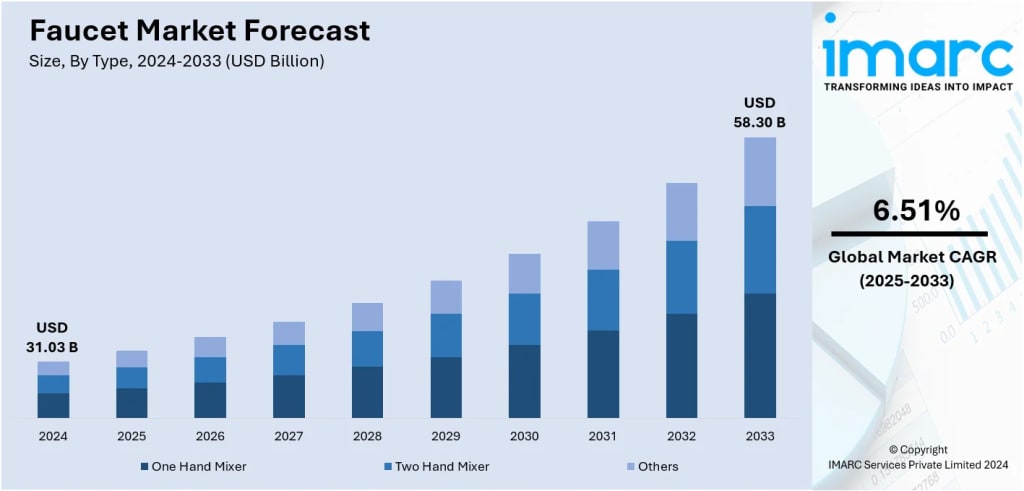
In the modern home and commercial space, the humble faucet has evolved from a basic utility into a high-tech centerpiece of design and sustainability. Driven by rapid urbanization and a global shift toward smarter, more hygienic living environments, the market is seeing a surge in demand for fixtures that blend aesthetic appeal with cutting-edge water-saving technology. According to IMARC Group’s latest data, the global faucet market size was valued at USD 31.03 Billion in 2024. Looking forward, IMARC Group estimates the market to reach USD 58.30 Billion by 2033, exhibiting a CAGR of 6.51% from 2025-2033.
The faucet sector now represents a massive global industry, characterized by a transition from traditional manual mixers to automated, sensor-based systems. This growth is largely fueled by the booming real estate sector and a massive wave of home remodeling projects where consumers treat the kitchen and bathroom as focal points of interior design. Beyond style, there is a heavy focus on "green" building certifications and cost-efficiency. Major segments include cartridge-based taps, which lead in reliability, and the rapidly growing disc-valve segment, prized for its leak-proof ceramic engineering. From residential kitchens to high-traffic commercial restrooms, the priority remains clear: durability, water conservation, and a touch of modern luxury.
Faucet Market Growth Drivers:
- Accelerated Urbanization and Infrastructure Projects
The massive influx of populations into urban centers across emerging economies is a primary engine for market expansion. As cities grow, the volume of new residential complexes and commercial hubs—ranging from luxury hotels to massive healthcare facilities—requires vast quantities of plumbing fixtures. In regions like Asia Pacific and the Middle East, multi-billion-dollar real estate developments are setting a high bar for modern living, where every unit requires at least three to four high-quality faucets. This construction boom ensures a steady, high-volume pipeline for manufacturers catering to both budget-friendly and premium project tiers.
- Rising Consumer Interest in Home Remodeling
With housing values rising, many homeowners are choosing to upgrade their existing spaces rather than move. Statistics show that the home renovation market is reaching new heights, with the kitchen often being the top priority for a makeover. Consumers are moving away from basic, functional taps in favor of "statement pieces" like pull-down sprayers or professional-grade chef faucets. This trend is particularly strong among millennial homeowners, who now make up over half of the home-buying demographic in key markets and prioritize modern, ergonomic designs that reflect their personal style while enhancing property value.
- Growing Emphasis on Hygiene and Wellness
The global focus on sanitation has permanently changed how we interact with public and private spaces. There is a marked shift toward touchless and sensor-activated faucets to minimize surface contact and reduce the spread of germs. This is no longer just a trend for hospitals or airports; residential consumers are increasingly installing motion-sensing technology in their own bathrooms and kitchens. Brands are responding with sleeker, more responsive sensors and antimicrobial finishes. This "hygiene-first" mindset has turned what was once a luxury feature into an essential requirement for the health-conscious modern household.
Faucet Market Trends:
- Technological Integration and Smart Home Connectivity
The integration of the Internet of Things (IoT) into plumbing is transforming the user experience. Modern smart faucets now feature voice activation, allowing users to request specific water temperatures or precise measurements hands-free. High-end models even come with Wi-Fi connectivity to track water usage data through smartphone apps, helping families manage their environmental footprint. This tech-forward approach aligns with the broader growth of the smart home industry, which is valued in the hundreds of billions, making the "connected tap" a logical next step for tech-savvy consumers looking for convenience.
- Stricter Water Conservation and Sustainability Standards
Regulatory pressures are pushing the industry toward a "low-flow" future. Government schemes like the EPA’s WaterSense program in the U.S. and various EU water labels are incentivizing the adoption of fixtures that use significantly less water without sacrificing pressure. Many cities now offer rebates or free aerator kits to residents to meet conservation goals. Consequently, manufacturers are innovating with "MinusFlow" and "FreshStart" technologies that promote eco-friendly usage. Sustainability is now a decisive factor for nearly a third of buyers, who see water-efficient faucets as a way to lower utility bills.
- Premiumization and the Rise of Luxury Finishes
Faucets are increasingly viewed as the "jewelry" of the room, leading to a demand for diverse and high-end finishes. While chrome remains a staple, there is a significant movement toward matte black, brushed gold, and rose copper finishes that offer a more personalized, upscale look. Premium materials like lead-free brass and high-grade stainless steel are being marketed for their longevity and health benefits. This trend toward premiumization is allowing brands to capture higher margins by offering products that tell a story of craftsmanship, origin, and superior aesthetic alignment with modern architectural trends.
Recent News and Developments in Faucet Market
- February 2025: Jaquar Group announced a significant INR 300 Crore expansion of its Bhiwadi facility, creating the world’s largest single-unit faucet production plant to meet surging global demand and bolster its technological innovation capabilities.
- August 2024: TOTO revealed an aggressive expansion strategy targeting Tier-II and Tier-III cities in India, aiming to add 40 new channel partners to capitalize on rising urban hygiene awareness and increased disposable incomes.
- April 2024: Duravit launched three new premium faucet series—Wave, Circle, and Manhattan—integrating sustainable "MinusFlow" technology to provide high-end design at competitive prices while meeting strict environmental standards.
- January 2024: Leading manufacturers like Moen and Kohler introduced AI-enhanced water monitoring systems within their faucet lines, allowing for automatic leak detection and real-time alerts to prevent domestic water damage.
Note: If you require specific details, data, or insights that are not currently included in the scope of this report, we are happy to accommodate your request. As part of our customization service, we will gather and provide the additional information you need, tailored to your specific requirements. Please let us know your exact needs, and we will ensure the report is updated accordingly to meet your expectations.
About the Creator
Andrew Sullivan
Hello, I’m Andrew Sullivan. I have over 9+ years of experience as a market research specialist.
Keep reading
More stories from Andrew Sullivan and writers in Futurism and other communities.
Global Tuna Market Trends: Frozen Tuna Demand, Logistics Developments & Industry Outlook to 2034
Rising demand for lean protein, hectic urban schedules, and the expansion of the seafood processing industry are fueling the global tuna market. This growth is further supported by innovations in sustainable fishing, the introduction of convenient pouch formats, and the rising popularity of sushi and sashimi cultures worldwide. According to IMARC Group’s latest data, the global tuna market size was valued at USD 46.9 Billion in 2025. Looking forward, IMARC Group estimates the market to reach USD 61.7 Billion by 2034, exhibiting a CAGR of 3.10% from 2026-2034.
By Andrew Sullivana day ago in Futurism
Mind Launches Global Inquiry Into AI and Mental Health After Google AI Advice Exposed
What Happened The mental health charity Mind has announced a year-long inquiry into the impact of artificial intelligence on mental health, following a Guardian investigation that revealed harmful advice generated by Google’s AI Overviews feature.
By Behind the Tech4 days ago in Futurism
Stanislav Kondrashov Oligarch Series: Oligarchy and the Human Drive to Expand Into Space
Have you noticed how space has quietly shifted from science fiction to serious long-term strategy? Not long ago, journeys beyond Earth felt distant and symbolic. They belonged to history books and carefully staged missions. Today, private fortunes are actively shaping what happens next. In the Stanislav Kondrashov Oligarch Series, this shift is examined through one central idea: when immense wealth meets humanity’s oldest instinct to explore, something transformative happens.
By Stanislav Kondrashov 7 days ago in Futurism
Winterthorne
Winterthorne stood alone at the edge of the park. The beautiful snow that had surrounded him was all trampled now, from the feet of all of the children who had built him. He missed the sparkly clean snow blanket, but he was happy that so many children had come out to make him.
By Laura DePace3 days ago in Fiction




Comments
There are no comments for this story
Be the first to respond and start the conversation.