
Exploring the World of Virtual Reality: Unlocking New Dimensions.
Virtual Reality: Stepping into a New Dimension of Possibilities
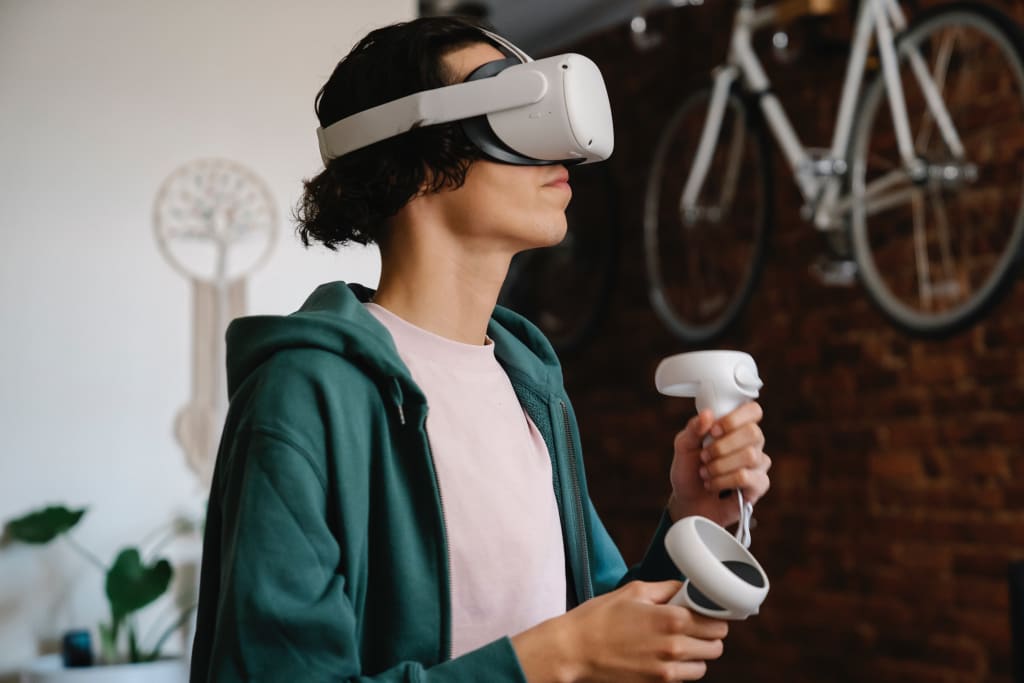
In the realm of technology, few advancements have generated as much excitement and potential as virtual reality (VR). This immersive technology has transformed the way we perceive and interact with digital content, unlocking new dimensions of experiences previously unimaginable. From entertainment and education to healthcare and beyond, virtual reality is revolutionizing various industries, captivating the minds of users worldwide.
Virtual reality offers a simulated environment that can be similar to or completely different from the real world. By wearing a VR headset, users are transported to a digital realm where they can explore, create, and interact with virtual objects and environments. Through a combination of high-resolution displays, motion sensors, and advanced tracking systems, VR delivers a sense of presence, enabling users to feel as if they are truly immersed in a different reality.
One of the most captivating applications of virtual reality is in the realm of entertainment. VR gaming has taken the gaming industry by storm, allowing players to step into the shoes of their favorite characters and experience gaming like never before. With realistic graphics, immersive sound effects, and interactive gameplay, VR gaming delivers an unprecedented level of engagement and excitement. From exploring fantastical worlds to engaging in adrenaline-pumping experiences, virtual reality has become a game-changer for gamers of all ages.
Beyond gaming, virtual reality has also found its place in education. Traditional classroom learning is being complemented and enhanced by VR technology, providing students with immersive and interactive educational experiences. Through virtual reality, students can travel back in time to historical events, dive deep into the ocean to explore marine life, or even venture into outer space to learn about the solar system. By engaging multiple senses and enabling hands-on learning, virtual reality stimulates curiosity and deepens understanding, making education more captivating and effective.
In the field of healthcare, virtual reality is making remarkable strides, transforming patient care and medical training. VR simulations allow medical professionals to practice complex procedures in a safe and controlled environment, reducing the risk for patients and providing valuable training opportunities. Furthermore, virtual reality has proven to be an effective tool for pain management, distracting patients from discomfort and anxiety by immersing them in calming and visually stimulating environments. From therapy to rehabilitation, virtual reality is revolutionizing healthcare practices and improving patient outcomes.
Virtual reality is also breaking barriers in the world of travel and exploration. For those unable to embark on physical journeys, VR offers a window into remote and inaccessible locations. From visiting iconic landmarks to exploring natural wonders, virtual reality travel experiences provide a sense of adventure and discovery without leaving the comfort of one's home. Additionally, virtual reality has opened up opportunities for cultural exchange and understanding, allowing people from different parts of the world to connect and experience each other's cultures in a more immersive and empathetic way.
While virtual reality has made significant strides, the technology is still evolving. As the hardware becomes more sophisticated and affordable, the potential for VR applications continues to expand. Innovations such as haptic feedback suits, omnidirectional treadmills, and eye-tracking technology promise to further enhance the immersive experience, making virtual reality even more realistic and engaging.
However, like any transformative technology, virtual reality also raises important considerations. Issues such as motion sickness, privacy concerns, and the potential for addiction need to be carefully addressed as virtual reality becomes more widespread. Responsible and ethical use of this technology is crucial to ensure its positive impact on society.
As we continue to unlock new dimensions with virtual reality, the possibilities for its future are truly limitless. From entertainment and education to healthcare and beyond, VR has the potential to reshape various industries and revolutionize the way we live, work, and play. As more people embrace this technology and push its boundaries, virtual reality will undoubtedly become an integral part of our everyday lives, opening up endless opportunities for exploration and innovation.
In the coming years, we can expect to see virtual reality being integrated into various sectors in ways we can only begin to imagine.
In the world of business and communication, virtual reality holds immense potential. Imagine attending a virtual meeting where participants from around the globe can come together in a shared virtual space, eliminating the barriers of physical distance. Companies can create virtual showrooms or product demonstrations, allowing customers to experience their offerings in a more immersive and interactive manner. Virtual reality can also revolutionize training programs by providing realistic simulations for employees to practice and refine their skills in a safe environment. The possibilities for collaboration and innovation in the business world are vast with the integration of virtual reality.
Architecture and design are other fields that stand to benefit from virtual reality. Architects can use VR technology to create virtual walkthroughs of their designs, enabling clients to visualize and experience spaces before they are built. Interior designers can experiment with different layouts and materials in a virtual environment, streamlining the design process. Virtual reality can bring blueprints to life, offering a realistic sense of scale and proportion that traditional 2D drawings cannot convey. By leveraging VR, professionals in these industries can enhance their creative process and deliver more satisfying results to their clients.
In the realm of therapy and mental health, virtual reality has shown tremendous promise. It can be used to treat phobias and anxiety disorders by exposing patients to their fears in a controlled and gradual manner. Virtual reality environments can simulate challenging situations, allowing individuals to confront and overcome their fears in a safe and supportive setting. Furthermore, virtual reality can be utilized for relaxation and stress reduction through immersive experiences that transport users to serene and calming environments. By tapping into the power of virtual reality, therapists and psychologists can offer innovative and effective interventions to improve mental well-being.
Virtual reality is also finding its way into the world of art and creativity. Artists can now create virtual sculptures, immersive installations, and interactive digital artworks that push the boundaries of traditional mediums. Virtual reality allows viewers to engage with art in new and exciting ways, blurring the lines between the real and the virtual. Museums and galleries can embrace virtual reality to offer virtual exhibitions, reaching a global audience and making art more accessible to all. This fusion of technology and art opens up endless possibilities for artistic expression and innovation.
As we delve deeper into the world of virtual reality, we must also consider the ethical implications that arise. Privacy concerns, data security, and the potential for addiction are important factors to address. Striking a balance between the benefits of virtual reality and the responsible use of the technology is crucial. Clear guidelines and regulations need to be established to ensure the protection of users and the responsible development of virtual reality applications.
In conclusion, virtual reality has unlocked new dimensions of experiences, transforming industries and captivating users worldwide. From gaming and education to healthcare and beyond, the applications of VR are vast and diverse. As the technology continues to evolve, we can expect virtual reality to become even more immersive and accessible, revolutionizing the way we live, work, and explore. While challenges exist, the potential for virtual reality to shape our future is extraordinary. It is an exciting time as we continue to push the boundaries of what is possible in the virtual realm and unlock the full potential of this transformative technology.
About the Creator
Keep reading
More stories from Not_JohnWick and writers in Futurism and other communities.
The Rise of Artificial Intelligence: Revolutionizing the Tech Landscape
Artificial Intelligence (AI) has emerged as one of the most transformative technologies of our time. It is revolutionizing the tech landscape and reshaping industries across the globe. From self-driving cars to virtual assistants, AI is making its mark in various domains, promising to bring about unprecedented advancements and efficiencies. In this article, we will explore the rise of AI and its profound impact on the tech landscape.
By Not_JohnWick3 years ago in Futurism
The Interactive Shift: Exploring the Future of Storytelling in Digital Age
For centuries, storytelling was a one-way street. We sat around campfires, listened to bards, turned the pages of novels, and watched silver screens. In these scenarios, the creator was the architect, and we—the audience—were the passive observers. We cried for characters we couldn't warn and cheered for heroes we couldn't help. But we are currently standing at a massive crossroads in cultural history.
By Muhammad Owais SEO2 days ago in Futurism
Australia Power Market: Renewable Energy Expansion, Grid Modernization & Electricity Demand Growth
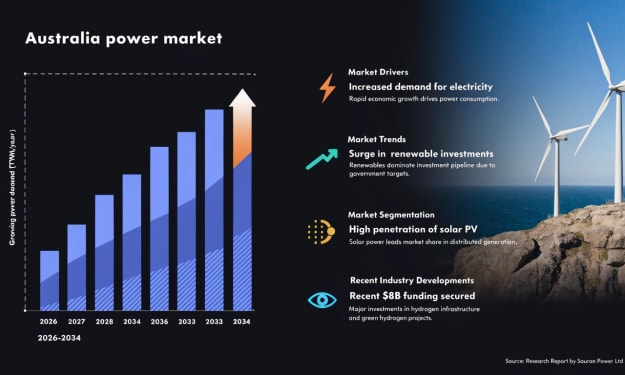
According to IMARC Group, the Australia power market reached 285.7 TWh in 2025 and is projected to reach 377.0 TWh by 2034, growing at a compound annual growth rate (CAGR) of 3.04% during 2026–2034. The market’s growth is being shaped by accelerating renewable energy adoption, increasing electricity demand and large-scale investments in grid modernization. Government incentives supporting clean energy transition, combined with rising corporate sustainability commitments, are encouraging the expansion of solar, wind and battery storage infrastructure. At the same time, the gradual phase-out of coal-fired power plants is transforming the structure of Australia’s electricity generation mix. With emerging technologies such as hydrogen energy systems and virtual power plants gaining traction, Australia’s power sector is evolving into a more diversified, digitally integrated and sustainable energy ecosystem.
By Kevin Cooper6 days ago in Futurism



Comments
There are no comments for this story
Be the first to respond and start the conversation.