
EV Charging Cables Market Trends: Liquid-Cooled Cables, Ultra-Fast Charging & Industry Forecast to 2034
How ultra-fast DC charging requirements, liquid-cooled cable technologies, and thermal management innovations are redefining efficiency benchmarks, reliability expectations, and charging performance across modern EV ecosystems.

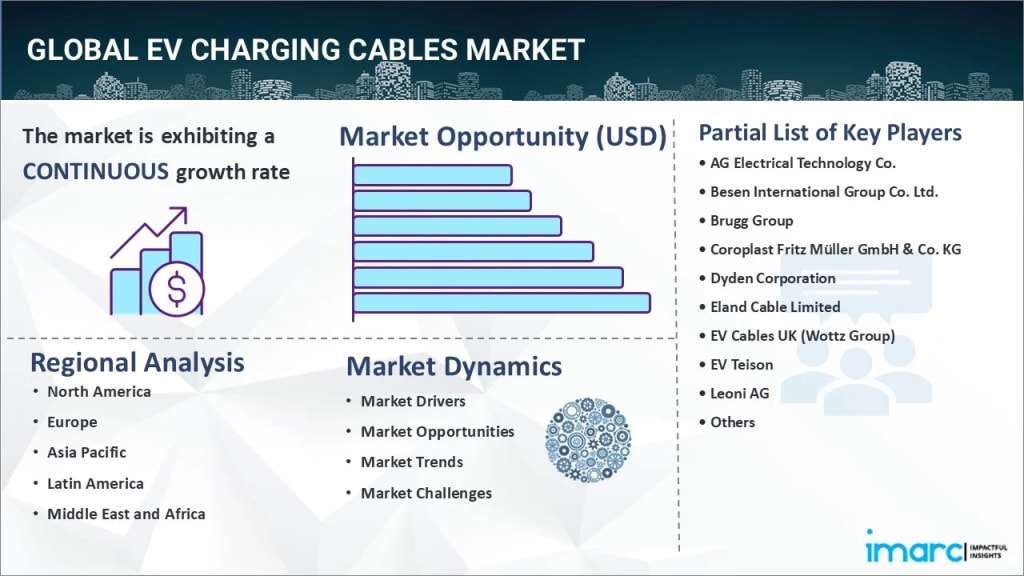
Rising demand for electric mobility, the rapid expansion of public charging infrastructure, and significant government funding are driving the EV charging cables market. Supported by technological advancements like high-power and liquid-cooled cables, the sector is scaling to meet the needs of both private and commercial users. According to IMARC Group’s latest data, the global EV charging cables market size reached USD 1,461.7 Million in 2025. Looking forward, IMARC Group estimates the market to reach USD 6,574.8 Million by 2034, exhibiting a CAGR of 18.18% during 2026-2034.
The EV charging cables sector is now a multi-billion-dollar global industry, essential for the transition toward zero-emission transportation. Growth is fueled by the surging sales of battery electric vehicles, increasing urbanization that necessitates accessible charging, and a global shift toward high-speed DC charging solutions. Retailers, workplaces, and gas stations are increasingly integrating charging hubs to provide convenience for long-distance travel and urban dwellers. Major segments include AC and DC charging cables, with straight and coiled formats designed for durability and ease of use. As battery capacities increase, consumers are prioritizing high-power cables that can deliver rapid energy transfer and withstand heavy daily usage.
Request a Free Sample of the “EV Charging Cables Market” Report!
EV Charging Cables Market Growth Drivers:
- Massive Global Surge in Electric Vehicle Adoption
The primary driver of the market is the explosive growth in EV sales, with over 13.7 million new electric cars registered globally in recent years. This surge creates an immediate and sustained demand for reliable charging cables across residential and public settings. In the United States alone, the number of registered plug-in vehicles reached approximately 7.3 million by late 2025. As automakers like Ford and GM scale their electric portfolios, the need for high-quality, durable cables that can handle frequent usage cycles remains critical for supporting this expanding fleet of vehicles.
- Aggressive Expansion of Public Charging Infrastructure
Governments and private entities are rapidly building out charging networks to alleviate "range anxiety" among consumers. For instance, the United States deployed over 18,000 new DC fast-charging ports in 2025, marking a 30% year-on-year increase. Similarly, China continues to lead the world, having added enough charging points in 2024 to equal the total global stock available in 2020. This massive infrastructure rollout requires a continuous supply of heavy-duty, high-capacity cables to connect power grids to vehicles at thousands of new stations in shopping centers, highways, and urban hubs.
- Significant Government Funding and Policy Support
Substantial financial incentives are accelerating market growth globally. The U.S. government allocated USD 5 billion through the National Electric Vehicle Infrastructure (NEVI) program and an additional USD 2.5 billion for community charging grants to build a network of 500,000 chargers by 2030. In India, the PM E-DRIVE scheme recently received an investment of approximately USD 240 million to boost urban charging infrastructure. These policies, combined with tax credits of up to USD 1,000 for residential chargers, lower the barrier to entry for consumers and drive large-scale procurement of charging hardware.
EV Charging Cables Market Trends:
- Shift Toward Ultra-Fast and Liquid-Cooled Charging
There is a significant transition toward ultra-fast charging technology to reduce wait times for drivers. The industry is seeing a rise in cables capable of delivering 250 kW or higher, which can add 100 miles of range in under 10 minutes. To manage the intense heat generated by such high power, manufacturers are increasingly adopting liquid-cooled cable designs. These advanced solutions are becoming the standard for highway corridors, where high throughput is essential. In 2025, nearly one in four new chargers installed in the U.S. featured these high-power capabilities.
- NACS Standardization and Universal Compatibility
A major trend shaping the market is the widespread adoption of the North American Charging Standard (NACS). Most major automakers have committed to integrating NACS ports, leading to a surge in demand for NACS-compatible cables and adapters. This move toward a unified connector type simplifies the charging experience for consumers and streamlines production for cable manufacturers. This standardization effort is mirrored in other regions, where the focus is on creating interoperable networks that allow any EV to use any public charger, regardless of the brand.
- Focus on Durability and Weather-Resistant Designs
As charging stations move into more diverse and extreme environments, there is an increasing emphasis on the physical durability of cables. Manufacturers are developing cables with enhanced resistance to UV radiation, oil, and extreme temperatures ranging from -40°C to +50°C. Modern cables are also being designed with lightweight, high-flexibility materials to make them easier for all users to handle. In public settings, there is a growing use of retractable cable management systems to prevent wear and tear from cables lying on the ground, ensuring a longer operational lifespan.
Recent News and Developments in EV Charging Cables Market
- January 2025: The U.S. Department of Transportation announced USD 635 million in grants under the Bipartisan Infrastructure Law to deploy over 11,500 new EV charging ports across 27 states, directly boosting the demand for high-capacity charging cables.
- October 2025: The National Electric Vehicle Infrastructure (NEVI) program reached a milestone with 121 stations energized across 16 states, signaling a move from the planning phase to active large-scale hardware deployment.
- August 2025: Revised federal guidance was unveiled to streamline the applications for charging infrastructure, giving states more flexibility in station placement and accelerating the timeline for building out national Alternative Fuel Corridors.
- March 2024: Itselectric announced the first UL-certified detachable cable EV charger, introducing a new level of safety and convenience for urban charging solutions where permanent cable fixtures may be prone to damage or theft.
Note: If you require specific details, data, or insights that are not currently included in the scope of this report, we are happy to accommodate your request. As part of our customization service, we will gather and provide the additional information you need, tailored to your specific requirements. Please let us know your exact needs, and we will ensure the report is updated accordingly to meet your expectations.
About the Creator
Andrew Sullivan
Hello, I’m Andrew Sullivan. I have over 9+ years of experience as a market research specialist.
Keep reading
More stories from Andrew Sullivan and writers in Futurism and other communities.
Capnography Devices Market Trends: Portable Monitoring Growth, Clinical Adoption & Industry Outlook to 2033
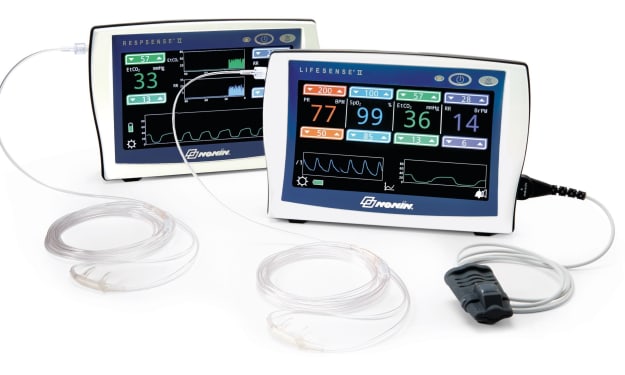
The increasing prevalence of respiratory diseases, growing demand for minimally invasive monitoring, and stringent safety guidelines for anesthesia and sedation are driving the capnography devices market. These factors are further supported by technological advancements in portable devices and the expansion of emergency medical services. According to IMARC Group’s latest data, the global capnography devices market size was valued at USD 429.4 Million in 2024. Looking forward, IMARC Group estimates the market to reach USD 685.0 Million by 2033, exhibiting a CAGR of 5.06% during 2025-2033.
By Andrew Sullivanabout 12 hours ago in Futurism
Australia Fast Food Market: Consumer Preferences, Convenience Demand & Digital Ordering
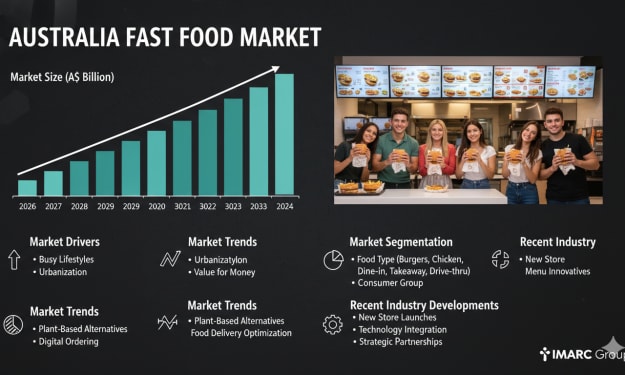
According to IMARC Group, the Australia fast food market reached USD 18.8 Billion in 2025 and is projected to grow to USD 26.5 Billion by 2034, exhibiting a compound annual growth rate (CAGR) of 3.80% during 2026–2034. This steady expansion reflects evolving consumption habits, urban convenience culture and digital transformation across Australia. Fast food, once defined primarily by traditional quick-service restaurant formats, now encompasses app-based ordering, drive-through innovation, delivery integration and menu diversification. As disposable incomes rise and consumers seek speed without sacrificing variety, Australia’s fast food ecosystem is adapting through technology, health-oriented reformulation and omnichannel engagement strategies.
By Shrestha Roy2 days ago in Futurism


Comments
There are no comments for this story
Be the first to respond and start the conversation.