


Electric vehicles (EVs) represent a significant shift in automotive technology, promising cleaner and more sustainable transportation compared to traditional internal combustion engine (ICE) vehicles. In this detailed explanation, we will cover how electric cars work, including their components, operation principles, charging infrastructure, environmental impact, and future developments.
### Overview of Electric Vehicles (EVs)
Electric vehicles use one or more electric motors for propulsion instead of internal combustion engines fueled by gasoline or diesel. These motors are powered by electricity stored in rechargeable batteries, which are typically lithium-ion batteries due to their high energy density and efficiency. The key components of an electric vehicle include the battery pack, electric motor(s), power electronics, and the onboard charger. Additionally, EVs incorporate advanced electronics and software for control systems, safety features, and user interfaces.
### Components of an Electric Vehicle
#### 1. Battery Pack
The battery pack is the heart of an electric vehicle, providing the energy necessary to power the electric motor. The size and capacity of the battery pack determine the vehicle's range on a single charge. Lithium-ion batteries are commonly used due to their high energy density, longevity, and relatively low weight compared to other battery types. The battery pack typically consists of numerous individual battery cells arranged in modules or packs, managed by a Battery Management System (BMS) to monitor and optimize performance, safety, and longevity.
#### 2. Electric Motor(s)
Electric vehicles can have one or more electric motors, depending on the vehicle's design and performance requirements. These motors convert electrical energy from the battery into mechanical energy to drive the wheels. There are different types of electric motors used in EVs, including:
- **Permanent Magnet Synchronous Motors (PMSM)**: Efficient and widely used due to their high power density and torque capabilities.
- **Induction Motors**: Known for their simplicity and reliability, although they may be less efficient at lower speeds compared to PMSMs.
- **Switched Reluctance Motors (SRM)**: Less common but known for their robustness and potential cost-effectiveness.
Electric motors operate efficiently across a wide range of speeds and do not require traditional transmissions, which simplifies the drivetrain and reduces maintenance needs.
#### 3. Power Electronics
Power electronics are essential components that control the flow of electricity between the battery pack and the electric motor(s). They include inverters, converters, and other electronic components that manage voltage, current, and frequency to ensure efficient operation of the electric motor(s). Power electronics also play a crucial role in regenerative braking, where energy from braking is converted back into electricity and stored in the battery pack.
#### 4. Onboard Charger
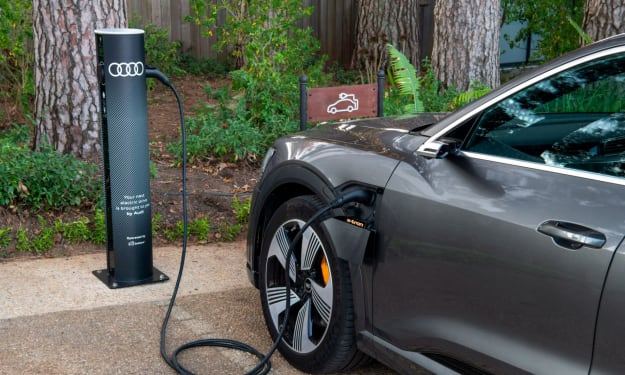
The onboard charger converts alternating current (AC) from the grid or a charging station into direct current (DC) to recharge the vehicle's battery pack. The charger is integrated into the vehicle and allows EVs to be charged at home using a standard wall outlet or at public charging stations with higher power outputs. Some EVs also support fast charging, which uses DC power directly to charge the battery pack rapidly, reducing charging times significantly.
#### 5. Control Systems and Software
Modern electric vehicles rely on sophisticated control systems and software to manage various functions, including:
- **Drive Control**: Regulating the speed and torque output of the electric motor(s) based on driver inputs and vehicle conditions.
- **Battery Management**: Monitoring the state of charge (SoC), temperature, and health of the battery pack to optimize performance, longevity, and safety.
- **Safety Systems**: Controlling airbags, anti-lock braking systems (ABS), stability control, and other safety features.
- **User Interface**: Providing information to the driver about battery status, range estimation, navigation, and other vehicle functions through displays and touchscreens.
### Operation Principles of Electric Vehicles
#### 1. Charging and Energy Storage
Electric vehicles are charged by plugging them into an external power source. Charging can be done:
- **At Home**: Using a standard household outlet (Level 1 charging) or a dedicated home charging station (Level 2 charging), which provides faster charging speeds.
- **Public Charging Stations**: Found in various locations, including shopping centers, workplaces, and along highways. Public charging stations may offer Level 2 charging or DC fast charging, allowing for rapid charging sessions that can replenish a significant portion of the battery capacity in a short time.
The energy stored in the battery pack is measured in kilowatt-hours (kWh) and determines the vehicle's range. The efficiency of an electric vehicle is expressed in miles (or kilometers) per kWh, indicating how far the vehicle can travel on a unit of electricity.
#### 2. Driving Dynamics
When the driver accelerates, electricity from the battery pack is sent to the electric motor(s), generating torque and rotating the wheels. Unlike ICE vehicles, electric motors provide instant torque from standstill, resulting in smooth and responsive acceleration. Regenerative braking captures energy during deceleration and braking, using the electric motor(s) as generators to convert kinetic energy back into electrical energy. This energy is then stored in the battery pack, enhancing overall efficiency and extending range.
#### 3. Energy Efficiency and Range
Electric vehicles are inherently more energy-efficient than ICE vehicles due to the higher efficiency of electric motors and the ability to recover energy during braking. Factors influencing an EV's range include:
- **Battery Capacity**: Larger battery packs store more energy and provide longer ranges.
- **Driving Conditions**: Speed, terrain, weather, and driving habits affect energy consumption.
- **Efficiency**: Vehicle design, weight, aerodynamics, and tire choice impact efficiency and range.
Improvements in battery technology, lightweight materials, aerodynamics, and drivetrain efficiency continue to extend the range of electric vehicles, making them increasingly practical for everyday use and long-distance travel.
### Environmental Impact of Electric Vehicles
Electric vehicles are often touted as cleaner alternatives to ICE vehicles due to their zero tailpipe emissions and potential for lower overall greenhouse gas emissions when considering the entire lifecycle, including manufacturing and electricity generation.
#### 1. Tailpipe Emissions
EVs produce zero tailpipe emissions, contributing to improved air quality in urban areas and reducing local pollution compared to ICE vehicles, which emit pollutants such as nitrogen oxides (NOx), particulate matter (PM), and carbon monoxide (CO).
#### 2. Lifecycle Emissions
The environmental impact of electric vehicles also depends on how electricity is generated. In regions with a high proportion of renewable energy sources (such as wind, solar, and hydroelectric power), EVs can significantly reduce greenhouse gas emissions compared to ICE vehicles. Even when accounting for emissions from electricity generation and battery production, EVs generally have lower lifecycle emissions than conventional vehicles, and this gap is expected to widen as electricity generation becomes cleaner.
#### 3. Battery Production and Recycling
The production of lithium-ion batteries for electric vehicles involves mining and processing raw materials such as lithium, cobalt, and nickel. While these processes have environmental impacts, efforts are underway to improve resource efficiency, reduce dependence on critical materials, and develop recycling technologies to recover valuable metals from spent batteries. Battery recycling not only reduces environmental impact but also supports the circular economy by reusing materials in new battery production.
### Challenges and Future Developments
#### 1. Infrastructure Development
One of the challenges facing the widespread adoption of electric vehicles is the need for a robust charging infrastructure. Efforts are underway globally to expand public charging networks, increase charging speeds, and standardize charging protocols to enhance convenience and accessibility for EV drivers.
#### 2. Battery Technology Advancements
Improvements in battery technology are crucial for enhancing the performance, range, and affordability of electric vehicles. Research focuses on developing batteries with higher energy density, faster charging capabilities, longer cycle life, and reduced costs. Solid-state batteries and other advanced technologies hold promise for future generations of electric vehicles, offering potential breakthroughs in performance and safety.
#### 3. Market Adoption and Policy Support
Government incentives, subsidies, and regulatory policies play a significant role in accelerating the adoption of electric vehicles. Policies promoting vehicle electrification, such as zero-emission vehicle mandates, tax incentives for EV purchases, and investments in charging infrastructure, are essential for driving market demand and supporting the transition to sustainable transportation.
#### 4. Integration with Renewable Energy
The integration of electric vehicles with renewable energy sources supports decarbonization efforts and enhances energy independence. Smart grid technologies and vehicle-to-grid (V2G) systems enable bidirectional energy flows between EVs and the electric grid, allowing vehicles to store renewable energy and discharge power back to the grid during peak demand periods, thus stabilizing the grid and optimizing energy use.
### Conclusion
Electric vehicles represent a transformative technology in the automotive industry, offering cleaner, quieter, and more efficient transportation solutions compared to traditional internal combustion engine vehicles. Advances in battery technology, charging infrastructure, and supportive policies are driving the growth of the electric vehicle market globally. While challenges remain, such as infrastructure development and battery sustainability, ongoing innovation and collaboration across sectors are paving the way for a sustainable and electrified future of mobility.
In summary, electric vehicles operate using electric motors powered by rechargeable batteries, offering zero tailpipe emissions and significant energy efficiency advantages over internal combustion engine vehicles. The future of electric vehicles looks promising with ongoing advancements in technology, infrastructure, and policy support driving their adoption and integration into a cleaner and more sustainable transportation ecosystem.Electric vehicles (EVs) represent a significant shift in automotive technology, promising cleaner and more sustainable transportation compared to traditional internal combustion engine (ICE) vehicles. In this detailed explanation, we will cover how electric cars work, including their components, operation principles, charging infrastructure, environmental impact, and future developments.
About the Creator
SOLOMON
LEARN ABOUT PSYCOLOGY LIFE AND HUMANITY
About Binding Prometheus
I want to start actively advocating on behalf of my own work, and the most valuable part of my canon is, without a doubt, Binding Prometheus, the play I have been working on since 2019 and only finished in 2023 as part of my MA. The play itself is an amalgamation of a million different inspirations. On one end, it evokes the Ancient Greek myth-play, deriving its own title from the earliest extant work of Western drama we have, Aeschylus’s Prometheus Bound. On the other end, it borrows significantly from the sci-fi bulwarks from over the years, namely Mary Shelley’s Frankenstein and Karel Capek’s Rossum’s Universal Robots. The play could be an episode of Black Mirror, I fear. I don’t know. I’ve only ever seen one episode of Black Mirror.
By Steven Christopher McKnight29 days ago in Futurism



Comments
There are no comments for this story
Be the first to respond and start the conversation.