
Ethical considerations in the development and deployment of AI
This article can explore the ethical challenges of developing and using AI, such as bias in machine learning algorithms and the potential for misuse of AI technologies.

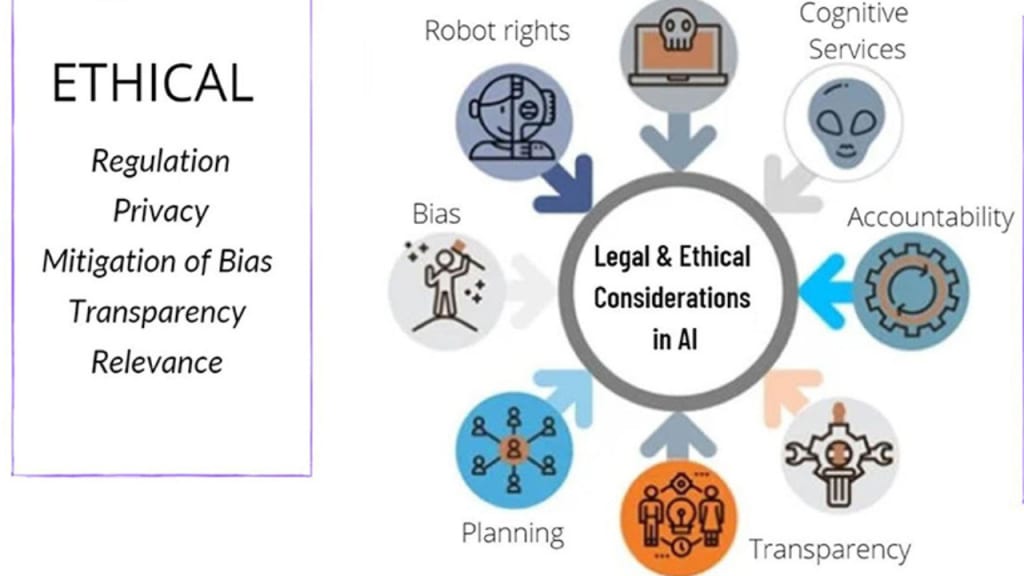
As artificial intelligence (AI) becomes increasingly integrated into our daily lives, it is important to consider the ethical implications of its development and deployment. From issues of bias and discrimination to concerns around privacy and surveillance, the ethical considerations surrounding AI are complex and multifaceted. In this article, we will explore some of the key ethical considerations in the development and deployment of AI.
Bias and Discrimination
One of the primary ethical considerations in the development and deployment of AI is the potential for bias and discrimination. AI algorithms are only as unbiased as the data they are trained on, and if that data contains biases or reflects existing social inequalities, those biases can be amplified by the algorithm.
For example, facial recognition software has been shown to be less accurate for people with darker skin tones and for women, which can lead to harmful consequences such as false arrests or misidentification. Additionally, AI can perpetuate discrimination if it is used to make decisions about hiring, lending, or other important areas of life without taking into account factors such as historical discrimination or systemic bias.
To mitigate the impact of bias and discrimination in AI, it is important to ensure that datasets are diverse and representative, and that AI systems are tested for fairness and accuracy across different demographic groups.
Privacy and Surveillance
AI also poses significant privacy and surveillance risks, particularly when it comes to the collection and use of personal data. AI algorithms often rely on large amounts of data to function effectively, and that data can include personal information such as biometric data, location data, and online activity.
If this data is not properly secured or used in accordance with privacy regulations, it can be used to profile individuals or manipulate their behavior. For example, social media algorithms can be used to target individuals with personalized ads based on their online activity, which can have negative consequences such as the spread of misinformation or the reinforcement of harmful stereotypes.
To address these concerns, it is important to ensure that personal data is collected and used transparently and with the explicit consent of the individual, and that privacy regulations are enforced rigorously.
Transparency and Accountability
AI can also raise concerns around transparency and accountability. Because AI algorithms can be complex and difficult to understand, it can be challenging to determine how decisions are being made and what factors are being taken into account.
This lack of transparency can make it difficult for individuals to challenge decisions made by AI systems, particularly if those decisions have negative consequences such as denial of a loan or a job. Additionally, because AI can be trained on large amounts of data, it can be difficult to determine who is responsible for the decisions made by an AI system.
To address these concerns, it is important to ensure that AI systems are transparent and explainable, and that there is clear accountability for the decisions made by those systems.
Human Autonomy and Control
AI also raises concerns around human autonomy and control. As AI systems become more advanced, there is a risk that they could replace human decision-making entirely, leading to a loss of autonomy and control over important areas of life such as healthcare, education, and employment.
Additionally, there is a risk that AI systems could be used to manipulate or coerce individuals, particularly in areas such as politics or advertising where the ability to influence behavior is highly valued.
To address these concerns, it is important to ensure that human control and oversight is maintained over AI systems, and that individuals have the ability to challenge decisions made by those systems.
Environmental Impact
Finally, the development and deployment of AI can also have significant environmental impacts. AI systems require large amounts of computing power, which can lead to increased energy consumption and carbon emissions.
To address these concerns, it is important to ensure that AI systems are designed and deployed in a way that minimizes their environmental impact, such as by using renewable energy sources or by
About the Creator
Abdullah Javaid Khan
Im a Passionate Writer with a talent for crafting compelling stories and insightful commentary. With 2 Years Of experience in the writing industry,i have honed skills across a range of genres,from fiction to facts,journaslism to poetry.
Keep reading
More stories from Abdullah Javaid Khan and writers in Futurism and other communities.
The impact of AI on education
Artificial intelligence (AI) has the potential to revolutionize education in numerous ways. From personalized learning experiences to more efficient administrative processes, AI can provide educators and students with powerful tools to enhance the learning experience. In this article, we will explore the impact of AI on education, both current and future.
By Abdullah Javaid Khan3 years ago in Futurism
About Binding Prometheus
I want to start actively advocating on behalf of my own work, and the most valuable part of my canon is, without a doubt, Binding Prometheus, the play I have been working on since 2019 and only finished in 2023 as part of my MA. The play itself is an amalgamation of a million different inspirations. On one end, it evokes the Ancient Greek myth-play, deriving its own title from the earliest extant work of Western drama we have, Aeschylus’s Prometheus Bound. On the other end, it borrows significantly from the sci-fi bulwarks from over the years, namely Mary Shelley’s Frankenstein and Karel Capek’s Rossum’s Universal Robots. The play could be an episode of Black Mirror, I fear. I don’t know. I’ve only ever seen one episode of Black Mirror.
By Steven Christopher McKnight19 days ago in Futurism
AI's Approach to Medical Device Software Design
The healthcare industry is undergoing a rapid digital transformation, driven by the increasing adoption of connected medical devices, smart diagnostics, and software-powered patient care systems. At the heart of this evolution lies medical device software design, a specialized discipline that blends healthcare expertise, regulatory compliance, and advanced engineering to create reliable, life-critical digital solutions.
By Steve Waugh4 days ago in Futurism
Wild Card Weekend Recap: What Happens Now?
I think I figured out why I love Wild Card Weekend so much. It's because it's the first playoff anything of the calendar year. The NFL season starts in the fall, and once upon a time, the champion was crowned either on or slightly before New Year's. The evolution of the NFL schedule has resulted in the playoffs starting just into the New Year, and currently, the final week of the season falls on the first weekend of the New Year, with Wild Card Weekend coming a week after that. So yes, chronologically, the NFL's Wild Card Weekend serves as the first playoff anything of the calendar year.
By Clyde E. Dawkins7 days ago in Unbalanced



Comments
There are no comments for this story
Be the first to respond and start the conversation.