
Emotional Intelligence: What It Is and Why It Matters in the Modern World
Exploring the Power of Emotional Intelligence in Modern Life: From Work to Personal Relationships


Index:
1. Introduction to Emotional Intelligence
2. The Components of Emotional Intelligence
3. The Importance of Emotional Intelligence in the Workplace
4. Emotional Intelligence and Interpersonal Relationships
5. Developing Emotional Intelligence: Strategies and Techniques
6. The Future of Emotional Intelligence in the Digital Society
1. Introduction to Emotional Intelligence
Emotional intelligence, introduced in the 1990s by psychologist Daniel Goleman, refers to the ability to recognize, understand, and manage one’s own emotions and those of others. It stands out from traditional intelligence, as it includes the skills needed to navigate social interactions and emotional challenges. Numerous studies show its significance in various contexts, suggesting that emotional skills can be more crucial than cognitive abilities for personal and professional success.
2. The Components of Emotional Intelligence
Self-Awareness
Self-awareness involves recognizing and understanding one’s emotions, which is foundational for emotional intelligence. It includes an understanding of strengths, weaknesses, and motivations, aiding in more informed decision-making.
Self-Regulation
Self-regulation is the ability to control or redirect impulsive emotions and adapt to changing circumstances. It helps maintain calm under pressure and encourages a positive attitude.
Motivation
Motivation, within emotional intelligence, goes beyond external rewards, focusing on intrinsic reasons such as passion for work. It is linked to optimism and resilience.
Empathy
Empathy is understanding and sharing others’ feelings, essential for effective relationships. It involves recognizing and appropriately responding to others’ emotions.
Social Skills
Social skills include effective communication, teamwork, and conflict management. Strong social skills are critical for leadership and building trustful relationships.
3. The Importance of Emotional Intelligence in the Workplace
Emotional intelligence is vital for professional success. Leaders with high emotional intelligence can motivate teams, manage stress, and resolve conflicts effectively. Studies show it is a better predictor of job performance than IQ. Emotional skills facilitate open communication, collaboration, and adaptability to change, leading to a more productive work environment and higher employee satisfaction.
For example, a manager with high emotional intelligence can recognize when a team member is stressed or demotivated and intervene promptly to offer support, thus improving morale and group productivity. Emotional intelligence also helps in building and maintaining solid professional relationships, which are essential for collaboration and teamwork.
4. Emotional Intelligence and Interpersonal Relationships
Emotional intelligence enhances personal relationships by fostering effective communication, conflict resolution, and trust. In intimate relationships, empathy and self-regulation help maintain harmony. In friendships, emotional intelligence ensures support and reciprocity. Family relationships benefit from open communication, and children learn emotional skills by example. In professional settings, empathy and social skills improve teamwork and collaboration.
People with high emotional intelligence can communicate more effectively, resolve conflicts, and build relationships based on trust and mutual respect. Effective communication is the foundation of any healthy relationship, and emotional intelligence facilitates this process by allowing individuals to clearly express their feelings and actively listen to others. This not only improves the quality of personal interactions but can also positively impact mental health and overall well-being.
5. Developing Emotional Intelligence: Strategies and Techniques
Practicing Mindfulness
Self-awareness is the first step to developing emotional intelligence. Mindfulness and meditation practices can be particularly useful. These techniques help focus on the present moment, increasing awareness of one’s own emotions and thoughts. Daily meditation, even for just a few minutes, can significantly improve our ability to recognize and manage emotions. Additionally, keeping an emotional journal can help identify recurring emotional patterns and better understand our reactions.
Reflecting on Emotions
Another effective strategy is to regularly reflect on one’s emotions. This can be done through journaling, where daily emotional experiences are recorded, or through self-talk, where feelings are explored critically and constructively. Reflecting on emotions helps better understand the underlying causes of reactions and develop more effective strategies for managing them. It is important to be honest with oneself during this process, acknowledging both positive and negative emotions without judgment.
Training Empathy
Empathy can be developed through active listening and seeking different perspectives. Active listening means paying full attention to the speaker, without interrupting and genuinely trying to understand their point of view. This not only improves interpersonal relationships but also helps develop a deeper understanding of others’ emotions. Another way to train empathy is to read stories or watch films that explore diverse human experiences, allowing us to see the world through others’ eyes.
Developing Social Skills
Participating in discussion groups, clubs, or social activities can help improve relational skills. These experiences offer opportunities to practice effective communication, teamwork, and conflict management in a safe and supportive environment. Social activities also provide the chance to meet different people, enriching our understanding of various perspectives and cultures. Moreover, active participation in these social situations helps build self-confidence and improve interaction skills.
Stress Management
Stress management is another key component of developing emotional intelligence. Techniques like deep breathing, yoga, and regular physical exercise can help reduce stress levels and improve the ability to manage negative emotions. Taking time to relax and recharge is essential for maintaining emotional balance. Also, maintaining a healthy diet and a good sleep regime can positively impact stress management and emotional well-being.
6. The Future of Emotional Intelligence in the Digital Society
Emotional Intelligence and Digital Communications
With increasing digital interactions, emotional intelligence is crucial for understanding and responding to online communications, preventing misunderstandings and conflicts.
In today’s society, much of our interactions occur through digital channels such as emails, instant messages, and social media. While these tools are convenient, they can make it more difficult to understand others’ emotions, as they lack the non-verbal cues essential in face-to-face communication. This is where emotional intelligence comes into play, helping interpret and respond appropriately to messages even in the absence of visual and auditory cues. Developing greater emotional sensitivity in digital communications can prevent misunderstandings and conflicts, thus improving the quality of online interactions.
Emotional Intelligence in Emerging Technologies
Artificial intelligence (AI) and other emerging technologies are beginning to incorporate elements of emotional intelligence to enhance interactions with humans. For instance, chatbots and virtual assistants are becoming increasingly sophisticated in recognizing and responding to human emotions. These systems, using advanced algorithms, can analyze voice tone or textual content to provide more empathetic and appropriate responses. The future may see the introduction of even more advanced technologies capable of interacting empathetically and supporting people in various aspects of their daily lives.
Emotional Intelligence and Remote Work
Remote work, increasingly common due to the COVID-19 pandemic, has highlighted the importance of emotional intelligence. Managing virtual teams requires a greater ability to understand and support the emotional needs of employees, who may feel isolated or stressed. Leaders with high emotional intelligence can maintain effective communication and create a sense of community even in a virtual environment. This includes organizing regular meetings, recognizing achievements, and creating opportunities for informal social interactions, which help maintain high morale and strengthen the bond between team members.
Education and Training in Emotional Intelligence
With the growing recognition of the importance of emotional intelligence, many educational institutions and organizations are incorporating specific training programs to develop these skills. Schools are introducing curricula that teach children how to recognize and manage their emotions and how to relate empathetically to their peers. Similarly, many companies offer emotional intelligence training to their employees, recognizing that these skills are crucial for individual and organizational success. This investment in emotional education better prepares future generations to navigate the complexities of the modern world.
The Role of Emotional Intelligence in Global Society
Finally, in an increasingly interconnected global society, emotional intelligence becomes a fundamental skill for promoting international understanding and cooperation. The ability to recognize and respect cultural differences and communicate empathetically is essential for building solid international relationships and addressing global challenges such as climate change, migrations, and geopolitical conflicts. People with high emotional intelligence can act as bridges between different cultures, facilitating dialogue and collaboration at a global level.
Conclusions
Emotional intelligence is a crucial skill for modern life, enhancing personal relationships and professional success. It helps navigate digital interactions, manage stress, and adapt to change. Investing in emotional education prepares individuals for a more empathetic and resilient society, placing human relationships at the forefront of an increasingly digital world.
About the Creator
Fabio Smiraglia
I am a passionate content writer with extensive experience in crafting engaging texts for blogs, websites, and social media. I love telling stories, informing, and connecting with audiences, always with creativity and precision.
Keep reading
More stories from Fabio Smiraglia and writers in Futurism and other communities.
Smart Home: How Technology is Transforming Our Homes
Introduction Smart Homes represent one of the most significant innovations in residential technology. By integrating connected and automated devices, Smart Homes offer a new level of convenience, security, and energy efficiency. The adoption of these technologies is growing exponentially, with more and more people choosing to make their homes “smarter.” This article explores how technology is transforming our homes, analyzing the main components of Smart Homes, their benefits, challenges, and future prospects.
By Fabio Smiragliaabout a year ago in Futurism
About Binding Prometheus
I want to start actively advocating on behalf of my own work, and the most valuable part of my canon is, without a doubt, Binding Prometheus, the play I have been working on since 2019 and only finished in 2023 as part of my MA. The play itself is an amalgamation of a million different inspirations. On one end, it evokes the Ancient Greek myth-play, deriving its own title from the earliest extant work of Western drama we have, Aeschylus’s Prometheus Bound. On the other end, it borrows significantly from the sci-fi bulwarks from over the years, namely Mary Shelley’s Frankenstein and Karel Capek’s Rossum’s Universal Robots. The play could be an episode of Black Mirror, I fear. I don’t know. I’ve only ever seen one episode of Black Mirror.
By Steven Christopher McKnight16 days ago in Futurism
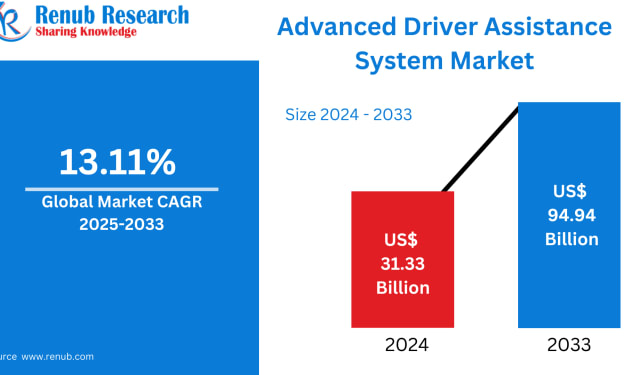
Advanced Driver Assistance System Market Size and Forecast 2025–2033
Advanced Driver Assistance System Market Advanced Driver Assistance System Industry Overview The Advanced Driver Assistance System (ADAS) industry represents one of the most transformative segments of modern automotive technology. Designed to enhance vehicle safety, minimize human error, and improve driving comfort, ADAS technologies are increasingly becoming essential rather than optional. From adaptive cruise control and lane departure warning to collision avoidance and automatic emergency braking, these systems are redefining how vehicles interact with drivers, roads, and surrounding traffic environments.
By Renub Research4 days ago in Futurism



Comments
There are no comments for this story
Be the first to respond and start the conversation.