
Electric Power Steering Market: Lightweight Designs, Fuel Efficiency Benefits & Automotive Innovation
Electric power steering gains traction as manufacturers reduce hydraulic systems for better efficiency.


According to IMARC Group's latest research publication, global Electric Power Steering Market size reached USD 29.62 Billion in 2024. Looking forward, IMARC Group expects the market to reach USD 45.30 Billion by 2033, exhibiting a growth rate (CAGR) of 4.59% during 2025-2033.
How AI is Reshaping the Future of Electric Power Steering Market
- Predictive Steering Algorithms and Real-Time Adaptation: AI algorithms process sensor data—driver behavior, vehicle speed, road conditions—to predict steering adjustments milliseconds in advance. Neural networks enable real-time adaptation to varying terrains, enhancing precision control and vehicle stability essential for electric and autonomous vehicles.
- Advanced Driver Assistance Systems Integration: Machine learning powers lane-keeping assist, automatic emergency steering, and adaptive cruise control. AI-enhanced EPS provides precise electronic inputs for safety features, with systems learning driver characteristics to personalize assistance levels while maintaining consistent safety standards across diverse driving scenarios.
- Predictive Maintenance and Fault Detection: AI analyzes sensor data patterns to predict component failures before breakdowns occur. Real-time anomaly detection identifies deviations in steering performance, minimizing downtime and ensuring system reliability while reducing maintenance costs through proactive interventions rather than reactive repairs.
- Energy Optimization and Battery Management: AI-driven systems optimize power consumption by adjusting assistance levels based on driving conditions and battery status. Intelligent algorithms control motor output, reducing parasitic losses and extending electric vehicle range while maintaining responsive steering feel and driver comfort throughout various operating conditions.
Electric Power Steering Industry Overview:
The automotive industry's rapid electrification is fundamentally transforming steering systems, with electric and hybrid vehicles driving unprecedented EPS adoption. Global electric vehicle sales reached 10.5 million units in 2022, marking a 55% surge from 2021, with projections indicating 17 million units in 2024—representing over 20% of global car sales. Governments worldwide are implementing stringent emission regulations and fuel efficiency mandates to reduce carbon footprints. The European Union's General Safety Regulation II, effective July 2024, mandates advanced safety technologies that integrate seamlessly with EPS systems, creating regulatory momentum. India's PM E-DRIVE Scheme allocates ₹10,900 crore (approximately USD 1.30 billion) to accelerate EV adoption and infrastructure development, directly benefiting EPS manufacturers. Major automakers are investing heavily in EPS technology integration across vehicle lineups, with approximately 70% of newly produced vehicles globally now featuring EPS systems as standard equipment, replacing traditional hydraulic mechanisms.
Request a Sample Report for In-Depth Industry Intelligence
Electric Power Steering Market Trends & Drivers
- The explosive growth of electric and hybrid vehicles represents the primary catalyst for EPS market expansion. These vehicles exclusively rely on EPS systems for improved energy efficiency and performance, eliminating parasitic energy losses inherent in hydraulic systems. EPS reduces fuel consumption by up to 0.4 liters per 100 kilometers and cuts CO2 emissions by approximately 7 grams per kilometer compared to hydraulic alternatives. Battery electric vehicles are projected to grow at 16.50% annually through 2030, the fastest among all propulsion types. China's EV market, the world's largest, witnessed significant expansion in 2024, with ZF Automotive Technology increasing its Chinese EPS production capacity to serve local manufacturers' surging demand.
- Integration with Advanced Driver Assistance Systems (ADAS) and autonomous driving technologies is revolutionizing EPS applications and creating new market opportunities. By 2025, nearly 60% of cars sold globally will feature Level 2 autonomy including adaptive cruise control, lane-keeping assistance, and collision avoidance—all requiring precise EPS integration. Mercedes-Benz is advancing toward Level 3 autonomy with environmental detection capabilities enabling vehicles to assist with acceleration, braking, and steering functions. Steer-by-wire technology, which eliminates mechanical connections between steering wheels and wheels, is predicted to increase vehicle adoption by 22% in 2025.
- Government regulations promoting fuel efficiency and emission reduction, combined with safety mandates, are accelerating EPS adoption across all vehicle segments. Fuel efficiency mandates drive measurable benefits, with National Research Council studies indicating 1.3% fuel reduction for midsize cars and 1.1% for large cars when replacing hydraulic systems with EPS. The automotive AI market is projected to surge from USD 5.2 billion in 2024 to USD 21 billion by 2030 at 27.5% CAGR, reflecting the integration of intelligent steering systems. Fleet operators increasingly recognize EPS as infrastructure investment delivering immediate operational cost reductions while enabling future autonomous capabilities. Passenger cars dominate the market with 68.6% share in 2024, driven by consumer demand for fuel-efficient, technology-savvy, low-emission vehicles featuring enhanced driving comfort.
Leading Companies Operating in the Global Electric Power Steering Industry:
- HELLA GmbH & Co. KGaA (Faurecia SE)
- Hycet Technology Co. Ltd (Great Wall Motor Company Limited)
- JTEKT Corporation
- Mitsubishi Electric Corporation
- Nexteer Automotive
- NSK LTD
- NXP Semiconductors N.V.
- Robert Bosch GmbH
- ThyssenKrupp AG
- TT Electronics plc
- ZF Friedrichshafen AG
Electric Power Steering Market Report Segmentation:
By Component:
- Steering Column
- Sensors
- Steering Gear
- Mechanical Rack and Pinion
- Electronic Control Unit
- Electric Motor
- Others
Sensors represent the largest segment due to their critical role in developing high-performance accuracy and safety for EPS systems, providing real-time data essential for precision steering and vehicle stability control.
By Mechanism:
- Rigid EPS
- Collapsible EPS
Collapsible EPS leads the market owing to superior safety capabilities and increased adaptability across different vehicle types.
By Type:
- Rack Assist Type (REPS)
- Column Assist Type (CEPS)
- Pinion Assist Type (PEPS)
Column Assist Type (CEPS) is the largest segment due to widespread adoption in small and mid-sized passenger vehicles and its space-efficient design.
By Vehicle Type:
- Passenger Car
- Commercial Vehicle
Passenger cars have the largest market share owing to rising demand for fuel-efficient, technology-savvy, and low-emission vehicles.
Regional Insights:
- North America (United States, Canada)
- Asia Pacific (China, Japan, India, South Korea, Australia, Indonesia, Others)
- Europe (Germany, France, United Kingdom, Italy, Spain, Russia, Others)
- Latin America (Brazil, Mexico, Others)
- Middle East and Africa
Asia Pacific exhibits clear dominance in the electric power steering market due to the presence of major automotive manufacturers and rapid electric vehicle adoption.
Recent News and Developments in Electric Power Steering Market
- February 2025: ZF Friedrichshafen AG commenced series production of steer-by-wire steering systems for Chinese manufacturer NIO's ET9 vehicle, marking a significant milestone in eliminating mechanical connections between the steering wheel and steering gear. This deployment represents one of the first commercial applications of fully electronic steering architecture in production vehicles.
- January 2025: ZF Friedrichshafen AG signed a major agreement to provide brake-by-wire and EPS systems to a multinational Original Equipment Manufacturer (OEM). This development demonstrates the increasing use of integrated by-wire technologies in the automotive sector.
- December 2024: Bosch announced the expansion of electric steering production in Hungary, with an investment of USD 117 million, supported by USD 27 million in state funding. This development reflects growing demand for EPS systems and Bosch's strategic positioning to serve European automotive manufacturers.
- July 2025: Knorr-Bremse began expanding its German truck plant to produce electric steering systems, with the potential to reduce European CO₂ emissions by up to 5.8 million tonnes over the next decade as part of its commitment to sustainable transportation solutions.
Note: If you require specific details, data, or insights that are not currently included in the scope of this report, we are happy to accommodate your request. As part of our customization service, we will gather and provide the additional information you need, tailored to your specific requirements. Please let us know your exact needs, and we will ensure the report is updated accordingly to meet your expectations.
About the Creator
sujeet. imarcgroup
With 2 years of hands-on experience at IMARC Group, I have conducted in-depth market research and analysis across diverse industries including technology, healthcare, agriculture, and consumer goods.
Keep reading
More stories from sujeet. imarcgroup and writers in Futurism and other communities.
Railway Cyber Security Market: Advanced Security Platforms, Malware Defense & Transportation Security
According to IMARC Group's latest research publication, the global railway cyber security market size was valued at USD 8.6 Billion in 2025. Looking forward, IMARC Group expects the market to reach USD 16.7 Billion by 2034, exhibiting a growth rate (CAGR) of 7.58% during 2026-2034.
By sujeet. imarcgroup2 months ago in Futurism
Mobile Gaming Market Trends: Esports Growth, Competitive Gaming & Forecast to 2033
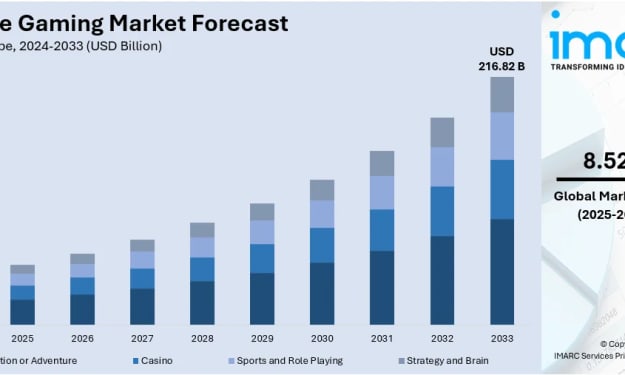
Smartphones have quietly become the world's most popular gaming console — no expensive hardware, no downloads, just a tap and play. That shift is fueling one of the fastest-growing segments in the entire technology sector. According to IMARC Group's latest research, the global mobile gaming market was valued at USD 100.08 Billion in 2024. Looking ahead, IMARC Group estimates the market to reach USD 216.82 Billion by 2033, exhibiting a CAGR of 8.52% from 2025 to 2033. Asia Pacific currently dominates the market, holding a market share of 58.9% in 2024. The region's lead is built on a massive tech-savvy population, rapid smartphone adoption, robust digital infrastructure, and consistent government investment in connectivity.
By Suhaira Yusuf6 days ago in Futurism
Stanislav Kondrashov: How Circumvention Drives Technological Breakthroughs
Innovation rarely follows a straight path. Many of the most meaningful technological advances emerged not from perfectly planned strategies but from creative detours around obstacles. In this context, the concept of circumvention becomes an unexpected catalyst for discovery. Rather than representing avoidance, it reflects the ability to rethink limitations and approach challenges from new angles.
By Stanislav Kondrashovabout 2 hours ago in Futurism



Comments
There are no comments for this story
Be the first to respond and start the conversation.