
Egypt Renewable Energy Market Analysis: Key Players and Growth Outlook
How Rising Energy Demand and Sustainability Goals Are Shaping the Egypt Renewable Energy Market


According to IMARC Group's latest research publication, the Egypt renewable energy market size reached USD 3,504.6 Million in 2025. The market is projected to reach USD 5,051.8 Million by 2034, exhibiting a growth rate of 3.94% during 2026-2034.
How AI is Reshaping the Future of Egypt Renewable Energy Market
- Predictive Energy Forecasting: AI analyzes weather patterns and historical data to forecast solar irradiance and wind speeds hourly, enabling grid operators to balance supply and demand while minimizing reliance on backup fossil fuel generation.
- Smart Grid Optimization: Machine learning algorithms route electricity efficiently across Egypt's expanding transmission network, reducing losses that currently stand at 16.5% and improving stability as renewable capacity scales toward 6,470 MW.
- Predictive Maintenance Systems: AI monitors solar panels and wind turbines in real-time, detecting performance anomalies early to schedule timely repairs, reducing downtime at major facilities like the 1.8 GW Benban Solar Park.
- Dynamic Resource Allocation: Intelligent algorithms optimize panel positioning throughout the day and adjust wind turbine blade angles in real-time, maximizing energy capture from Egypt's 2,000-3,200 kWh/m² annual solar irradiance and 8-12 m/s wind speeds.
- Energy Storage Intelligence: AI-powered battery management systems optimize charge-discharge cycles at facilities like the 300 MWh Kom Ombo storage system, ensuring reliable power during low-generation periods and peak demand hours.
Get In-Depth 2026 Industry Insights & Projections
How Vision 2030 is Revolutionizing Egypt Renewable Energy Industry
Egypt's ambitious renewable energy transformation is accelerating under a comprehensive national strategy targeting 42% renewable electricity by 2030. The government has committed EGP 136.3 billion in electricity sector investments for the 2025/2026 fiscal year—nearly double the previous year's allocation—demonstrating unprecedented financial commitment to clean energy infrastructure. The Nexus of Water, Food, and Energy (NWFE) program alone targets 10 GW of new renewable capacity with $10 billion in investments while phasing out 5 GW of fossil fuel generation by 2028. Major international partnerships are materializing rapidly, with over $4 billion secured from development partners including the European Bank for Reconstruction and Development, International Finance Corporation, and African Development Bank. Egypt has already signed 32 Power Purchase Agreements with private developers generating 1,465 MW, using the Build-Own-Operate model to accelerate deployment. Grid modernization is advancing with 12 million smart meters installed and 19 new distribution control centers under construction, positioning Egypt as a regional energy hub with planned interconnections totaling 3,900 MW to Saudi Arabia, Greece, Cyprus, and Libya for exporting clean power across borders.
Egypt Renewable Energy Market Trends & Drivers
Egypt's renewable energy boom is being powered by exceptional natural resources that few countries can match. The nation enjoys some of the world's highest solar irradiance—between 2,000 and 3,200 kWh per square meter annually—with over 3,500 hours of peak sunlight in regions like the Western Desert and Upper Egypt. These desert areas offer massive tracts of unused land perfect for solar farms without competing with agriculture or housing. Meanwhile, the Gulf of Suez delivers consistent wind speeds averaging 8-12 meters per second, creating ideal conditions for large-scale wind generation. The 650 MW Gulf of Suez Wind Farm II, now Africa and the Middle East's largest operational wind facility, went fully online ahead of schedule, showcasing how effectively Egypt can harness these resources. Projects like the 1.8 GW Benban Solar Park—one of the world's largest solar installations—prove that Egypt's natural advantages translate into real generation capacity. These geographic gifts are making renewable energy increasingly cost-competitive with fossil fuels, fundamentally changing Egypt's energy economics and attracting billions in private investment.
Surging electricity demand and energy security concerns are forcing Egypt to dramatically expand and diversify its power generation. The country's rapidly growing population, urban expansion, and industrial development are pushing electricity consumption higher each year, creating supply pressures that led to periodic outages. Historically dependent on natural gas and oil, Egypt is now vulnerable to volatile global energy prices and dwindling domestic fossil fuel reserves. The government's target to reach 20% renewable electricity by 2025/2026—up from just 12% previously—reflects the urgency of this transition. Achieving 6,470 MW of combined wind and solar capacity requires massive infrastructure buildout, but it's essential for meeting baseload demand without relying solely on imported fuels. Over 3,700 MW of solar capacity with 2,840 MWh of battery storage is being connected to the grid before summer to address peak demand periods. This renewable expansion isn't just about environmental goals—it's about economic survival, reducing import bills, protecting against price shocks, and ensuring Egyptian homes and factories have reliable power for sustained growth.
Falling technology costs and unprecedented international investment are accelerating Egypt's renewable transition at remarkable speed. Solar panel and wind turbine prices have dropped dramatically, making renewable projects financially viable without heavy subsidies. Development partners have committed over $4 billion in financing through institutions like the European Bank for Reconstruction and Development, International Finance Corporation, African Development Bank, and Japan International Cooperation Agency. Major private developers—including Masdar, ACWA Power, AMEA Power, Scatec, and Hassan Allam Utilities—are executing multi-billion dollar projects under long-term Power Purchase Agreements with guaranteed offtake. Masdar alone is developing a 10 GW onshore wind farm that will become one of the world's largest, projected to reduce carbon emissions by 23.8 million tons annually. Egypt's green hydrogen ambitions are attracting even bigger investments, with a $33 billion consortium agreement and a $17 billion facility in South Sinai targeting 400,000 tons of annual production. These partnerships bring not just capital but cutting-edge technology and operational expertise, enabling Egypt to leapfrog development stages and deploy world-class renewable infrastructure at scale.
Egypt Renewable Energy Market Industry Segmentation
The report has segmented the market into the following categories:
Type Insights:
- Hydro Power
- Wind Power
- Solar Power
- Bioenergy
- Others
End User Insights:
- Industrial
- Residential
- Commercial
Regional Insights:
- Greater Cairo
- Alexandria
- Suez Canal
- Delta
- Others
Competitive Landscape
The competitive landscape of the industry has also been examined along with the profiles of the key players.
Recent News and Developments in Egypt Renewable Energy Market
- June 2025: Sumitomo Corporation announced the Amunet Wind Power Plant (500 MW capacity) commenced commercial operations ahead of schedule on May 29, with annual output projected to power approximately one million Egyptian households through a 25-year power purchase agreement.
- July 2025: Egypt commissioned its first utility-scale Battery Energy Storage System (300 MWh) in Kom Ombo, Aswan, ahead of schedule, fully integrated with AMEA's 500 MW solar PV plant operational since December 2024.
- September 2025: Egypt's Ministry of Investment and Foreign Trade met with Alcazar Energy to discuss expanding renewable energy initiatives supporting the nation's sustainability goals, while separately engaging SunRev Solar on plans for a 100,000 square meter manufacturing facility in Ain Sokhna producing 2 GW solar cells and modules starting early 2026.
- September 2025: The Ministry of Planning confirmed EGP 6.7 billion in public investments secured for the 2024/2025 fiscal year to reinforce the national electricity grid, supporting 3,700 MW of solar capacity with 2,840 MWh battery storage scheduled for connection before summer 2025.
- September 2025: Egypt announced electricity sector investments will reach EGP 136.3 billion in 2025/2026—nearly double the EGP 72.6 billion allocated in 2024/2025—with renewables targeted to account for 20% of power generation, up from 12% in 2023/2024.
Note: If you require specific details, data, or insights that are not currently included in the scope of this report, we are happy to accommodate your request. As part of our customization service, we will gather and provide the additional information you need, tailored to your specific requirements. Please let us know your exact needs, and we will ensure the report is updated accordingly to meet your expectations.
About the Creator
Abhay Rajput
I am working in market research company that provides market and business research intelligence across the globe.
Keep reading
More stories from Abhay Rajput and writers in Futurism and other communities.
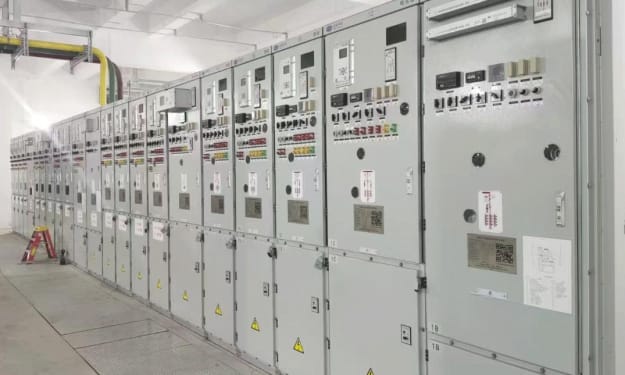
GCC Switchgear Market Analysis: Key Players and Market Forecast
According to IMARC Group's latest research publication, the GCC switchgear market size reached USD 2,334.97 Million in 2025. The market is projected to reach USD 3,385.56 Million by 2034, exhibiting a growth rate of 4.21% during 2026-2034.
By Abhay Rajputabout 12 hours ago in Futurism
About Binding Prometheus
I want to start actively advocating on behalf of my own work, and the most valuable part of my canon is, without a doubt, Binding Prometheus, the play I have been working on since 2019 and only finished in 2023 as part of my MA. The play itself is an amalgamation of a million different inspirations. On one end, it evokes the Ancient Greek myth-play, deriving its own title from the earliest extant work of Western drama we have, Aeschylus’s Prometheus Bound. On the other end, it borrows significantly from the sci-fi bulwarks from over the years, namely Mary Shelley’s Frankenstein and Karel Capek’s Rossum’s Universal Robots. The play could be an episode of Black Mirror, I fear. I don’t know. I’ve only ever seen one episode of Black Mirror.
By Steven Christopher McKnight21 days ago in Futurism
Tissue Paper Market Size and Forecast 2025–2033
Introduction The global tissue paper industry, once viewed as a low-involvement consumer staple, has undergone a significant transformation in recent years. According to Renub Research, the worldwide Tissue Paper Market is projected to grow from US$ 62.47 billion in 2024 to US$ 103.59 billion by 2033, registering a compound annual growth rate (CAGR) of 5.78% during 2025–2033. This steady expansion reflects a combination of rising hygiene awareness, accelerating urbanization, and increasing reliance on convenient, disposable products across residential and commercial environments.
By Aaina Oberoi7 days ago in Futurism
📢 Raise Your Voice Thread: 01/22/2026
Our “Raise Your Voice Threads” are hosted most alternating Thursdays at 12PM ET to offer creators more avenues to uncover exceptional stories on Vocal. As we are continuously searching for fresh creators and inspiring stories, this thread provides an opportunity to exchange and discuss the stories that have moved and motivated us on Vocal.
By Raise Your Voice by Vocal25 minutes ago in Resources


Comments
There are no comments for this story
Be the first to respond and start the conversation.