
Egypt Paper Packaging Market: Sustainability Trends, Material Innovation & Growth Outlook
How E-Commerce Growth and Policy Support Are Driving Demand for Paper Packaging in Egypt

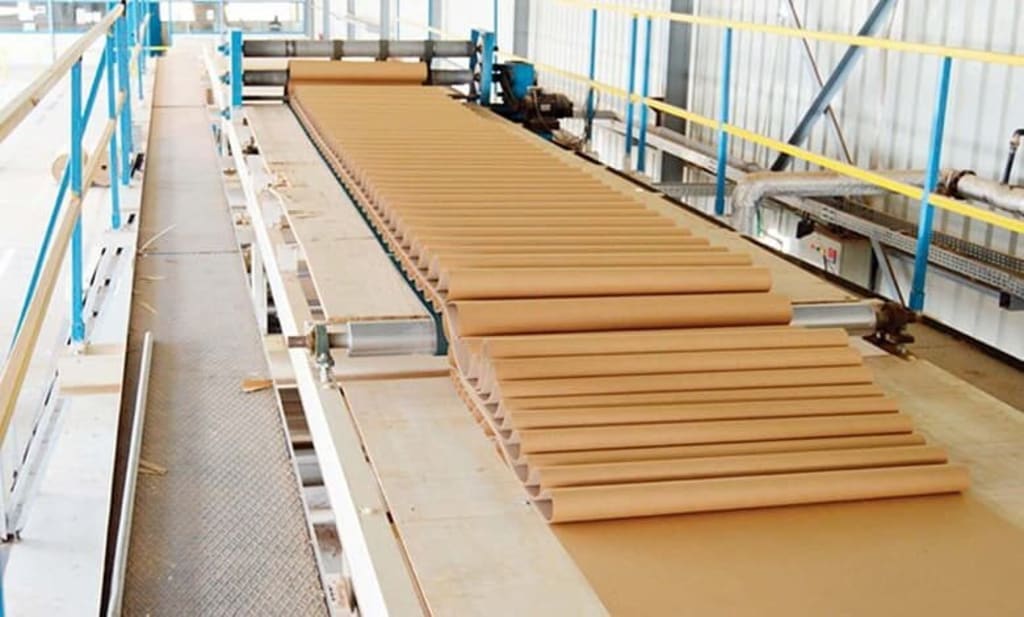
According to IMARC Group's latest research publication, Egypt Paper Packaging Market size reached USD 1,570.1 Million in 2024. Looking forward, IMARC Group expects the market to reach USD 2,090.2 Million by 2033, exhibiting a growth rate (CAGR) of 3.23% during 2025-2033.
How AI is Reshaping the Future of Egypt Paper Packaging Market
- Predictive Demand Forecasting: AI-powered analytics process historical sales patterns and seasonal fluctuations to predict packaging demand with 85% accuracy, enabling Egyptian manufacturers to optimize production schedules, minimize inventory waste, and reduce storage costs across Greater Cairo's industrial zones.
- Automated Quality Control: Machine learning vision systems scan paperboard at production speeds exceeding 500 meters per minute, detecting micro-defects, creasing errors, and coating inconsistencies invisible to human inspectors, reducing rejection rates by 30% while maintaining international export standards.
- Smart Supply Chain Optimization: AI algorithms track raw material shipments from Port Said and Sokhna ports in real-time, predicting customs clearance delays and recommending alternative routes, cutting logistics costs by 20% while ensuring just-in-time delivery to converters across Delta region.
- Energy Efficiency Management: AI-driven systems monitor boiler temperatures, chemical dosing, and paper formation continuously, automatically adjusting parameters to maintain optimal quality while reducing energy consumption by 15%, helping mills hedge against Egypt's electricity tariff increases implemented throughout the country.
- Custom Design Generation: Generative AI creates personalized packaging designs for cosmetics and food brands in minutes, producing print-ready artwork with culturally relevant graphics and compliance-ready labeling, reducing traditional design cycles from weeks to 48 hours for export-oriented pharmaceutical converters.
How Vision 2030 is Revolutionizing Egypt Paper Packaging Industry
Egypt Vision 2030's transition toward a green economy and circular production systems is fundamentally reshaping the paper packaging landscape. The strategy's emphasis on sustainable consumption patterns aligns perfectly with the EGP 45 billion export rebate program launched in mid-period, which guarantees 90-day reimbursements for converters meeting energy-efficiency benchmarks and achieving 40% local value-added thresholds. Government initiatives banning single-use plastic bags in Red Sea governorates and Sharm El-Sheikh tourism corridors accelerate fiber substitution, while Law 202 of 2020 enforces Extended Producer Responsibility rules obligating suppliers to finance collection infrastructure. Private-sector investment surged to EGP 133.1 billion in recent fiscal quarters, channeling capital into logistics hubs and converting plants that process agricultural waste like sugarcane bagasse into food-contact packaging. Vision 2030's digital transformation pillar supports customs digitization at major ports, shortening clearance times and encouraging global brand owners to source locally, strengthening Egypt's position as North Africa's packaging manufacturing hub.
Get In-Depth 2026 Industry Insights & Projections
Egypt Paper Packaging Market Trends & Drivers:
Economic diversification and industrial expansion are propelling Egypt's paper packaging sector into a new growth phase. The UAE, Egypt, and Jordan signed an industrial partnership allocating $10 billion from Abu Dhabi's sovereign fund ADQ toward cross-sector projects that strengthen regional manufacturing capacity. This investment, combined with Egypt's 78% import dependency for paper products, creates compelling opportunities for domestic production expansion. Processed food exports hit $6.1 billion recently, marking 21% year-over-year growth that sustains robust demand for corrugated shipping containers and liquid cartons meeting Gulf and European regulatory standards. E-commerce penetration accelerates packaging requirements as online retailers need lightweight, branded boxes protecting products during last-mile delivery across Egypt's urbanizing population centers. The retail sector's evolution—including supermarket proliferation and modern trade formats—amplifies demand for folding cartons displaying premium graphics. Government policies promoting local manufacturing and export competitiveness underscore the strategic importance of efficient, cost-effective packaging solutions that help Egyptian producers compete globally while creating domestic employment across converter networks from Alexandria to Upper Egypt facilities.
Sustainability imperatives and environmental consciousness are fundamentally restructuring market dynamics as consumers and businesses prioritize eco-friendly alternatives. Egypt's first domestic cardboard recycling line commenced operations recently, providing essential circular-economy infrastructure backed by government support for greener materials. SIG's "Recycle for Good" initiative—Egypt's inaugural end-to-end aseptic carton recycling program—enables households and food service establishments to schedule used carton pickups through mobile apps, receiving rewards while keeping high-value fibers circulating. The Tetra Pak-Uniboard €2.5 million partnership established an 8,000-tonne annual beverage carton recycling facility generating closed-loop feedstock securing cartonboard supply for liquid processors. Hypermarket chains distributed 4,500 reusable bags phasing out single-use plastics, amplifying public awareness and retailer commitment to fiber-based options. Young, environmentally aware demographics increasingly demand biodegradable materials, pushing food brands showcased at industry exhibitions to adopt recyclable paperboard. Extended Producer Responsibility regulations create cost advantages for mills leveraging agricultural residues like sugarcane bagasse meeting stringent food-contact guidelines, enabling quick-service restaurants to transition toward compostable disposables aligned with global sustainability targets.
Technological innovation and manufacturing sophistication are elevating Egypt's capabilities beyond commodity packaging toward value-added specialty applications. Manufacturers develop advanced barrier coatings and reinforced paperboard competing directly with plastic alternatives while maintaining recyclability—exemplified by kraft paper solutions incorporating functional barriers designed for natural decomposition. Digital printing adoption accelerates short-run, versioned packaging production for cosmetics and online sellers, differentiating converters investing in single-pass inkjet platforms capturing personalization demand. High-speed flexo lines and rotary die-cutters installed across Delta region facilities shorten lead times for multicolor shipping containers targeting Gulf retailers requiring premium graphics. Pharmaceutical and personal care sectors demand precision creasing and anti-counterfeit features supporting premium product positioning, while juice and UHT milk processors adopt aseptic technology requiring specialized liquid cartons. QR-enabled traceability solutions piloted by major manufacturers provide supply chain transparency attracting brand owners prioritizing consumer trust. The convergence of sustainability mandates, design innovation, and processing efficiency positions Egyptian converters to serve domestic markets while capturing export opportunities across Middle East and African regions demanding quality packaging at competitive price points.
Egypt Paper Packaging Market Industry Segmentation:
The report has segmented the market into the following categories:
Product Type Insights:
- Corrugated Boxes
- Folding Boxes and Cases
- Liquid Paperboard Cartons
- Paper Bags and Sacks
- Others
Grade Insights:
- Solid Bleached
- Coated Recycled
- Uncoated Recycled
- Others
Packaging Level Insights:
- Primary Packaging
- Secondary Packaging
- Tertiary Packaging
End Use Industry Insights:
- Food
- Beverage
- Personal Care and Home Care
- Healthcare
- Others
Regional Insights:
- Greater Cairo
- Alexandria
- Suez Canal
- Delta
- Others
Competitive Landscape:
The competitive landscape of the industry has also been examined along with the profiles of the key players.
Recent News and Developments in Egypt Paper Packaging Market
- August 2025: SIG inaugurated Egypt's first closed-loop recycling network for aseptic beverage cartons, integrating blockchain-tracked collection with local fiber repulping facilities. The initiative establishes end-to-end circularity infrastructure that keeps valuable materials in productive use while supporting Egypt Vision 2030's sustainability objectives and waste reduction targets.
- June 2025: Egypt's Cabinet withdrew industrial power subsidies, lifting paperboard production costs by 10-15 piastres per kilowatt-hour. Simultaneously, authorities launched an EGP 45 billion export rebate program embedding sustainability criteria, providing 90-day reimbursements for converters meeting energy-efficiency benchmarks and achieving 40% local value-added thresholds.
- May 2024: Tetra Pak announced expansion of its homogenizer portfolio, offering machines with Outokumpu Circle Green stainless steel—a material boasting carbon footprints up to 93% lower than global industry averages. The innovation supports Egypt's transition toward sustainable manufacturing equipment across beverage processing facilities.
- April 2024: International Paper and DS Smith Plc reached agreement on an all-share combination creating a global leader in sustainable packaging solutions. The merger strengthens Egypt's access to advanced corrugated technologies and reinforces relationships with multinational brand owners sourcing regionally.
- December 2024: Egypt inaugurated its first cardboard recycling line, marking a national circular-economy milestone. The facility processes post-consumer corrugated waste into reusable fiber, reducing import dependency while supporting government objectives for waste management infrastructure development and environmental protection throughout manufacturing sectors.
Note: If you require specific details, data, or insights that are not currently included in the scope of this report, we are happy to accommodate your request. As part of our customization service, we will gather and provide the additional information you need, tailored to your specific requirements. Please let us know your exact needs, and we will ensure the report is updated accordingly to meet your expectations.
About the Creator
Abhay Rajput
I am working in market research company that provides market and business research intelligence across the globe.
Keep reading
More stories from Abhay Rajput and writers in Futurism and other communities.
Egypt Office Furniture Market: Workspace Modernization, Corporate Demand & Growth Outlook
According to IMARC Group's latest research publication, Egypt Office Furniture Market size reached USD 229.52 Million in 2024. Looking forward, IMARC Group expects the market to reach USD 310.37 Million by 2033, exhibiting a growth rate (CAGR) of 3.31% during 2025-2033.
By Abhay Rajput6 days ago in Futurism
About Binding Prometheus
I want to start actively advocating on behalf of my own work, and the most valuable part of my canon is, without a doubt, Binding Prometheus, the play I have been working on since 2019 and only finished in 2023 as part of my MA. The play itself is an amalgamation of a million different inspirations. On one end, it evokes the Ancient Greek myth-play, deriving its own title from the earliest extant work of Western drama we have, Aeschylus’s Prometheus Bound. On the other end, it borrows significantly from the sci-fi bulwarks from over the years, namely Mary Shelley’s Frankenstein and Karel Capek’s Rossum’s Universal Robots. The play could be an episode of Black Mirror, I fear. I don’t know. I’ve only ever seen one episode of Black Mirror.
By Steven Christopher McKnight19 days ago in Futurism
Top Enterprise Software Development Companies in 2026
Enterprise software has become the backbone of modern organizations. In 2026, enterprises are no longer focused solely on digitization—they are prioritizing scalability, security, interoperability, and long-term architectural resilience. As a result, the role of enterprise software development companies has evolved from implementation partners to strategic technology enablers.
By Isabella Rossi5 days ago in Futurism
Smart phones, Humans and Aliens.
WARNING. I will be tapping into one of your favorite creative tensions: The absurdity of humans worshipping their glowing rectangles as if they were tiny oracles. There’s something deliciously poetic about that contradiction, and it lends itself beautifully to an instructive proviso.
By Novel Allen4 days ago in Poets


Comments
There are no comments for this story
Be the first to respond and start the conversation.