
Egypt Home Appliances Market: Rising Urbanization, Smart Appliance Adoption & Demand Growth
How rising urbanization, housing development, and changing lifestyles are reshaping demand patterns and competitive strategies in the Egypt home appliances market

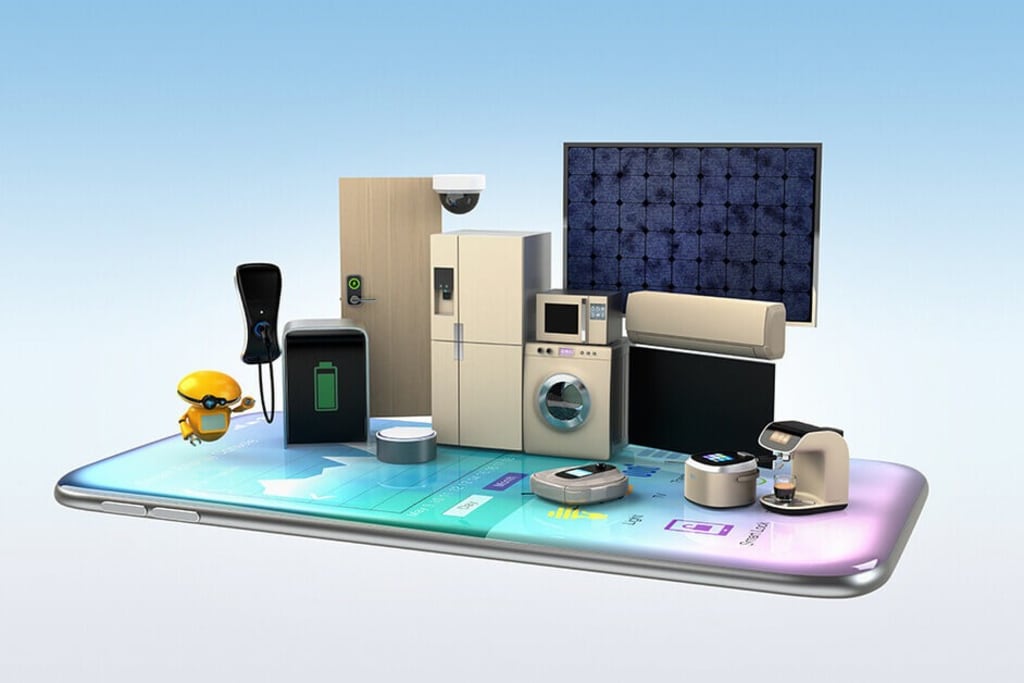
According to IMARC Group's latest research publication, Egypt home appliances market size reached USD 6,848.0 Million in 2024. The market is projected to reach USD 13,451.5 Million by 2033, exhibiting a growth rate of 7.79% during 2025-2033.
How AI is Reshaping the Future of Egypt Home Appliances Market
- Smart Connectivity and IoT Integration: AI-powered appliances with remote control via smartphones allow Egyptian consumers to monitor refrigerators, washing machines, and air conditioners from anywhere, driving adoption among tech-savvy urban households.
- Energy Management Systems: Machine learning algorithms optimize electricity consumption in real-time, helping households save up to 30% on utility bills—particularly valuable as Egypt implements tiered tariff structures and smart meter deployments.
- Predictive Maintenance Technology: AI sensors detect potential equipment failures before they occur, reducing downtime and extending appliance lifespan, with manufacturers like Samsung and LG deploying these features across their Egyptian product lines.
- Automated Household Tasks: Voice-activated controls through Alexa, Google Assistant, and Siri enable hands-free operation of smart washing machines, ovens, and vacuum cleaners, appealing to busy urban professionals seeking convenience.
- Personalized User Experience: AI learns individual preferences for temperature settings, cooking patterns, and cleaning schedules, automatically adjusting operations to match household routines and improving overall satisfaction among Egyptian consumers.
How Vision 2030 is Revolutionizing Egypt Home Appliances Industry
Egypt's Vision 2030 and the National Industry Strategy are fundamentally transforming the home appliances sector through aggressive localization and manufacturing incentives. The government's "golden license" program streamlines permits and offers five-year tax exemptions, attracting major Chinese investments from Haier and Hisense. Local component ratios now reach 70% for cookers and electric water heaters, with Fresh producing refrigerator motors domestically and Al-Arabi Group launching air-conditioner compressor manufacturing. The Digital Egypt Industrial Platform has allocated millions of square meters of serviced industrial land across multiple governorates, while the strategy targets increasing industrial sector contribution from 14% to 20% of GDP. Housing initiatives like "Housing for All Egyptians" have already allocated 639,000 units, creating synchronized demand for appliances that must be installed before utility connections. Combined with the Suez Canal Economic Zone developments and mega-projects like Ras El Hekma targeting 2 million residents, these initiatives are positioning Egypt as a regional manufacturing hub while boosting domestic consumption and reducing import dependency.
Get a Sample Report: Market Size, Trends, and Forecasts Inside
Egypt Home Appliances Market Trends & Drivers:
Egypt's home appliances sector is experiencing rapid expansion driven by powerful economic and demographic shifts. Rising disposable incomes among the expanding middle class enable more households to invest in modern conveniences, with every LE 1,000 increase in income lifting average purchase value by 3%. The GDP per capita climbed to USD 4,560, strengthening consumer purchasing power for refrigerators, washing machines, and air conditioners. Approximately 400,000 new households form annually, translating directly into first-time appliance purchases. Young demographics favor connected, energy-efficient products that align with tech-savvy lifestyles, while social housing projects bundle appliance packages with new apartments. E-commerce platforms offering Buy-Now-Pay-Later plans unlock new consumer segments, with online sales jumping to 6.3% of total market share. Retailers like B.Tech operate 152 multi-brand outlets with on-site service hubs, while Jumia partners with Samsung and Haier on exclusive online launches.
Urbanization and infrastructure development are reshaping consumption patterns across Egypt. The transition from rural to urban living drives construction of new residential buildings and housing complexes, each requiring complete appliance suites. Greater Cairo captured 31.63% of market share, while Canal Cities and Sinai chart the fastest growth at 5.83% annually through concentrated manufacturing employment linked to the Suez Canal Economic Zone. Smart grid pilots in these zones promise reliable voltage, encouraging uptake of intelligent dishwashers and high-efficiency dryers. Urban living standards bring higher expectations for convenience and comfort, accelerating adoption of advanced appliances. Developers increasingly bundle appliance packages into new apartments, elevating replacement cycles as tenants relocate. The Ras El Hekma megaproject integrates a 10 million square meter industrial zone, creating medium-term uplift in durable goods consumption. Cross-docking facilities at Borg El Arab cut lead times for coastal retailers, supporting quick replenishment ahead of summer peaks.
Technological innovation and sustainability concerns are driving product evolution. Manufacturers continually introduce energy-efficient models appealing to environmentally conscious consumers seeking cost-effective solutions, particularly as electricity tariffs rose to 223 Pt/kWh for high-use brackets. Mandatory energy-efficiency labeling and government incentives encourage upgrades to inverter-based air conditioners and A-class refrigerators. Smart technology integration, including IoT-enabled appliances, makes household tasks more automated and convenient. Companies like Samsung launched Bespoke AI appliances optimizing energy efficiency, while LG introduced Built-In kitchens with advanced technological solutions. Air fryers with AI technology eliminate unwanted aroma in fried foods, and next-generation autonomous vacuum cleaners use advanced laser technology for navigational floor cleaning. Egypt's Global Innovation Index ranking improved from 96 to 89, signifying enhanced innovation capacity. Local manufacturers like Elaraby Group operate 36 factories marketing 16 global brands through 3,000 distributors, while international players accelerate local production to hedge foreign-exchange swings and leverage duty-free inputs.
Egypt Home Appliances Market Industry Segmentation:
The report has segmented the market into the following categories:
Product Insights:
- Major Appliances
- Refrigerators
- Freezers
- Dishwashing Machines
- Washing Machines
- Ovens
- Air Conditioners
- Others
- Small Appliances
- Coffee/Tea Makers
- Food Processors
- Grills and Roasters
- Vacuum Cleaners
- Others
Distribution Channel Insights:
- Multi-brand Stores
- Exclusive Stores
- Online
- Others
Regional Insights:
- Greater Cairo
- Alexandria
- Suez Canal
- Delta
- Others
Competitive Landscape:
The competitive landscape of the industry has also been examined along with the profiles of the key players.
Recent News and Developments in Egypt Home Appliances Market
- January 2025: BSH (Bosch-Siemens Hausgeräte) secured a "Golden License" streamlining permits for its stove-appliance venture, enabling accelerated construction and access to subsidized training programs for 1,000 technicians in Egypt.
- February 2025: Electrolux Group affirmed expansion plans for Egyptian operations, signaling confidence in local sourcing to secure high-efficiency washer production capacity, supporting wider energy-label adoption trends.
- February 2025: Xinfeng (China) signed agreements to develop a USD 1.65 billion multi-industry complex covering 3.75 million square meters in Ain Sokhna, with planned production lines for refrigerators, vacuum cleaners, and compressors targeting 60% export to Gulf markets.
- April 2025: Kax Investment announced USD 50 million to build a 40,000 square meter component and assembly facility in the Suez Canal Economic Zone, manufacturing metal racks, electronic boards, and plastic parts while creating 600 direct jobs.
- May 2025: Samsung Egypt launched new semi-automatic washing machines featuring Dual Magic Filter and Soft Closing Toughened Glass Lid technologies, delivering effortless laundry experiences for Egyptian consumers.
Note: If you require specific details, data, or insights that are not currently included in the scope of this report, we are happy to accommodate your request. As part of our customization service, we will gather and provide the additional information you need, tailored to your specific requirements. Please let us know your exact needs, and we will ensure the report is updated accordingly to meet your expectations.
About the Creator
Abhay Rajput
I am working in market research company that provides market and business research intelligence across the globe.
Keep reading
More stories from Abhay Rajput and writers in Futurism and other communities.
GCC Logistics Market: E-Commerce Expansion, Cold Chain Growth & Industry Trends
According to IMARC Group's latest research publication, GCC logistics market size reached USD 109.0 Billion in 2024. The market is projected to reach USD 171.0 Billion by 2033, exhibiting a growth rate (CAGR) of 5.10% during 2025-2033.
By Abhay Rajput6 days ago in Futurism
About Binding Prometheus
I want to start actively advocating on behalf of my own work, and the most valuable part of my canon is, without a doubt, Binding Prometheus, the play I have been working on since 2019 and only finished in 2023 as part of my MA. The play itself is an amalgamation of a million different inspirations. On one end, it evokes the Ancient Greek myth-play, deriving its own title from the earliest extant work of Western drama we have, Aeschylus’s Prometheus Bound. On the other end, it borrows significantly from the sci-fi bulwarks from over the years, namely Mary Shelley’s Frankenstein and Karel Capek’s Rossum’s Universal Robots. The play could be an episode of Black Mirror, I fear. I don’t know. I’ve only ever seen one episode of Black Mirror.
By Steven Christopher McKnight11 days ago in Futurism
Plastic Compounding Market: Demand Dynamics, Application Expansion & Industry Evolution
According to IMARC Group's latest research publication, global plastic compounding market size reached USD 72.6 Billion in 2024. Looking forward, IMARC Group expects the market to reach USD 113.9 Billion by 2033, exhibiting a growth rate (CAGR) of 5.08% during 2025-2033.
By Andrew Sullivan4 days ago in Futurism
Bruce Lee and The God of War: Kuan Ti
It starts with love.. The Power to the God Of War and Wealth Walk into a Chinese restaurant (even in Oklahoma, USA), a Chinese police station, a kung fu martial arts studio or even a Chinese temple and you often see a red faced warrior holding a heavy quan-do (spear like weapon).
By WILD WAYNE : The Dragon King4 days ago in Chapters


Comments
There are no comments for this story
Be the first to respond and start the conversation.