
Edge Computing Madness
AWS Local Zones vs. The Latency Monster
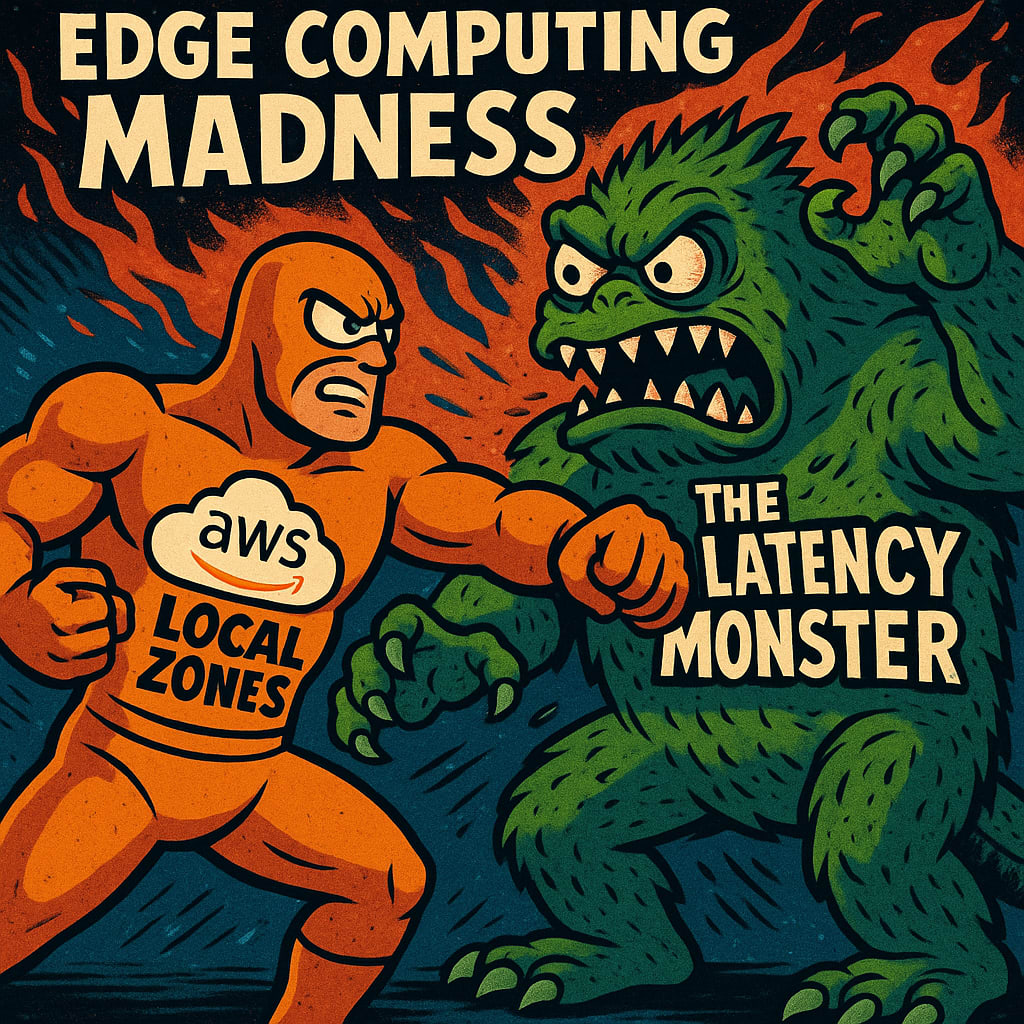
Edge computing is all the rage these days, especially when you’re chasing that elusive low latency for your apps and IoT devices. But let’s be real—latency can feel like a monstrous beast, slowing down your user experience and making real-time processing a nightmare. Enter AWS Local Zones and the broader edge computing landscape, both aiming to tame this latency monster. So, let’s dive into the madness of edge computing, break down what AWS Local Zones bring to the table, and explore how they stack up against the latency challenges that edge computing tries to solve.
What’s the Big Deal with Latency and Edge Computing?
Latency is basically the delay between sending a request and getting a response. In traditional cloud setups, your data often has to travel all the way to a distant data center, get processed, and then come back. That round trip can be painfully slow for applications that need instant reactions think gaming, live video streaming, or industrial IoT sensors controlling machinery.
Edge computing flips this model on its head by pushing compute and storage resources closer to where the data is generated—right at the network edge or near the user. This proximity slashes the distance data has to travel, which means lower latency, faster response times, and less bandwidth congestion. Plus, it can keep things running even if your connection to the central cloud is spotty or offline.
If you want to build a solid foundation, starting with courses on edge computing fundamentals, distributed computing, and network architecture will help you understand why edge matters and how latency impacts your solutions.
AWS Local Zones: Edge Computing’s Neighborhood Hub
AWS Local Zones are like mini AWS data centers placed strategically in major metro areas, extending the AWS cloud closer to your users. Think of them as an extension of an AWS Region but physically nearer to your end-users, which means fewer network hops and faster access to compute and storage resources.
Here’s what makes AWS Local Zones a powerful tool in the edge computing arsenal:
- Compute & Storage Variety: They offer a wide range of EC2 instance types from general purpose to compute-optimized and accelerated computing plus various storage options like SSDs and high-performance file systems.
- Container Support: You can run Kubernetes pods or container tasks directly in Local Zones, making it easier to deploy containerized apps with low latency.
- Networking: Local Zones seamlessly extend your existing Amazon VPCs, so you can create subnets in Local Zones just like in Availability Zones. This means you get all the network features like Security Groups and Route Tables extended locally.
- Internet & Direct Connect: They have local internet ingress/egress points to cut latency further and support private, secure network connections.
Courses focusing on AWS core services like EC2, VPC, EKS, and ECS will give you the hands-on skills to deploy and manage resources in Local Zones effectively.
The Latency Monster: How AWS Local Zones Help Slay It
Latency is the bane of many real-time applications. When your app’s responsiveness depends on milliseconds, every network hop counts. AWS Local Zones reduce the number of hops between your users and the compute resources by placing those resources physically closer. This means less delay and more snappy interactions.
For example, if you’re running a video streaming service, gaming platform, or a smart city IoT deployment, Local Zones ensure that the data processing happens near your users, cutting down the lag significantly. Plus, because Local Zones connect back to the parent AWS Region, you still get access to the full suite of AWS services—just with a lot less latency.
To deepen your expertise, look for courses that cover designing low-latency architectures, messaging patterns, and data pipelines suited for edge environments.
Edge Computing Beyond Local Zones: The Bigger Picture
AWS Local Zones are a fantastic option, but edge computing is broader than just these zones. Edge computing involves processing data at or near the source—whether that’s on a device, a gateway, or a local server. This approach reduces the need to send all data back to a central cloud, which not only cuts latency but also optimizes bandwidth and supports offline functionality.
Here’s why edge computing is the ultimate latency buster:
- Real-Time Processing: By handling data locally, edge computing enables immediate decisions and actions without waiting for cloud round trips.
- Bandwidth Savings: Only critical or summarized data gets sent to the cloud, reducing network congestion.
- Offline Resilience: Edge devices can keep working autonomously even when cloud connectivity is lost.
AWS complements Local Zones with other edge solutions like on-premises infrastructure, ruggedized devices for harsh environments, and hybrid cloud storage gateways, giving you a full spectrum of edge computing options.
Courses on hybrid cloud architectures, IoT, and security at the edge will help you design resilient, secure, and efficient edge computing solutions.
Getting Hands-On: Learning the Edge Computing Ropes
If you’re itching to master edge computing and AWS Local Zones, diving into technical courses is a great move. Focus on learning paths that cover:
- Edge computing fundamentals: distributed computing, IoT, network architecture, and security.
- AWS core services: EC2, VPC, EKS, ECS, and storage options.
- Designing low-latency architectures: messaging patterns, data pipelines, and database choices suited for edge environments.
- Security at the edge: cryptographic protocols, network security, and infrastructure hardening.
- Hands-on labs and real-world scenarios will help you build the skills to deploy and manage edge computing solutions effectively.
Wrapping Up: AWS Local Zones vs The Latency Monster
Latency is a tough beast, but AWS Local Zones bring the cloud closer to your users, slicing down delays and boosting performance for latency-sensitive apps. Combined with the broader edge computing paradigm processing data near its source you get a powerful toolkit to tackle latency challenges head-on.
Whether you’re building a smart city, a live streaming platform, or an industrial IoT system, understanding and leveraging AWS Local Zones and edge computing concepts can make the difference between a sluggish user experience and a lightning-fast one.
So, ready to jump into the edge computing madness and tame that latency monster? Start exploring edge computing fundamentals, AWS Local Zones, and low-latency design principles to level up your cloud game!
About the Creator
Agni
Aspiring researcher & info provider dedicated to unearthing and sharing impactful knowledge. I translate complex data into simple insights, aiming to inspire progress with reliable, engaging content across all disciplines worldwide.
Australia Energy Storage Market: Renewable Integration, Battery Deployment & Grid Stability
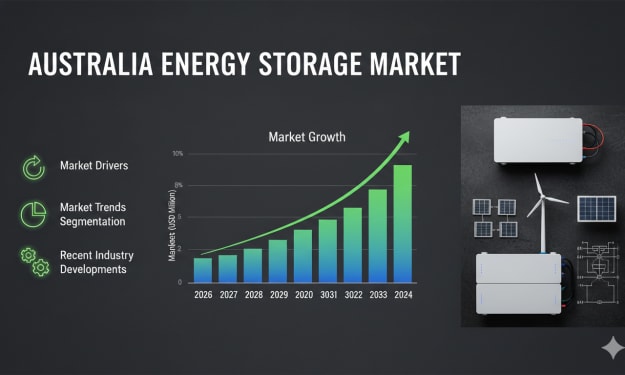
According to IMARC Group, the Australia energy storage market reached 4.72 GW in 2025 and is projected to expand significantly to 19.81 GW by 2034, exhibiting a compound annual growth rate (CAGR) of 17.28% during 2026–2034. The rapid growth of the sector reflects the country’s accelerating transition toward renewable energy and the increasing need for reliable electricity systems across Australia. As solar and wind power generation expands, energy storage technologies such as battery energy storage systems (BESS) are becoming essential for maintaining grid reliability and balancing electricity supply and demand. Government policies supporting clean energy adoption, declining battery costs, and investments in grid modernization are significantly strengthening Australia energy storage market share while enabling the integration of renewable power into the national electricity network.
By Shrestha Roy6 days ago in Futurism
The Last Fortress
The Final Frontier of Privacy For centuries, the human mind has been the only place where true freedom existed. No matter how oppressive a regime was, or how invasive a technology became, your thoughts were yours alone. They were the "Last Fortress"—a sanctuary of private dreams, silent rebellions, and unspoken loves.
By Alex Sterling 3 days ago in Futurism



Comments (1)
Edge computing is crucial for low latency. Traditional cloud setups have high latency as data travels far. AWS Local Zones seem like a great solution, bringing the cloud closer. I wonder how they compare cost - wise to other edge computing options. Also, are there any limitations in terms of the types of applications they're best suited for? It's cool how they aim to reduce those long round trips. I've worked on projects where latency was a pain, so this is promising. But I'm curious if they can handle really large - scale, complex data processing as well as a full - fledged data center.