
Echoes of AI: My Journey with Artificial Intelligence
Navigating the Intersection of Technology and Humanity.


2009
I was 14 when I first heard about AI. It wasn’t through some tech documentary or an article in a glossy magazine—it was through a friend who had just started playing around with a primitive chatbot online. He called it the future. At the time, it seemed like a novelty. Just a robot with a name and a quirky sense of humor that would answer basic questions. Little did I know, that playful interaction would mark the beginning of my deep dive into a world that would become a part of me.
I spent years fascinated by AI—learning its capabilities, the breakthroughs, the endless debates about its potential and dangers. But it wasn’t until much later that I realized how intertwined my own story would become with the technology.
2015
Fast forward to college. I chose Artificial Intelligence as my major, driven by the same sense of awe that I’d had as a teenager. I was excited to be part of something so revolutionary. But as the years progressed, the novelty faded. What once felt like a dream was now a grind—learning algorithms, studying code, and grappling with ethical concerns. Yet, the question I couldn’t shake was always the same: What does it mean for something to be truly "intelligent"?
AI wasn’t just a tool anymore. It was changing the fabric of how we lived, how we interacted with technology, and ultimately, how we perceived our own humanity. In the midst of all this, I found myself becoming a little obsessed. But it wasn’t about the machines. It was about understanding how these advancements mirrored our own nature.
2018
The moment that truly shifted everything for me wasn’t in a lecture or in the news. It happened when I experienced something most people don’t think twice about: a conversation with an AI-powered assistant.
It was a simple thing, really. I asked my smart speaker about the weather. But what struck me was the way it responded: calmly, efficiently, and without judgment. There was something oddly comforting about it. No human emotions, no biases, just data transformed into a response.
For the first time, I felt what many had warned about: A machine that was more empathetic than some people I knew.
But the more I interacted with this technology, the more questions arose. Could we trust machines to have the same ethical compass as humans? What if AI started to make decisions that impacted real lives? Could it be trusted to make moral choices? Or was it simply reflecting the values it was given?
2022
I began working for a tech company focused on developing AI for healthcare. The dream was to revolutionize diagnostics and patient care, using data and algorithms to predict diseases before they became life-threatening. It was, in theory, the perfect intersection of technology and humanity—where AI could truly help save lives.
But once I was behind the scenes, I was faced with a harsh reality. While the tech was advancing rapidly, the human side was lagging behind. Decisions weren’t being made with the same level of care and attention as the code itself. Data sets were incomplete, biased, and flawed. I found myself questioning the very essence of what I was helping create. Was I building something to improve lives—or something that could potentially harm them?
I spent countless hours working with my colleagues, brainstorming, revising, and testing to make sure that AI didn't just mimic human behavior, but could understand context, empathy, and fairness. The challenge wasn’t about creating smarter algorithms; it was about making sure those algorithms understood the complexities of human existence.
2024
Looking back, I realize that my journey with AI isn’t just about the technology—it’s about how I’ve learned to see myself through the lens of a rapidly evolving world. I’ve grown alongside the machines I once marveled at, and I’ve come to realize that AI, in many ways, is a mirror. It reflects our ideals, our fears, and our inherent biases. But it also holds a profound power to heal, to help, and to transcend our limitations.
We’ve all heard the warnings: AI is a threat, it will replace us, it will control us. But in my own experiences, I’ve come to see AI not as a rival to human intelligence, but as a partner in our journey toward self-understanding. A tool that, when used wisely, could amplify our best qualities and challenge our worst.
As I continue down this path, I see the future not just of technology, but of humanity itself. Because, in the end, AI isn’t separate from us. It is us—our hopes, our shortcomings, our potential.
Epilogue
So, here I am today, still navigating the delicate balance between innovation and ethics. AI is no longer just a study; it’s a part of the way I view the world. Every day, I wonder: How much of our future can we shape with these tools? And more importantly, what kind of future do we want to build with them?
In a way, AI has become my reflection—not just of what we can create, but of who we are, and who we have yet to become.
---
About the Creator
Australia Pro AV Market: Hybrid Work Demand, Digital Signage & Smart AV Technologies
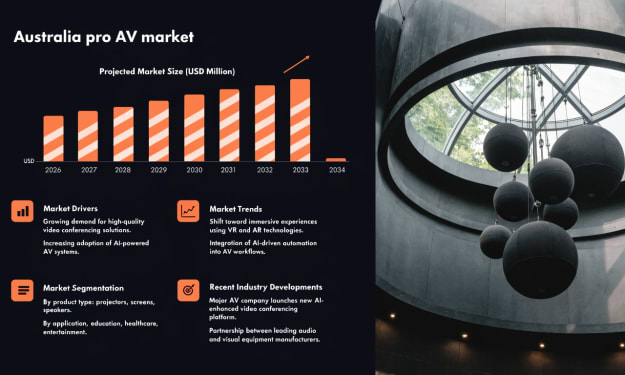
According to IMARC Group, the Australia pro AV market reached a value of USD 93.9 Million in 2025 and is projected to reach USD 133.6 Million by 2034, growing at a compound annual growth rate (CAGR) of 3.88% during 2026–2034. The market is expanding as organizations increasingly adopt advanced audiovisual solutions to support communication, collaboration and digital engagement. Hybrid work environments are encouraging businesses to invest in video conferencing systems, smart displays and integrated collaboration platforms that connect remote and in-office teams. At the same time, industries such as retail, hospitality and tourism are investing in digital signage to improve customer engagement and brand communication. As companies focus on creating interactive and technology-driven environments, professional AV solutions are becoming essential tools for modern workplaces, entertainment venues and commercial spaces across Australia.
By Kevin Cooper4 days ago in Futurism
WhatsApp Business API: A Complete Guide to Business Messaging in 2026
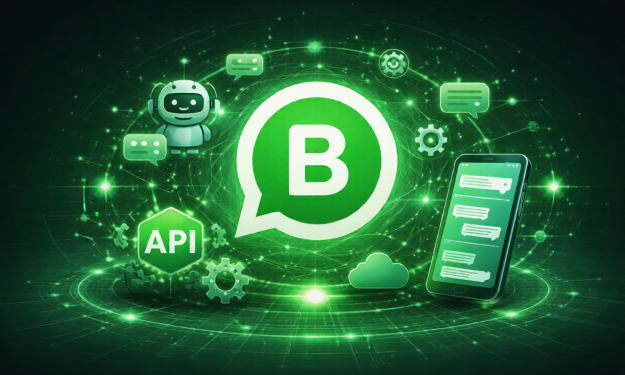
Over the past decade, the way businesses communicate with customers has changed dramatically. Traditional channels such as email and phone support are still widely used, but instant messaging has become one of the most preferred ways for people to interact with brands. Customers increasingly expect quick responses, convenient updates, and support that feels personal rather than formal.
By Olivia Carterabout 14 hours ago in Futurism
Worth the Wait: Puerto Viejo, Costa Rica
Beach bumming in a small Caribbean beach town sounded like a perfect way to end our 6-month trip through Mexico and Central America. Or so we thought. The foul, fishy stench of rotten seaweed hit our nostrils as we stepped from the cramped bus and looked out at a rather depressing, empty, and underwhelming black sand beach. It was pouring with rain, and we had to quickly fish out our ponchos. We thought, this couldn’t be it, could it?
By Sh*t Happens - Lost Girl Travel6 days ago in Wander

Comments
There are no comments for this story
Be the first to respond and start the conversation.