
Driving into the Future: The Rise of Car Automation
What is Car Automation?
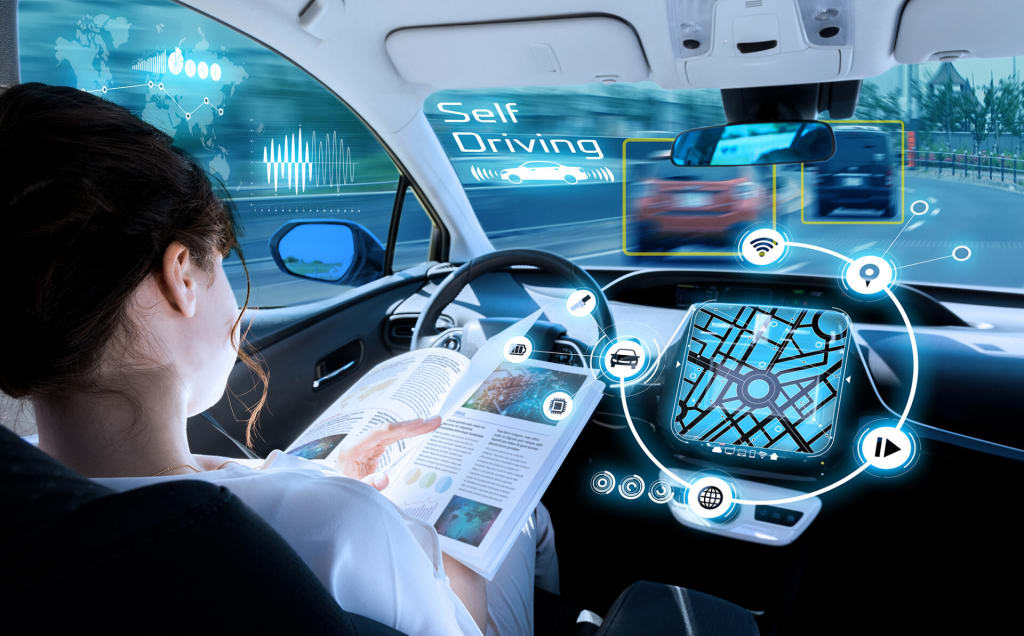
The automobile industry is undergoing a transformation of historic proportions, driven by the rise of automation and advanced technologies. Automated cars, or self-driving vehicles, represent a seismic shift in how humans interact with transportation. With innovations ranging from lane-keeping assist to fully autonomous vehicles, car automation promises to revolutionize safety, efficiency, and convenience on the road.
This article delves into the intricacies of car automation, its current state, the technologies enabling it, and what lies ahead for a world of intelligent vehicles. Additionally, discover how Hexadecimal Software and Hexahome are at the forefront of bringing these technologies to life.
What is Car Automation?
Car automation refers to vehicles equipped with systems that perform tasks traditionally handled by drivers. These tasks range from basic functions like adaptive cruise control to complex decision-making processes seen in fully autonomous vehicles. The Society of Automotive Engineers (SAE) defines six levels of driving automation:
Level 0 (No Automation): The driver controls everything.
Level 1 (Driver Assistance): Features like adaptive cruise control assist but do not replace human input.
Level 2 (Partial Automation): The car can steer and accelerate/decelerate simultaneously but still requires driver supervision.
Level 3 (Conditional Automation): The car can handle most driving tasks under specific conditions, with the driver intervening when prompted.
Level 4 (High Automation): The car performs all tasks without human input in designated areas.
Level 5 (Full Automation): Complete autonomy, with no need for a driver.
Core Technologies Powering Car Automation
The development of automated vehicles relies on a combination of cutting-edge technologies that enable cars to "see," "think," and "act" independently. Here are the pillars of car automation:
1. Sensors and Cameras
LIDAR (Light Detection and Ranging): Measures distances and maps environments using laser light to create 3D models of surroundings.
Radar: Detects objects and measures their speed, crucial for adaptive cruise control and collision avoidance.
Cameras: Provide visual data for lane recognition, traffic sign reading, and pedestrian detection.
Ultrasonic Sensors: Assist in parking and close-range detection.
2. Artificial Intelligence (AI) and Machine Learning (ML)
AI algorithms analyze sensor data to make split-second decisions.
Machine learning models enable vehicles to recognize patterns, predict behaviors, and improve over time.
3. Connectivity
V2V (Vehicle-to-Vehicle) Communication: Cars share information about speed, location, and road conditions to enhance safety.
V2I (Vehicle-to-Infrastructure) Communication: Vehicles connect with traffic signals, road signs, and other infrastructure for optimal navigation.
4. High-Definition Mapping
Precise maps allow automated cars to understand their environment with pinpoint accuracy, even in adverse weather conditions.
5. Advanced Control Systems
Algorithms govern how the vehicle accelerates, steers, and brakes, ensuring smooth and efficient operations.
The Benefits of Car Automation
1. Enhanced Safety
One of the primary motivations behind car automation is reducing accidents caused by human error. Automated systems can react faster than humans and are immune to distractions, fatigue, or impaired judgment.
2. Improved Traffic Flow
Automation can minimize stop-and-go traffic, optimize lane usage, and reduce congestion through efficient vehicle coordination.
3. Environmental Benefits
By optimizing routes and maintaining consistent speeds, autonomous vehicles can reduce fuel consumption and lower emissions.
4. Accessibility
Car automation offers greater mobility for individuals unable to drive, such as the elderly or disabled.
5. Convenience
Features like automated parking and traffic jam assist alleviate the stress of driving, allowing users to focus on other tasks during their commute.
Challenges to Overcome
While promising, car automation faces several hurdles:
1. Technological Limitations
Achieving full automation requires advancements in AI, sensor technology, and real-time data processing.
2. Legal and Ethical Concerns
Questions around liability, insurance, and ethical decision-making in unavoidable accidents need addressing.
3. Cybersecurity Risks
Connected vehicles are susceptible to hacking, necessitating robust security measures.
4. Infrastructure Readiness
Many areas lack the infrastructure, such as smart traffic systems, needed to support autonomous vehicles.
5. Public Acceptance
Building trust in automated systems is essential, as many people remain skeptical about relinquishing control to machines.
Applications of Car Automation
1. Ride-Sharing and Taxi Services
Companies like Uber and Waymo are already testing autonomous taxis, aiming to revolutionize urban transportation.
2. Logistics and Delivery
Automated trucks and drones are set to streamline supply chains and last-mile deliveries, reducing costs and improving efficiency.
3. Smart Cities
Autonomous vehicles play a crucial role in the development of smart cities, integrating with intelligent traffic management systems for seamless urban mobility.
4. Personal Vehicles
Automated features like autopilot and self-parking are becoming standard in consumer vehicles, offering convenience and safety.
Future Trends in Car Automation
1. Integration with IoT
Automated vehicles will increasingly connect with smart devices and infrastructure, creating an ecosystem of interconnected systems.
2. Focus on Sustainability
Electric and autonomous vehicles will converge, leading to environmentally friendly and efficient transportation solutions.
3. Advanced AI Capabilities
Next-generation AI will enable better decision-making, allowing vehicles to handle more complex scenarios.
4. Expansion Beyond Roads
Autonomous technology is being explored for other transportation modes, including trains, ships, and aircraft.
Hexadecimal Software: Driving the Automation Revolution
Car automation is reshaping the future of transportation, offering unparalleled safety, convenience, and efficiency. To stay ahead in this fast-evolving landscape, you need a trusted partner with expertise in software development and innovative technologies.
Hexadecimal Software specializes in creating cutting-edge solutions for the automotive industry, from AI-powered systems to IoT integrations. Their expert team is equipped to turn your vision into reality, leveraging the latest technologies to deliver scalable and reliable software.
Additionally, explore Hexahome for smart home solutions that seamlessly integrate with automated vehicles. Together, these platforms represent a future of intelligent living and transportation.
Car automation is not just a technological advancement—it’s a gateway to a safer, more efficient, and sustainable future. Embrace the possibilities with experts who are redefining the boundaries of innovation.
About the Creator
Keep reading
More stories from shreyash-hexa and writers in Futurism and other communities.
Mastering AWS S3
Introduction In the era of digital transformation, cloud storage has become indispensable for businesses and developers alike. AWS S3 (Amazon Simple Storage Service) stands out as one of the most reliable, scalable, and secure object storage solutions available today. Whether you're hosting a website, storing backups, or managing big data analytics, AWS S3 provides the flexibility to meet your needs.
By shreyash-hexaabout a year ago in Futurism
About Binding Prometheus
I want to start actively advocating on behalf of my own work, and the most valuable part of my canon is, without a doubt, Binding Prometheus, the play I have been working on since 2019 and only finished in 2023 as part of my MA. The play itself is an amalgamation of a million different inspirations. On one end, it evokes the Ancient Greek myth-play, deriving its own title from the earliest extant work of Western drama we have, Aeschylus’s Prometheus Bound. On the other end, it borrows significantly from the sci-fi bulwarks from over the years, namely Mary Shelley’s Frankenstein and Karel Capek’s Rossum’s Universal Robots. The play could be an episode of Black Mirror, I fear. I don’t know. I’ve only ever seen one episode of Black Mirror.
By Steven Christopher McKnight19 days ago in Futurism
Smart Office Market: Smart Security Systems, Access Control & Workplace Safety Advancements
According to IMARC Group's latest research publication, global smart office market size reached USD 50.17 Billion in 2024. Looking forward, IMARC Group expects the market to reach USD 128.27 Billion by 2033, exhibiting a growth rate (CAGR) of 10.89% during 2025-2033.
By sujeet. imarcgroup6 days ago in Futurism



Comments
There are no comments for this story
Be the first to respond and start the conversation.