
Doctor Who’s Fifteenth Era: A Masterclass in Missed Potential
Gatwa’s abrupt exit from Doctor Who leaves an uncertainty in the show’s future


When Russell T Davies returned to Doctor Who, backed by Disney and a bigger budget, the buzz was undeniable. With Ncuti Gatwa cast as the Fifteenth Doctor — the first openly gay Black actor to take the role — the stage was set for a bold new era. Fresh visuals, vibrant performances, and the BBC backed by a global platform promised a creative renaissance.
But two seasons later, what we’re left with is a frustrating paradox: a show bursting with potential that continually tripped over its own ambition. Plotlines were introduced and abandoned. Emotional arcs were shortchanged in favour of flashy twists. And by the time the finale arrived, the series felt less like a culmination — and more like a hopeful trailer for a third season that might be postponed indefinitely.
Here’s where I think the mishandling of the writing and character development led to the show’s uncertain future.

Ncuti Gatwa Deserved Better
Ncuti Gatwa delivered a magnetic, emotionally rich performance as the Doctor. He was vibrant, vulnerable, and endlessly watchable. But too often, the scripts failed to rise to his level. Rather than giving him complex dilemmas or rich character arcs, the show leaned on surface-level charm and awkward dialogue beats. Villains stopping mid-monologue just to compliment his looks? Once or twice fine — depending on who says it and when, but it felt more like the writer speaking Theo fh
Episodes like Boom and Rogue showed what Gatwa could do when given real material — dramatic weight, emotional stakes, and sincere storytelling. But those moments were the exception, not the rule. He had the makings of a great Doctor, but the writing never gave him the consistent platform he deserved.

Ruby and Belinda: Two Great Companions, Underused
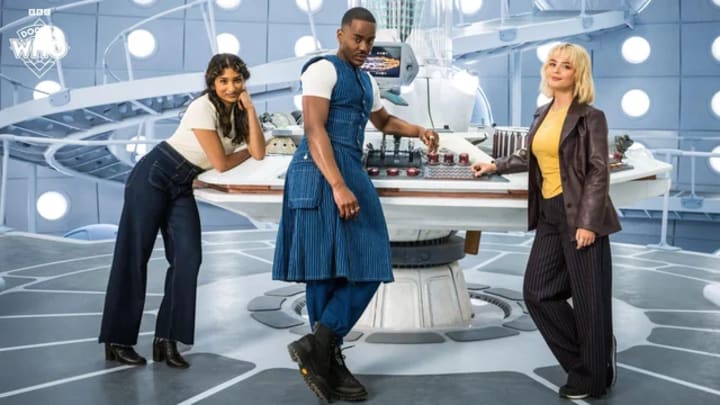
Millie Gibson (Ruby Sunday) and Varada Sethu (Belinda Chandra) were excellent additions to the TARDIS crew, each with their own emotional range and chemistry with Gatwa.
Ruby’s arc had mythic weight from the start — the constant snowfall, her uncanny ability to remember what others forgot, and that eerie connection to Maestro’s music. It felt like we were building toward something bigger, stranger, maybe even cosmic. But by the end, her story was flattened into a grounded — but narratively unearned — domestic twist. The mystery didn’t resolve; it just vanished.
What makes Ruby’s arc so frustrating isn’t just the flat ending — it’s that the show invited us to care about those mysteries. The snowfall. The memory retention. The haunting tune. These weren’t background flourishes; they were thematic signals. But instead of weaving them into her resolution, the show abandoned them entirely. All that potential — wasted.
Belinda was pitched as the wildcard — grounded, pragmatic, and refreshingly unimpressed by the Doctor’s quirks. She was meant to challenge him, to call out his hypocrisy and offer a different moral lens. And in her first two episodes, she does exactly that. But then, oddly, her role softens into a pleasant road trip dynamic with Gatwa’s Doctor. On the surface, this isn’t a problem — the actors had strong chemistry, and platonic Doctor-companion relationships are often some of the show’s richest.
But that edge, that tension she was introduced with, just… fades. It’s even more frustrating when you compare her to Bliss in Big Finish’s Time War series — a reluctant companion to McGann’s Eighth Doctor, whose arc grew darker and more layered with each story. Bliss evolved. Belinda was rewritten. Her complexity only surfaces again in the final moments of the finale, and even then, it’s part of a retroactive twist. Rather than becoming a fully realised character, she’s reduced to a device to serve a surprise.
Honestly, we were robbed of a potentially brilliant TARDIS trio with Gatwa, Ruby, and Belinda. The chemistry was there. The development wasn’t.
Villains, Twists, and the Finale That Fell Apart
The biggest disappointment of the finale — and honestly, the entire era — is the unrealised potential. So many plot threads were tied together awkwardly, clearly aiming to set up a third season that never came, rather than delivering a satisfying conclusion.
The central villain, Conrad, had early promise: a man driven by rejection, desperate to be the centre of attention. But instead of exploring that insecurity or giving him a grounded psychological arc, the show leaned on tired tropes — including forcing the Doctor into a heteronormative relationship with Belinda in a rewritten timeline. It went against everything we knew about both characters.
And Conrad’s version of a “perfect world” is built on erasure: he’s homophobic, transphobic (trans characters are literally wiped from existence), and ableist (disabled characters are shown as homeless and ignored). But instead of exploring these prejudices through character or plot, the show used them as shorthand to say “he’s evil” — surface-level outrage rather than earned, internal motivation.
If Conrad was meant to embody that kind of reactionary bigotry, it should’ve been foreshadowed earlier — through dialogue, ideology, subtle choices — so that his final act of rewriting the universe felt chilling and inevitable, not abrupt. After Lucky Day’s episode — which Millie Gibson carried beautifully like Carey Mulligan in Blink — I half-joked to a friend that Conrad reminded me of those Red Pill podcast guys. I didn’t realise just how accurate that was going to be.
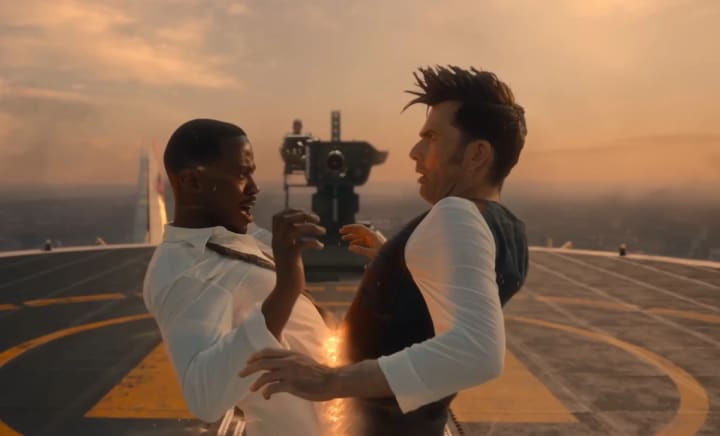
Then there was the bi-generation twist — a flashy gimmick that let David Tennant’s Fourteenth Doctor stick around while Gatwa took over. But it didn’t feel earned. If you want Tennant and Gatwa to co-exist, the show already has the tools to make that happen. Doctor Who canon has long allowed for overlap without needing to bend the rules of regeneration. This just felt like another shortcut — spectacle over substance. I thought that was a one off for the anniversary special. Nope.
The Rani and Mrs. Flood: Two Reveals, No Payoff
Casting Anita Dobson and Archie Panjabi was a stroke of genius. Both actresses brought presence and intrigue to the screen. But the long-hinted reveal that they were versions of the Rani fell completely flat.
Instead of a powerful return of a classic villain, we got a confusing dual performance with no regeneration scene, no stakes, and barely any screentime. Dobson’s Mrs. Flood was compelling — until she was sidelined. Panjabi’s take had edge — but she was only in two episodes. Rather than choosing one actress and developing the Rani as a true series villain, the show tried to hedge its bets, and in the process, undercut them both.

Billie Piper’s Return: A Final Plea?
When Billie Piper returned as Rose Tyler in the finale, it should have been momentous. Instead, it felt empty. Not a character return — a cameo. Not a tribute — a tease. Like Tennant’s Fourteenth Doctor, her appearance leaned hard on nostalgia, offering no emotional grounding or story logic. It wasn’t earned.
This is especially disappointing because Billie Piper has already delivered a richer, more layered take on Rose in Big Finish’s Dimension Canon. In that series, we see Rose as a multiverse traveller, facing impossible choices, fighting for justice, and grappling with grief. It’s some of Piper’s most compelling Doctor Who work — and it proves how much more her character has to offer.
In contrast, this finale reduced her to a marketing tool. A final-scene shock designed to stir buzz, a plea for fans to stick around. In the credits, Billie Piper wasn’t given a credited role — could she be the Doctor? Bad Wolf? Rose again? We won’t have any answers until the BBC renew the show for another season.

What This Era Got Wrong
Russell T Davies’s biggest mistake with this era wasn’t ambition — it was prioritising nostalgia and plot twists over coherent storytelling and character arcs. So many storylines — Susan Foreman, the bi-generation, the Rani, Ruby’s origin, Belinda’s motivations — were introduced without proper resolution.
If you’re only contracted for two seasons, you can’t write like you’re guaranteed a third or fourth. You have to commit. You have to deliver. Otherwise, you get what we got: a series built on build-up, with no satisfying resolution.
Final Thoughts
This era wanted to be everything — bold, fantastical, modern — and at times, it genuinely came close. Several episodes offered glimpses of what Doctor Who can be at its best: ambitious, heartfelt, and full of wonder. But flashes of brilliance weren’t enough to hold the era together.
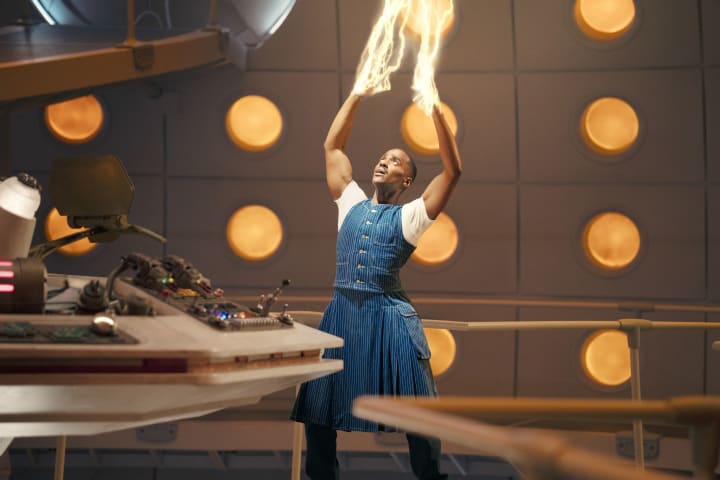
Ncuti Gatwa was sensational — vibrant, vulnerable, endlessly watchable. Millie Gibson and Varada Sethu brought real depth and charisma, even when the writing didn’t rise to meet them. The talent was never in question. The vision was.
Too often, storytelling gave way to spectacle. Arcs were teased, then abandoned. Threads dangled. Characters were rewritten midstream to serve last-minute twists. Nostalgia was used as a shortcut, when what the story really needed was clarity and commitment. The show reached for grandeur, but forgot to earn it.
What this era needed wasn’t another surprise cameo or flashy gimmick. It needed conviction. Resolution. Emotional follow-through. And most of all, structure. Both Boom and Joy to the World — the strongest episodes of this era — were written by Steven Moffat. They offered emotional depth, narrative control, and a sense of purpose that the rest of the season too often lacked. Moffat understood how to balance mythology with character, tension with payoff. Under his pen, Gatwa’s Doctor came alive in a way the main arc never quite achieved.
If this had truly been a two-season arc — not just the setup for a third that might never arrived — maybe we’d be having a different conversation. Instead, we’re left with what-ifs and what feels like an incomplete story.

What did you think of the the end of the Fifteenth Doctor’s era? Let us know in the comments!
About the Creator
Ted Ryan
Screenwriter, director, reviewer & author.
Ted Ryan: Storyteller Chronicles | T.J. Ryan: NA romance
Socials: @authortedryan | @tjryanwrites | @tjryanreviews
The Author Diaries #1: The Storyteller’s Curse — Exclusive Prologue Reveal
Author’s Note: Dear Readers, Thank you for being here — for reading, subscribing, and stepping back into the world of The Storyteller Chronicles. When I finished Book One, I truly thought the story was done. Silas was defeated. The grimoire was safe. Lauren had saved the day — in two worlds — and her family were reunited.
By Ted RyanExclusive • 8 months ago
Why Peanut Butter Is Becoming a Staple in UK Breakfast and Snack Culture?
Peanut butter has steadily gained popularity in the United Kingdom as consumers explore convenient, nutritious, and versatile food options. Once considered a niche product, it is now widely available across supermarkets, health food stores, and online retail platforms. The spread is commonly enjoyed on toast, in smoothies, and as an ingredient in various recipes.
By deepanshu Thakur7 days ago in Futurism
AI-Based Recommendation System Market to Reach USD 34.4 Billion by 2033; Driven by Personalized Digital Experiences
The Global AI-Based Recommendation System Market is projected to increase from USD 2.8 Billion in 2023 to approximately USD 34.4 Billion by 2033, reflecting a strong CAGR of 28.5% during the forecast period from 2024 to 2033. AI-powered recommendation systems use machine learning algorithms, behavioral analytics, and predictive modeling to deliver personalized suggestions to users. These systems analyze large datasets including browsing history, purchase patterns, search queries, and user preferences to identify relevant content, products, or services. As digital platforms continue to expand globally, recommendation technologies have become essential tools for improving engagement, conversion rates, and customer satisfaction.
By Roberto Crum6 days ago in Futurism
The Politics of Playing Dress-Up
Well, to start off I'd like to say a happy world book day to all who celebrate. I know I haven't really posted anything on my socials about it but I'm not a jubilant kind of person. I lay low most of the time. Let's start off with a popular anecdote from the vaults...
By Annie Kapur7 days ago in Geeks




Comments (1)
I agree!! Well said! I really thought Ruby had more to offer, Belinda’s story started out one way (single nurse living in a home with roommates) and change to something completely different! There was so much more to both seasons (would have loved to see Rogue rescued, hopefully in the future?) that I do wish they would have slowed down and added… Also seeing him against the Daleks or Cybermen would have been great too!