
Designing Office Spaces That Prioritise Mental Clarity
Design
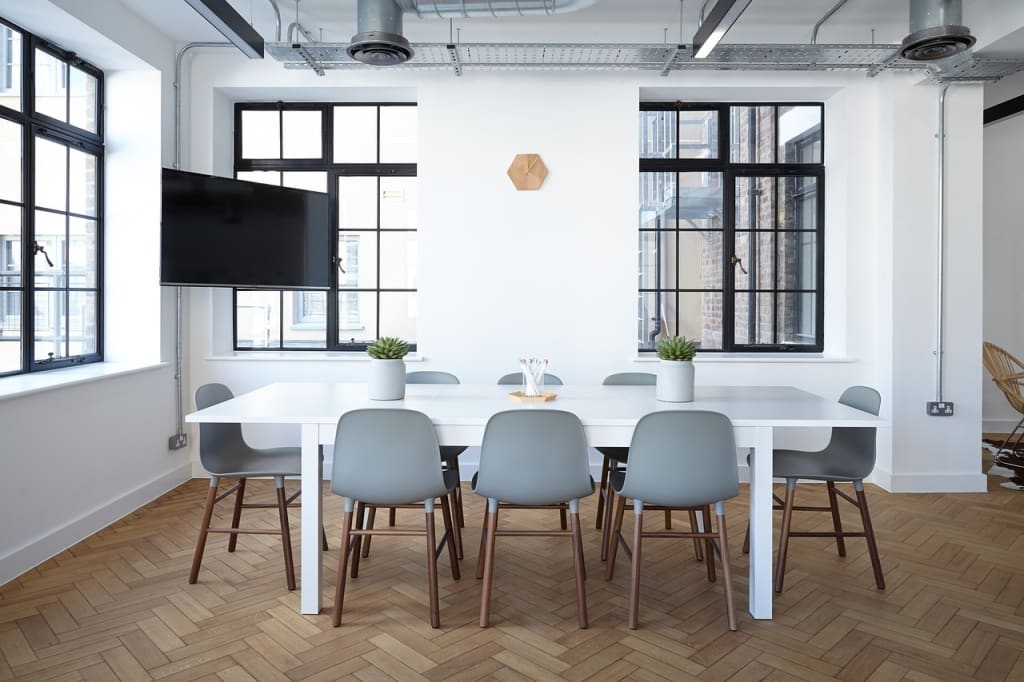
Introduction – From Chaos to Calm
“It wasn’t until I stopped feeling like I was working in a warzone that I realised how loud my office environment was.”
This might sound dramatic, but for many professionals, especially in open-plan or poorly designed offices, the chaos is very real. Constant noise, cluttered desks, harsh lighting, and awkward furniture create environments that chip away at mental clarity. In Australia’s high-performing business and government sectors, this invisible stressor often flies under the radar.
We’re living through an era of hybrid work and heightened burnout. As such, the traditional ‘busy office’ aesthetic is due for a rethink. More than ever, we need calm workspaces that promote wellbeing as much as they support performance.
The modern office should not just be a place to do work—it should be a place that helps people feel good doing it.
The Psychology of Space
The physical layout of a workspace has a silent but powerful impact on our mental state. Cluttered environments elevate cortisol levels—the body’s stress hormone—while poorly designed lighting disrupts circadian rhythms, leading to brain fog and fatigue.
Drawing from Japanese Zen and Scandinavian minimalism, we find timeless design principles that favour simplicity, flow, and balance. In both traditions, form serves function. Surfaces are clean, light is maximised, and everything has its place.
These principles are increasingly embraced in progressive Australian workplaces, where mental load and burnout are growing concerns. A calming space, free of unnecessary distraction, doesn’t just look good—it fosters clarity and control.
Moreover, spatial psychology reveals how humans instinctively respond to structure. Open layouts may foster transparency but can overwhelm without zones of rest or quiet. Similarly, bright white lights may boost alertness but increase sensory fatigue when overused.
A better solution? Integrating warm, indirect lighting; reducing clutter through intelligent storage; and aligning furniture layout with the daily rhythms of concentration and collaboration.
Zones of Tranquillity
To promote focus and balance, consider dividing the workspace into distinct emotional zones:
Focus Zones: Quiet nooks or enclosed pods for deep work. These spaces shield employees from noise and movement—ideal for tasks requiring sustained attention.
Collaboration Areas: Open, creative spaces for team energy. Use casual seating, writable walls, or circular tables to foster organic interaction.
Retreat Spots: Lounge-style corners or wellness rooms for decompression. Whether it’s a beanbag zone, a meditation nook, or a room with biophilic elements, these areas let the brain reset.
This zoning strategy draws from evidence-based design used in progressive architecture and education. Studies show that when people can move between distinct cognitive environments, their engagement and task-switching abilities improve dramatically.
By intentionally zoning your office, you respect different cognitive states—concentration, conversation, and rest.
Working with experienced commercial designers can completely reshape your environment—from lighting and acoustics to zoning and furniture—to create wellbeing-focused layouts. Many businesses now invest in professional fit-out services to align their workspaces with psychological design principles.
Furniture as Mindfulness Tools
Furniture is more than functional—it’s emotional. The textures we touch, the shapes we sit in, and the colour tones that surround us all contribute to our subconscious state.
Ergonomic furniture isn’t just about physical comfort—it can directly influence mental wellbeing. For instance, ergonomic task chairs designed for posture and focus help reduce tension, letting the mind concentrate without bodily distraction.
Similarly, incorporating natural textures—like timber, wool, or plant-fibre finishes—can subtly connect staff to the calming influence of nature. Soft curves and muted colours also help, replacing stark, corporate sterility with sensory calm.
In the Australian context, where climate and nature are integral to identity, this makes cultural sense. Offices in Sydney or Brisbane, for example, increasingly integrate light woods, greenery, and wide windows to harmonise with the outdoors.
Sensory Design: More Than Meets the Eye
Modern workspace design must engage more than sight. Sound, smell, touch, and even temperature shape our focus and wellbeing.
Acoustics: Use sound-absorbing materials such as acoustic panels, carpet tiles, and even hanging felt partitions to reduce ambient noise and echo.
Scent: Subtle natural aromas—eucalyptus, peppermint, or lavender—can positively affect alertness or calm.
Temperature Zones: Adjustable thermal comfort has become a non-negotiable. Thermal discomfort is cited as one of the top causes of workplace dissatisfaction in Australia.
While many of these elements may seem small, their cumulative effect on mental clarity is immense. Integrating sensory design also aligns with neurodiversity-aware environments, making the workspace more inclusive for all cognitive profiles.
The Entry Matters More Than You Think
The reception area is the first impression you give—both to guests and to staff arriving each morning. A cluttered, noisy, or chaotic front desk can unconsciously signal stress. A calm, ordered reception sets an emotional tone for the entire day.
For Australian organisations navigating hybrid schedules and evolving work patterns, the reception area can also be a bridge between the digital and physical workspace—a place of orientation, welcome, and transition.
It’s not just about aesthetics; it’s about perception. People walking through your door are subconsciously asking: “Does this place support calm, or cause chaos?”
Design your entryway with soft lighting, curated decor, a soothing colour palette, and intuitive wayfinding. Plants, warm timber surfaces, and gentle acoustics can transform a transactional space into a statement of care. Choosing natural textures, neutral tones, and layout-conscious furnishings from specialist office furniture providers can instantly communicate calm and professionalism.
The Rise of the Mindful Meeting Room
In fast-paced industries, meetings are often crammed, rushed, and surrounded by cluttered whiteboards and blinking screens. But meeting rooms can be reimagined as intentional, focused spaces.
Incorporate:
Acoustic panels to absorb disruptive sounds.
Circular tables to promote equity and participation.
Natural light or dimmable fixtures for control and mood.
Australia’s workplace culture is undergoing a generational shift, valuing authenticity, psychological safety, and wellbeing. A mindfully designed meeting room reflects and supports that shift.
Biophilia in the Workplace
One of the most powerful (and underused) tools in office design is biophilia—the innate human tendency to seek connection with nature.
This connection can be nurtured through:
Indoor greenery, vertical gardens, or hanging plants
Natural materials like stone and wood
Visual access to sunlight and outdoor views
Incorporating biophilic elements has been shown to improve air quality, reduce stress, and even boost memory retention. Given Australia’s biodiversity and culture of outdoor living, biophilic design aligns naturally with employee expectations.
Cultural Reflections: Australia’s Design Ethos
Designing for mental clarity means aligning with national values. In Australia, work-life balance, outdoor living, and ‘no worries’ culture all point toward calm, honest spaces.
Corporate Australia, especially within education and public services, is beginning to abandon outdated cubicles in favour of open-yet-structured environments that facilitate natural light, movement, and quiet.
The integration of Indigenous-inspired patterns, local timber, and place-based artwork in office design also adds meaningful cultural value, grounding the space in story and land.
Final Thoughts – Designing for Flow, Not Just Function
A well-designed workspace isn’t about shiny desks or designer chairs—it’s about creating the conditions where people can think clearly, feel safe, and do their best work.
Mental clarity is influenced by everything we see, touch, and hear. Australian offices, from start-ups to government departments, can benefit from environments that respect human psychology.
When your environment exudes clarity, your mind follows.
In a country that prizes openness, honesty, and nature, calm workspaces are more than a design choice—they’re a cultural fit.
About the Creator
Keep reading
More stories from Sukaina Hassan and writers in Futurism and other communities.
Apple AI Advances and OpenAI’s Acquisition of Jony Ive’s Startup
In 2025, Apple Park is accelerating its AI integration across devices and services, driving more personalized, intelligent user experiences. Separately, OpenAI completed its acquisition of Jony Ive’s startup focused on AI-enhanced hardware design, marking a significant step toward AI-driven product innovation. These two distinct but impactful developments highlight the growing influence of AI in both software and hardware realms.
By Sukaina Hassan8 months ago in Futurism
Kids Digital Advertising Market to hit USD 25.9 Billion By 2033
The Global Kids Digital Advertising Market is projected to reach approximately USD 25.9 Billion by 2033, rising from USD 3.4 Billion in 2023, and is expected to expand at a CAGR of 22.5% during the forecast period from 2024 to 2033. This growth is driven by the increasing digital consumption among children, the growing influence of social media, and the rising importance of targeted, interactive advertising methods. With the increasing use of smartphones, tablets, and other digital devices among kids, advertisers are increasingly focusing on creating engaging, child-friendly content that can capture the attention of younger audiences.
By Roberto Crum3 days ago in Futurism
Artemis II: Nasa targets early April for Moon mission
The mission represents a crucial milestone in NASA’s broader Artemis program, which aims to return humans to the lunar surface and establish a long-term presence on the Moon. If successful, Artemis II will pave the way for future missions that could eventually support lunar bases and deeper exploration into the solar system. Artemis II will be the first crewed flight of the powerful Orion spacecraft launched aboard the massive Space Launch System rocket. The spacecraft will carry four astronauts on a journey that will take them thousands of kilometers beyond the Moon before returning safely to Earth. The mission follows the success of Artemis I, which flew in late 2022 and successfully tested the Orion spacecraft in deep space without astronauts on board. That mission orbited the Moon and returned valuable data about the spacecraft’s performance, heat shield durability, and onboard systems. According to NASA officials, Artemis II will take astronauts on a roughly 10-day journey. During the mission, the Orion spacecraft will perform a flyby of the Moon, traveling farther from Earth than any human mission has gone before. The astronauts will also test key navigation systems, life-support technology, and communication equipment needed for long-duration space travel. The crew selected for the historic mission includes commander Reid Wiseman, pilot Victor Glover, mission specialist Christina Koch, and Canadian astronaut Jeremy Hansen. Together, they will represent a new era of international cooperation in space exploration. Christina Koch’s participation is particularly significant, as she will become the first woman to travel to the Moon. Meanwhile, Jeremy Hansen will be the first Canadian astronaut to take part in a lunar mission, highlighting the role of international partnerships in NASA’s long-term exploration strategy. The Artemis program itself is part of a broader effort to establish sustainable human exploration beyond Earth. Unlike the earlier Apollo missions, which focused on short lunar visits, the Artemis program aims to build infrastructure that will support repeated missions and long-term scientific research. Future plans include the construction of the Lunar Gateway, a small space station that will orbit the Moon and serve as a staging point for missions to the lunar surface. From there, astronauts could travel down to the Moon using specialized landers designed for repeated use. NASA officials say the Artemis program will also help prepare astronauts for future missions to Mars. By testing deep-space systems near the Moon, engineers and scientists can learn valuable lessons about life-support systems, radiation protection, and long-duration spaceflight. Despite the excitement surrounding Artemis II, the mission has faced multiple delays as engineers worked to ensure the safety of both the spacecraft and the launch system. Issues related to hardware testing, battery components, and environmental control systems required additional time for inspection and redesign. NASA administrators have emphasized that safety remains the agency’s top priority. Crewed missions beyond low Earth orbit carry significant risks, and officials have insisted that all systems must be thoroughly tested before astronauts are launched into deep space. The early April target represents a tentative launch window rather than a fixed date. Weather conditions, final technical checks, and launch readiness reviews will ultimately determine the exact day when the rocket lifts off from Kennedy Space Center. If the mission proceeds as planned, Artemis II will become the first crewed lunar flyby mission since Apollo 17 in 1972. That historic mission marked the end of the Apollo era, after which human exploration of the Moon paused for decades. Now, with Artemis II approaching launch, NASA is preparing to usher in a new chapter of lunar exploration. The mission is expected to capture global attention as astronauts once again venture into deep space, retracing a path last traveled by the Apollo generation. For space enthusiasts, scientists, and engineers around the world, the upcoming mission represents more than just a technological achievement. It symbolizes humanity’s renewed determination to explore beyond Earth and expand our understanding of the universe. If Artemis II succeeds, it will not only demonstrate the readiness of NASA’s next-generation spacecraft but also bring humanity one step closer to returning astronauts to the lunar surface for the first time in the 21st century.
By Fiaz Ahmed about 2 hours ago in Futurism
Becca
"Everything is so... flat." Denille said stupidly as she looked around her new neighborhood. She looked around at the muted desert where even the smallest sign of life seemed to have given up. The plant life was shrubs that were half cooked by the heat and where there should have been a lawn, a mess of white rocks laid glistening in the sun. Even the sky looked stretched thin, like the sun had ironed it smooth. She’d moved from Riverside, where at least there were hills, but here in Barstow, everything felt baked and brittle.
By Sara Wilson7 days ago in Fiction




Comments
There are no comments for this story
Be the first to respond and start the conversation.