
Data Warehouse Assessment: Unlocking the Key to Data-driven Success
Eagle - Data Warehouse Assessment & Cloud Migration Planning Tool | Datametica

In today's data-centric business landscape, organizations rely on data warehouses as critical components of their information infrastructure. However, as technology evolves and business requirements change, it becomes essential to periodically assess the effectiveness, efficiency, and scalability of data warehouses. A comprehensive data warehouse assessment provides valuable insights to optimize data management strategies and unlock the full potential of an organization's data assets. In this blog, we will explore the importance of data warehouse assessments and discuss key considerations for conducting a successful assessment.
Why Assess Your Data Warehouse?
Identify Performance Bottlenecks: A data warehouse assessment helps identify bottlenecks and inefficiencies in the current data warehouse architecture. By evaluating factors such as data load times, query performance, data modeling, and indexing, organizations can pinpoint areas that require optimization and enhance overall system performance.
Align with Business Objectives: Business requirements and priorities evolve over time. Conducting a data warehouse assessment allows organizations to evaluate if their existing data warehouse infrastructure aligns with current and future business objectives. It helps identify gaps and areas for improvement, ensuring that the data warehouse supports the organization's strategic goals.
Enhance Scalability and Agility: As data volumes grow and new data sources emerge, organizations must ensure their data warehouse can scale effectively. A data warehouse assessment assesses scalability requirements and provides insights into necessary modifications, such as partitioning strategies, hardware upgrades, or cloud migration, to accommodate future data growth and evolving business needs.
Optimize Data Integration: Effective data integration is crucial for a robust data warehouse. A comprehensive assessment evaluates data integration processes, identifies potential issues, and recommends improvements. This includes assessing data quality, data lineage, data transformation, and data integration frameworks, enabling organizations to ensure data accuracy, consistency, and reliability.
Evaluate Data Governance and Security: Data governance and security are paramount for protecting sensitive information and ensuring compliance. A data warehouse assessment examines data governance policies, security controls, and access management mechanisms. It helps organizations identify gaps, address potential risks, and ensure adherence to regulatory requirements, thereby enhancing data governance and security practices.
Key Considerations for Data Warehouse Assessment:
Define Assessment Goals: Clearly define the objectives of the assessment. Identify the specific areas you want to evaluate, such as performance, scalability, data quality, data governance, or integration. This will guide the assessment process and help measure success against predefined goals.
Assess Data Architecture: Evaluate the overall data warehouse architecture, including data models, schema design, ETL (Extract, Transform, Load) processes, and integration patterns. Assess the alignment between the current architecture and business requirements to identify areas for improvement or optimization.
Evaluate Performance Metrics: Measure and analyze performance metrics such as query response times, data load durations, and system resource utilization. Identify performance bottlenecks and determine the root causes. This analysis helps uncover opportunities for optimization, indexing strategies, or hardware upgrades.
Analyze Data Quality: Evaluate data quality by analyzing data accuracy, completeness, consistency, and timeliness. Assess data profiling results, data cleansing processes, and data validation mechanisms. This analysis enables organizations to improve data quality assurance and ensure reliable insights for decision-making.
Review Data Governance and Security Practices: Assess data governance policies, metadata management, data lineage, access controls, and security mechanisms. Identify gaps or weaknesses in data governance and security frameworks. Implement necessary enhancements to strengthen data protection and compliance practices.
Consider Scalability and Future Needs: Assess the scalability of the data warehouse infrastructure by evaluating data growth projections, system capacity, and performance under increased loads. Consider future requirements and emerging technologies such as cloud-based solutions to ensure the data warehouse can accommodate growth and adapt to changing business needs.
Visit: https://www.datametica.com/eagle-data-warehouse-assessement-and-cloud-migration-planning-tool/
About the Creator
Keep reading
More stories from Nidhi Chhalotre and writers in Futurism and other communities.
Nurturing Young Minds: Exploring Schools in HSR Layout
HSR Layout, located in the vibrant city of Bangalore, is a popular residential and commercial area known for its well-planned infrastructure and amenities. With a growing population of families settling in the region, the availability of quality educational institutions is of utmost importance. In this blog, we will delve into the diverse educational landscape of HSR Layout and highlight the schools that make it an ideal destination for providing a solid foundation to young minds.
By Nidhi Chhalotre3 years ago in Education
Face Makeup Market Trends: Natural Ingredients, Organic Cosmetics & Forecast to 2033
Social media culture, a booming self-care economy, and a growing appetite for inclusive beauty are reshaping the face makeup industry faster than ever. From TikTok tutorials driving overnight sellouts to brands expanding shade ranges to serve truly global skin tones, the forces pushing this market forward are both cultural and commercial. According to IMARC Group's latest data, The global face makeup market size was valued at USD 40.0 Billion in 2024. Looking forward, IMARC Group estimates the market to reach USD 55.3 Billion by 2033, exhibiting a CAGR of 3.48% from 2025-2033. North America currently dominates the market, backed by beauty-conscious consumers, a well-developed retail network, and a powerful influencer ecosystem that keeps trend cycles moving at speed.
By Suhaira Yusuf4 days ago in Futurism
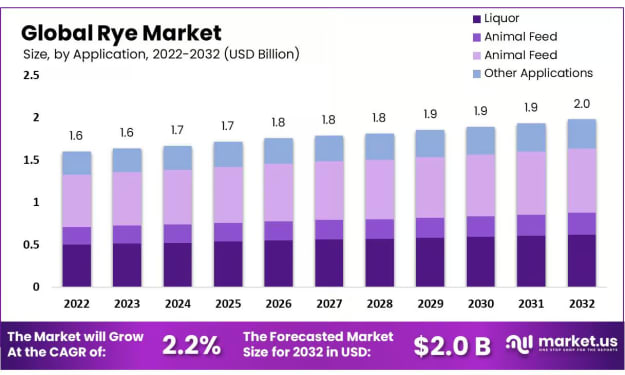
Rye Market Report: USD 2.0 Billion by 2032 at 2.2% CAGR
Overview The Global Rye Market was valued at approximately USD 1.6 billion in 2023 and is projected to reach USD 2.0 billion by 2032, expanding at a compound annual growth rate (CAGR) of 2.2% over the forecast period. Rye (Secale cereale) is a hardy cereal grain belonging to the wheat tribe, cultivated widely for both food and forage. Its ability to thrive in harsh winters, sandy or low-fertility soils, drought conditions, and even acidic environments gives it a significant agronomic advantage over many competing grains.
By Hayden Kulas5 days ago in Futurism



Comments
There are no comments for this story
Be the first to respond and start the conversation.