
Cryptocurrency Trading 101: A Beginner's Guide to Making Money in the Digital Currency Market
Your Essential Handbook for Successful Trading in the Exciting World of Cryptocurrency.
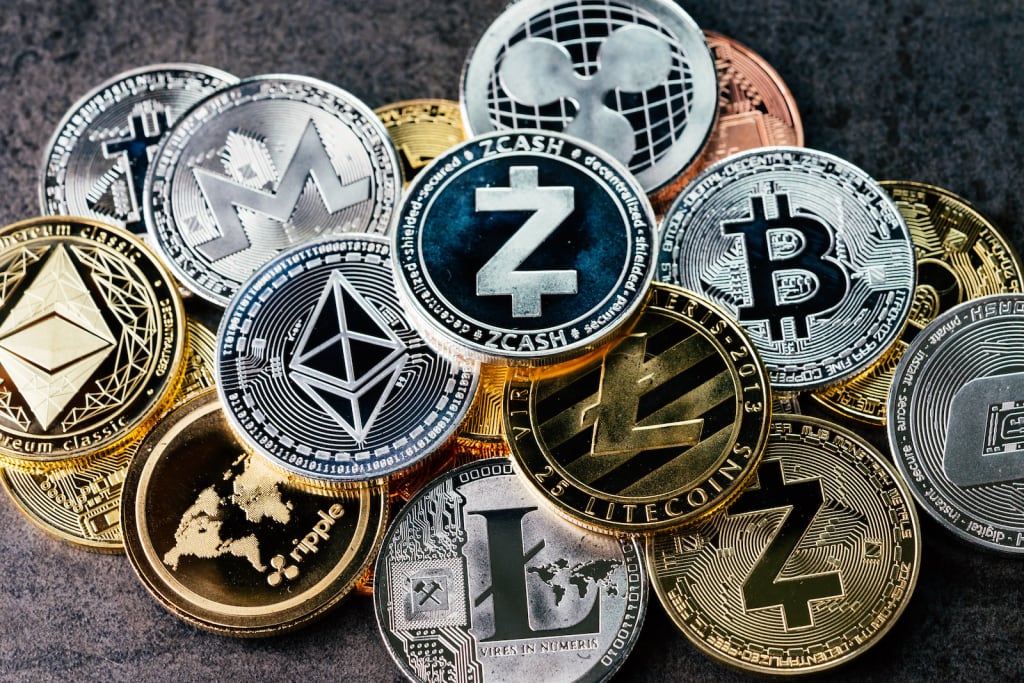
Overview of what you might find in "Cryptocurrency Trading 101: A Beginner's Guide to Making Money in the Digital Currency Market":
Chapter 1: Introduction to Cryptocurrency Trading
What is cryptocurrency?
Understanding the difference between cryptocurrency and fiat currency
Why trade cryptocurrency?
Chapter 2: Getting Started with Cryptocurrency Trading
Choosing a cryptocurrency exchange
Setting up your trading account
Funding your trading account
Understanding trading fees
Chapter 3: Basic Concepts for Cryptocurrency Trading
Understanding market trends and indicators
Identifying valuable projects and teams
Analyzing news and events
Chapter 4: Trading Strategies for Cryptocurrency Trading
Day trading vs. swing trading vs. position trading
Trend-following strategies
Using stop-loss orders
Using technical analysis
Chapter 5: Risk Management for Cryptocurrency Trading
Setting stop-loss orders
Using leverage
Diversifying your portfolio
Managing emotions and psychology
Chapter 6: Advanced Topics in Cryptocurrency Trading
Trading derivatives such as futures and options
Reading order books and market depth charts
Advanced charting techniques
Chapter 7: Conclusion and Resources
Recap of key points and strategies
Additional resources for further learning and trading
Final thoughts and next steps.
Chapter 1: Introduction to Cryptocurrency Trading
Cryptocurrencies have been making waves in the financial world in recent years, and many people are eager to learn more about this exciting new asset class. In this chapter, we'll start with the basics: what is cryptocurrency, how it differs from fiat currency, and why you might want to consider trading it.
What is cryptocurrency?
Cryptocurrency is a digital or virtual currency that uses cryptography for security. It is decentralized, meaning it is not controlled by any government or financial institution. Instead, cryptocurrency relies on a distributed ledger called the blockchain, which records all transactions in a transparent and immutable way.
Some of the most well-known cryptocurrencies include Bitcoin, Ethereum, and Litecoin. However, there are now thousands of different cryptocurrencies available, each with its own unique features and use cases.
Understanding the difference between cryptocurrency and fiat currency
Fiat currency, on the other hand, is the currency issued by a government and regulated by a central authority such as a central bank. Examples of fiat currency include the US dollar, the euro, and the Japanese yen.
The main difference between cryptocurrency and fiat currency is that the latter is backed by a government or institution, while the former is not. Additionally, fiat currency is often subject to inflation, while many cryptocurrencies have a limited supply, which can make them more valuable over time.
Why trade cryptocurrency?
There are many reasons why someone might want to trade cryptocurrency. Here are a few:
1. Potential for high returns: Cryptocurrencies are known for their volatility, which means they can experience rapid price movements in short periods of time. While this can be risky, it also presents opportunities for traders to make large profits.
2. Decentralization: Since cryptocurrencies are not controlled by any government or financial institution, they offer a degree of independence and privacy that is not possible with fiat currency.
3. Diversification: Cryptocurrency can be a valuable addition to a diversified investment portfolio. By including cryptocurrencies in your portfolio, you can spread your risk across different asset classes.
In the next chapter, we'll explore how to get started with cryptocurrency trading, including choosing a cryptocurrency exchange and setting up your trading account.
Chapter 2: Getting Started with Cryptocurrency Trading
Now that you have a basic understanding of what cryptocurrency is and why you might want to trade it, it's time to get started. In this chapter, we'll walk you through the process of setting up a cryptocurrency trading account.
Choosing a cryptocurrency exchange
The first step in trading cryptocurrency is to choose a cryptocurrency exchange. There are many exchanges to choose from, each with its own features, security measures, and trading fees. Some popular exchanges include Binance, Coinbase, and Kraken.
When choosing an exchange, consider factors such as the number of cryptocurrencies available for trading, the security measures in place, the trading fees, and the reputation of the exchange.
Setting up your trading account
Once you've chosen an exchange, the next step is to set up your trading account. This typically involves providing some basic personal information and verifying your identity, which can be done through a variety of methods, such as uploading a photo ID or linking your social media accounts.
Funding your trading account
After your account is set up and verified, you'll need to fund your trading account with cryptocurrency or fiat currency. This can usually be done through a bank transfer or credit card payment, depending on the exchange.
Understanding trading fees
It's important to understand the trading fees associated with your chosen exchange. Trading fees can vary widely, and can have a significant impact on your profitability as a trader. Some exchanges charge a flat fee per trade, while others charge a percentage of the total trade volume.
In addition to trading fees, some exchanges also charge fees for deposits and withdrawals, so be sure to factor these into your trading strategy.
In the next chapter, we'll cover some basic concepts for cryptocurrency trading, including how to analyze market trends and indicators, and how to identify valuable projects and teams.
About the Creator
Keep reading
More stories from Selvakumar Sekar and writers in Futurism and other communities.
The Weaver's Revolution: Changing the Course of Tamil Nadu's Silk Industry
The Weaver's Revolution" is a story about a time traveler who goes back in time to Tamil Nadu during the British Raj, and helps a young weaver to start a movement that changes the silk industry's future. They form a union, demand better wages and working conditions, and eventually start their own successful silk production and trading company.
By Selvakumar Sekar3 years ago in Fiction
About Binding Prometheus
I want to start actively advocating on behalf of my own work, and the most valuable part of my canon is, without a doubt, Binding Prometheus, the play I have been working on since 2019 and only finished in 2023 as part of my MA. The play itself is an amalgamation of a million different inspirations. On one end, it evokes the Ancient Greek myth-play, deriving its own title from the earliest extant work of Western drama we have, Aeschylus’s Prometheus Bound. On the other end, it borrows significantly from the sci-fi bulwarks from over the years, namely Mary Shelley’s Frankenstein and Karel Capek’s Rossum’s Universal Robots. The play could be an episode of Black Mirror, I fear. I don’t know. I’ve only ever seen one episode of Black Mirror.
By Steven Christopher McKnight17 days ago in Futurism
Healthy Snacks Market Size to Hit USD 148.4 Billion by 2034 Driven by Protein-Rich and Functional Products
According to IMARC Group's latest research publication, the global healthy snacks market size reached USD 95.8 Billion in 2025. Looking forward, IMARC Group expects the market to reach USD 148.4 Billion by 2034, exhibiting a growth rate (CAGR) of 4.98% during 2026-2034.
By Suhaira Yusuf6 days ago in Futurism




Comments
There are no comments for this story
Be the first to respond and start the conversation.