
Clothing manufacturers for startups in USA
How to Choose the Right Clothing Manufacturer for Your Startup

Starting a clothing line is an exciting venture, but one of the most critical decisions you’ll face is selecting the right clothing manufacturer. The right partner can help bring your vision to life, maintain quality, and meet your production needs. Here’s a step-by-step guide to choosing the ideal clothing manufacturer for your startup.
1. Determine Your Production Needs
Before approaching manufacturers, define your requirements clearly:
Quantity: Are you looking for small-batch production or large-scale manufacturing?
Product Type: What type of clothing are you producing (e.g., activewear, casual wear, luxury items)?
Materials and Techniques: Do you need specific fabrics, sustainable options, or specialized processes like embroidery or screen printing?
Understanding these details will help you filter manufacturers that align with your needs.
2. Decide Between Domestic and Overseas Manufacturing
Each option has its pros and cons:
Domestic (USA-Based) Manufacturing:
Benefits: Higher quality control, faster shipping, and better communication.
Challenges: Higher production costs compared to overseas options.
Overseas Manufacturing:
Benefits: Lower production costs, access to specialized labor.
Challenges: Longer lead times, language barriers, and potential quality control issues.
For startups focused on "Made in USA" branding or eco-conscious production, domestic manufacturing may be the better choice.
3. Research and Shortlist Manufacturers
Use these resources to find potential manufacturers:
Online Directories: Websites like Maker’s Row and Sewport list vetted clothing manufacturers.
Industry Trade Shows: Events like Magic Las Vegas or Texworld USA can help you meet manufacturers in person.
Networking: Join industry forums, LinkedIn groups, or local business communities to get recommendations.
4. Evaluate the Manufacturer’s Expertise
Once you have a shortlist, dig deeper:
Portfolio: Review their previous work. Do they have experience in producing the type of clothing you’re creating?
Client Testimonials: Look for reviews or ask for references from other brands they’ve worked with.
Certifications: Check for certifications like ISO or sustainable production credentials (e.g., GOTS for organic textiles).
5. Request Samples
Samples allow you to evaluate the quality of their work firsthand. Pay attention to:
Stitching and finishing.
Material quality and consistency.
Compliance with your design specifications.
6. Understand Their Minimum Order Quantities (MOQs)
Many manufacturers have a minimum order quantity. For startups, look for manufacturers offering low MOQs, which allow you to test the market without overcommitting.
7. Discuss Pricing and Payment Terms
Be clear about pricing upfront:
Request a detailed breakdown of costs (e.g., material, labor, shipping).
Inquire about hidden fees or additional costs for rush orders.
Negotiate payment terms, such as a deposit and milestone-based payments
8. Evaluate Communication and Responsiveness
Effective communication is crucial for a smooth production process. Test their responsiveness during the initial stages:
Do they reply promptly to emails or calls?
Are they transparent about timelines and processes?
Do they provide clear answers to your questions?
9. Visit the Factory (If Possible)
If feasible, visit the manufacturer’s facility to:
Assess working conditions and equipment.
Verify their capacity to handle your production needs.
Build a stronger relationship with the team.
For overseas manufacturers, consider hiring a local agent or using a third-party inspection service.
10. Start with a Trial Run
Before committing to large-scale production, start with a small trial order. This allows you to:
Test their ability to meet deadlines.
Evaluate the consistency of quality.
Identify and address potential issues early.
Final Thoughts
Choosing the right clothing manufacturer is a pivotal step in building a successful clothing brand. By clearly defining your needs, thoroughly researching options, and testing the relationship with a trial run, you can find a manufacturer that aligns with your goals and values. Investing time in this decision now will save you headaches down the road and set your startup on the path to success.
FAQs
How much does it cost to work with a clothing manufacturer?
Costs vary based on factors like order quantity, material choice, and complexity. Domestic manufacturing generally costs more than overseas options.
What is a typical lead time for clothing manufacturers?
Lead times range from 4 to 12 weeks, depending on the manufacturer’s capacity and your order’s complexity.
Can I work with a manufacturer if I don’t have technical designs?
Some manufacturers offer design assistance or can work with basic sketches, but having detailed tech packs will streamline the process.
About the Creator
Keep reading
More stories from George Morrison and writers in Futurism and other communities.
Affordable SEO for Texas Startups: Proven Strategies That Drive Real Growth
In the fiercely competitive Texas startup ecosystem, standing out online isn’t optional—it’s critical. From Austin tech startups to Houston eCommerce founders, every new business wants visibility, but few can afford the high retainers of large SEO firms. That’s where affordable SEO services for Texas startups come into play: cost-effective, results-driven, and tailored for lean budgets.
By George Morrison10 months ago in Futurism
Hunger is looming over Yemen, urgent action is needed
Yemen is facing one of the most severe humanitarian crises in the world, with millions of people at risk of starvation as conflict, economic instability, and restricted access to aid converge to create a dire situation. Experts warn that without urgent international intervention, the country could experience catastrophic levels of hunger and malnutrition in the coming months. The crisis is driven by years of armed conflict between the internationally recognized government and Houthi rebels, compounded by regional geopolitical tensions, economic collapse, and the disruption of basic services. Humanitarian agencies have repeatedly highlighted that food insecurity is escalating rapidly, with children and vulnerable populations at particular risk. The Scale of the Crisis According to reports from United Nations World Food Programme, more than 20 million people in Yemen — nearly two-thirds of the population — face severe food insecurity. Of these, millions are on the brink of famine, unable to access adequate nutrition due to limited food supplies, rising prices, and blocked humanitarian corridors. The war has destroyed infrastructure, disrupted agricultural production, and limited the flow of imports, making food increasingly scarce and expensive. Fuel shortages exacerbate the problem by making transportation of goods more difficult, while inflation further erodes household purchasing power. Children and Vulnerable Groups at Risk Children are disproportionately affected by Yemen’s food crisis. Malnutrition rates among children under five have reached alarming levels, with tens of thousands at risk of life-threatening conditions such as severe acute malnutrition. International health agencies warn that without immediate intervention, the health and survival of an entire generation are at stake. Pregnant and lactating women, the elderly, and displaced populations are also particularly vulnerable. Limited access to healthcare and clean water compounds the risk of disease, further increasing the urgency for humanitarian support. Barriers to Aid Delivery Humanitarian operations in Yemen face immense challenges. Blocked ports, active conflict zones, and bureaucratic restrictions hinder the delivery of food, medical supplies, and essential services. Aid organizations report that in some regions, trucks carrying food are delayed for weeks due to inspections and restricted access imposed by local authorities. The situation is worsened by ongoing conflict, which disrupts supply chains and forces humanitarian agencies to navigate dangerous areas to reach vulnerable communities. Aid convoys often require extensive negotiation and security coordination, limiting the speed and volume of deliveries. International Response The international community has pledged support, but funding gaps continue to impede large-scale relief efforts. United Nations and partner organizations have repeatedly called for emergency funding to address Yemen’s food crisis, emphasizing that without rapid assistance, the risk of famine will increase dramatically. Several countries and humanitarian donors have contributed to food and medical aid, but the sheer scale of the need far exceeds available resources. Emergency appeals frequently highlight the need for cash assistance, nutritional support for children, and measures to restore basic services. Economic Collapse Compounds the Crisis Yemen’s economy has been devastated by years of war. Currency depreciation, high unemployment, and disrupted markets have left millions unable to afford food even when supplies are available. Analysts warn that without economic stabilization, humanitarian interventions alone may be insufficient to prevent widespread hunger. The collapse of local food production further intensifies the problem. Farmers struggle with lack of access to seeds, fuel, and water, while conflict limits transportation to markets, leading to shortages in urban and rural areas alike. Calls for Urgent Action Experts stress that immediate and coordinated action is essential. Expanding humanitarian access, increasing funding, and negotiating safe corridors for food delivery are critical steps to prevent mass starvation. Humanitarian advocates also urge the international community to press for ceasefires and conflict resolution measures that allow aid to reach those most in need. Without addressing the underlying political and security issues, temporary relief may only partially alleviate the crisis. The Humanitarian Imperative Yemen’s hunger crisis is a stark reminder of the devastating human cost of prolonged conflict. Families are being forced to make impossible choices, and children are suffering the consequences of disrupted food systems and limited healthcare. Global organizations continue to emphasize that starvation is preventable if the international community acts swiftly. Coordinated diplomatic, financial, and logistical support could save millions of lives and stabilize communities across Yemen. As the situation deteriorates, the world faces a moral imperative: to provide urgent assistance before the crisis escalates into widespread famine and the loss of countless lives. Immediate action is needed to deliver food, medical care, and protection to the most vulnerable, ensuring that hope is not lost amid the devastation.
By Fiaz Ahmed a day ago in Futurism
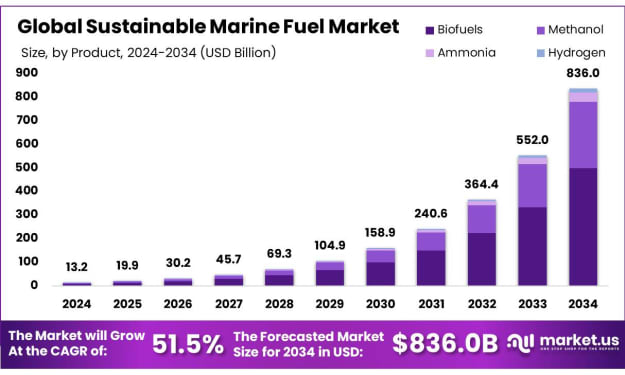
Sustainable Marine Fuel Market To Reach USD 836.0 Billion by 2034 at 51.5% CAGR
The global Sustainable Marine Fuel Market is projected to grow rapidly, increasing from USD 13.1 billion in 2024 to around USD 836.0 billion by 2034, representing a compound annual growth rate (CAGR) of 51.5% between 2025 and 2034. In 2024, Europe led the market with more than 51.0% of the global share, generating approximately USD 6.7 billion in revenue. This expansion is largely driven by the maritime sector’s urgent need to reduce emissions, as shipping currently accounts for about 2.5% of global greenhouse gas (GHG) emissions, a figure that could rise to nearly 17% by 2050 without effective mitigation measures.
By Hayden Kulas5 days ago in Futurism



Comments
There are no comments for this story
Be the first to respond and start the conversation.