
Choosing the Right Crops for Solar Farms: Practical Insights for Agrivoltaic Success
Agrivoltaics The Future of Sustainable Farming
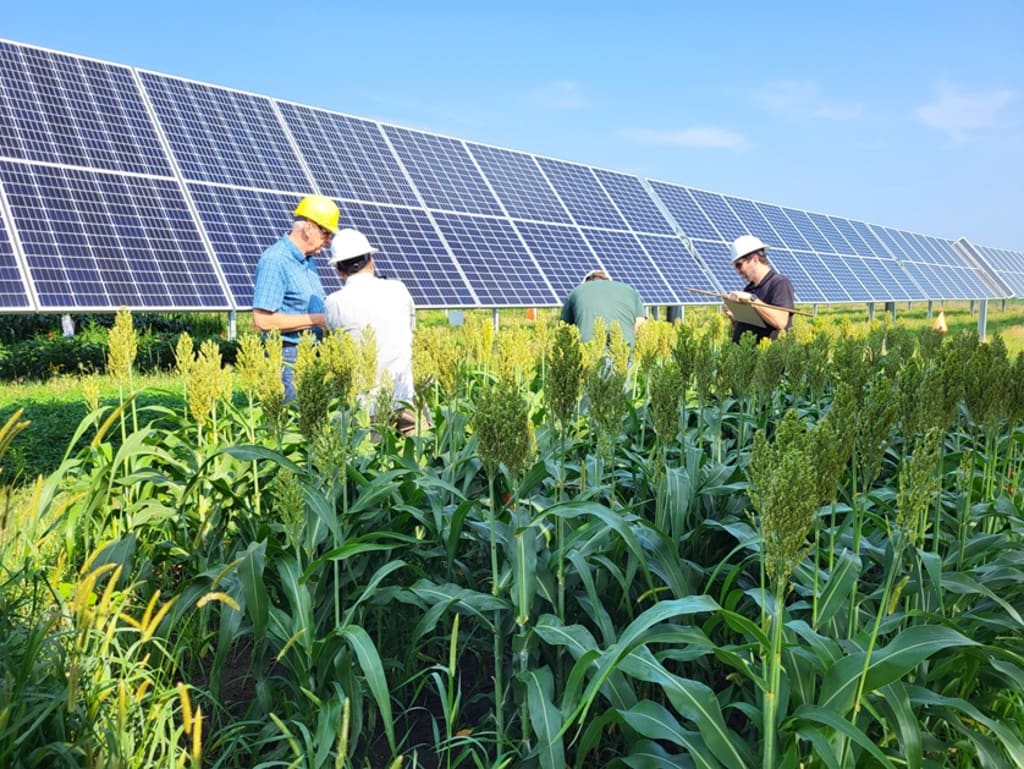
When it comes to agrivoltaics, the crops you plant are just as important as the solar panels you install. Not every plant responds well to partial shading, and making the wrong choice can turn an innovative project into a frustrating one. But when farmers select crops that thrive under solar panels, the results can be extraordinarily higher yields, improved water savings, and a steady income from renewable energy.
Whether you’re a farmer exploring how to get more from your land, a solar enthusiast fascinated by dual-use technology, or someone simply curious about how food and power can grow side by side, this guide will give you the practical insights you need.
________________________________________
Why Crop Choice Matters in Agrivoltaics
Agrivoltaics reshapes the farming environment in subtle but powerful ways. By installing panels above fields, farmers change the balance of sunlight, shade, and soil conditions. Solar arrays reduce direct sun exposure, create cooler microclimates, and help retain moisture in the soil.
For certain crops, that’s a dream scenario. Leafy greens, for instance, wilt under blazing sun but flourish in cooler, moist soils. For others—like wheat or corn, which crave full sun—the environment may not be as suitable.
When farmers match the right crops to the microclimate created by solar panels, the result isn’t just a good harvest—it’s a profitable, resilient system that works for both food and energy production.
________________________________________
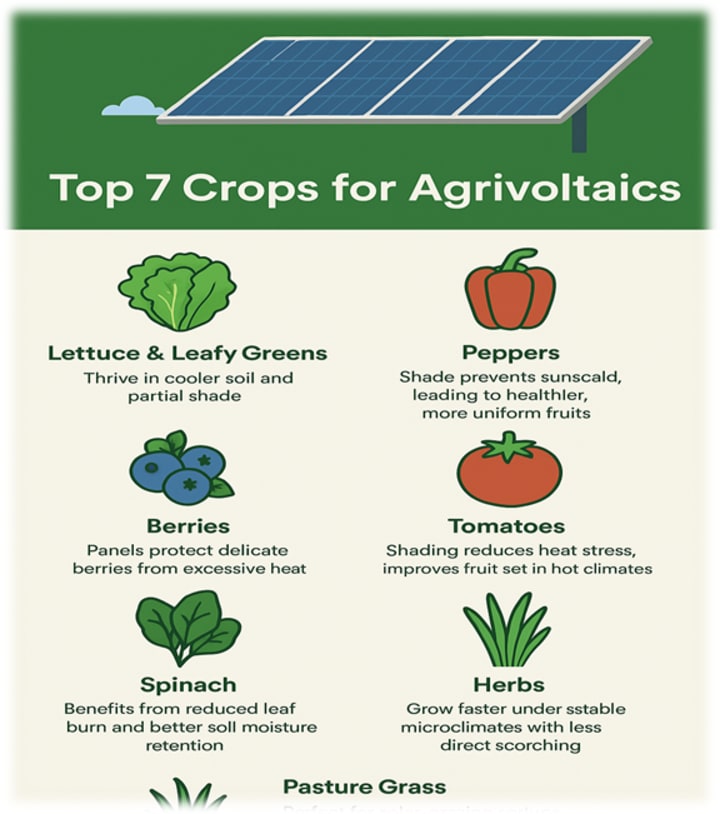
Top 7 Crops That Thrive Under Solar Panels
Research from agrivoltaic projects in the U.S., Europe, and Asia highlights a handful of crops that consistently perform well under solar installations.
1. Lettuce & Leafy Greens
• Love cooler soil and partial shade.
• Require less water when shielded from the harsh midday sun.
• Perfect for fast, repeat harvests.
2. Spinach
• Benefits from reduced leaf burn.
• Maintains better soil moisture, especially in hotter climates.
3. Peppers
• Shade protects peppers from sunscald.
• Results in healthier, more uniform fruits with improved market quality.
4. Berries (Strawberries, Blueberries, Raspberries)
• Delicate fruits are shielded from heat stress and rainfall damage.
• Panels help extend berry harvest seasons.
5. Tomatoes
• Shading reduces heat stress, especially in warm regions.
• Promotes better fruit set and size during hot summers.
6. Herbs (Basil, Cilantro, Parsley, Mint)
• Grow faster and more consistently in shaded microclimates.
• High value per acre makes them a profitable agrivoltaic option.
7. Pasture Grass for Grazing
• Works perfectly in solar grazing systems, where sheep and goats keep grass trimmed.
• Provides livestock with natural shade, improving animal welfare while keeping land productive
________________________________________
How Shade Affects Crop Yield: Lessons from Real Farms
Shading doesn’t automatically mean lower yields—in fact, real-world agrivoltaic farms prove the opposite.
• Arizona State University Study: Tomatoes grown under solar panels used 65% less water while maintaining strong yields during extreme summer heat.
• Germany’s Fraunhofer ISE Project: Wheat grown under panels produced about 80% of conventional yields—but solar revenue made the system far more profitable overall.
• Japan’s Citrus Orchards: Trees under elevated panels experienced reduced heat stress and delivered higher-quality fruit over multiple seasons.
The lesson? Partial shade often means smarter productivity, not weaker harvests.
________________________________________
Vineyards, Orchards, and Specialty Farming with Solar
Agrivoltaics is not just about row crops—it’s beginning to transform specialty agriculture as well.
• Vineyards: In France, wine growers are experimenting with elevated panels above grapevines. The result? Grapes are more resistant to drought and heat waves, with better long-term resilience.
• Orchards: Apples, pears, and citrus benefit from filtered sunlight. Reduced fruit sunburn, better soil moisture, and improved quality are being reported.
• High-Value Veggies: Premium crops like heirloom tomatoes, gourmet lettuce, and organic herbs thrive under stable microclimates. Farmers supplying restaurants and premium markets benefit from more consistent quality.
________________________________________
The Bottom Line
The choice of crops in an agrivoltaic system isn’t simply about maximizing yield, but about amplifying collaborations. Solar panels create conditions that certain crops love, while crops in turn improve the sustainability and economics of solar farms.
By aligning solar energy with the right crops, farmers can:
• Use less water.
• Increase resilience to climate change.
• Generate dual revenue streams—one from food, one from clean energy.
The crops listed above are some of the most promising options, but they’re just the start. Agrivoltaics is still a young field, and with ongoing research, even more crop-panel partnerships are likely to emerge.
In the next part of our Agrivoltaics Hub, we’ll dive into:
How Much Can a Farmer Earn from Agrivoltaics?
While picking the right crops is essential, understanding the complete financial picture is the key to long-term success.
About the Creator
Keep reading
More stories from Kenneth Annan and writers in Futurism and other communities.
Getting Started With Agrivoltaics: A Beginner-Friendly Guide
If you’ve ever dreamed of a future where farming and clean energy grow side by side, you’re in the right place. Welcome to agrivoltaics, the exciting new frontier that blends agriculture with solar power to create farms that feed us while generating renewable energy.
By Kenneth Annan6 months ago in Earth
About Binding Prometheus
I want to start actively advocating on behalf of my own work, and the most valuable part of my canon is, without a doubt, Binding Prometheus, the play I have been working on since 2019 and only finished in 2023 as part of my MA. The play itself is an amalgamation of a million different inspirations. On one end, it evokes the Ancient Greek myth-play, deriving its own title from the earliest extant work of Western drama we have, Aeschylus’s Prometheus Bound. On the other end, it borrows significantly from the sci-fi bulwarks from over the years, namely Mary Shelley’s Frankenstein and Karel Capek’s Rossum’s Universal Robots. The play could be an episode of Black Mirror, I fear. I don’t know. I’ve only ever seen one episode of Black Mirror.
By Steven Christopher McKnight19 days ago in Futurism
UAE Solar Energy Market: Renewable Expansion, Policy Support & Long-Term Growth Outlook
According to IMARC Group's latest research publication, The UAE solar energy market size was valued at 11.0 TWh in 2024. Looking forward, IMARC Group estimates the market to reach 73.5 TWh by 2033, exhibiting a CAGR of 22.33% during 2025-2033.
By Abhay Rajput5 days ago in Futurism


Comments
There are no comments for this story
Be the first to respond and start the conversation.