
ChatGPT Is Coming For Excel
The age of spreadsheets is shifting—from formulas you memorized to prompts you speak

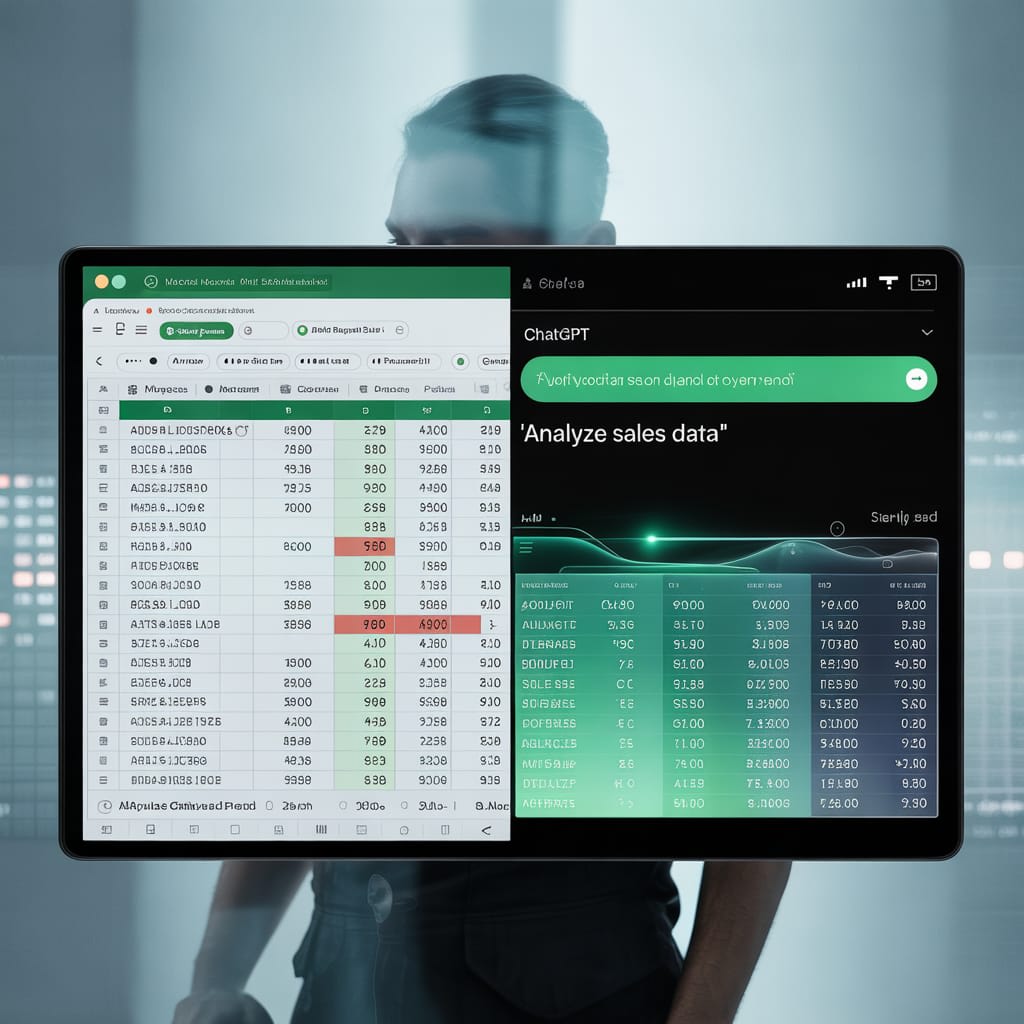
A quiet revolution is happening in offices everywhere—one that could reshape the future of data entry, analysis, and even employment as we know it. This week, a striking example of this shift has emerged at the intersection of artificial intelligence and the long-dominant Microsoft Excel.
We’re talking about OpenAI’s ChatGPT—a name now familiar even beyond tech circles—and its new capabilities that signal a fundamental change. Excel, the spreadsheet software that's long been a staple in office workflows and resume skillsets, may soon face its most serious disruption yet. And it's not from a competing software—it’s from an AI assistant that doesn’t even need Excel to function.
From Formulas to Prompts
For decades, Excel has reigned supreme in the domain of data entry, calculation, and visualization. Countless office workers have spent years mastering its functions: from basic addition to complex logical formulas. Remember having to learn things like =IF(AND(A2>100,B2="Yes"),"Approve","Reject") just to pass a job assessment?
Now, all that expertise is quickly becoming optional.
ChatGPT has evolved far beyond a tool that merely suggests text or summarizes documents. It’s now capable of understanding your intentions and translating natural language commands into functioning Excel formulas in real-time. Want to mark entries where column A is above 100 and column B says "Yes"? You don’t need to write the formula. You just say it, and ChatGPT builds it for you—correct syntax, no errors.
This move is part of a broader trend known as "vibecoding"—a concept where humans no longer need to manually write code or formulas. Instead, they describe the desired outcome, and the AI does the rest. This approach democratizes technical tasks, making them accessible even to those with no programming background. But as this shift accelerates, it also raises questions: if AI can do the work without humans, what happens to the humans?
A New Phase: Autopilot for Spreadsheets
The earlier iterations of ChatGPT were already impressive. They could aggregate data, write simple scripts, and suggest basic Excel functions. But the latest updates are taking that a step further—into the territory of full-blown automation.
According to recent reports from The Information, OpenAI is actively developing new tools that allow ChatGPT to create, open, and fully manage spreadsheets—and even presentations—without relying on Microsoft software at all. These aren’t just suggestions or auto-filled formulas. These are complete files that can be exported in Excel or PowerPoint format, compatible with the Microsoft Office ecosystem, even if the user doesn’t own or operate those applications.
This development could upend the traditional licensing model that Microsoft has long relied upon. If users can create Excel-ready documents from within ChatGPT without needing Excel itself, then suddenly the software suite becomes optional—an accessory, not a necessity.
Vasudha Mukherjee of Business Standard explained this shift succinctly: "New tools under development will allow users to create and edit spreadsheets and presentations directly within ChatGPT, eliminating the need for Microsoft Excel, PowerPoint, or any Microsoft software access."
This is no small change. For decades, Excel proficiency was considered a basic requirement for administrative jobs. It was a badge of professionalism—a proof of competency. Now, AI is absorbing that skillset and making it obsolete in minutes.
The Efficiency—and the Cost
To many, this innovation is exciting. It promises faster workflows, fewer human errors, and better access to professional-level tools. Businesses can streamline operations, reduce training costs, and improve accuracy. For startups and solo entrepreneurs, it’s a dream: powerful tools without the heavy software overhead.
But to others, especially clerical and entry-level office workers, it’s a looming threat.
Much of the data-entry work that once required hours of manual labor can now be done by simply describing the task to ChatGPT. Need a report generated? Ask. Want to filter a massive dataset based on a condition? Just say the words. The AI will not only perform the task but also present it in a format that’s ready for submission or review.
This isn’t just a tool—it’s a virtual employee. And unlike human workers, it doesn’t need rest, salaries, or training.
A Warning for the Workforce
As ChatGPT matures, the nature of work itself is changing. Tasks that once served as entry points into corporate careers are being eliminated by intelligent automation. If AI continues down this trajectory—and all signs point to that—it won’t just change how we work. It will change who gets to work at all.
Ironically, this move comes under the Microsoft umbrella as well. Microsoft has invested heavily in OpenAI and integrated its tools into platforms like Teams, Outlook, and even Excel itself. But now, OpenAI is developing tools that bypass Microsoft software entirely. It’s a bold statement about where power lies in the AI age: not in the traditional tools, but in the intelligence guiding them.
The Road Ahead
For now, many will continue using Excel as they always have, unaware that a silent revolution is taking place in the background. But those who pay attention will realize something profound is unfolding.
The spreadsheet, once a symbol of modern office work, is being redefined—not just by better software, but by intelligent assistants that understand your goals and deliver results with a single command.
Welcome to the era where you don’t need to know Excel to use Excel.
And perhaps, you don’t even need Excel at all.
About the Creator
Muhammad Sabeel
I write not for silence, but for the echo—where mystery lingers, hearts awaken, and every story dares to leave a mark
Keep reading
More stories from Muhammad Sabeel and writers in Futurism and other communities.
5 ChatGPT Prompts To Rapidly Scale A High-Paying Side Hustle
Want to level up your side project into a high-paying side hustle? The right ChatGPT prompts can help you get there faster. Recent research from MarketWatch finds that 51% of Americans have worked a side hustle in the past year. That figure climbs to 72% for Gen Z. With the gig economy projected to surpass $600 billion globally this year, according to Business Research Insights, now is the perfect time to put AI to work. Here are five ChatGPT prompts designed to help you scale rapidly and unlock new income streams.
By Muhammad Sabeel7 months ago in Futurism
Containerized Data Center Market Report: Growth Drivers, Key Players & Future Outlook
According to IMARC Group's latest research publication, global containerized data center market size reached USD 15.5 Billion in 2025. Looking forward, IMARC Group expects the market to reach USD 72.7 Billion by 2034, exhibiting a growth rate (CAGR) of 18.71% during 2026-2034.
By sujeet. imarcgroup8 days ago in Futurism
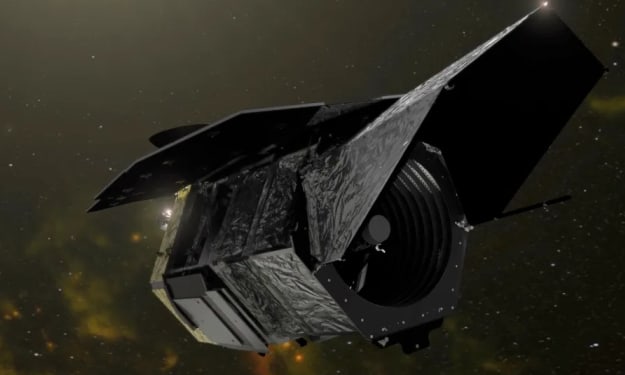
Launch and Scientific Impact of NASA’s Nancy Grace Roman Space Telescope (2026)
In 2026, NASA is preparing to launch one of the most ambitious space observatories of the decade: the Nancy Grace Roman Space Telescope. Designed to survey the universe at an unprecedented scale in near-infrared light, Roman is expected to reshape modern astrophysics by combining high resolution with an extraordinarily wide field of view. If the Hubble Space Telescope revealed the fine details of the cosmos, Roman will provide the panoramic context.
By Holianyk Ihor6 days ago in Futurism



Comments
There are no comments for this story
Be the first to respond and start the conversation.