
Changing Fates
The only way forward is to learn from our past
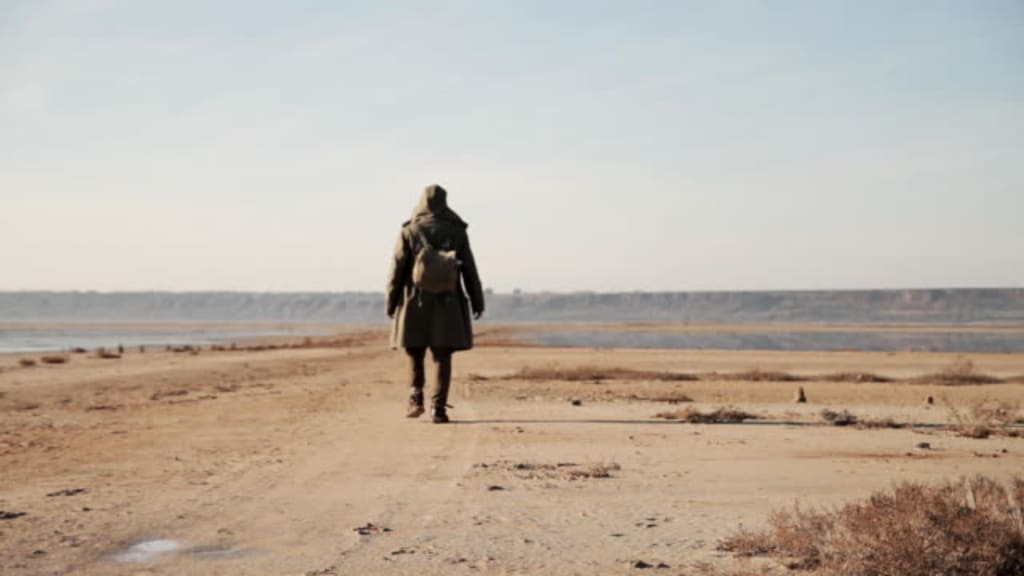
The small bar of gold hit the metal table between us with a clang that skittered along my bones.
“A token to express our,” he paused, and I could feel the eyes hidden beneath the shadows of his shawl catalogue the small tin room. “Interest.”
I swallowed, the arid air I was accustomed to suddenly feeling too dry. The small black notebook tucked into the large pocket against my thigh screamed, filling the room with nervous energy. I had to splay my hand on that same table to keep it from twitching towards the yellowed bundle of pages, the only thing he could possibly be here for.
“Interest in what?” I feigned, instead dropping my eyes to the bar that shimmered beneath a small slash of sunlight leaking through the unsealed corrugated tin walls. It was no more than the size of my palm, but worth a solid twenty thousand. Maybe thirty. This guy meant business. In a World that runs on unstable crypto currencies where $20K can become worthless in the blink of an eye, only people with extreme means and motivation would offer this kind of treasure.
He grunted, dropping a card on top of the gold bar. “I think you know.”
Of course I knew. Big. Intimidating. An air of arrogance and entitlement that couldn’t be achieved through swagger alone. He might wear the same uniform as everyone else in this hell landscape— thick canvas clothing, heavy boot cinched tight mid-calf, worn gloves and a breathable scarf loosely draped around his exposed neck and head with tinted goggles hanging at his neck— but he’s a suit. A ruthless transactionist instructed to obtain the precious resource I hold at any cost. That I didn’t tell a soul about. Yet, he stands in my non-descript shoebox of a room, the third in an uneven stack, in the middle of a settlement of nearly 10,000 survivors like I provided him with a map. “How?”
He shrugged, “My client has their ways.” He taps the small tablet also resting there, a small smile turning the corner of his mouth up. “That’s--"
He’s cut off by a siren that echoes through the metal walls of the makeshift city, the shrill sound becoming a symphony of chaos. I can’t stop my eyes from slipping to the old deep freezer I scavenged and hauled here months ago, my only defence from what approaches. It is survival. An it’s not big enough for two.
He follows my thoughts to the corner, my hand gripping the rusted blade at my thigh until he snorts and turns. “Call the number,” he calls as he steps out and grips the metal pole next to the scaffolding outside my door. He’s gone before I can respond, rage building in my chest as he hits the ground and gets into a vehicle fortified as heavily as a tank. The frame beneath me shakes violently and I look out to find the wall of sand only a couple of rows from where I stand.
It takes all of my weight to shove the door closed against the gritty wind, and I jam a piece of mangled rebar through the metal hook and loop inside. I race for the deep freeze, the floor beneath me rocking like a boat at sea. It’s only as I swing a leg in that I remember. The three steps it would take could cost me my life, but that bar is life. One step. A hard crash against the north wall, a dent appearing in the wall. Two steps. The exposed section of roof beneath the home stacked on top of mine rips loose, nails screeching. Three steps, my hand closes around the small gold bar. I leap on my second step going back, grabbing the edge of the lid and pulling it closed as I land painfully hard on my shoulder in the darkness. I hear the sand engulf me, a thousand tiny knives thrown at the steel box I’ve buried myself in. I allow myself only a couple big gulps of air before clamping down, unsure of how long I will need to preserve the small amount of air in here.
My hand slides to the rigid square in my pant pocket, the outline of a small black notebook I uncovered two days ago. With no work and no resources, I was forced to steal a metal detector from a slumlord in a settlement a two day walk from here. That was a year ago. Fleeing was my only option to escape certain execution for that one, even if it meant leaving my older brother behind. The journey nearly killed me. I fled with only a few cans of expired beans and a flask of water, hardly enough to survive a couple of days on this planet.
It wasn’t always like this, or so I’ve been told. I’m not sure if I believe the stories entirely, the ones where this was once a lush planet, with forests and farmland as far as the eye can see. Rivers and lakes of fresh water. Trees heavy with fruit and plains filled with animals that could feed the entire population. But I do believe the stories of how we got here, technology and waste filling our atmosphere with pollution that became a runaway train, one they couldn’t stop. Our last apocalyptic event, The Great Burning, was 82 years ago. Multiple fault lines erupted and entire countries were lost to the ocean. What remained was covered in lava and flames, burning until nothing was left and there was nowhere to go. Only a few million humans survived and the ones that remained sought shelter in small bands, sustaining themselves any way they could.
My twenty three years on this planet have been characterized by loss in this rocky, desert landscape with random settlements hobbled together using whatever junkyard items could be salvaged. Water is scarce. Food is limited to what can be protected and grown inside these makeshift cities, away from the elements. Resources beyond sand, stone and salvaged metal or plastics are rare. Rumours of Northern mountains where grass and trees still grow at high elevations float, but I can’t hope to confirm them. The journey would kill me, and if it didn’t, the whispers say the mountains would.
This stolen metal detector has kept me alive, allowing me to find tiny caches of metal that I can barter for the food and water to survive. Last week was different though. Instead of a small coin or decaying pieces of technology from times past, my search along the coastline that lay three hours of hard riding west on my dirtbike revealed a metal box filled with something labelled as a time capsule. In it lay nothing but this notebook.
I slide it out, along with a small flashlight. The spine groans as I force the book open, the yellowed sheets of paper rustling beneath my touch. I’ve never felt paper before, and it’s hardened pages feel like a contradiction. Perfectly smooth, yet rough. Malleable, but breakable. I thought about seeking the resource companies trying to reverse engineer any scrap of paper or wood they can find to create trees that can survive our climate. Trees, they claim, are key to our salvation. I should have gone with that man, should have swam in the wealth he offered. I should have shopped for a buyer as soon as I found it. This notebook could buy me a better life. A job. An enclosed space. Food and water stores. It could change my fate.
Yet, as I read the passages held on these pages, I couldn’t find it in me to seek out the highest bidder, instead hiding it and asking questions. A dangerous venture in itself.
My flashlight illuminates the uneven blue scrawl of the first page. It’s dated December 8 of 2020. It was likely uninteresting, even unimportant in its own time. The words tell of mundane things— phone calls to be made, annoyances over things I don’t understand like a grocery store being out of toilet paper. The writer longs for some kind of medicine called a vaccination, a supposed salvation from a virus that scares her. Her life seems so… simple. Even in it’s annoyances. But what strikes me most is the descriptions of the World around her littered throughout. She complains of the amount of rain, something we haven’t seen in years now. She talks about the changing of seasons, how the World turns green. She talks about water being so available that she lingers in warm tubs full of it. She walks for fun and feasts with friends. But, she worries. That it’s mid-winter and she still hasn’t seen something called snow. It’s too warm for December she says. She worries about the amount of plastic and food she throws out and the development project about to cut through the headwaters of her water source. She worries about the virus currently plaguing humans and that another one lies in wait.
To a human in this writer’s World, this notebook of daily observations was likely dull. But to me, they’re extraordinary. A story lost, a culture forgotten, a World lost to mistakes that we still haven’t bothered to understand or learn from. A world where money and resources were valued over nature and culture. I look around at the darkness of the metal box I lay in for fear of the nature raging around me and the gold bar in my hand to buy my favour, and I know that we aren’t just doomed to make these mistakes again— we are already making them. As soon as this storm is over, the suit will be back to force my hand in adding my own contribution to the story currently being written.
I push against the lid of the freezer, fighting to get my scarf wrapped over the dark black braid that falls over my shoulder as sand whips in all around me. I hold it over my mouth and nose, filtering the air as I roll out and get as low to the ground as possible. With only the gold bar and the notebook that holds a life past, I army crawl to the door and dislodge the rebar that protects me from the elements outside.
I tumble onto the scaffolding, the wind threatening to claim me. The shifting sand beneath gives way enough to reveal glimpses of black, the suit’s tank waiting the storm out to make his next move. I can only hope my sand-coloured clothing with camouflage me. Or that he isn’t dumb enough to risk his life to chase me down.
My questions around the settlement of ragtag metal buildings and shipping containers didn’t garner me much, only that a compound might exist to the North. One that stores art and stories and artifacts. One that protects these items, that studies them. No one knew if it was true and the ones that insisted it was said I’d never get past the gates.
I have to try.
I slip around the back of the building, the sand stinging the small band of skin visible across my cheeks as I mount my only hope. One hard kick to the pedal and the dirt bike roars to life. I hear another ignition follow suit as I blare into the storm.
I have nothing. No food. No water. But if I can make it to the next settlement, this gold bar will change my stars. And I will go North until I can go no further, I will find the place that can protect this unassuming story.
Because what good are resources without people, without a culture, to enjoy them? What good are resources if we continue to destroy our world in pursuit of them, never learning from our mistakes?
Yes, this notebook could change my fate.
But it could also change everyone else’s.
About the Creator
Brianne Zwambag
Just a small town girl with a thing for words, mountains and adventure.
Keep reading
More stories from writers in Futurism and other communities.
About Binding Prometheus
I want to start actively advocating on behalf of my own work, and the most valuable part of my canon is, without a doubt, Binding Prometheus, the play I have been working on since 2019 and only finished in 2023 as part of my MA. The play itself is an amalgamation of a million different inspirations. On one end, it evokes the Ancient Greek myth-play, deriving its own title from the earliest extant work of Western drama we have, Aeschylus’s Prometheus Bound. On the other end, it borrows significantly from the sci-fi bulwarks from over the years, namely Mary Shelley’s Frankenstein and Karel Capek’s Rossum’s Universal Robots. The play could be an episode of Black Mirror, I fear. I don’t know. I’ve only ever seen one episode of Black Mirror.
By Steven Christopher McKnight28 days ago in Futurism
🅼🅸🅳🅽🅸🅶🅷🆃 🆂🅽🅰🅲🅺🆂
"It's 10 in Tuscon! We all know what that means... It's Time for Midnight Snacks with your man, Gerald Gee! Ready to spend the night together? Me too! I'm full of snacks and can't wait to regurgitate them all back into your hungry ears. Crack a brew! Pop some corn! Anything to get ready for one hell of a show where the talk maybe cheap but the words cut deep...
By Lamar Wiggins7 days ago in Fiction



Comments
There are no comments for this story
Be the first to respond and start the conversation.