
Catholic Saints Feast Days - April
An overview of some saints celebrated in April

2nd April
Blessed Olha Bida
Olha Bida was born in Tsebliv, Ukraine, in 1903. She is also known by several other names, including Olympia and Olga.
Olha joined the Congregation of the Sisters of Saint Joseph. She embraced a life of service and spirituality, serving as a catechist and novice director. In 1938, Olha was assigned to Khyriv and became superior of the convent in the town.
With her commitment to education and her faith, Olha had a profound impact on young women. She shaped and empowered them, taught them, and helped to raise several.
As the Soviet regime gained power, the Khyriv convent suffered attacks. Olha, along with two other sisters, was arrested in 1951 by the NKVD. She was imprisoned before being sent to a labour camp in the Tomsk region of Siberia, Russia. Despite heavy forced labour, Olha remained dedicated to her faith. She continued her duties as a superior, organising support groups and guiding other exiled nuns.
Still in exile, Olha died from a serious illness on 28th January 1952. She was decreed a martyr, along with 27 others, by John Paul II when he beatified her in Ukraine on 27th June 2001. In some denominations, Olha's death and beatification dates are celebrated as her feast days.
Volodymyr Pryjma
Volodymyr was born in Stradcz, Austria-Hungary (now Stradch, Ukraine), on 17th July 1906.
Volodymyr's parents, Ivan and Hanna, were active members of their community. Ivan was a church cantor and secretary. Volodymyr's two brothers were ordained priests.
After graduating from School for Cantors of Metropolitan Andrey Sheptysky, Volodymyr became cantor and choir director in his village church. Volodymyr married Maria Stojka on 10th November 1931, and they had four children together.
On 26th June 1941, Volodymyr accompanied Father Mykola Konrad to the home of an ill woman who had asked to received the Sacrament of Reconciliation (confession). On their way, they were accosted by the NKVD and taken to Birok forest. Villagers searched for a week before finding the two men's broken bodies. They had been brutally tortured and murdered. Volodymyr had been stabbed several times in the chest with a bayonet.
Volodymyr Pryjma is recognised as a martyr. He and Father Konrad were among those beatified by Pope John Paul II in Ukraine on 27th June 2001. Both men are 'Blessed'. In 2013, Volodymyr was confirmed patron saint of Ukrainian Catholic laity. In 2019, his relics were placed in Holy Eucharist Ukrainian Catholic Cathedral in New Westminster, Canada.
3rd April
Richard of Chichester
Richard de Wyche (Richard de Wych, Richard of Chichester) was born in 1197 at Droitwich Spa. He came from a land-owning farming family and, as a younger son, he was likely expected to become a clerk.
Richard studied at Oxford but his studies were interrupted by his father’s death. Richard returned home to help run his family estate. With prosperity, Richard turned over the estate to his brother Robert and returned to Oxford.
At Oxford, Richard studied under Robert Grosseteste (then Chancellor of Oxford, later Bishop of Lincoln) and Edmund Rich. Richard formed a friendship with Edmund, who later became Edmund of Abingdon, Archbishop of Canterbury.
After his MA, Richard began teaching at Oxford. He also travelled to Paris (and possibly to Bologna) to study Canon Law, becoming the earliest recorded Doctor of Canon Law.
Upon his return to England in 1235, Richard was appointed Chancellor of Oxford University, making him the legal and administrative head of the university. He then served as Chancellor of Canterbury to Edmund of Abingdon until Edmund's death in 1240, after which Richard studied Theology at a Dominican School in Orléans. He studied there for two years and was ordained as a priest in 1243 before returning to England.
Richard then served as Parish Priest at Charing and at Deal (Vicar of Deal) but was soon reappointed to the position of Chancellor of Canterbury under the new Archbishop Boniface of Savoy.
In 1244, Richard was appointed Bishop Elect of Chichester in 1244, although King Henry III favoured another candidate. Richard was consecrated in 1245 by Pope Innocent IV after both Henry and Boniface refused each other's candidate. In 1246, after Innocent IV threatened Henry with excommunication, the King accepted the appointment of Richard to Bishop of Chichester.
Richard of Chichester was an advocate of Innocent III’s church reforms: refusal of secular office; not to engage in trade; and avoidance of worldly pastimes.
In the Spring of 1252, Richard received a commission from the Pope to preach throughout Sussex and Kent of the latest crusade. It was during this tour that he fell ill, eventually leading to his death on 3rd April 1253 at a house for poor priests in Devon. His body was returned to Chichester Cathedral. When his body was washed, it was purported to shine with radiant whiteness said to portend a future resurrection.
In 1256, the Bishops and Canons of Chichester, supported by Henry III, petitioned the pope to enquire into Richard’s life and miracles.
There was a reported miracle at Cakeham Manor. While processing in the open, a gust of wind blew out all the candles. Shortly afterwards, it was noticed that Richard’s candle was alight once again. To avoid appearing vainglorious, Richard instructed his attendant to remain silent.
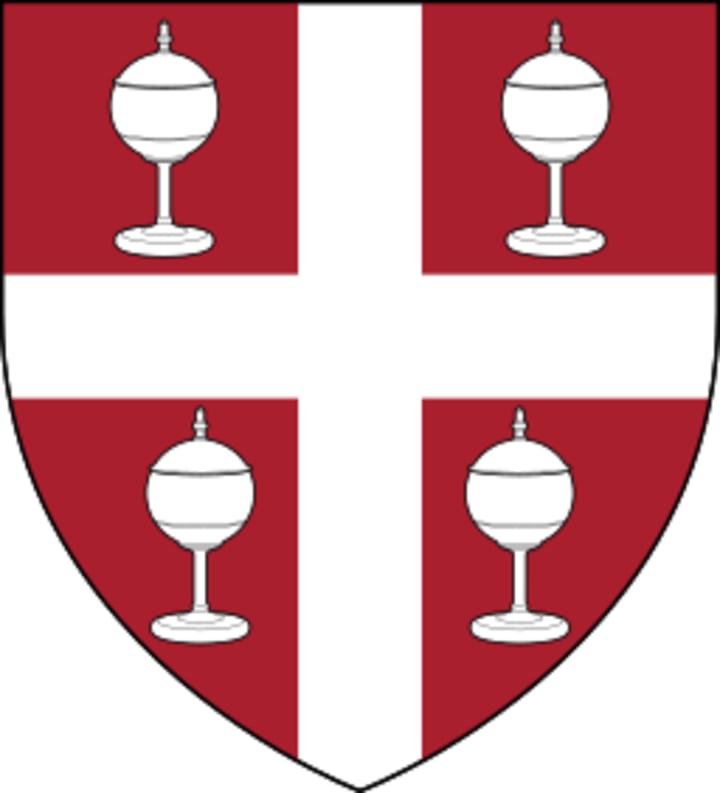
There was a second miracle of the overturned chalice. When tired and ill, and celebrating mass, Richard dropped the chalice of consecrated wine. However, none of the wine was spilt. This is depicted on his coat of arms and the statue of St Richard by Harry Hems, 1894.
In January 1262, Richard was canonised by Pope Urban IV, who ordered the feast day to be 3rd April.
Richard’s relics were taken to Canterbury and to several churches in Normandy. His body was enshrined in the high altar at Chichester Cathedral. His head was enshrined separately in a niche in the Chapel of St Mary Magdalene. On 16 June 1288, Richard’s body was translated to a shrine behind the high altar in Chichester Cathedral.
In 1538, during the reign of Henry VIII, Richard’s shrine was razed. Its coffers, caskets and jewels were removed. There is no record of what happened to Richard’s head or body.
There is a well in Droitwich known as St Richard’s Well. Pilgrims regularly came to pray here on Richard’s feast day. They continued to do so even after doing so was forbidden under Puritan rule during 16th and 17th centuries.
Richard is patron saint of coachmen, the Diocese of Chichester, and Sussex.
Benedict the Moor
Benedict was born on 31st March 1524 in the commune of San Fratello, Italy. His parents were slaves, having been brought to the city of Messina from Africa. Benedict received no schooling and could not read or write.
When Benedict was 18, he was freed from slavery. This was granted to his parents for their loyal service. During his youth work, Benedict gave away much of what he earned to the poor. He undertook farm work until he was able to afford to buy two oxen.
When Benedict was 21 years old, he was publicly insulted for his colour. The leader of a group of hermits noted Benedict's control over the situation and invited him to join the group. Benedict settled with other hermits in Palermo where he eventually became the leader of this community. When Pope Pius IV disbanded solitary communities, Benedict became a Franciscan lay brother as the community followed the Rule of Saint Francis.
Benedict later became superior of Saint Mary's convent in Palermo. This was a position that was forced upon him. He then became novice master but, once relieved of the position, was glad to return to his previous work as a cook.
Benedict was popular with both Europeans and Africans, having contributed significantly to racial and ethnic harmony. He had few possessions, which he shared freely and considered them as belonging to the community.
Benedict died in 1589, and there are claims that he predicted the exact hour of his own death. After Benedict's death, King Philip III of Spain paid for a tomb for him so his remains could be kept in the friary church.
There are many accounts of people being healed from various afflictions upon intercession of Benedict. Benedict was beatified by Pope Benedict XIV in 1743 and canonised in 1807 by Pope Pius VII. His major shrine was located at the Convent of Santa Maria di Gesù al Capo in Palermo. In 2023, the church and his relics were largely destroyed by wildfires.
Benedict is venerated particularly throughout Latin America and the southern United States. He is patron of black people, African Americans, African and black missions, and both Palermo and San Fratello.
4th April
Saint Guier
Saint Guier, also know as Guerir or Gwirer of Liskeard, was a hermit priest of Cornwall. As a pre-congregation saint, he has no specific patronage but he is called on in times of need.
Little is known of Guier other than he was a 9th-Century hermit at Ham-Stoke near Liskeard, Cornwall, and was revered for his miraculous healings.
Following Guier's death, his hermitage was passed to Saint Neot Asser, who built a church on Guier’s grave. King Alfred made a pilgrimage to the grave. He was cured of a painful disorder, which he had suffered since infancy, when praying in this church.
9th April
Saint Theodore and the Martyrs of Croyland
The Martyrs of Croyland (now Crowland, Lincolnshire) were Benedictine Monks slain by Danes during an invasion of Croyland Abbey and surrounding areas.
In 866 AD, the abbey was entirely destroyed and the community was slaughtered. The Abbot, Theodore, was killed at the high altar while celebrating mass thus regarded immediately as a martyr. Other named Martyrs of Croyland are Prior Askega Subprior Swethin, Elfgete, Savinus, Egdred, Agamund, Grimkeld, and Ulrick.
The abbey was rebuilt (wholly or partially) three times. First, during the reign of King Edred (circa 923-955 AD) but was destroyed by fire in 1091. It was rebuilt around 1111 by Abbot Joffrid. In 1170, the greater part of the abbey and church burnt down and was then rebuilt by Abbot Edward.
The abbey would not be destroyed again until the time of the Dissolution. In 1534, Abbot John Wells (also known as John Bridges) and his twenty-seven monks subscribed to Royal Supremacy, surrendering their house in 1539. Wells was the last abbot of Croyland.
During the Dissolution, the nave of the great church was retained by the town while the rest was swept away. There is a skull in the abbey that has a sword wound above the left eye socket. It is thought to be that of Abbot Theodore, hidden away when Croyland was dissolved in 1539. The skull is now kept in a room over the abbey porch. In 1643, the remains of the abbey were fortified by Royalists and it was besieged and taken by Cromwell in May the same year.
11th April
Guthlac of Crowland
Guthlac (or Guðlac) was born to a noble family in Mercia about 673 AD. He was a successful soldier and military leader until he turned to a religious life.
Inspired by the deeds of his ancestors, Guthlac formed a band of soldiers. At the age of 24, he experienced profound conversion and entered into the monastery at Repton, Derbyshire.
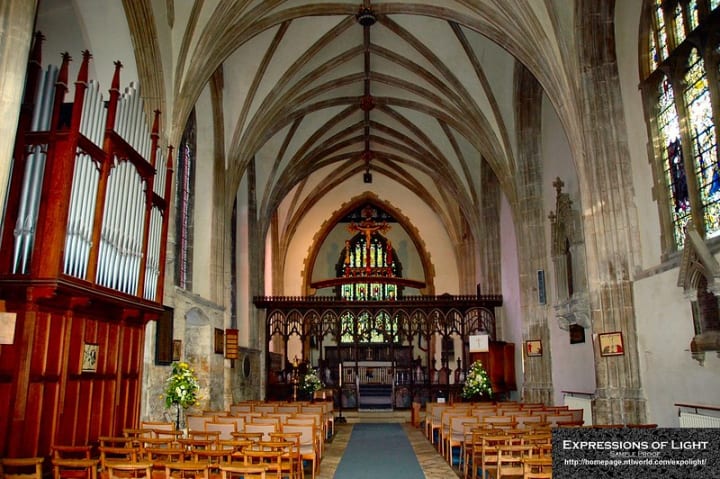
Guthlac gained permission to live a solitary life as a hermit. He chose a solitary location on the island of Crowland, emulating Christ in the desert and other saints before him. It was said that all those who had tried to inhabit the island before Guthlac had failed as the place was haunted by phantoms and demons.
Guthlac arrived in Crowland on St Bartholomew’s feast day (24th August) and vowed to remain there for the rest of his days. On the side of a barrow, Guthlac built a hut. He wore only animal skin, ate only barley bread and drank only muddy water. The Devil soon set upon Guthlac. For three days, Guthlac was plagued with self-doubt, worrying that he could never be cleansed of the sins of his previous life. In the evening of the third day, he called upon God for aid and St Bartholomew appeared to him, remaining in his presence until the trial was over. St Bart promised to come to Guthlac’s aid whenever he needed. Next, two demons appeared in human form before Guthlac, complimenting his faith and offering to teach him how to fast. They urged him to fast for seven days at a time rather than the more typical two or three. Guthlac saw through this false instruction and ate his bread, sending the demons into a fit of fury, their howling screams being heard far and wide.
A few nights later, when Guthlac was deep in prayer, he was attacked by a horde of demons. They bound his limbs, carried him from his hut into the swamp, and whipped him before dragging him to the gates of hell. Guthlac challenged the demons to actually throw him into hell. As it seemed they would follow through, St Bart appeared, frightened off the demons and returned Guthlac to his hut.
The demons attacked Guthlac once again. A troop of British-speaking demons approached his hut, lifted him up on their spears and carried him about. Having lived among Celtic Britons, Guthlac understood their speech and recognised them as demons. He recited the first verse of Psalm 67, and the demons vanished.
Guthlac was elevated to priesthood and gave counsel to Æthelbald, claimant to the throne of Mercia. Foreseeing his own death, Guthlac sent for his sister, Saint Pega, to come to Crowland where she buried him.
Æthelbald returned to Guthlac’s tomb a year later, now as king of Mercia. As the body was being translated, the new king found it to be miraculously incorrupt so he built a monument to honour the saint. A monastic community followed in Guthlac’s footsteps, eventually setting up an abbey in Crowland in 971 AD. Around 749 AD, King Ælfwald of the East Angles commissioned a monk named Felix to write an account of Guðlac’s life.
One of Guthlac's known miracles was the possession of Beccelm. A priest named Beccelm came to Crowland to serve Guthlac and learn from him. An evil spirit possessed Beccelm and made him take up a sword against Guthlac. However, Guthlac had been granted the gift of prophecy and so saw Beccelm’s intentions. Guthlac confronted Beccelm, informing him that he was under the influence of an evil spirit. Beccelm dropped to Guthlac’s feet and begged forgiveness. Guthlac forgave him and promised to come to Beccelm’s aid whenever he needed.
When asked by Abbess Ecburgh who would inherit the hermitage at Crowland, Guthlac predicted that it would be a man who was currently pagan but would later be baptised and find his way there. Guthlac’s successor was a man named Cissa, who was pagan and was yet to be baptised. Guthlac is also said to have communed with animals, found lost objects, healed the sick, and to have known the words and thoughts of those who were not present.
Guthlac died on 11 April 714 AD in Crowland.
28th April
Saint Valeria of Milan
According to christian tradition, Valeria was the wife of Saint Vitalis and the mother of Saints Gervase and Protase. However, there are other stories that claim Valeria was a virgin martyr. She may never have actually existed at all but been the result of a fictional character mistaken for an historical figure.
It is said that Valeria was born, in either the first or second century, to a noble family. She was baptised at an early age, and was one of the first converts to Christianity in Milan.
There are various traditions about Valeria's death. One claims that, after her husband was martyred, Valeria was severely beaten after refusing to sacrifice to Pagan gods. She died two days later as a result. Another story is that Valeria was found and tortured by Roman soldiers, finally being beheaded with other martyrs.
In 1868, a box supposedly containing part of Valeria's arm bone was taken to Saint Joseph Church in Thibodaux, Louisiana. Thousands of people attended as the box was placed at the altar. Since then, Valeria has been patroness of Thibodaux.
In 1916, Valeria's reliquary was one of only a few objects saved from a fire that destroyed Saint Joseph Church. It was returned once the church was rebuilt.
Valeria is invoked for protection from storms and floods, and is the patron saint of Seregno in Italy.
Saint Vitalis
Saint Vitalis was a first or second century saint. According to legend, he was possibly a soldier, and was a wealthy citizen of Milan as all citizen-soldiers were land owners at the time.
The story that he and Saint Valeria were the parents of Saints Gervase and Protase is most likely untrue. It is possible that Vitalis, and other characters in stories relating to him, have been confused or conflated with other saints of similar names.
Saint Vitalis is said to have accompanied Roman Judge Paulinus from Milan to Ravenna. Vitalis witnessed the execution of Ursicinus, a physician from Ravenna, convincing him not to lose faith and raising him to martyrdom. Vitalis stole Ursicinus's body and gave him an honourable burial.
After discovering that Vitalis was a Christian, Paulinus had him arrested. He was then tortured on a rack, laid in a pit, and buried alive under stones. Valeria then tried to take Vitalis's body, and this led to her martyrdom.
Some sources say that Vitalis died in 60 AD during Nero's reign. Other stories suggest that he lived in the second century under Marcus Aurelius.
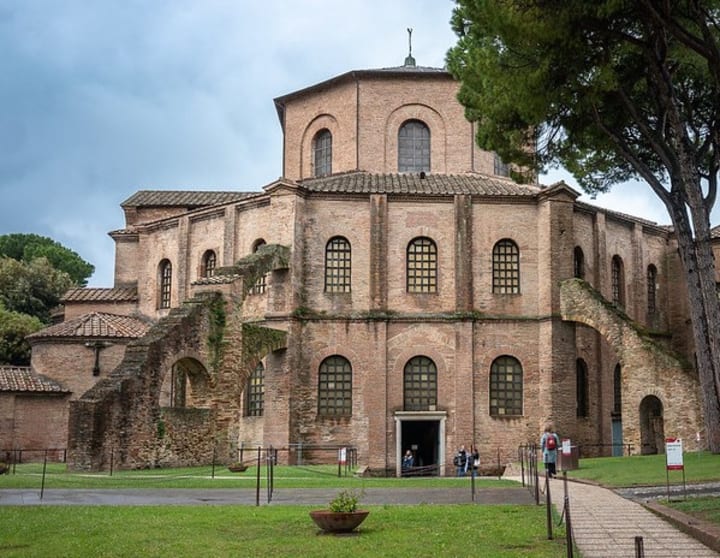
There are several churches in Italy, and one in Croatia, dedicated to Vitalis. The Basilica of San Vitale at Ravenna stands on the site where he is said to have been martyred.
Vitalis is patron saint of Ravenna and Granarola dell'Emilia in Italy. He is also patron of Thibodaux, Louisiana.
Saint Peter Chanel
Pierre (Peter) Louis Marie Chanel was born in Montrevel-en-Bresse, France, on 12th July 1803. He was the fifth of eight children born to Claude-François Chanel and Marie-Anne Sibellas.
Peter spent some of his childhood as a shepherd but took an interest in missionary work from an early age. He attended a small school until a priest from Cras took over his education. Peter made his first communion in 1817 and was ordained a priest in 1827.
In 1831, Peter joined the Marists (Society of Mary). In 1836, he led a mission to the New Hebrides (now Vanuatu), Oceania. After the missionaries' 10-month journey, Peter went to the island of Futuna with two other men. They were originally welcomed by natives. Peter was seen as thoughtful and patient, and he learnt the native language.
King Niuliki realised that his sovereignty could be undermined by the faith that Peter had brought to the island. When Niuliki discovered that his own son had converted to Christianity, he sent warriors to kill Peter.
Peter was murdered on 28th April 1841, age 37, becoming protomartyr in Oceania. Within five months of Peter's death, the whole island had converted to Christianity. In 1842, the missionaries asked for the protection of France. The islands became protectorate of France around 40 years later, and are still ruled under France's constitution today.
Peter was declared a martyr and beatified by Pope Leo XIII on 17th November 1889. He was canonised on 12th June 1954 by Pope Pius XII.
Peter Chanel is the patron saint of Oceania. There is a major shrine to him on the island of Futuna. Saint Peter Chanel Day is a public holiday in the Territory of the Wallis and Futuna Islands.
29th April
Saint Wilfred the Younger
Wilfred's year of birth and early origins are unknown. He was considered a generous and holy man. Wilfred was a Benedictine abbot and a disciple of Saint John of Beverley, studying under him at Whitby Abbey. When John became Bishop of York in 705, Wilfred became his chaplain.

John retired in 718 and Wilfred succeeded him as bishop. Wilfred would be the last bishop of York as the see was converted to an archbishopric during his successor's appointment.
Wilfred retired in 732 and lived the rest of his life in solitude. Where he retired is unknown, but may have been in Ripon, Yorkshire. According to Early British Kingdoms, Wilfred died in 745 and was buried at Ripon. Other sources give 744 and 746 as year of death. Wilfred's body may have been translated to Canterbury, possibly mistaken for that of the earlier Saint Wilfred of Ripon.
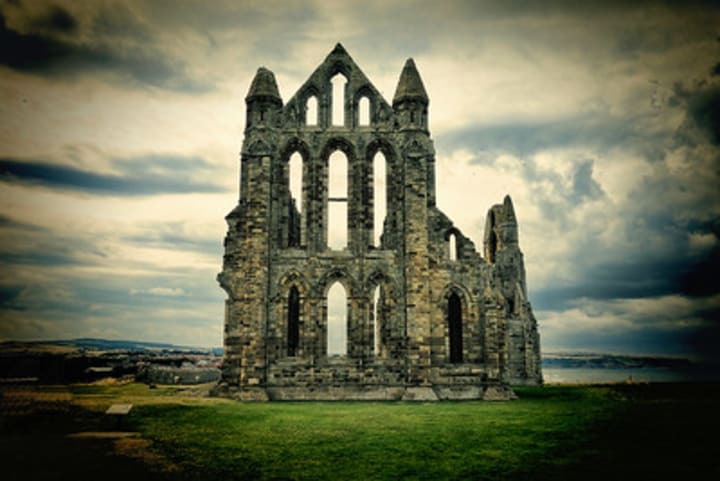
Saint Ava
Ava was born on 29th April, possibly in 845. There seems to be some confusion as to her parentage with various references to her being the niece or daughter of King Pepin of Aquitaine. Another source claims that Ava's her father was Pippin III, King of the Franks. However, Pippin III died almost 80 years before Ava was born. It is more likely that she was the daughter of Pepin II of Aquitaine.
Ava made many pilgrimages. During one pilgrimage, she was cured of blindness. She then gave her fortune to the church and became a nun at Dinart in Hainault (an area that now borders modern day France and Belgium). Sources claim that Ava became abbess in 845, although this conflicts with her supposed year of birth.
The date of Ava's death is unknown. She was a pre-congregation saint, becoming a saint by proclamation. Ava is the patron saint of the blind.
.....
This article is part of a series. If you have enjoyed reading this, please take a look at the others in the series (linked below) and look out for the next one.
August September October November December January February March
Special thanks to my son Rhys Tamborski for his research and contribution on Guier, Martyrs of Croyland, and Guthlac.
About the Creator
Sapphire Ravenclaw
I am, among other things, a freelance writer and mother. I enjoy writing poetry and articles on various subjects. My current big project is a book about Paganism.
More of me:
Find me on Facebook
Keep reading
More stories from Sapphire Ravenclaw and writers in Futurism and other communities.
Catholic Saints Feast Days - March
2nd March Saint Angela of the Cross Born in Seville, Spain, on 30th January 1846, Angela is a relatively modern saint. Angela was born into a pious family, her father was a cook in the convent of Trinitarian while her mother did the laundry there. The couple had fourteen children, although only six reached adulthood.
By Sapphire Ravenclaw2 years ago in Futurism
PropTech Market Outlook: Digital Transformation in Real Estate and Growth Opportunities
According to IMARC Group's latest research publication, The global proptech market size reached USD 35.4 Billion in 2024. Looking forward, IMARC Group expects the market to reach USD 114.8 Billion by 2033, exhibiting a growth rate (CAGR) of 13.25% during 2025-2033.
By Michael Richard2 days ago in Futurism
Anthropic Expands Claude “Cowork” With Job-Specific Tools and In-App Workflows, Keeping Wall Street on Edge
What Happened (Facts) Anthropic announced a new round of workplace-focused updates to its Claude assistant during a virtual event on Tuesday, pushing deeper into what it frames as “office work” rather than just coding.
By Behind the Tech2 days ago in Futurism



Comments