
Can Tesla Maintain Its Dominance? The Future of Electric Vehicles
Tesla’s Reign in the EV Market

Introduction
Tesla has long been the undisputed leader in the electric vehicle (EV) market, revolutionizing the auto industry and pushing EVs into the mainstream. With cutting-edge technology, a strong brand identity, and an ever-growing fan base, Tesla’s dominance has seemed unshakable. However, as competition intensifies and the EV landscape evolves, the question arises: Can Tesla maintain its dominance in the future?
The Rise of Tesla: A Trailblazer in the EV Market
Founded in 2003, Tesla set out to make EVs not just viable but desirable. Under the leadership of 'Elon Musk', the company redefined the industry by introducing high-performance, long-range electric cars that challenged traditional gasoline-powered vehicles. The launch of the Model S in 2012 and the more affordable Model 3 in 2017 cemented Tesla’s status as an industry leader. Today, the company boasts a line up that includes the Model X, Model Y, Cybertruck, and the high-performance Roadster.
Tesla’s success can be attributed to several key factors:
- Supercharging Network: The world’s most extensive fast-charging network.
- Battery Innovation: Continuous advancements in battery technology to improve range and efficiency.
- Autopilot & Full Self-Driving (FSD): Pioneering driver-assistance features that aim for full autonomy.
- Brand Loyalty: A passionate customer base that treats Tesla more like a tech company than a car manufacturer.
But is this enough to keep Tesla ahead in an increasingly competitive market?
Rising Competition: EV Market No Longer a One-Horse Race
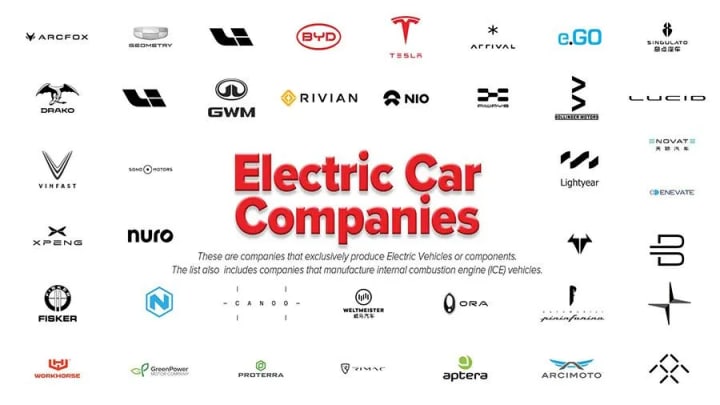
Tesla may have had a head start, but the EV market is no longer its exclusive playground. Several automakers are now aggressively competing for market share:
1. Legacy Automakers Going Electric
Companies like Ford, GM, Volkswagen, and Mercedes-Benz are investing billions into electrification. The Ford Mustang Mach-E and F-150 Lightning, along with GM’s Ultium battery platform, pose serious threats to Tesla’s market share.
2. Chinese EV Giants on the Rise
China, the largest EV market, has seen a surge in homegrown brands like BYD, Nio, and XPeng. These companies offer high-tech, affordable EVs that rival Tesla’s models, particularly in China, where Tesla faces regulatory and pricing challenges.
3. New Players and Innovations
Start-ups such as Rivian, Lucid Motors, and Polestar are targeting specific niches in the EV market. Lucid, for example, has developed luxury EVs with longer ranges than Tesla’s best offerings, while Rivian is dominating the electric truck space.
Challenges Tesla Faces in Maintaining Dominance
Despite its head start, Tesla is facing multiple hurdles that could impact its future dominance:
1. Production and Delivery Bottlenecks
While demand for Tesla vehicles remains high, supply chain disruptions, chip shortages, and factory limitations have led to long delivery times. Competitors with more established manufacturing infrastructures could capitalize on these delays.
2. Autonomous Driving Setbacks
Tesla’s Full Self-Driving (FSD) software is still in beta testing and has faced criticism from regulators. If companies like Waymo or Apple deliver a safer, fully autonomous system first, Tesla could lose its technological edge.
3. Pricing and Market Saturation
Tesla initially thrived by offering EVs that felt revolutionary, but price hikes and the gradual saturation of the luxury EV market mean that consumers have more options now. Budget-friendly EVs from competitors could appeal to a larger audience.
4. Regulatory and Legal Scrutiny
Governments worldwide are implementing stricter regulations on autonomous driving, battery safety, and emissions. Tesla, often at the centre of legal battles over its Autopilot system and labour practices, faces risks that competitors might avoid.
Tesla’s Advantage: Why It Might Stay on Top
Despite these challenges, Tesla still holds significant advantages:
First-Mover Advantage: Tesla is synonymous with EVs, much like Apple is with smartphones.
Supercharger Network: No competitor has matched Tesla’s fast-charging infrastructure.
Software and AI Leadership: Tesla’s ability to update cars remotely gives it a tech-driven edge.
Energy Business: Tesla isn’t just a car company; it’s also leading in solar panels, battery storage, and grid solutions.
Brand Power: No EV brand has the cultural cachet and devoted following that Tesla enjoys.
The Future: Can Tesla Evolve and Adapt?
To maintain its dominance, Tesla must adapt to the changing landscape.
Here are some strategies that could help:
Affordable Models: A rumoured $25,000 Tesla could expand its market share significantly.
Enhanced Battery Tech: LFP batteries and next-gen 4680 battery cells promise better range and lower costs.
Global Expansion: Expanding production in markets like India, South America, and Africa could unlock new revenue streams.
Self-Driving Breakthroughs: If Tesla achieves true Level 4 or Level 5 autonomy, it could solidify its leadership in AI-driven transport.
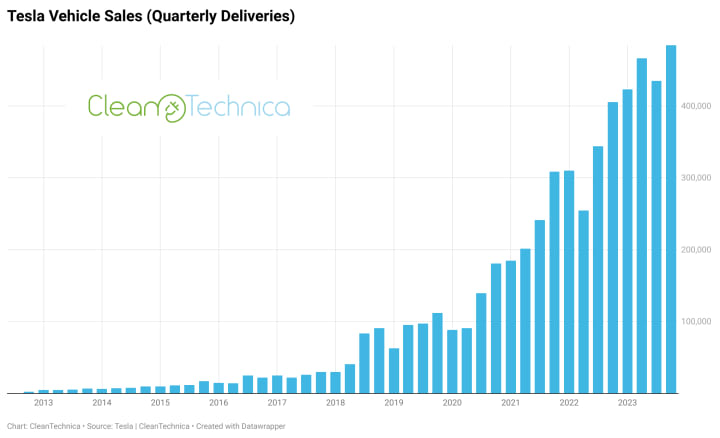
Diversification: Growth in the energy sector (solar, Powerwall, and Megapacks) could offset slowing car sales.
Conclusion: Will Tesla Stay on Top?
The EV industry is evolving rapidly, and Tesla’s position as the dominant force is being challenged. While its innovation and brand power still set it apart, the growing competition and internal challenges mean that the company must continuously adapt. Tesla’s future dominance is not guaranteed, but if it plays its cards right, it could remain a leader in the industry for years to come.
What do you think? Can Tesla continue leading the EV revolution, or will rivals catch up? Let us know in the comments!
About the Creator
Keep reading
More stories from Bevy Osuos and writers in Futurism and other communities.
Grok 4 Just Went Live: Why Elon Musk Says It’s Smarter Than Most PhDs
What Is Grok 4 🚀, and Why Is Everyone Talking About It? Elon Musk doesn’t just launch rockets. He launches disruption. And this time, it’s with Grok 4, the latest version of his AI chatbot developed by xAI, now officially rolled out to premium users on X (formerly Twitter).
By Bevy Osuos6 months ago in Futurism
About Binding Prometheus
I want to start actively advocating on behalf of my own work, and the most valuable part of my canon is, without a doubt, Binding Prometheus, the play I have been working on since 2019 and only finished in 2023 as part of my MA. The play itself is an amalgamation of a million different inspirations. On one end, it evokes the Ancient Greek myth-play, deriving its own title from the earliest extant work of Western drama we have, Aeschylus’s Prometheus Bound. On the other end, it borrows significantly from the sci-fi bulwarks from over the years, namely Mary Shelley’s Frankenstein and Karel Capek’s Rossum’s Universal Robots. The play could be an episode of Black Mirror, I fear. I don’t know. I’ve only ever seen one episode of Black Mirror.
By Steven Christopher McKnight17 days ago in Futurism
Macarons Market: Premium Dessert Demand, Flavor Innovation & Gourmet Bakery Trends
According to IMARC Group's latest research publication, global macarons market size reached USD 1,077.8 Million in 2024. Looking forward, IMARC Group expects the market to reach USD 1,715.4 Million by 2033, exhibiting a growth rate (CAGR) of 5.03% during 2025-2033.
By sujeet. imarcgroup2 days ago in Futurism


Comments
There are no comments for this story
Be the first to respond and start the conversation.