
Can Students Trust AI? Understanding Accuracy and Bias in AI Tools
A Student’s Guide to Using AI Tools Responsibly and Effectively

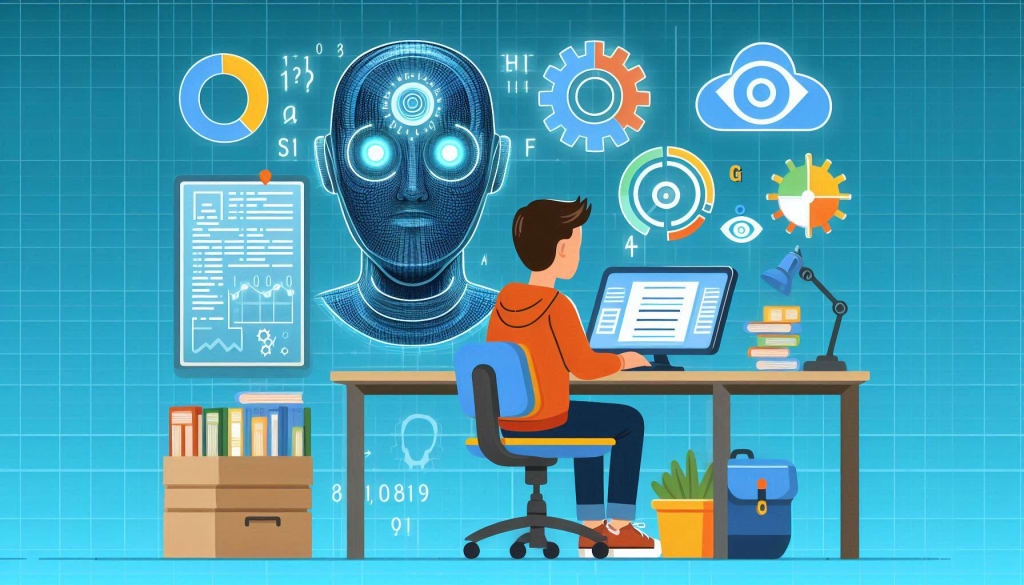
Artificial Intelligence (AI) has quickly become a staple in modern education. From drafting essays to solving complex equations, students now rely on AI tools for academic assistance more than ever. These platforms promise efficiency, personalized support, and 24/7 availability—but the growing dependence also raises a pressing question: Can students trust AI tools?
To answer that, we need to look deeper into how AI works, how accurate it really is, and how bias might influence its performance. Understanding these elements is key to using AI responsibly and effectively.
Accuracy: Can AI Deliver Reliable Results?
Accuracy is one of the primary factors that determine whether an AI tool is trustworthy. While many AI tools are highly advanced, their output isn’t always 100% reliable. Here’s why:
Training Data Matters: AI tools are trained on large datasets. If that data is outdated, biased, or limited, the information they generate may be inaccurate or misleading.
Complex Subject Handling: AI performs well with structured tasks like grammar correction or simple problem-solving. But when it comes to creative thinking, critical analysis, or nuanced academic writing, its limitations become more apparent.
This means students should never take AI-generated content at face value. Always you should double-check the facts, revise outputs, and use your own understanding to fill in any of the gaps.
The Problem of Bias in AI Tools
Another critical factor in trusting AI is recognizing bias. AI systems can unintentionally reflect the biases present in the data they were trained on. This may result in:
- Cultural or regional biases that present a limited view on global topics.
- Language bias in explanations or translations, where AI may favor certain dialects, tones, or linguistic styles, potentially misrepresenting the original meaning or intent in multilingual or cross-cultural contexts.
- Confirmation bias in generated content, where AI tends to reinforce popular or widely accepted viewpoints rather than presenting diverse or opposing perspectives, which may limit critical thinking and open discussion.
- Temporal bias due to outdated training data, where AI student tools may provide information that was once accurate but is now obsolete, especially in fast-changing fields like science, technology, or current events.
Using AI Responsibly: A Student’s Checklist
AI can be an incredible asset when used correctly. Here’s how students can make the most of these tools:
- Use AI as a learning aid—not a shortcut. Let it help you brainstorm, summarize, or practice, but do your own research and analysis.
- Evaluate outputs carefully. Don’t assume that everything an AI tool produces is accurate or complete.
- Diversify your sources. If the AI suggests certain facts or viewpoints, validate them through books, journals, or trusted academic websites.
- Be aware of privacy risks. Avoid sharing sensitive or personal information with AI tools that aren’t secure or transparent about data usage.
Choosing the Right AI Tools
Not every AI tool is built with students in mind. Some are designed primarily for business or general users and may not align with academic standards. That’s why it’s important to explore the best AI tools for student learning, which are specifically designed to support educational goals. These platforms are more likely to offer accurate, bias-aware, and privacy-conscious solutions tailored for learners.
Conclusion
So, can students trust AI? The short answer is yes—but with caution. AI tools can enhance learning when used wisely, but they’re not perfect. Understanding their strengths and limitations—especially when it comes to accuracy and bias—helps students make smarter choices. Treat AI as a study partner, not a substitute for your own thinking, and it can become a powerful ally in your academic journey.
About the Creator
Timesofai
Timesofai brings you global information regarding artificial intelligence, whether it is related to an innovation with AI or an AI tool taking over the world. For every small update in AI industry, you can visit https://www.timesofai.com/
Australia Construction Equipment Market: Infrastructure Growth, Urban Development & Technology Adoption
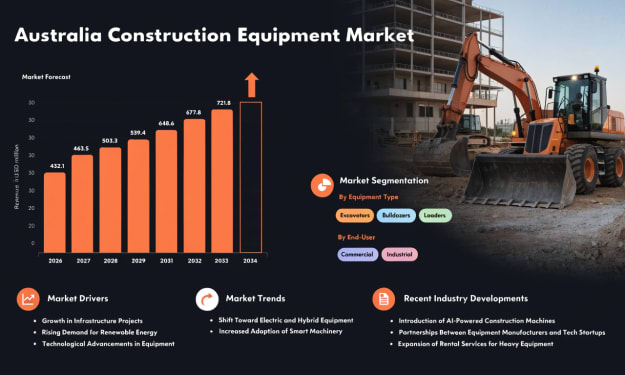
According to IMARC Group, the Australia construction equipment market reached USD 1.9 Billion in 2024 and is projected to expand to USD 2.4 Billion by 2033, exhibiting a compound annual growth rate (CAGR) of 2.50% during 2025–2033. This steady growth reflects sustained infrastructure expansion and urban development across Australia. Construction equipment—including excavators, loaders, cranes, bulldozers and road-building machinery—plays a critical role in delivering transportation networks, residential housing, commercial developments and mining operations. As Australia invests in modernization and sustainability, demand for advanced and eco-friendly equipment solutions continues to evolve.
By Kevin Cooper4 days ago in Futurism
Bioherbicides Market Outlook: Sustainable Weed Management and Agricultural Growth Opportunities
According to IMARC Group's latest research publication, The global bioherbicides market size reached USD 3.3 Billion in 2025. Looking forward, IMARC Group expects the market to reach USD 8.1 Billion by 2034, exhibiting a growth rate (CAGR) of 10.01% during 2026-2034.
By James Whitman4 days ago in Futurism


Comments
There are no comments for this story
Be the first to respond and start the conversation.