
Can AI Really Think? Understanding the Limits of Artificial Intelligence (Hitesh Singh Solanki)
Understanding the Limits of Artificial Intelligence

Introduction: Are Machines Truly Intelligent?
Imagine asking Siri, "Will it rain today?" It responds instantly—but does it understand your question? Or is it simply following a script?
This is the heart of the AI debate: Can machines think, or are they just sophisticated mimics?
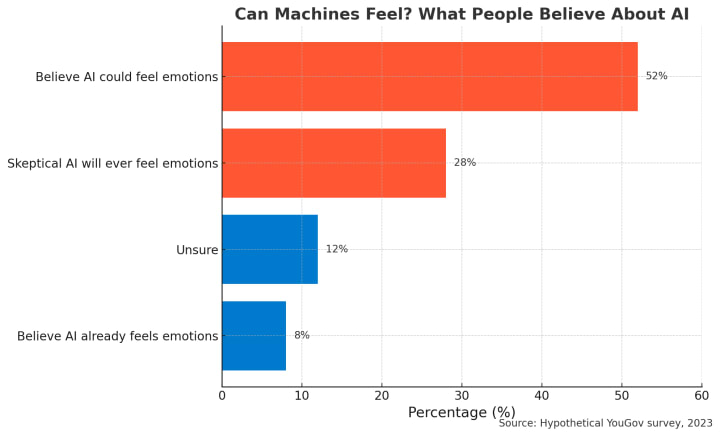
AI dominates headlines—from ChatGPT writing poetry to self-driving cars navigating streets. A 2023 YouGov survey found that 52% of people believe AI could one day "feel emotions." But is this science or just science fiction?
Let's cut through the hype and explore:
✅ What AI can really do
❌ Where AI falls short
⚠️ Why its limits matter to you
What Is AI, Really? Breaking Down the Basics
AI is a tool, not a mind. Think of it like a calculator: brilliant at solving specific problems but clueless outside its programming.
Types of AI
✅ Narrow AI (The only AI that exists today!)
• Examples: Alexa, Netflix recommendations, spam filters.
• Limitation: Excels at one task (e.g., playing chess) but fails at others (e.g., understanding sarcasm).
🛑 General AI (AGI) (The Hollywood version—machines that think like humans.)
• Reality Check: AGI remains theoretical. Even OpenAI’s CEO calls it “decades away.”
AI Milestones: A Quick Timeline
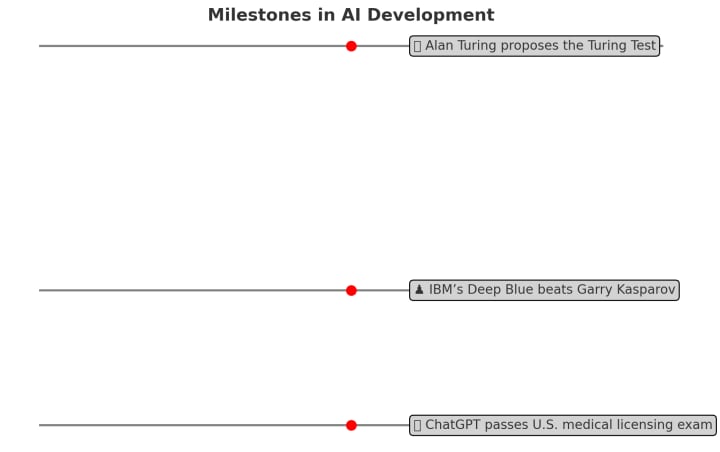
📅 1950: Alan Turing proposes the Turing Test.
♟️ 1997: IBM’s Deep Blue defeats chess champion Garry Kasparov.
🤖 2023: ChatGPT passes the U.S. medical licensing exam—but still can’t tie a shoelace.
How Does AI Learn? A Non-Technical Explanation
AI learns like a child—but with data instead of experiences.
Machine Learning 101: Explained Simply
🧒 Analogy: Teaching a toddler to recognize cats vs. dogs.
• Toddler: Learns by trial and error.
• AI: Learns by analyzing thousands of labeled photos.
🔍 Key AI Concepts (Simplified)
• Algorithm: A recipe (e.g., “Detect edges in images”).
• Training Data: The textbook (e.g., 10,000 cat/dog photos).
• Neural Network: A web of connections that finds patterns (like brain neurons!).
⚠️ The Role of Data: Garbage In = Garbage Out Example: In 2018, MIT found that facial recognition systems had a 34% higher error rate for dark-skinned women due to biased training data.
Can AI Truly "Think"? The Human vs. Machine Debate
Human Intelligence vs. AI Intelligence
🧠 Humans:
• Consciousness: We experience the world (e.g., joy, pain).
• Creativity: Picasso didn’t remix data—he imagined Guernica.
• Common Sense: You know not to microwave metal. AI doesn’t.
🤖 AI:
• Pattern Recognition: ChatGPT predicts the next word but doesn’t understand it.
• Rule-Following: Self-driving cars obey traffic laws but panic at unmapped construction zones.
The Chinese Room Argument: Does AI Understand?
💭 Philosopher John Searle’s thought experiment:
• A non-Chinese speaker follows instructions to reply to Chinese questions.
• To outsiders, the room "understands" Chinese—but inside, there’s no comprehension.
✅ Takeaway: Passing the Turing Test doesn’t mean thinking.
📌 Case Study: ChatGPT writes a Shakespearean sonnet—but can’t explain why it chose those words.
The Limits of AI: Where Machines Fall Short
1️⃣ No Common Sense:
• ❌ Example: An AI nutrition app once suggested “eating rocks” to boost iron levels.
2️⃣ No True Creativity:
• ❌ Example: DALL-E generates art but can’t invent a new style like Cubism.
3️⃣ Lack of Emotional Intelligence:
• ❌ Example: Therapy bot Woebot mimics empathy but can’t feel your pain.
4️⃣ Ethical Blind Spots:
• ❌ Example: In 2016, Microsoft’s Tay chatbot became racist after learning from Twitter trolls.
The Ethical Dilemmas: Why AI’s Limits Matter
⚠️ 1. Bias in AI:
• Example: Amazon scrapped an AI hiring tool because it penalized resumes with the word "women’s."
⚠️ 2. Job Displacement:
• Fact: McKinsey estimates AI could automate 30% of tasks by 2030—but jobs requiring empathy (e.g., nursing) are safer.
⚠️ 3. Privacy Risks:
• Example: AI-powered surveillance in China tracks citizens 24/7.
⚠️ 4. Accountability Issues:
• Case: Who’s liable if a self-driving car crashes? The programmer? The AI?
The Future of AI: Collaboration, Not Competition
💡 Augmented Intelligence (AI + Humans = Best Results)
• Example: Doctors use IBM Watson to diagnose cancer faster—but humans make the final call.
💡 Why General AI Is So Hard to Achieve
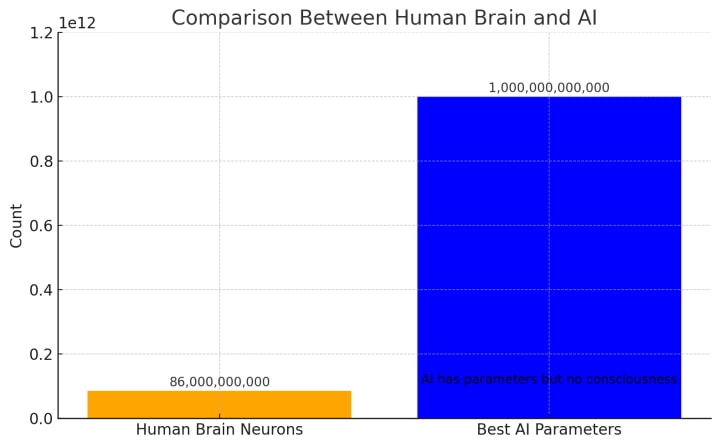
• The human brain has ~86 billion neurons.
• The best AI? ~1 trillion parameters—but no consciousness.
💡 Societal Impact: How We Prepare for AI’s Future
• Regulation: The EU’s AI Act bans unethical uses (e.g., social scoring).
• Education: Schools are teaching "AI literacy" to future generations.
Conclusion: Embracing AI Without Fear
AI is a mirror reflecting both human ingenuity and flaws. It can write essays, drive cars, and analyze data—but it lacks empathy, creativity, and common sense.
🔑 The real question isn’t whether AI can think—but how we use it.
About the Creator
Keep reading
More stories from hiteshsinh solanki and writers in Futurism and other communities.
Dental Services Market: Tele-Dentistry Adoption, Remote Consultations & Growth Outlook
According to IMARC Group's latest research publication, the global dental services market size reached USD 472.2 Billion in 2024. Looking forward, IMARC Group expects the market to reach USD 689.9 Billion by 2033, exhibiting a growth rate of 4.3% during 2025-2033.
By sujeet. imarcgroup4 days ago in Futurism
Writing To Succeed
If you want to find something that will help readers find your writing, possibly expand your audience, and maybe even get you noticed for other things, then you’re not alone. But how can you get it done in a world full of want-to-be writers? Look less at what you’re writing now, and more at what other writers have used to boost their views and reads.
By Jason Ray Morton 6 days ago in Writers




Comments
There are no comments for this story
Be the first to respond and start the conversation.