
Can a US Senator Really Ban and Criminalize Downloading DeepSeek AI?
What Do US Laws and the Constitution Say?

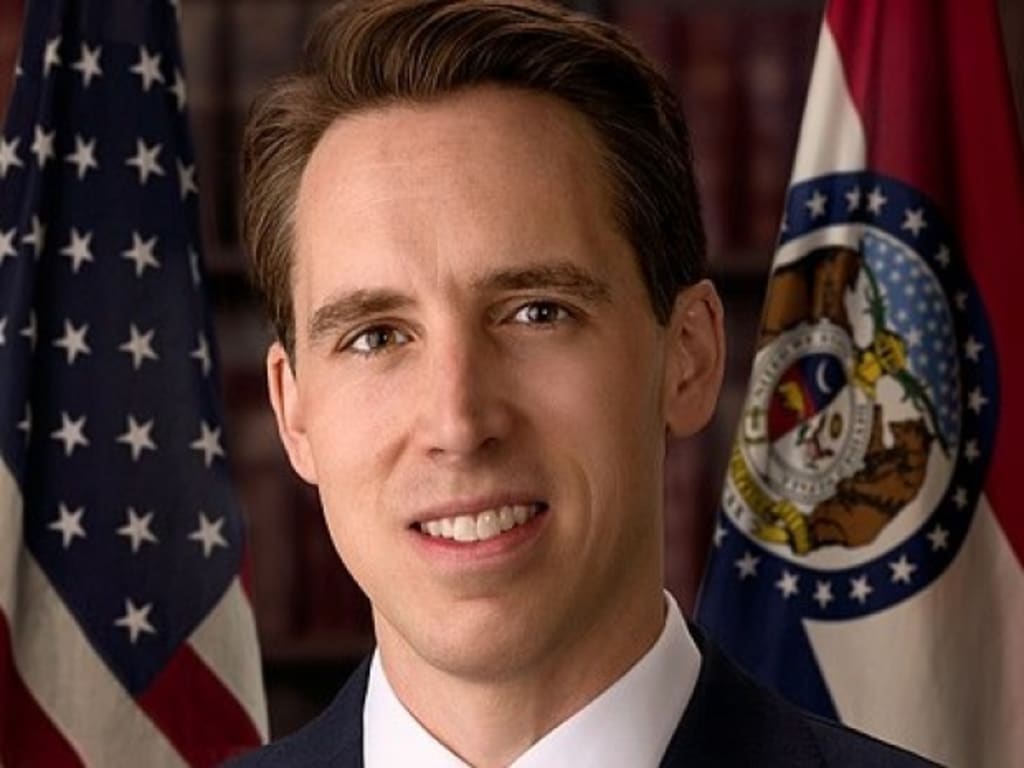
The recent introduction of the Decoupling America’s Artificial Intelligence Capabilities from China Act by Senator Josh Hawley has raised significant concerns about the legal and constitutional viability of banning and criminalizing the use of DeepSeek AI in the United States. The bill aims to prohibit the import, export, and use of AI technology from China, citing national security threats. However, such a ban raises critical questions about constitutional rights, trade laws, and the impact on open-source AI. Can a senator truly enforce such a ban, and what does US law say about this?
Understanding the Proposed AI Ban
What is the Decoupling America’s AI Capabilities from China Act?
- Introduced by Senator Josh Hawley to limit AI exchanges between the US and China.
- Seeks to prevent Chinese AI companies from benefiting from US innovations.
- Prohibits downloading and using AI technologies like DeepSeek AI.
Proposed Penalties
- Individuals: Fines up to $1 million and imprisonment up to 20 years.
- Companies: Fines up to $100 million and loss of government contracts or grants.
- Restricts AI research and investment collaborations with China.
Legal and Constitutional Challenges to the Ban
First Amendment Protections: Free Speech and Information Access
- The First Amendment guarantees freedom of speech and the right to receive information.
- Banning software downloads raises concerns about government overreach in restricting knowledge.
- Courts have previously ruled that software code can be considered speech (e.g., Bernstein v. U.S. Department of State, 1996).
Commerce Clause and International Trade Law
- The Commerce Clause (Article I, Section 8) grants Congress, not individual senators, the power to regulate international trade.
- If the ban is enacted as federal law, it could face challenges from trade agreements with China and the World Trade Organization (WTO).
- Restricting AI exchanges may violate principles of free trade and economic competition.
Fourth and Fifth Amendment Concerns
- Unreasonable searches and seizures (Fourth Amendment): Would enforcement require surveillance of individual devices?
- Due process violations (Fifth Amendment): Harsh penalties without clear justification or legal precedent could be seen as unconstitutional.
Precedents in US Technology and Trade Restrictions
Historical Bans on Foreign Technology
Huawei and TikTok Restrictions
- US government previously restricted Huawei's 5G equipment and attempted to ban TikTok due to national security concerns.
- TikTok faced legal challenges, with courts ruling that executive actions must be justified by clear evidence.
Comparison to DeepSeek AI Ban
- Unlike hardware or social media platforms, AI models are digital files that can be easily shared and accessed, making enforcement more challenging.
Crypto and Open-Source Software Legal Cases
Encryption Software (Bernstein v. US, 1996)
- Court ruled that software code is protected speech under the First Amendment.
- A similar argument could be made for AI models like DeepSeek AI.
Bitcoin and Cryptocurrency Regulations
- Attempts to ban Bitcoin transactions have been difficult due to decentralized access.
- AI models, like cryptocurrencies, operate on distributed networks, making a full ban impractical.
Potential Impacts on AI Development and Open-Source Research
Hindering US AI Innovation
- Critics argue that restricting access to foreign AI models could stifle US research progress.
- Open-source AI advocates fear that government restrictions could extend beyond DeepSeek AI to other AI research initiatives.
Economic and Global AI Competitiveness
China’s AI Industry Gains
- Restricting AI exchanges could push US researchers to adopt inferior models or work independently, slowing progress.
- Meanwhile, China may continue AI advancements unimpeded, gaining a global technological advantage.
Silicon Valley’s Response
- AI researchers and developers may seek workarounds or shift focus to alternative models.
- Open-source models may become more prevalent as a form of resistance to restrictive laws.
Feasibility of Enforcement
Practical Challenges in Enforcing a Download Ban
Circumventing Restrictions
- AI models can be shared through encrypted channels, VPNs, and decentralized networks.
- Open-source models can be modified and rebranded, making detection difficult.
Lack of Precedent for Criminalizing AI Use
- Unlike copyrighted material or illicit content, AI models exist in a legal gray area.
- Criminalizing downloads would set a dangerous precedent for future software restrictions.
Alternative Approaches to AI Security
Regulating Data Sharing Instead of Banning Downloads
- US laws could focus on restricting data transfers to foreign AI companies rather than criminalizing AI use.
Collaboration with AI Researchers
- Encouraging ethical AI research with clear security guidelines could be a more effective approach than outright bans.
Conclusion: Can the US Really Ban DeepSeek AI?
While Senator Hawley’s bill aims to protect national security, its legal and constitutional foundations are questionable. A total ban on downloading DeepSeek AI could violate First Amendment rights, international trade agreements, and digital privacy laws. Additionally, practical enforcement remains nearly impossible due to decentralized AI distribution. Instead of criminalizing AI users, the US government may need to explore more balanced approaches to AI security, such as strengthening data privacy laws and investing in competitive AI research.
Key Takeaways:
- The First Amendment may protect AI code as a form of speech, making bans legally questionable.
- The Commerce Clause and international trade laws complicate unilateral AI restrictions.
- Past technology bans (TikTok, Huawei) faced legal hurdles and enforcement difficulties.
- A ban may stifle US AI innovation while giving China a competitive edge.
- Practical enforcement challenges make a complete AI download ban nearly impossible.
The battle over AI regulation will likely continue, but outright criminalization of AI downloads may not hold up in court. Instead, the US government should focus on strategic AI security policies that balance innovation with national safety.
About the Creator
Rahul Bhatia
Passionate about AI, future tech, and human relationships. Exploring the intersection of technology and connection. Building innovative solutions while staying ahead of emerging trends. Always curious about what’s next in AI.
Keep reading
More stories from writers in Futurism and other communities.
Saudi Arabia Reinsurance Market: Regulatory Reforms, Risk Diversification, Capital Strength & Market Expansion
According to IMARC Group's latest research publication, Saudi Arabia reinsurance market size was valued at USD 3.3 Billion in 2025. Looking forward, IMARC Group estimates the market to reach USD 5.2 Billion by 2034, exhibiting a CAGR of 5.35% from 2026-2034.
By Jeffrey Wilson5 days ago in Futurism




Comments
There are no comments for this story
Be the first to respond and start the conversation.