
Building Integrated Photovoltaics Market: Urban Infrastructure, Renewable Facades & Outlook
The building integrated photovoltaics (BIPV) market is gaining momentum as urban infrastructure projects increasingly adopt renewable energy solutions. Integration of solar panels into building facades, rooftops, and architectural elements is enabling on-site power generation while supporting energy efficiency, aesthetic design, and sustainability goals, driving long-term market growth.

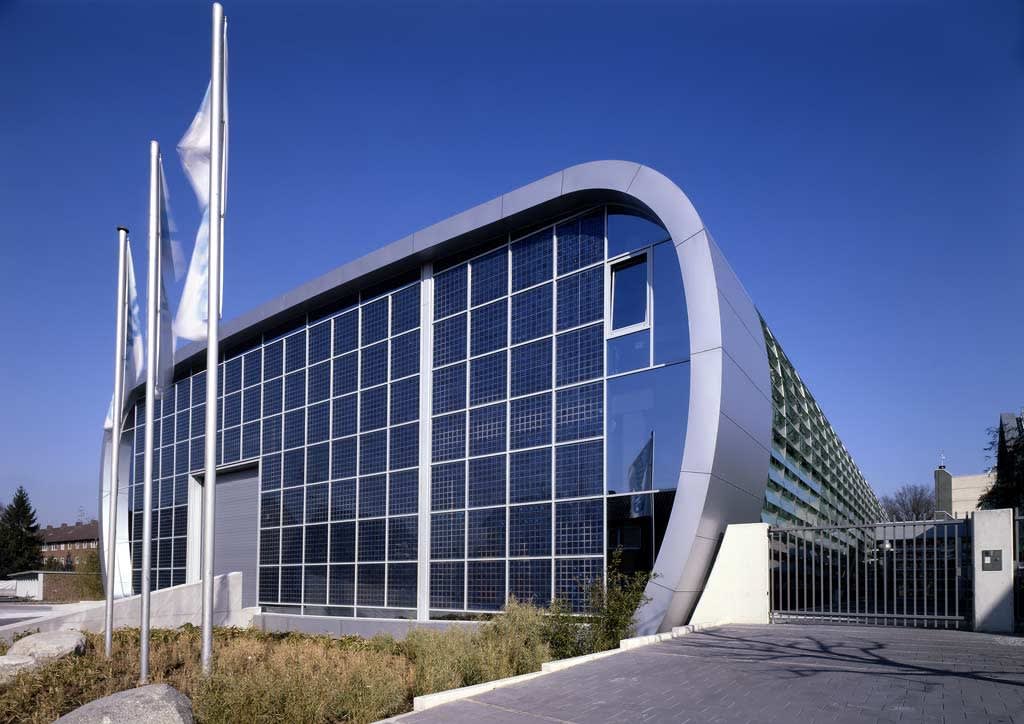
Rising urbanization, stricter energy-efficiency regulations, and demand for sustainable construction are accelerating adoption of building integrated photovoltaics. Advancements in solar efficiency, declining technology costs, and aesthetic integration into facades and rooftops further support growth. Government incentives, green building certifications, and corporate decarbonization goals are also driving investment, positioning BIPV as a strategic solution for modern, energy-efficient infrastructure development. According to IMARC Group's latest research publication, The global building integrated photovoltaics market size reached USD 26.89 Billion in 2024. Looking forward, IMARC Group expects the market to reach USD 116.17 Billion by 2033, exhibiting a growth rate (CAGR) of 15.76% during 2025-2033.
How AI is Reshaping the Future of Building Integrated Photovoltaics Market
- Smart Energy Management Optimization: Predicting energy demand of buildings and controlling BIPV generation could shift solar yield closer to demand thus maximizing the use of energy through distribution in such a way that the consumption of the grid supply is minimized.
- Predictive Maintenance and Performance Monitoring: Predictive maintenance uses ML to predict failures using sensor data from BIPV systems. AI diagnostics can identify panel degradation, wiring damage, and a decline in energy output. This prevents system outages, thereby increasing the system's lifespan.
- Design integration: Architects can use artificial intelligence software to integrate photovoltaic technology into building facades, walls, roofs and windows and simulate energy outputs with architecture to improve buildings' aesthetic value while providing integrated energy generation.

Building Integrated Photovoltaics Industry Overview:
BIPV is most popular in Europe, often due to aggressive climate objectives, ambitious RPS, and high feed-in tariffs for solar-integrated buildings; for example France offers high feed-in tariffs for buildings with photovoltaic power systems. In India, the PM Surya Ghar (Household) scheme seeks to increase the use of rooftop solar, with spending of INR 75021 crore until FY 2026-27. The EU recorded the largest annual solar capacity increase of 66 GW. Global PV manufacturing capacity exceeded 1100 GW, six times as much as demand, with worldwide production capacity increasing almost two-fold.
Building Integrated Photovoltaics Market Trends & Drivers:
Policies are being adopted to promote commercial projects. In the USA, 30% tax credits are available on the installed cost solar, and California's Title 24 Building Code requires solar on the majority of new homes. Germany has implemented feed-in tariffs (US$0.088/kWh for systems under 10 kW and US$0.14/kWh for grid-connected photovoltaic systems), and increased its BIPV penetration by expanding from self-consumption to grid-connected applications. Southeast Asia's energy sector needs USD 190 billion yearly as detailed in the Net Zero Emissions report.
New technologies have made BIPV flexible and suitable for today's architecture. Organic Photovoltaic panels are lightweight and flexible, have a lab tested efficiency of 19.3% and can be printed roll to roll. Quantum Dot Solar Cells could enable transparent solar windows and facades. In January 2025, researchers at Nagoya University developed passive cooling and quantum dot solar energy generation in ventilated louver systems. GoodWe also offers residential solar carports with bifacial TOPCon PV modules with 21.5% cell efficiency and up to 240 km/h wind resistance.
Commercial buildings represent the most BIPV installations (54.5% of the global market), for their size and sustainability having a greater impact. Offices, commercial shopping centers and public buildings on the facades use PV glass and shade screens for LEED and BREEAM certifications in the United States and the United Kingdom, respectively. The 36% reduction in CO2 emissions and 20% reduction in green building maintenance costs followed.
Leading Companies Operating in the Global Building Integrated Photovoltaics Industry:
- Ankara Solar AS
- Ertex Solartechnik GmbH
- Viasolis
- Hanergy Holding Group Ltd.
- HermansTechniglaz
- ISSOL sa
- Sphelar Power Corporation
- Navitas Green Solutions Pvt. Ltd.
- NanoPV Solar Inc.
- Polysolar Ltd.
Building Integrated Photovoltaics Market Report Segmentation:
By Product Type:
- Polycrystalline
- Thin Film
- Others
Polycrystalline represents the largest segment, accounting for 68.9% market share, as it offers cost-effective production, better heat tolerance, and lower energy-intensive manufacturing compared to monocrystalline alternatives.
By Application:
- Roof
- Facades
- Glass
- Others
Roof leads the market with 44.7% share owing to maximum direct sunlight exposure, easy installation during construction or renovation, dual functionality providing weatherproofing, and effective thermal insulation benefits.
By End Use:
- Commercial
- Residential
- Industrial
Commercial holds the largest share at 54.5% due to extensive roof and facade areas, high daytime energy consumption aligning with solar generation, and corporate sustainability commitments reducing carbon footprints.
Regional Insights:
- North America (United States, Canada)
- Asia Pacific (China, Japan, India, South Korea, Australia, Indonesia, Others)
- Europe (Germany, France, United Kingdom, Italy, Spain, Russia, Others)
- Latin America (Brazil, Mexico, Others)
- Middle East and Africa
Europe exhibits clear dominance in the building integrated photovoltaics market with a 40.25% share due to strong regulatory frameworks promoting renewable energy and climate commitments under the Paris Agreement.
Recent News and Developments in Building Integrated Photovoltaics Market
- January 2025: Researchers at Nagoya University announced that a new building-integrated photovoltaic system with ventilated louvers cools and recovers heat from the system, which improves solar cells' efficiency and preserves interior comfort without increasing energy consumption.
- GoodWe's residential solar carports launched in November 2024. The carports have Polaris BIPV panels rated at 4.8 kW and 8.0 kW. The modular carports are lightweight and wind-resistant, handling winds of up to 240 km/h (150 mph). TOPCon bifacial double glass modules provide residential customers with 21.5% efficiency.
- In October 2024, Trinasolar Evergreen launched four products for public works and industrial and infrastructure projects: solar tile, industrial wall, PV noise barrier and colored PV glass. All products are made with TOPCon solar cells with up to 21.9% efficiency, and meet China's green construction standards.
- October 2024: Sustainable Buildings Canada was announced by Natural Resources Canada to lead multi-year projects to advance sustainability in Canada's built environment, including the Codes Acceleration Project that will assist Building Officials in adopting Tier Building Codes. EnergySPRING will support deep-energy retrofits of Ontario Social Housing.
- In August 2024, the largest BIPV project at a port inside China was deployed at Nansha Port in Guangzhou, where a 7.3 MW PV system produced 6.8 million kWh/year and abated 4,338 tonnes of carbon dioxide annually. It makes waterproof and uses energy with efficiency. It plans to expand to 20 MW capacity.
Note: If you require specific details, data, or insights that are not currently included in the scope of this report, we are happy to accommodate your request. As part of our customization service, we will gather and provide the additional information you need, tailored to your specific requirements. Please let us know your exact needs, and we will ensure the report is updated accordingly to meet your expectations.
About the Creator
James Whitman
With years of experience in analyzing global industries, I specialize in delivering actionable market insights that help businesses stay ahead in an ever-changing landscape.
Keep reading
More stories from James Whitman and writers in Futurism and other communities.
Supply Chain Management Software Market: Cybersecurity, Data Protection & System Reliability Outlook
Rising complexity in global trade, demand for real-time visibility, and pressure to reduce costs are accelerating adoption of supply chain management software. Cloud deployment, AI-driven analytics, and automation improve forecasting, inventory control, and resilience. E-commerce growth, omnichannel fulfillment, and regulatory compliance needs further drive investment, as organizations seek scalable platforms to manage disruptions and enhance operational efficiency across complex, volatile sup According to IMARC Group's latest research publication, The global supply chain management software market size was valued at USD 23.2 Billion in 2025. Looking forward, IMARC Group estimates the market to reach USD 54.8 Billion by 2034, exhibiting a CAGR of 10.02% during 2026-2034.
By James Whitmanabout 3 hours ago in Futurism
About Binding Prometheus
I want to start actively advocating on behalf of my own work, and the most valuable part of my canon is, without a doubt, Binding Prometheus, the play I have been working on since 2019 and only finished in 2023 as part of my MA. The play itself is an amalgamation of a million different inspirations. On one end, it evokes the Ancient Greek myth-play, deriving its own title from the earliest extant work of Western drama we have, Aeschylus’s Prometheus Bound. On the other end, it borrows significantly from the sci-fi bulwarks from over the years, namely Mary Shelley’s Frankenstein and Karel Capek’s Rossum’s Universal Robots. The play could be an episode of Black Mirror, I fear. I don’t know. I’ve only ever seen one episode of Black Mirror.
By Steven Christopher McKnight21 days ago in Futurism
Packaged Food Market: Snacking Culture, On-the-Go Consumption & Industry Growth
According to IMARC Group's latest research publication, the global packaged food market size reached USD 2,618.2 Billion in 2024. Looking forward, IMARC Group expects the market to reach USD 4,709.0 Billion by 2033, exhibiting a growth rate of 6.68% during 2025-2033.
By Andrew Sullivan7 days ago in Futurism


Comments
There are no comments for this story
Be the first to respond and start the conversation.