
Mrs. Donaghue smiled at me as she was readying to leave the Breather offices. A real smile, beaming out of her as if it were the product of actual memories. It was hard to reconcile her with the woman who had come in for her consultations, the one who’d dragged her shoes across the marble floor with such grave weight, if only to counterbalance the downward slump of her shoulders.
Mrs. Donaghue’s husband had bled out in a crinkly pile of leaves after a hunting accident in Vermont and been mourned by not only Mrs. Donaghue but also his three mistresses and a smattering of illegitimate children. Mrs. Donaghue had received the life insurance payout, but money wasn’t everything, and she’d been logging more intimate hours with the neck of her vodka bottle than she ever had with Mr. Donaghue. She would barely venture beyond the tassels of her entryway rug and had a twenty-one year old daughter worrying her cuticles to a shred about the state of her mother.
“Severe case. She’ll need five years,” Dr. Friedman had said with a scraping flourish of his pen before handing me her chart. “Have her sign the wavers and schedule her for tomorrow.”
He was already down the hall before I had a chance to look up from the clipboard. I acquiesced stupidly to no one and went about the business of protecting Breather from any future lawsuits.
The morning of Mrs. Donaghue’s appointment, the very same day she later became a brighter version of herself, I was worrying the computer mouse around its pad at the reception desk, reviewing the MP4s we had labeled and filed under Sally_Donaghue_2021, and jotting down thesis notes in my little black notebook.
“Would you calm down? You’re putting me on edge,” Priyana had said, swiveling her chair to face me. “She’ll be fine. They’re always fine.”
I smiled, weakly. Priyana rolled her eyes, waving me away with a long, slender hand. With a thousand interns vying for my position, she had little patience for me, but I’d incurred eighty thousand dollars in student loans for a chance like this, and I felt the chasm of it take on new depth every time I imagined the procedure failing.
I made my way over to the waiting area where Mrs. Donaghue sat slackly, her glassed-over stare aimed at the chaotic snowfall through the window, her pants heavy with a mysterious gradient of stains.
“Mrs. Donaghue,” I said gently, looking over at her daughter hopefully. “It’s time to get you changed now.”
“Come on mom,” her daughter said, guiding her upwards by the elbow. Mrs. Donaghue plodded along slowly, partly from life’s onslaught, partly from the muscle relaxants.
Once Mrs. Donaghue was strapped in, I readied the video feed. The procedure would last several hours, during which Priyana and I would assist, handing Dr. Friedman the sterilized needles and vials as necessary. We worked so closely that I could smell Dr. Friedman’s wintry aftershave, which meant I had a front row seat to his genius. Whether the world was ready to acknowledge that genius or not, it had to acknowledge that Dr. Friedman had found a way around the memory problem.
The solution had been to abandon the idea of destroying the offending memories. It simply wasn’t possible. Homing in on specific memories without accidentally destroying others (or worse, destroying other functions entirely) was beyond the current state of science. Even if the memories could be eliminated, the subject would be robbed of the byproduct of memory - acquired knowledge. Without the lesson learned from the painful experience, the subject stood a much higher chance of becoming revictimized. Then there was the problem of someone referring to moments a person had lived but no longer remembered.
Dr. Friedman’s technique bypassed these issues by stimulating a subject’s key memory centers (hippocampus, neo-cortex, amygdala) and introducing audio and video content while the patient was in a semi-conscious state. In essence, Dr. Friedman was jump-starting the Acceptance stage of grief by falsifying and inserting completely new memories, taking place in an illusory period of time between the traumatic period and ‘now’.
He was giving his patients the gift of time.
The prescribed length of the memories was dependent on the character of the patient, how well they’d dealt with hardship in the past, and the depth of the offending event. To all of those who had ever closed their eyes and wished they could just wake up one year from now, Breather was their answer, for the modest sum of three hundred thousand dollars.
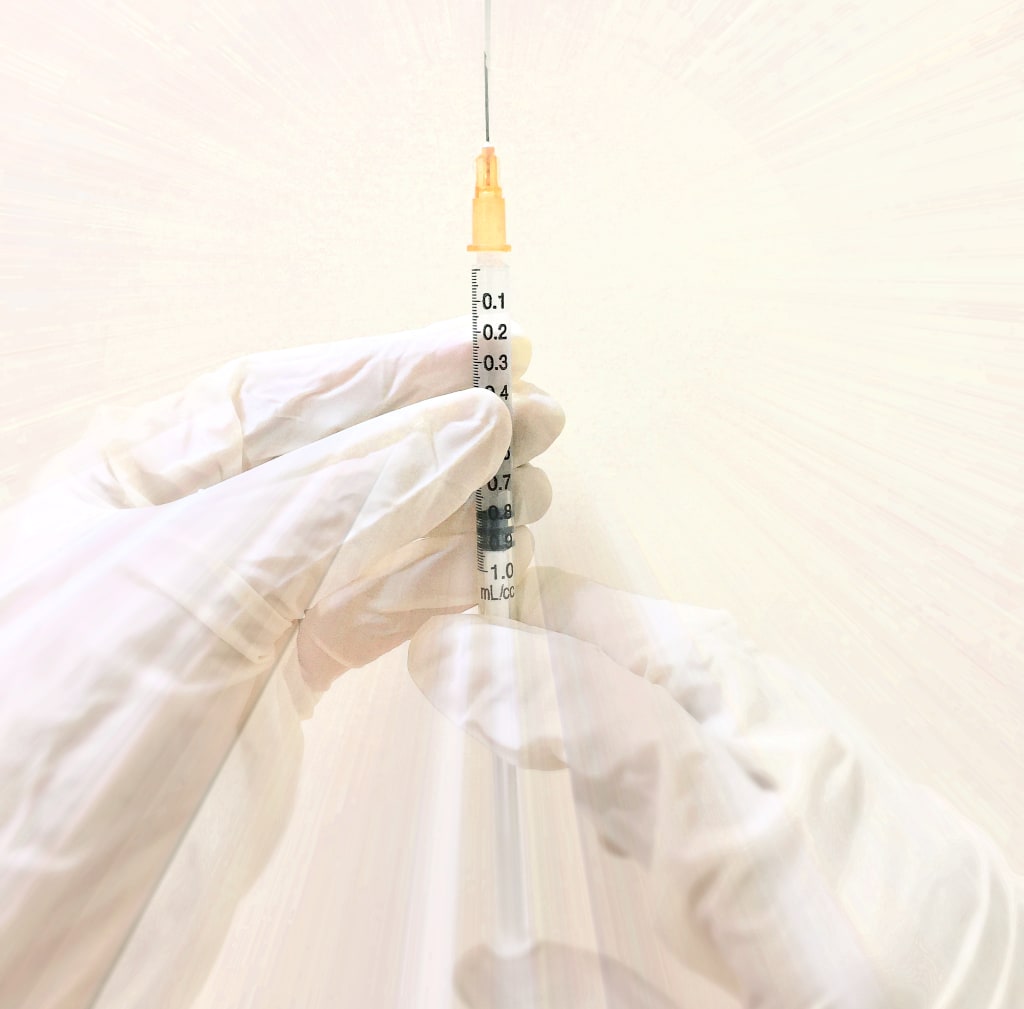
The accelerated audio-video content was triggered at precisely the instant that Dr. Friedman administered the nootropics via syringe. Neural inhibitors were also introduced and delivered to the dorsolateral prefrontal cortex via the bloodstream, slowing the patient’s perception of time. Videos ranged from scenes of therapeutic vacations to thrilling new adventures, but always included at least twenty-six memory-weeks of cognitive-behavioural therapy. Since this fell within her specialty, Priyana took on the role of psychiatrist and recorded herself making insightful breakthroughs unique to each patient.
Readied in her chair that Tuesday, Mrs. Donaghue had been heavy-lidded and compliant. She’d emoted throughout, releasing tears of anger, tears of catharsis, and finally the sighs of serenity that marked the end of the procedure. Once we had removed her headset, she was transferred to the recovery room for monitoring, and hours after that, she smiled at me.
“Oh, it’s you!” she then said looking past me, her hand in a ball at her mouth.
With her long black hair swooshing in her wake, Priyana hurried around the desk and guided Mrs. Donaghue to the small changing room in the hallway, shutting the door behind them with a thunk.
Having come to know her as their tranquil and astute psychiatrist, patients had reacted strongly to Priyana before, but something about her scuttling response set my analytical mind in motion. I wondered if something had gone wrong with the procedure.
The front door opened and a cold wind rushed in alongside Mrs. Donaghue’s daughter. She stomped her boots out on the front mat and looked over at me with a careful hope.
“How did it go?”
Before I could answer, Dr. Friedman emerged from his office.
“Your mother now has five long emotional years of healing between your father’s passing and today,” he said. “You’ll notice the difference as soon as you see her.”
He turned to me then, for corroboration.
“Yes, it all went perfectly. You’ll want to acknowledge the experiences she now believes she’s had, as we discussed. She’s aware of the procedure, but over time won’t be able to distinguish between lived and introduced memories and won’t associate her new memories to any specific years. Her brain will be eager to make the discrepancy work.”
I was saying the words emptily, thinking about several things at once. Whether Priyana knew something about the Breather procedure that I didn’t. About my thesis, and how Mrs. Donaghue’s success would be the cornerstone of its scientific validity. About how my concern was not for her but for myself. About my student loans deepening with the weight of my unpaid internship. About Dr. Friedman delaying talks of my Olfactory Project despite it being an excellent idea. A lot could go on in a mind in a minute.
Priyana returned with a smiling Mrs. Donaghue and delivered her to her daughter. Once the Donaghues had left, arm in arm, giggling as if reunited after years of separation, Dr. Friedman brought out a bottle of champagne to celebrate. My mind was still aflutter.
“I am grateful to have such brilliant women to share my successes with," he said, raising a glass. "Here’s to another life saved.”
The sight of his manicured fingernails irked me. What successes were we a part of, exactly? Not his financial ones. I’d be dragged down by the anchor of my debt for a decade, at least. My twin mattress was a hand-me down. My shampoo bottle would be 75% tap water until I could afford another pharmacy run. I looked over at Priyana who was smiling widely, her teeth a sheen of white under smooth brown lips. There was a glint in her eye that looked undeniably like a secret. What was I missing? Were they sleeping together?
When Dr. Friedman ran out of things to say, he left us with the rest of the bottle. I wondered with a sense of embarrassment if I should be trying to leave them time alone in the office, but before I could give the thought life, he was gone.
“I have to go pee,” Priyana said, setting down her glass on the front desk with a plink. “Good work today. I told you she’d be fine.”
I stood there with the desk at my back, facing out to the falling snow, the glass a projection of my image against the blue of the dusk. I looked how I felt. Greasy, tired, confused. A labrat in a lab coat. I gulped the rest of my drink.
A light caught the corner of my eye. I turned to where Priyana’s phone lay on the counter and a notification stared back at me.
You have received an e-transfer.
Fortified by the champagne, I grabbed the phone and pulled the notification down to see what more I could read without the lock code.
Sally Donaghue has sent you $40,000, sign in to deposit your money.
I reached over and scrambled around the front desk, trying to find the little black Moleskine notebook identical to mine that Dr. Friedman had gifted her. The one she was so furtive about. I lifted it from her purse and riffled through its pages, not knowing what I was looking for. It was some sort of ledger. Patient names, amounts, MP4 file names, and a column of notes.
“I’ll give you a quarter of my last payment.”
I whipped around, notebook in hand.
“I don’t understand.” I said, a brittleness in my voice. “He’s paying you?”
“He? I think we both know Dr. Friedman is a selfish, money-hungry prick.”
“So you’re not sleeping with him?”
“What?” Her scoff was genuine. “That’s offensive, Sarah. Even if I weren’t gay.”
“Priyana, what is all this?” I asked, waving the book in an exasperated half circle. She flicked her eyes skyward, irritated that I hadn’t pieced things together.
“These patients have more money than they know what to do with. We’ve put countless hours of our lives into this project, and we’ve been doing it all for nothing.”
“We’ve been doing it to have our names attached to the project.” I said lamely.
“Don’t be naive. Dr. Friedman is going ahead with your scent idea and won’t be crediting you. He’s working with providers already.”
A sludginess wormed its way through my knees.
“Ten thousand dollars, free and clear.”
“Why would Mrs. Donaghue agree to send you money?” I asked.
“She agreed to send her doctor money. Dr. Priyana Navesh. For three years of intensive patient care.”
My heart was beating in my ears. Priyana loaded up a video on her phone. It was her, sitting in the makeshift psychiatrist’s office we’d designed in the back room, telling the camera that this would be their last session, that the only thing left to do was to transfer her the payment.
I stood there dumbly, feeling run over, duped. But another feeling was lingering in the mix, one I was scared to give light to. Priyana reached beyond me for her glass and took a long sip.
“Are you in or out?”
To give the illusion that I didn’t have the same crude compass guiding my ambition that guided Priyana’s and Dr. Friedman’s, I took a minute.
“Twenty thousand.” I said.
Priyana raised one incredulous eyebrow and a dose of shame ran through me. But as it turned out, I knew the perfect way to put distance between myself and the shame of a bad decision.
About the Creator
Anne Potter
Anne is a creative professional in the field of music curation. She is a loving and absurd mom and an avid reader.
Keep reading
More stories from Anne Potter and writers in Futurism and other communities.
About Binding Prometheus
I want to start actively advocating on behalf of my own work, and the most valuable part of my canon is, without a doubt, Binding Prometheus, the play I have been working on since 2019 and only finished in 2023 as part of my MA. The play itself is an amalgamation of a million different inspirations. On one end, it evokes the Ancient Greek myth-play, deriving its own title from the earliest extant work of Western drama we have, Aeschylus’s Prometheus Bound. On the other end, it borrows significantly from the sci-fi bulwarks from over the years, namely Mary Shelley’s Frankenstein and Karel Capek’s Rossum’s Universal Robots. The play could be an episode of Black Mirror, I fear. I don’t know. I’ve only ever seen one episode of Black Mirror.
By Steven Christopher McKnight28 days ago in Futurism



Comments
There are no comments for this story
Be the first to respond and start the conversation.