
Bottled Water Market Trends: Eco-Friendly Bottles, Smart Labeling & Industry Outlook to 2034
How technological advancements, smart labeling, and QR-enabled traceability are improving supply chain transparency, consumer engagement, and authenticity verification in bottled water products.

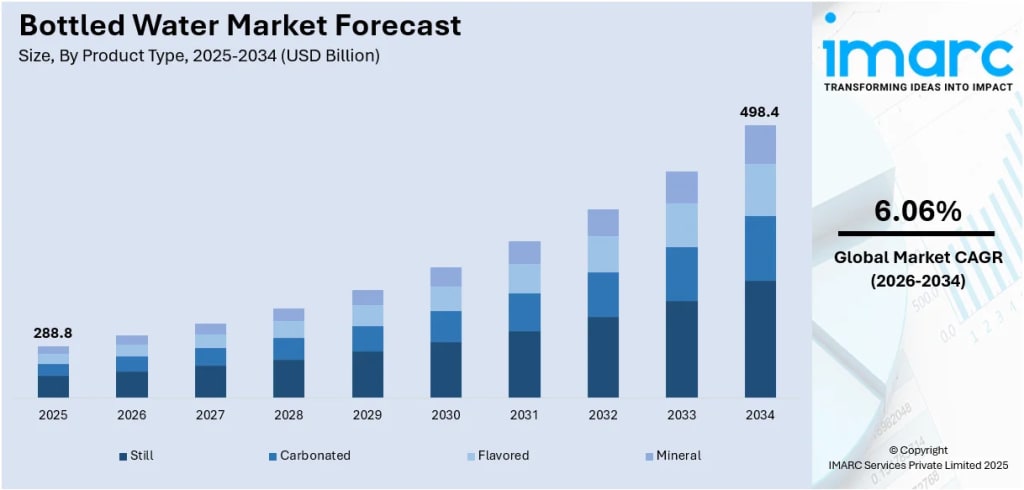
Growing health awareness, concerns about water contamination, and the shift away from sugary beverages are fueling the bottled water market, complemented by convenience factors, premiumization trends, and eco-friendly packaging innovations. According to IMARC Group's latest data, the global bottled water market size was valued at USD 288.8 Billion in 2025. Looking forward, IMARC Group estimates the market to reach USD 498.4 Billion by 2034, exhibiting a CAGR of 6.06% from 2026-2034.
Bottled water now represents a massive global industry with steady expansion driven by rising health consciousness, busy urban lifestyles, and growing concerns about tap water quality in many regions. The market is experiencing robust demand across multiple segments including still water, sparkling water, mineral water, and functional waters enriched with vitamins and electrolytes. Consumer preferences are shifting toward premium brands, sustainable packaging solutions, and products with transparent sourcing and clean labels. E-commerce platforms, retail innovation, and expanding distribution networks are making bottled water more accessible than ever.
Bottled Water Market Growth Drivers:
- Rising Health Consciousness and Hydration Awareness
People everywhere are making healthier beverage choices, moving away from sodas and sugar-loaded drinks toward clean hydration options. This shift is particularly visible among fitness enthusiasts and wellness-focused consumers who recognize the importance of proper hydration for overall health. According to the International Bottled Water Association, Americans consumed an average of 46.5 gallons of bottled water per person compared to just 36 gallons of soda, marking a significant preference shift. The trend is amplified by growing concerns about obesity, diabetes, and other lifestyle diseases linked to high-sugar beverages, making bottled water an obvious go-to choice for health-conscious individuals.
- Water Quality Concerns and Infrastructure Challenges
Contamination issues and deteriorating water infrastructure are pushing consumers toward bottled alternatives as a safer bet. According to Water.org, roughly 2.2 billion people worldwide lack access to safe, drinkable water, highlighting a massive gap that bottled water helps fill. Even in developed regions, periodic water quality alerts, aging pipes, and concerns about contaminants like lead or chemicals drive people to trust branded bottled water. This is especially pronounced in rapidly urbanizing areas of Asia-Pacific and Africa where municipal water systems struggle to keep pace with population growth, creating sustained demand for reliable bottled water sources.
- Convenience and On-the-Go Lifestyle Demands
Busy schedules and fast-paced urban living have made portability king, with bottled water perfectly positioned to meet this need. Whether it's at the gym, office, during travel, or outdoor activities, consumers want hydration that fits seamlessly into their routines without any prep work. Single-serve formats, resealable caps, and various size options from mini bottles to family packs cater to different usage occasions. The United Nations reports that over half of the world's population now lives in cities, and this figure is expected to reach nearly 70% in coming decades, sustaining strong demand for convenient, grab-and-go bottled water solutions across retail, e-commerce, and vending channels.
Bottled Water Market Trends:
- Sustainability Revolution in Packaging
Environmental concerns are driving a major shift toward eco-friendly packaging solutions across the industry. Leading brands are adopting 100% recycled PET (rPET) bottles, with companies like FIJI Water and Coca-Cola India already making the transition for significant portions of their product lines. Some innovative players like Win Win Water have introduced fully biodegradable bottles made from plant-based materials that decompose within 90 days in commercial composting facilities. According to an Oney survey, around 90% of Europeans now consider sustainability a primary factor in purchase decisions. This pressure is pushing manufacturers to explore alternative materials like aluminum cans, glass, and even paper-based bottles while implementing take-back programs and lightweighting initiatives to reduce their environmental footprint.
- Sparkling and Flavored Water Explosion
The sparkling and flavored water segments are experiencing exceptional growth as consumers look for healthier alternatives to sodas without sacrificing taste or the fizz they enjoy. Recent product launches like PepsiCo's Bubble Burst and Sparkling Ice's STARBURST-inspired flavors demonstrate how brands are innovating with zero-sugar, low-calorie options that appeal to younger consumers. The sparkling segment alone is growing faster than still water in many markets, with flavor innovation ranging from exotic fruit combinations to botanical infusions. Research shows that flavored seltzer sales reached over USD 5 billion with strong volume growth, highlighting how this category is successfully capturing the "social beverage" occasion previously dominated by soft drinks while maintaining the health positioning consumers want.
- Technology-Driven Product Enhancement
Advanced purification technologies and innovative product formulations are reshaping the bottled water landscape. Companies are investing in multi-stage filtration processes including reverse osmosis and UV treatment to ensure superior purity and safety—PepsiCo's Aquafina 'Beyond Purified' line earned FDA approval for its enhanced purification process. Meanwhile, cutting-edge innovations like IOTA Water's oxygen nanobubble technology promise better hydration by improving oxygen absorption at the cellular level. These technological advances extend beyond the product itself to packaging design, with smart bottles, QR code traceability, and tamper-evident features becoming more common.
Recent News and Developments in Bottled Water Market
- May 2025: Nestlé announced plans to sell its water division, including premium brands Perrier and S.Pellegrino, later this year, hiring Rothschild & Co. as advisor. Valued at over €5 billion, the strategic move aligns with CEO Laurent Freixe's decision to focus on around 30 core brands like Kit-Kat and Nescafe.
- March 2025: Bisleri International partnered with Schneider Electric's Sustainability Business to significantly boost energy efficiency and expand solar power capacity under 'Bisleri's Greener Promise'. The collaboration will install up to 13.6 MW of solar capacity across six manufacturing plants in Maharashtra, Tamil Nadu, Karnataka, and Uttar Pradesh, increasing green energy use to nearly 33% while improving energy efficiency by 2.5%, reducing carbon emissions by approximately 16,000 tons annually.
- February 2025: IOTA Water launched in North India as India's first bottled water infused with advanced Oxygen Nanobubbles technology, developed by NICO Nanobubble India Co. This groundbreaking innovation enhances hydration by improving oxygen absorption at the cellular level, promoting wellness benefits beyond conventional bottled water.
Note: If you require specific details, data, or insights that are not currently included in the scope of this report, we are happy to accommodate your request. As part of our customization service, we will gather and provide the additional information you need, tailored to your specific requirements. Please let us know your exact needs, and we will ensure the report is updated accordingly to meet your expectations.
About the Creator
Andrew Sullivan
Hello, I’m Andrew Sullivan. I have over 9+ years of experience as a market research specialist.
Keep reading
More stories from Andrew Sullivan and writers in Futurism and other communities.
Life Science Tools Market Insights: CRISPR Innovation, Molecular Analysis & Forecast to 2034
The life science tools sector continues to reshape biomedical research through advanced instruments, consumables, and services supporting applications from genomic sequencing to cellular analysis. According to IMARC Group’s latest findings, the global life science tools market reached a size of USD 176.3 billion in 2025. Looking ahead, the market is projected to expand to USD 315.1 billion by 2034.
By Andrew Sullivana day ago in Futurism
Digital Twin Market Size to Hit USD 223.6 Billion by 2034 | Driven by Recent Advancements in IoT, AI, and ML Technologies
Industry 4.0 and Smart Manufacturing Driving Global Digital Twin Adoption The global digital twin market is driven by the increase in adoption of Industry 4.0 and smart manufacturing solutions, owing to the need for improved operational and production efficiency and competitive advantage and increasing awareness regarding the benefits of digital transformation and rapid adoption of smart manufacturing solutions among industrial facilities across the globe.
By Frank Morgan5 days ago in Futurism
Specialty Polymers Market Outlook: Lightweighting Trends & Future Demand
According to IMARC Group's latest research publication, global specialty polymers market size reached USD 87.0 Billion in 2024. Looking forward, IMARC Group expects the market to reach USD 150.7 Billion by 2033, exhibiting a growth rate (CAGR) of 5.98% during 2025-2033.
By sujeet. imarcgroup7 days ago in Futurism
What Happens To Your Brain When You Stop Multitasking
Digital technology is the culprit that is causing us to doom scroll when tired, disengaged and unmotivated with the content that motivated you to log onto your device to consume in the first place. That is only the beginning. In the modern workplace (and even when filing cabinets were around, I confirmed this with my adopted parents to get my facts right); reading files while you are supposed to be present to the caller on the other end of the phone line is another classic example of multitasking that causes your brain (although adaptable and intelligent) to lose focus and concentration.
By Justine Crowley4 days ago in Psyche



Comments
There are no comments for this story
Be the first to respond and start the conversation.