
Black week for cryptocurrencies, losses of 200 billion dollars. Terra Luna, near extinction
The value of bitcoin fell below $26,000, and two other cryptocurrencies, considered stable, Terra Luna and Terra USD depreciated so much that some investors decided to withdraw. This week, the virtual currency market lost more than 200 billion dollars.
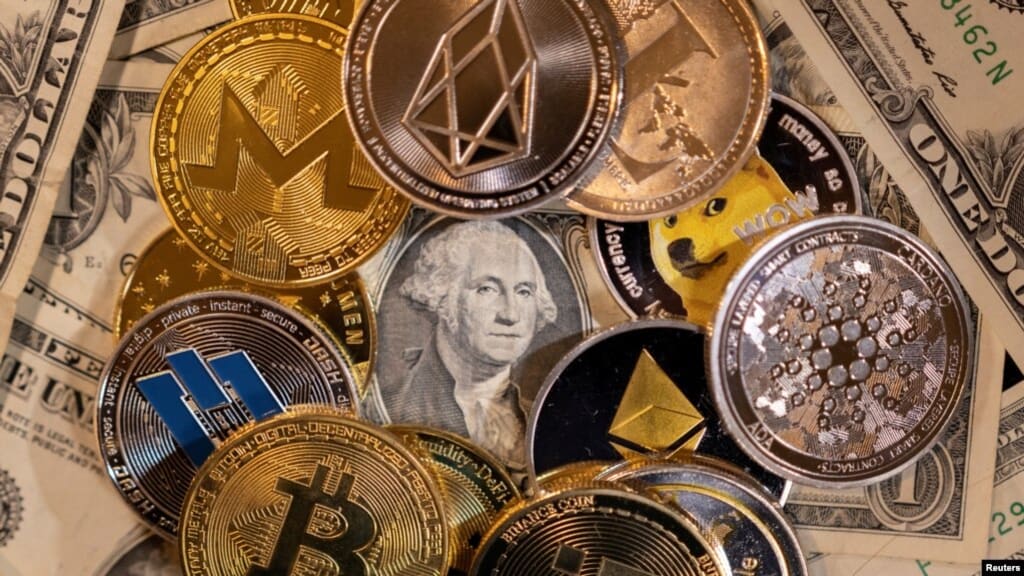
It is the first time in 16 months that the value of bitcoin, the most powerful cryptocurrency, falls by almost 9%, Euronews writes, citing Coin Metrics: $25,401 was worth this Thursday.
The price of Ether, the second most important digital currency, fell to $1,704 per coin. It is the first time the cryptocurrency has fallen below the $2,000 mark since June 2021. Ether last fell 8.8% to $1,937.
Also, stablecoins, i.e. stable coins that should retain their value, have lost ground. They are meant to support digital assets such as bitcoin.
Terra USD is about to collapse completely – it was worth 38 cents on Wednesday and is now estimated at 17 cents.
Terra USD's sister currency, Luna, has fallen by 97 percent, writes Euronews. If on Monday it was worth between 66 and 48 dollars, currently one cryptocurrency is quoted at 0.0004 dollars.
Economic analyst Dragoș Cabat says that over the past two years, cryptocurrencies have become an increasingly accepted financial instrument and that the events of the past week should not affect the market very much, in general.
"The impact is not major, because pension funds, big investment firms don't really hold cryptocurrencies in their portfolio as a major asset."
Marius Morra, CEO of Tokero, explains that the cryptocurrency market has fallen in the past and that the vision of those who invest should be directed to the future.
A similar moment occurred in March, but the market recovered after about three weeks, he says.
“Down times happen; the crypto market is a volatile market. For the most correct positioning, we always say that investments in cryptocurrencies are investments with a high degree of risk and everything should be treated as such. On the other hand, I, at least, am a great ambassador of the crypto area. We have to look, from my point of view, over a longer window of time, not necessarily at what is happening today, this week or this month."
During the periods when the value of cryptocurrencies goes up, investors "rush" to buy a virtual currency, and in the moments of decline, they avoid doing it, adds Marius Morra.
“Basically right now, when they should be acting, this theme is being induced and they are not doing it. In principle, it is good to buy when there are discounts. I, personally, can say that I made a few purchases during this period".
Currently, the BBC notes that the market for all cryptocurrencies in the world stands at $1.12 trillion.
The marginal cost of production represented by the electricity bill exceeded, as of this month, the price of a cryptocurrency. The virtual currency depreciated by more than 50% in the last year and by more than 60% compared to the maximum quotation it recorded on December 17, 2017, writes profit.ro.
Unlike individuals, large institutional producers can afford to negotiate contracts with electricity suppliers and realize a lower marginal cost of production.
Currently, this is, according to MarketWatch, 50-60% of the gross profit made from the mining activity.
According to a May survey by Elite Fixtures, the average cost of producing a bitcoin was $4,758.
The global geoeconomy has become complicated by the overlapping of several crises – economic, energy, food, water – with a recurring character, influencing each other and assimilating other unpredictable shocks, such as those caused by the Russian invasion of Ukraine. In economic terms, inflation exceeded all the records of the last decades, both in developed and emerging countries, and the action of central banks, focused on curbing inflation and bringing it back to the level of price stability, strained financial markets and stock exchanges. actions. The specter of the economic crisis deepens for the years 2022 and 2023, to the point of declaring the possibility of entering stagflation, which will make the recovery, taking as a benchmark other lessons of this kind, take more time than one would think. Central banks have begun a cycle of raising interest rates, seen as either necessary or overdue, if not unnecessary.
About the Creator
Keep reading
More stories from Gabriela Rafaila and writers in Futurism and other communities.
Mercy dog
World War I By the beginning of World War I, Germany had around 6,000 trained dogs, many of which were ambulance dogs. The German army called them 'Sanitätshunde',[10] or 'medical dogs'.[2][13][14] The nation is estimated to have used a total of 30,000 dogs during the war, mainly as messengers and ambulance dogs. Of those, 7,000 were killed.[15] It is estimated that upwards of 50,000 dogs were used by all the combatants.[16]
By Gabriela Rafaila3 years ago in Humans
Liqueurs Market Outlook: Premium Spirits Demand and Flavor Innovation Opportunities
According to IMARC Group's latest research publication, The global liqueurs market size reached USD 131.3 Billion in 2024. Looking forward, IMARC Group expects the market to reach USD 164.0 Billion by 2033, exhibiting a growth rate (CAGR) of 2.38% during 2025-2033.
By James Whitman6 days ago in Futurism
Artificial Intelligence (AI) earbuds Market will Reach Nearly USD 51.86 Billion by 2034
The Global AI Earbuds Market is projected to reach approximately USD 51.86 Billion by 2034, increasing from USD 5.75 Billion in 2024, growing at a robust CAGR of 24.6% during the forecast period from 2025 to 2034. This growth is primarily driven by the increasing demand for advanced audio solutions that integrate artificial intelligence (AI) to enhance user experiences.
By Roberto Crum7 days ago in Futurism
Babbling Dixie
The short form of tomorrow is never the whole story. Abbreviations mean nothing when we are born to die and we all are aren't we? Being spoken for before birth is something we're not supposed to remember like some kind of karma after effect. Still here we are spending our lives looking for each other.
By Canuck Scriber Lisa Lachapelleabout 7 hours ago in Fiction



Comments
There are no comments for this story
Be the first to respond and start the conversation.