
Best Mobile App Development Frameworks to Learn in 2025
From Flutter to React Native to SwiftUI and Unity, discover the apps that the entire mobile app development industry is relying on.


The market for mobile apps is growing at a rapid pace, and companies are aware that apps aren't simply "nice to have"; they're indispensable. It doesn't matter if it's gaming and e-commerce, healthcare, or education; mobile applications provide direct connections between companies and users in a way that only websites are unable to. However, the problem is that developing apps can be complicated, demanding, time-consuming, and costly. This is why mobile application development frameworks come into the game and become game-changers.
Frameworks offer developers pre-built tools, reusable components, and streamlined programming techniques to speed up the process of creating apps. Instead of having to reinvent the wheel, it is possible to focus on the functionality and style. If you're planning to collaborate with a developing mobile application company and you're looking for the best structure, it could mean the difference between a successful project and expensive delays.
In this article, we'll look at the top mobile application development frameworks you'll need to know for the future of mobile apps in 2025 and why they are important and how they will influence your professional or business performance.
Flutter: Google's Powerhouse for Cross-Platform Apps

The popularity of Flutter has exploded in recent years, and for the right reason. With the support of Google and the Open Source UI toolkit, developers can create natively compiled applications for web, mobile, and desktops, all using a single codebase. The most important feature? Its secret weapon? Dart programming language. It is simple to master and extremely efficient.
What makes Flutter different is Flutter's hot reload feature. Designers can immediately see any changes made without having to reload the application, which makes testing faster and less stressful. Additionally, the Flutter widget library provides a wide range of customization options, allowing apps to be truly distinctive. A variety of top brands, from Alibaba to BMW, are embracing Flutter. This makes it an essential framework to learn for those who want to remain ahead of the pack.
React Native: The Facebook Legacy That Still Dominates

The moment that Facebook launched React Native in 2015, it radically changed how we saw app development. The framework lets developers make use of JavaScript as well as React to create apps that work on both iOS and Android, which reduces time and costs significantly. React Native's strengths lie in its vast user base, strong libraries, and the massive adoption of corporate applications.
If you're a part of a firm that develops mobile apps, there's a good chance React Native will come up during conversations because of its close-to-nature performance, which is why businesses such as Instagram, Uber Eats, and Walmart depend on React Native. The ecosystem of the framework is mature, and you'll be able to find numerous plugins, applications, and solutions from third parties that can speed up the process.
SwiftUI: Apple's Next-Gen iOS Framework

Apple has always been focused on offering developers a seamless development experience, which is why SwiftUI represents the present-day offering to iOS users. It was introduced in the year 2019. SwiftUI makes it easier to create interfaces, making use of the declarative syntax. Instead of telling an app "how" to do something in a step-by-step manner, you simply define "what" the UI should appear like, and SwiftUI does the rest.
What makes SwiftUI so powerful is the profound integration with the ecosystem of Apple. SwiftUI is flawless across iOS, iPadOS, and macOS, as well as watchOS and tvOS. If you're looking to focus on iOS or are working in an iPhone-centric company that develops mobile apps, SwiftUI is your way to speed up, improve the quality of, and future-proof your development.
Kotlin Multiplatform: Bridging Android and Beyond

For a long time, developers pleaded for an easy way to transfer code between platforms without degrading speed. The answer is Kotlin Multiplatform is a framework developed by JetBrains (the same group that developed IntelliJ IDEA). Contrary to Flutter as well as React Native, which focus on UI, Kotlin Multiplatform lets you connect business logic to iOS, Android, and even desktop-based applications.
The result is that developers are able to develop specifically for the platform UI and reuse the majority of the logic behind it. If you're a company that values speed but also wants to be efficient, Kotlin Multiplatform strikes the ideal combination of performance and efficiency. It's slowly gaining popularity with firms that develop mobile apps serving both the iOS and Android markets.
Xamarin: Microsoft's Cross-Platform Veteran
While the newest frameworks frequently make the spotlight, Xamarin has been around for more than a decade. As a part of Microsoft, Xamarin utilizes C# and the .NET framework to create applications that run on iOS, Android, and Windows. People who are already working in the Microsoft ecosystem see Xamarin as an ideal match.
One of the most significant advantages Xamarin has is its native speed. In contrast to some frameworks that depend on rendering through the internet, Xamarin apps compile into native code and provide users with the best experience. Additionally, because it provides the use of native APIs, programmers won't need to compromise on features. If your clients are using Windows along with mobile devices, the Xamarin framework is one to keep in your toolkit.
Ionic: The Web Developer's Gateway to Mobile Apps

If you're a person with experience in web development, Ionic might be a welcome return. It is built on top of Angular (and is now integrated with React and Vue), and Ionic lets you utilize HTML, CSS, and JavaScript to build hybrid mobile applications. This reduces the learning curve for front-end developers entering the world of mobile.
What makes Ionic appealing is its large library of ready-to-use UI elements. Menus, buttons, and navigational elements are set to be used, allowing developers to develop sleek and attractive apps in a short time. Numerous small startups choose Ionic, as it helps reduce the cost of development, something that each business that develops mobile apps is aware of when balancing tight budgets.
NativeScript:

NativeScript can be a different framework worth considering, in particular if you desire the same native performance as JavaScript as well as TypeScript. In contrast to Ionic, which uses WebView, NativeScript renders apps directly with native APIs. It gives developers the benefits of both the flexibility of JavaScript and near-native speed.
The main benefit of NativeScript is easy accessibility to the native APIs without the need for additional plugins. Developers have access to Android as well as iOS functions using JavaScript, which makes it efficient and user-friendly. Though it's not going to enjoy the same amount of popularity as React Native or Flutter, it's a framework that is creating a sector.
Unity: More Than Just Games

When they hear Unity, when they hear the word "Unity," they usually imagine video games. However, Unity has grown into an incredibly flexible framework that allows for the creation of applications for mobile devices that go beyond gaming. Its strengths lie in rendering 3D and 2D images, which makes it ideal for Augmented Reality (AR) as well as Virtual Reality (VR) and other immersive experiences.
Through Unity, developers are able to create cross-platform applications for iOS as well as Android and benefit from its huge asset store and huge community. Numerous industries, ranging from healthcare to education, are now using Unity to develop immersive software. If you're looking to collaborate with a mobile application development firm that is experimenting with the use of AR/VR in their work, Unity is a skill that can differentiate you.
Apache Cordova: The Classic Hybrid Option

Although not as attractive as some of the newer frameworks, Apache Cordova (formerly PhoneGap) remains a good choice for hybrid app development. It lets developers make use of standard web technologies such as HTML, CSS, and JavaScript to develop apps within a native application.
One of the main reasons people love Cordova is its simple interface. App developers can create applications quickly using device functions like cameras, GPS, and the file system. In the case of smaller companies or prototypes, Cordova is still a feasible option, particularly when timelines and budgets are limited. Numerous developers of mobile apps are still using the platform for projects that don't need a lot of performance.
How to Choose the Right Framework
There are so many frameworks to choose from. How do you choose which one to study? This is based on the needs, goals, market, and scope of your project. As an example, Flutter and React Native can be a great choice if you need to reach both iOS and Android rapidly. SwiftUI is the best when you're focusing on iOS. However, Unity shines for AR/VR as well as 3D-intensive applications.
The other factor to consider is the environment, that is, the developing mobile apps company, the company you're working for. If they're firmly embedded within Microsoft's platform, Xamarin makes sense. If they are catering for startups with limited funds, Ionic or Cordova might be the best fit. The trick is matching your framework with the challenge that you're trying to solve and not simply being a follower of patterns.
The Future of Mobile App Development Frameworks
As technology advances and frameworks continue to evolve. Look for deeper integration of AI machines and AI and cloud-based services with the next versions. Frameworks are also focused on a better user experience for developers and reducing boilerplate code, as well as extending cross-platform compatibility to new devices such as wearables and smart televisions.
The growth of Progressive Web Applications (PWAs) is also worthy of watching. While technically not frameworks, PWAs provide similar experiences to apps straight via browsers, blurring the lines between mobile and web. For businesses and developers today, it's all about speed and agility, which is what most frameworks have already achieved.
Conclusion
The market for mobile apps is too competitive to rely on tools that are outdated. Understanding the best frameworks could lead to new opportunities regardless of whether you're an individual developer or a part of a developing mobile apps business. From Flutter's flexibility to Unity's capabilities for immersive experiences, there's a framework to suit each and every idea.
If you invest your time understanding these frameworks, you're not only learning about tools but also preparing yourself to be able to satisfy the requirements of today's users. Mobile's future for mobile applications is exciting, and when you have the proper framework at hand and a solid foundation, you'll be able to develop smarter, more quickly, and stronger.
About the Creator
Alex
I've built my career around people-focused roles in the software industry, where clear communication, hands-on support, and quality assurance are always top priorities.
Reader insights
Nice work
Very well written. Keep up the good work!
Top insights
Easy to read and follow
Well-structured & engaging content
On-point and relevant
Writing reflected the title & theme
Deadline Looms as Anthropic Rejects Pentagon Demand to Remove AI Safeguards
A showdown is unfolding between Anthropic and the U.S. Department of Defense after CEO Dario Amodei formally rejected a Pentagon ultimatum to loosen safeguards on the company’s AI model, Claude.
By Behind the Tech2 days ago in Futurism
Australia Wealth Management Market: HNWI Growth, Digital Transformation & Regulatory Evolution
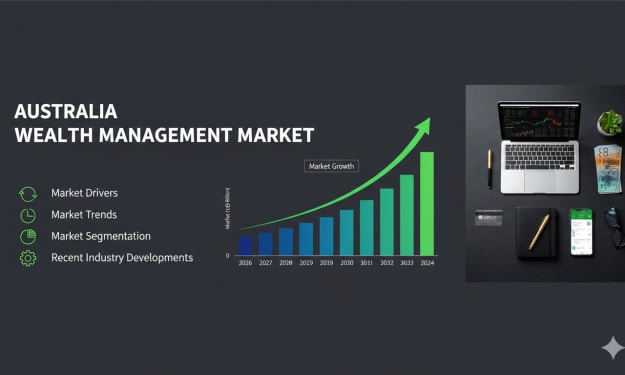
According to IMARC Group, the Australia wealth management market reached USD 118.6 Million in 2025 and is projected to expand to USD 222.2 Million by 2034, exhibiting a compound annual growth rate (CAGR) of 7.00% during 2026–2034. This sustained expansion reflects structural changes in capital accumulation, digital advisory platforms and regulatory oversight across Australia. Wealth management services—including portfolio advisory, retirement planning, tax structuring and estate planning—are increasingly critical as individuals accumulate assets through entrepreneurship, property investments and superannuation growth. As high-net-worth individuals (HNWIs) expand in number and financial sophistication, demand for tailored, transparent and digitally enabled advisory services continues to rise.
By Kevin Cooper6 days ago in Futurism


Comments
There are no comments for this story
Be the first to respond and start the conversation.