
Autonomous Vehicle Market: AI-Driven Mobility, Sensor Fusion & Industry Growth Outlook
Autonomous vehicles gain traction for improving road safety and traffic efficiency.

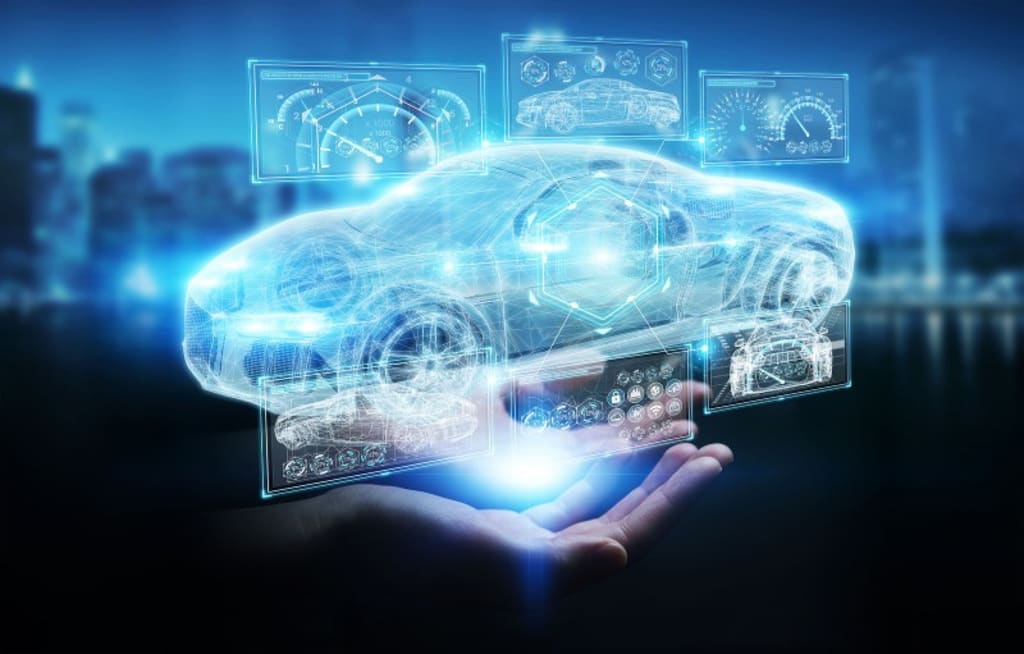
According to IMARC Group's latest research publication, global autonomous vehicle market size was valued at USD 109.0 Billion in 2024. Looking forward, IMARC Group expects the market to reach USD 1,730.4 Billion by 2033, exhibiting a growth rate (CAGR) of 31.85% during 2025-2033.
How AI is Reshaping the Future of Autonomous Vehicle Market
- Real-Time Environment Perception and Object Recognition: AI algorithms with computer vision enable vehicles to identify pedestrians, traffic signals, and obstacles instantly. Neural networks process camera and LiDAR data to create 360-degree awareness, allowing autonomous systems to navigate complex urban scenarios with precision comparable to human drivers.
- Predictive Behavior Analysis and Decision Intelligence: Machine learning models analyze traffic patterns and predict actions of surrounding vehicles and pedestrians before they occur. This enables AVs to make split-second decisions on lane changes, braking, and collision avoidance, reducing accident risk while optimizing route efficiency.
- Synthetic Data Generation for Edge Case Training: AI-driven simulation platforms generate millions of virtual driving scenarios to train autonomous systems for rare but critical situations. Companies like Waymo and Waabi use synthetic data to prepare vehicles for extreme weather, sensor failures, and complex intersections without real-world risk.

Autonomous Vehicle Industry Overview:
Major tech companies and automakers are accelerating commercial deployments across key markets. Waymo now provides over 200,000 paid robotaxi rides weekly in Los Angeles, San Francisco, and Phoenix, while Gatik became North America's first company to operate fully driverless trucks at commercial scale with more than USD 600 Million in contracted revenue. Isuzu Motors invested USD 30 Million in Gatik AI in May 2024 to develop level 4 autonomous middle-mile delivery, targeting large-scale manufacturing by 2027.
Autonomous Vehicle Market Trends & Drivers:
The integration of artificial intelligence and machine learning is fundamentally transforming autonomous vehicle capabilities, enabling them to navigate complex scenarios with unprecedented accuracy. Waymo's operations demonstrate this progress with over 1.7 Million autonomous miles driven with zero at-fault incidents over five years of driverless deployments.
Favorable government regulations and substantial private investment are creating an environment where autonomous vehicle testing and deployment can scale rapidly. The United States Transportation Department established a USD 500 Million SMART grant program in 2024 to support autonomous vehicles, roadside sensors, and aerial drones for transforming transportation infrastructure.
The convergence of electric vehicle platforms with autonomous technology is creating new mobility business models and reshaping urban transportation economics. Nearly all autonomous vehicles operate as electric vehicles due to their superior platform architecture for sensor integration and computational power requirements.
Leading Companies Operating in the Global Autonomous Vehicle Industry:
- AB Volvo
- AUDI Aktiengesellschaft (Volkswagen Group)
- Bayerische Motoren Werke AG
- Daimler AG
- Ford Motor Company
- General Motors
- Tesla Inc.
- Toyota Motor Corporation
- Uber Technologies Inc.
- Waymo LLC (Alphabet Inc.)
Autonomous Vehicle Market Report Segmentation:
By Component:
- Hardware
- Software and Services
Software and services represent the largest segment with around 70.2% of market share in 2024, as sophisticated AI algorithms, machine learning models, and essential services like mapping, data analytics, and over-the-air updates are central to enhancing vehicle capabilities, safety, and functionality.
By Level of Automation:
- Level 3
- Level 4
- Level 5
Level 3 leads the market with around 72.8% of market share in 2024. Level 3 automation enables vehicles to perform most driving tasks autonomously including acceleration, braking, and lane-keeping under predefined conditions, balancing advanced automation with safety features while meeting regulatory compliance standards.
By Application:
- Transportation and Logistics
- Military and Defense
Transportation and logistics lead the market with around 92.8% of market share in 2024, encompassing autonomous delivery trucks, self-driving taxis and ride-sharing services, autonomous public transit, and automated freight transportation that increase operational efficiency, reduce labor costs, and improve overall safety.
Regional Insights:
- North America (United States, Canada)
- Asia Pacific (China, Japan, India, South Korea, Australia, Indonesia, Others)
- Europe (Germany, France, United Kingdom, Italy, Spain, Russia, Others)
- Latin America (Brazil, Mexico, Others)
- Middle East and Africa
North America exhibits clear dominance in the autonomous vehicle market with over 40.8% market share in 2024 due to robust regulatory support, strong investments in research and development, and a thriving technology ecosystem with leading companies like Tesla, Waymo, and General Motors' Cruise.
Recent News and Developments in Autonomous Vehicle Market
- September 2024: BYD partnered with Huawei to integrate Qiankun, Huawei's advanced autonomous driving technology, into BYD's off-road Fang Cheng Bao electric vehicles. This strategic partnership aims to enhance BYD's premium brands including Yangwang, Fangchengbao, and Denza with cutting-edge autonomous capabilities.
- September 2024: Drive Forward Fund LP, sponsored by the White House with Monroe Capital leading, raised USD 1 Billion to help small and medium-sized automotive businesses develop innovations in electric vehicles, clean energy, and advanced automotive technologies including autonomous driving systems.
- July 2024: Uber announced it will deploy 100,000 electric BYD vehicles on its ride-hailing network across Europe and Latin America. The companies will also develop autonomous-capable vehicles for Uber's ride-hailing service, advancing the integration of electric and self-driving technologies.
- January 2025: Mercedes-Benz unveiled its new S-Class designed for the AI era, featuring Level 4-ready autonomous driving architecture powered by NVIDIA DRIVE Hyperion and full-stack AI integration, marking the company's 140 years of automotive innovation with next-generation autonomous capabilities.
Note: If you require specific details, data, or insights that are not currently included in the scope of this report, we are happy to accommodate your request. As part of our customization service, we will gather and provide the additional information you need, tailored to your specific requirements. Please let us know your exact needs, and we will ensure the report is updated accordingly to meet your expectations.
About the Creator
sujeet. imarcgroup
With 2 years of hands-on experience at IMARC Group, I have conducted in-depth market research and analysis across diverse industries including technology, healthcare, agriculture, and consumer goods.
Keep reading
More stories from sujeet. imarcgroup and writers in Futurism and other communities.
Agricultural Films Market: Crop Protection Demand, Yield Improvement & Industry Growth Outlook
According to IMARC Group's latest research publication, the global agricultural films market size reached USD 11.69 Billion in 2024. Looking forward, IMARC Group expects the market to reach USD 18.18 Billion by 2033, exhibiting a growth rate (CAGR) of 4.78% during 2025-2033.
By sujeet. imarcgroupabout 6 hours ago in Futurism
Squalene Market: Plant-Based Sourcing, Clean Beauty Trends & Growth Outlook
According to IMARC Group's latest research publication, The global squalene market size was valued at USD 154.98 Million in 2024. Looking forward, IMARC Group estimates the market to reach USD 263.04 Million by 2033, exhibiting a CAGR of 6.84% from 2025-2033.
By James Whitman5 days ago in Futurism



Comments
There are no comments for this story
Be the first to respond and start the conversation.