
Australia Seaweed Market: Aquaculture Expansion, Product Diversification & Sustainability Demand
How growth in seaweed aquaculture, increasing product diversification and rising sustainability demand are shaping Australia’s seaweed market
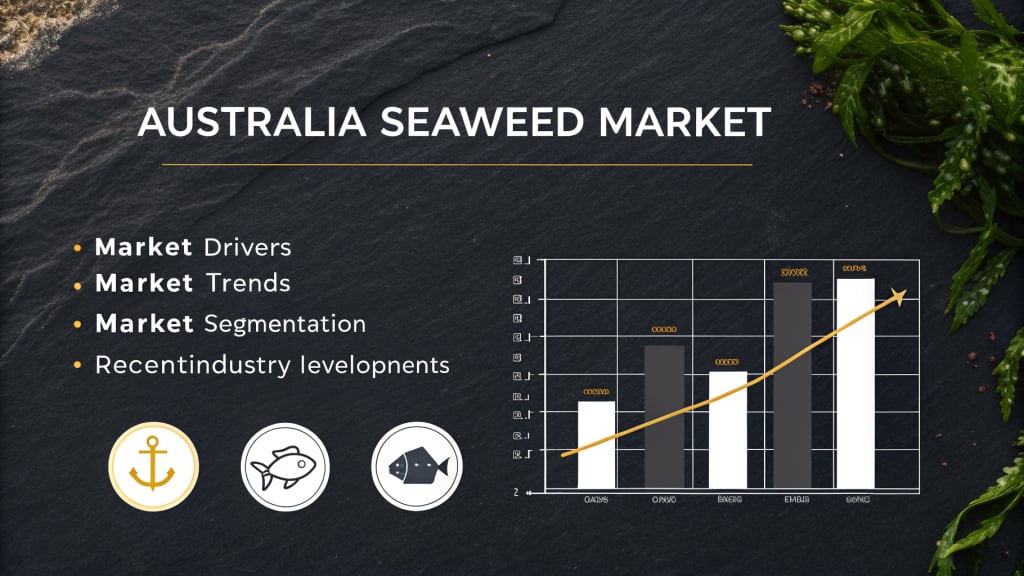
According to IMARC Group, the Australia seaweed market reached USD 271.5 Million in 2025 and is projected to expand to USD 528.2 Million by 2034, exhibiting a compound annual growth rate (CAGR) of 7.45% during 2026–2034. This strong growth trajectory reflects the increasing recognition of seaweed as a versatile, sustainable and commercially valuable resource across Australia. Once considered a niche marine product, seaweed is now gaining prominence in food, agriculture, pharmaceuticals and environmental applications. Driven by aquaculture expansion, innovation in value-added products and rising sustainability awareness, the seaweed industry is positioning itself as a strategic contributor to Australia’s blue economy and low-carbon future.
Why Should Smart Buyers and Investors Know About the Australia Seaweed Market?
Strong Growth Outlook
With a projected CAGR of 7.45%, the market demonstrates attractive mid-to-high growth potential.
Alignment With Sustainability and ESG Goals
Seaweed production supports carbon reduction, regenerative agriculture and circular economy initiatives.
Diversified Application Potential
Applications span food, agriculture, pharmaceuticals and environmental solutions, reducing market concentration risk.
Government and Research Support
Policy backing and innovation funding enhance long-term sector viability.
Global Export Opportunities
Growing international demand for sustainable and alternative protein sources strengthens export prospects.
Recent Trends & Developments in the Australia Seaweed Market
July 2025:
Regional aquaculture projects expanded offshore cultivation areas to increase production capacity.
March 2025:
Research collaborations advanced methane-reducing livestock feed supplements derived from seaweed.
October 2024:
Manufacturers introduced seaweed-based food products targeting plant-based and functional nutrition segments.
The Australia seaweed market represents a dynamic intersection of aquaculture innovation, environmental sustainability and product diversification. Supported by IMARC’s strong growth projections, the sector is transitioning from a niche marine activity to a strategically important industry within Australia’s broader blue economy. As seaweed cultivation expands and value-added applications increase, the market offers compelling opportunities for investors, producers and policymakers focused on sustainable growth. By combining ecological benefits with commercial potential, Australia’s seaweed industry is poised to play a meaningful role in the country’s long-term environmental and economic strategy.
Australia Seaweed Market Vision 2050
1. Large-Scale Marine Farming Networks
By 2050, extensive offshore seaweed farms may supply raw materials for food, biofuels and bioplastics.
2. Integration Into Climate Mitigation Strategies
Seaweed cultivation could become a key component of national carbon reduction programs and blue carbon initiatives.
3. Advanced Processing and Biorefinery Systems
Biorefinery technologies may extract multiple high-value compounds from seaweed, enhancing profitability.
4. Diversified Export Portfolios
Australia may expand seaweed exports to Asia-Pacific and European markets, capitalizing on rising global demand.
5. Functional and Nutraceutical Innovation
Seaweed-derived ingredients may play a growing role in pharmaceuticals, cosmetics and functional health products.
What Are the Key Growth Drivers in the Australia Seaweed Market?
Expansion of Seaweed Aquaculture
Australia’s extensive coastline and favorable marine conditions support the development of seaweed farming operations. Controlled aquaculture systems are improving yield consistency and scalability, enabling year-round production. Investments in offshore cultivation infrastructure are strengthening commercial viability.
Rising Demand for Sustainable Agriculture Inputs
Seaweed-based biofertilizers and soil conditioners are gaining traction as eco-friendly alternatives to synthetic chemicals. Farmers are adopting seaweed extracts to enhance crop resilience and improve soil health, aligning with regenerative agriculture practices.
Growth in Alternative Proteins and Functional Foods
Seaweed is increasingly incorporated into plant-based foods, nutritional supplements and functional beverages. Rich in minerals, fiber and bioactive compounds, it appeals to health-conscious consumers seeking sustainable protein sources.
Carbon Reduction and Environmental Applications
Seaweed cultivation absorbs carbon dioxide and contributes to marine ecosystem restoration. Research initiatives are exploring seaweed’s role in methane reduction in livestock feed and carbon sequestration projects, enhancing its climate mitigation potential.
Government Support and Research Investment
Supportive policies, regional aquaculture projects and academic research collaborations are accelerating innovation. Public-private partnerships are advancing cultivation technologies, product development and export readiness.
About the Creator
Keep reading
More stories from Shrestha Roy and writers in Futurism and other communities.
Australia Air Freight Market: Trade Flows, Logistics Capacity & Digitalization
According to IMARC Group, the Australia air freight market was valued at USD 2.0 Billion in 2025 and is projected to reach USD 3.7 Billion by 2034, exhibiting a compound annual growth rate (CAGR) of 7.12% during 2026–2034. This strong expansion reflects the increasing importance of speed, reliability and global connectivity within the trade ecosystem of Australia. As international commerce intensifies and e-commerce accelerates, air freight has become a strategic logistics solution for high-value, time-sensitive and perishable goods. Infrastructure modernization, technological innovation and sustainability initiatives are further strengthening the competitiveness and resilience of Australia’s air cargo sector.
By Shrestha Roya day ago in Futurism
Electronic Data Capture (EDC) Systems Market Outlook: Clinical Trial Digitization and Growth Opportunities
According to IMARC Group's latest research publication, The global electronic data capture (EDC) systems market size reached USD 1.4 Billion in 2024. Looking forward, IMARC Group expects the market to reach USD 3.3 Billion by 2033, exhibiting a growth rate (CAGR) of 9.7% during 2025-2033.
By James Whitman6 days ago in Futurism
How Investors Evaluate High-Expectation Narratives in Crypto Markets?
Predictions and fundamentals often have the same effect on the cryptocurrency market. As digital assets get more established, investors come across more and more bold price stories that get people talking, speculating, and paying attention. Some of these stories die out quickly, but others stick around through many market cycles.
By Muhammad Talha Ahmad3 days ago in Futurism



Comments
There are no comments for this story
Be the first to respond and start the conversation.