
Artificial Intelligence (AI) in Healthcare: Applications and Implications
Revolutionizing Patient Care and Addressing Ethical Challenges: A Deep Dive into the Role of AI in Modern Healthcare
Introduction
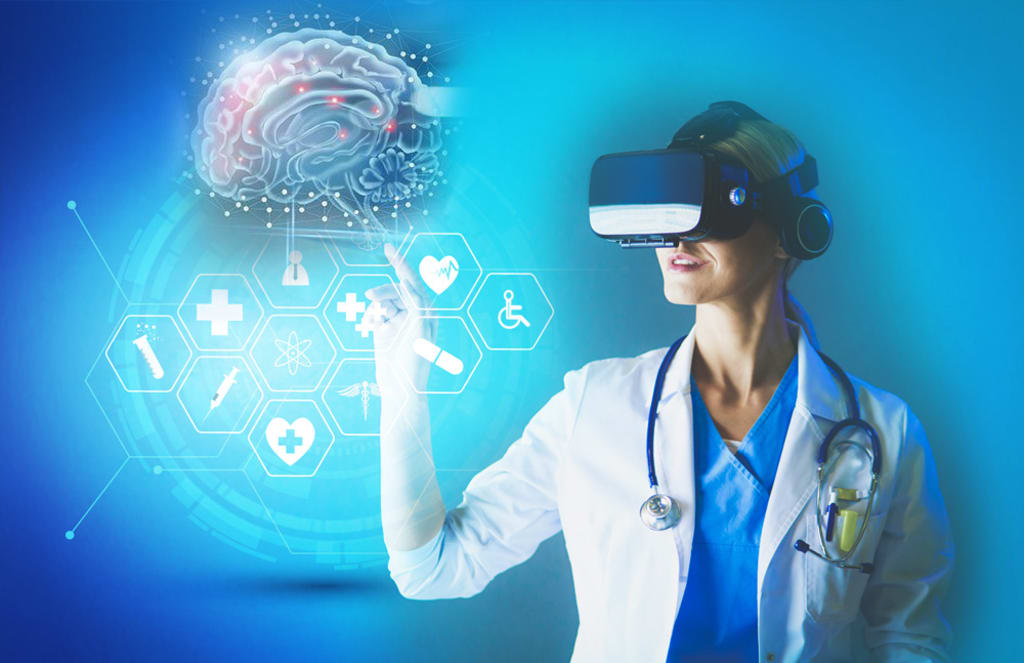
Artificial Intelligence (AI) has increasingly infiltrated numerous aspects of our daily lives, introducing a whole new level of sophistication and efficiency. One of the most promising sectors where AI has shown immense potential is healthcare. The role of AI in healthcare is rapidly expanding and transforming the field, creating remarkable advancements in diagnosis, treatment, research, and patient care. This article will explore the applications and implications of AI in healthcare, highlighting the beneficial transformation it has brought about while acknowledging the challenges and ethical considerations to be navigated.
Applications of AI in Healthcare
Disease Diagnosis and Identification
AI algorithms and machine learning models have exhibited a remarkable ability to analyze complex medical data, such as medical imaging, electronic health records (EHR), genetic information, and even lifestyle data. These algorithms can aid in the early detection and diagnosis of diseases such as cancer, diabetes, Alzheimer's, and heart disease, often with greater accuracy and speed than traditional methods.
Predictive Healthcare
One of the standout roles of AI in healthcare is predictive analysis. Using vast amounts of health data, AI can predict potential health risks and propose preventive measures. Predictive analytics can forecast disease outbreaks, enhance population health management, and prevent avoidable hospital readmissions.
Personalized Medicine
AI has the potential to create more personalized treatment plans by taking into account individual patients' unique genetic makeup, lifestyle, and environmental factors. This approach can improve the effectiveness of treatments and minimize adverse drug reactions.
Pharmaceutical Research and Development
AI-powered tools are accelerating drug discovery and development by enabling the rapid analysis of complex biological systems and the generation of hypotheses. AI can improve the understanding of disease mechanisms and aid in the development of targeted therapeutics, thereby reducing time and cost in the drug development pipeline.
Robotics and Automation
Robotic surgery, powered by AI, allows surgeons to perform intricate procedures with higher precision, flexibility, and control than conventional techniques. AI is also used in hospital automation, reducing human error and freeing up staff to focus on more complex tasks.
Implications and Challenges
Despite the impressive advancements, the implementation of AI in healthcare also comes with a set of challenges and ethical considerations.
Data Privacy and Security
One of the significant concerns is the protection of patient data. The vast amount of health data required to train AI models raises serious privacy concerns, especially considering the sensitive nature of medical information.
Ethical Considerations
AI's decision-making process, when it comes to medical diagnosis or treatment recommendation, must be transparent, interpretable, and accountable. There's a need to establish clear guidelines to ensure that AI applications respect patient autonomy, fairness, and do no harm.
Quality of Data
The accuracy of AI algorithms heavily relies on the quality and quantity of the data used to train them. If the data is biased or insufficient, the algorithms may produce skewed or inaccurate results, potentially leading to detrimental health outcomes.
Healthcare Workforce Impact
AI has the potential to disrupt the healthcare workforce, leading to potential job losses or shifts in roles. It is vital to ensure that the transition to AI-enabled healthcare is smooth and doesn't disproportionately affect certain job categories.
Conclusion
The integration of AI into healthcare offers remarkable opportunities for improving patient care, enhancing health outcomes, and driving efficiency. However, as we continue to leverage AI's potential, it is critical to address the associated challenges and implications thoughtfully and responsibly. Strategies need to be developed to ensure data privacy, improve the quality of AI training data, address ethical concerns, and prepare the healthcare workforce for an AI-driven future.
About the Creator
About Binding Prometheus
I want to start actively advocating on behalf of my own work, and the most valuable part of my canon is, without a doubt, Binding Prometheus, the play I have been working on since 2019 and only finished in 2023 as part of my MA. The play itself is an amalgamation of a million different inspirations. On one end, it evokes the Ancient Greek myth-play, deriving its own title from the earliest extant work of Western drama we have, Aeschylus’s Prometheus Bound. On the other end, it borrows significantly from the sci-fi bulwarks from over the years, namely Mary Shelley’s Frankenstein and Karel Capek’s Rossum’s Universal Robots. The play could be an episode of Black Mirror, I fear. I don’t know. I’ve only ever seen one episode of Black Mirror.
By Steven Christopher McKnight27 days ago in Futurism
3D Cell Culture Market: Tissue Engineering Demand, Cancer Research Focus & Market Forecast
Rising demand for physiologically relevant in-vitro models is accelerating adoption of 3D cell culture across drug discovery, toxicology, and regenerative medicine. According to IMARC Group's latest research publication, global 3D cell culture market size reached USD 2,643.1 Million in 2024. LAccording to IMARC Group's latest research publication, global 3D cell culture market size reached USD 2,643.1 Million in 2024. Looking forward, IMARC Group expects the market to reach USD 7,819.7 Million by 2033, exhibiting a growth rate (CAGR) of 12.69% during 2025-2033.
By sujeet. imarcgroup7 days ago in Futurism
🅼🅸🅳🅽🅸🅶🅷🆃 🆂🅽🅰🅲🅺🆂
"It's 10 in Tuscon! We all know what that means... It's Time for Midnight Snacks with your man, Gerald Gee! Ready to spend the night together? Me too! I'm full of snacks and can't wait to regurgitate them all back into your hungry ears. Crack a brew! Pop some corn! Anything to get ready for one hell of a show where the talk maybe cheap but the words cut deep...
By Lamar Wiggins5 days ago in Fiction


Comments
There are no comments for this story
Be the first to respond and start the conversation.